
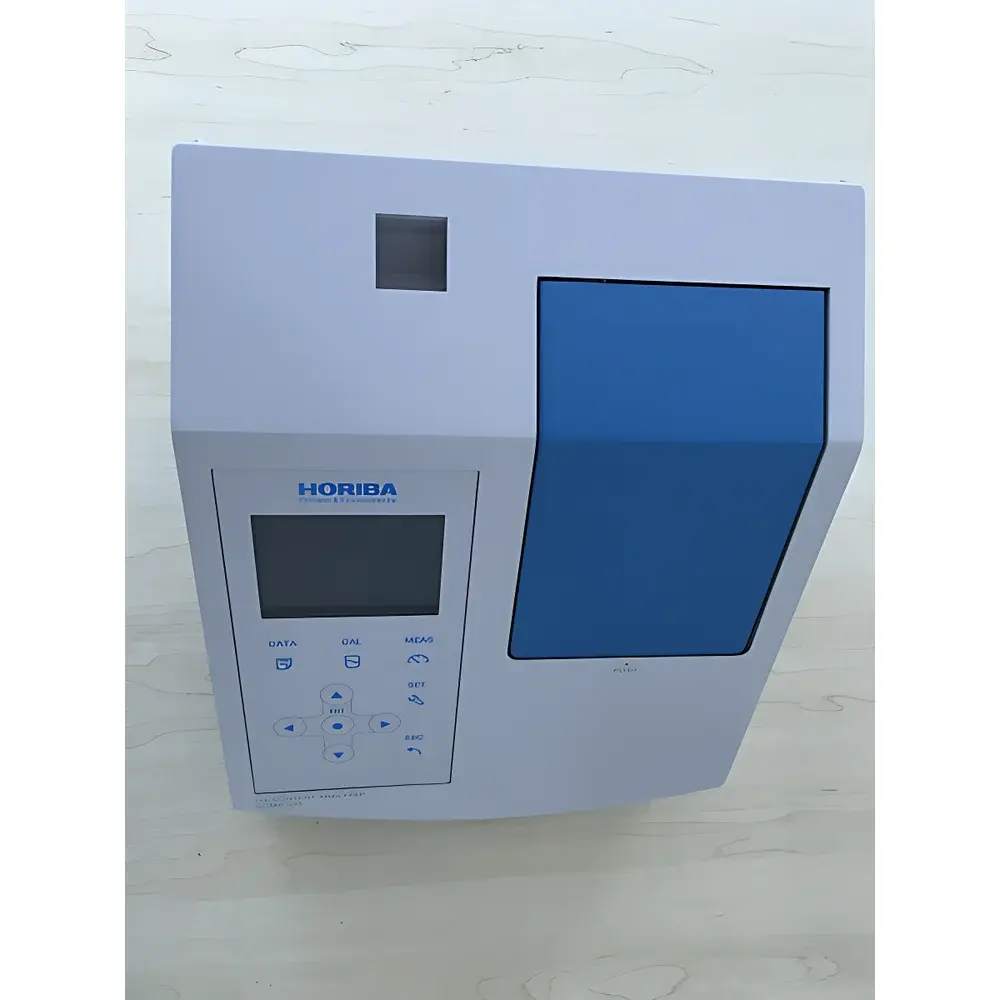
HORIBA OCMA-555H Portable Infrared Oil-in-Water and Oil-on-Solid Analyzer
| Brand | HORIBA |
|---|---|
| Origin | Japan |
| Model | OCMA-555H |
| Instrument Type | Portable |
| Measurement Principle | Non-Dispersive Infrared (NDIR) Absorption Spectrophotometry |
| Measurement Range | 0–200 mg/L, 0–1000 mg/kg, 0–1 Abs |
| Detection Limit | <0.3 mg/L |
| Accuracy | ±1% of reading (mg/L) |
| Resolution | 0.1 mg/L (for 0–99.9 mg/L range) |
| Measurement Frequency | 1 measurement per 5 minutes (0.2 min⁻¹) |
| Optical Path | 20 mm quartz cuvette |
| Power Supply | 230 V AC, 50 Hz |
| Dimensions | 250 × 200 × 285 mm (W × H × D) |
| Detector | Thermoelectric sensor |
| Data Interface | RS-232C serial port & parallel printer port |
Overview
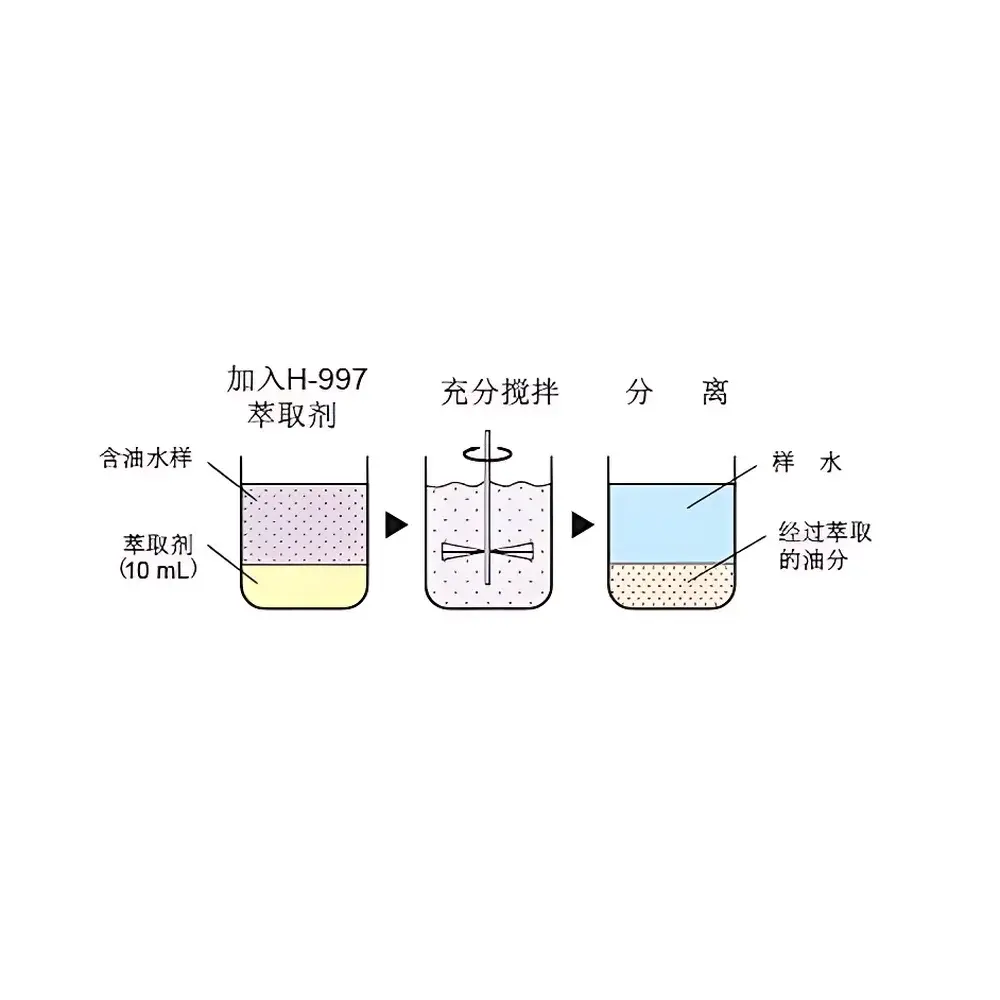
The HORIBA OCMA-555H is a field-deployable, non-dispersive infrared (NDIR) oil content analyzer engineered for quantitative determination of hydrocarbon-based oils in aqueous matrices, on solid surfaces, and in soil samples. It operates on the fundamental principle of infrared absorption at the characteristic C–H stretching vibration band near 3.4 µm (2940 cm⁻¹), where aliphatic hydrocarbons exhibit strong, selective absorbance. Unlike broad-spectrum UV-Vis methods, NDIR eliminates spectral interference from humic substances, suspended solids (SS), or turbidity—provided the sample has undergone standardized solvent extraction using HORIBA’s proprietary H-519 reagent. The instrument measures the absorbance of the oil–solvent extract directly in a fixed-pathlength (20 mm) quartz cell, converting optical density into concentration via pre-calibrated linear regression. Its design conforms to established regulatory frameworks for oil-in-water analysis, including EPA Method 1664 (revision B) principles and ISO 9377-2:2000 (petroleum hydrocarbons in water), supporting compliance in environmental monitoring, industrial effluent discharge verification, and hazardous waste site characterization.
Key Features
- Triple-unit display capability: switch seamlessly between mg/L (for water extracts), mg/kg (for soil/solid residue), and absorbance (Abs) — enabling traceability across sample matrices without recalibration.
- Integrated backlit LCD with real-time timestamping: ensures auditable data capture compliant with GLP documentation requirements.
- Thermoelectric detector with thermal stabilization: delivers high signal-to-noise ratio and long-term baseline stability essential for low-concentration quantitation down to <0.3 mg/L.
- One-button measurement workflow: after manual transfer of H-519 extract into the quartz cuvette, initiation triggers automatic zeroing (post-initialization), spectral acquisition, and concentration calculation.
- Compact, ruggedized portable chassis (250 × 200 × 285 mm): designed for on-site deployment in wastewater treatment plants, remediation sites, and manufacturing cleanrooms.
- Dual data output: RS-232C interface supports direct connection to laboratory PCs running LIMS-compatible software; parallel port enables hardcopy generation via standard dot-matrix printers.
Sample Compatibility & Compliance
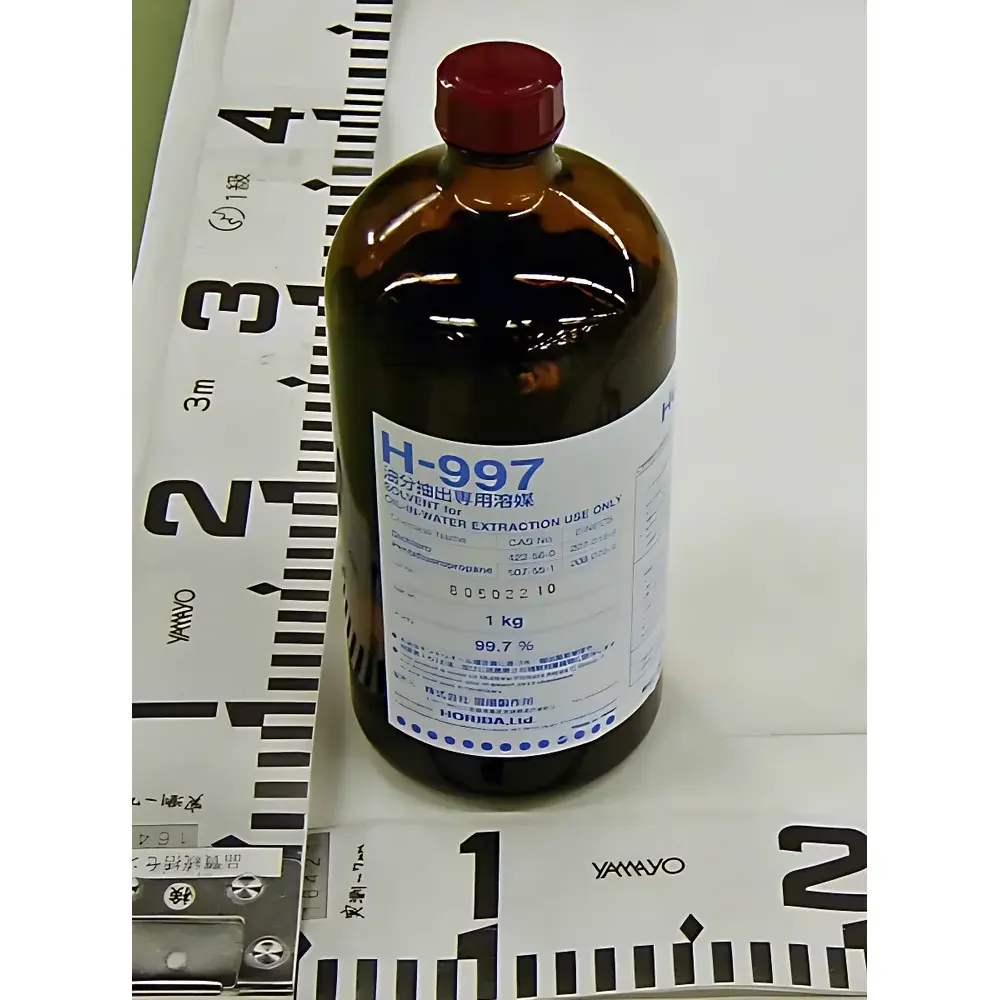
The OCMA-555H is validated for use with solvent-extracted samples prepared according to standardized protocols. It accepts extracts generated using HORIBA H-519 — a non-polar, IR-transparent chlorinated hydrocarbon solvent optimized for maximal hydrocarbon recovery and minimal background absorbance at 2940 cm⁻¹. The system accommodates heterogeneous matrices including industrial cooling water, post-treatment effluents, soil leachates, and surface wipe extracts from precision-engineered components (e.g., semiconductor wafers, bearing assemblies). While not an in-situ sensor, its performance aligns with ASTM D7066-04 (Standard Test Method for Determination of Oil and Grease and Selected Petroleum Hydrocarbons in Water by Solvent Extraction and Infrared Spectrophotometry) and supports audit readiness under ISO/IEC 17025:2017 for testing laboratories. Note: Final reporting must reference the extraction efficiency validation performed per user-defined SOPs, as required by US EPA and EU WFD reporting guidelines.
Software & Data Management
The OCMA-555H operates autonomously without embedded firmware-based software. All data handling occurs externally via ASCII-formatted serial output (RS-232C), compatible with generic terminal emulators or custom Python/Matlab scripts for batch processing. Each measurement record includes: date/time stamp, absorbance value, selected unit (mg/L/mg/kg/Abs), and instrument ID. For regulated environments, integration with validated data acquisition systems (e.g., LabWare LIMS or Thermo Fisher SampleManager) satisfies FDA 21 CFR Part 11 requirements when paired with appropriate electronic signature and audit trail configurations. Optional solvent regeneration unit SR-305 — though sold separately — extends H-519 usability through dual-bed activated carbon and activated alumina filtration, reducing solvent consumption and disposal costs while maintaining extract purity within ±2% RSD over 50 cycles.
Applications
- Environmental field screening: rapid assessment of oil contamination in groundwater, surface runoff, and sediment cores during Phase I/II site investigations.
- Industrial process control: monitoring residual cutting oil on machined metal parts, verifying degreasing efficacy in semiconductor wafer cleaning lines, and quantifying lubricant carryover in textile finishing baths.
- Regulatory compliance testing: verification of treated wastewater discharge against local limits (e.g., ≤10 mg/L total petroleum hydrocarbons per EU Directive 2006/11/EC).
- Quality assurance in precision manufacturing: detection of sub-milligram oil residues on optical lenses, medical device components, and aerospace fasteners prior to assembly.
- Hazardous waste characterization: classification of oily sludge and contaminated soils per TCLP (Toxicity Characteristic Leaching Procedure) extract analysis protocols.
FAQ
What solvent is required for sample preparation?
HORIBA H-519 is the specified extraction solvent. It exhibits negligible IR absorbance at 2940 cm⁻¹ and ensures >95% recovery of C10–C40 aliphatic hydrocarbons.
Can the OCMA-555H measure emulsified or dissolved oil without extraction?
No. The instrument requires prior liquid–liquid extraction. It does not support direct aqueous-phase measurement due to water’s strong IR absorption masking the target band.
Is calibration traceable to NIST standards?
Yes. Calibration is performed using certified reference materials (CRMs) traceable to NIST SRM 2781 (Diesel Fuel Oil) or equivalent, with documented uncertainty budgets available upon request.
What maintenance is required for long-term accuracy?
Annual verification of cuvette pathlength and detector responsivity is recommended. Quartz cells should be cleaned with H-519 followed by isopropanol rinse; no routine lamp replacement is needed due to thermoelectric detection architecture.
Does the instrument support multi-point calibration curves?
No. It uses a single-point factory calibration with user-initiated zero adjustment. Linearity is verified across the full range per ISO 8466-1:1990 during type approval.
Related Products







