
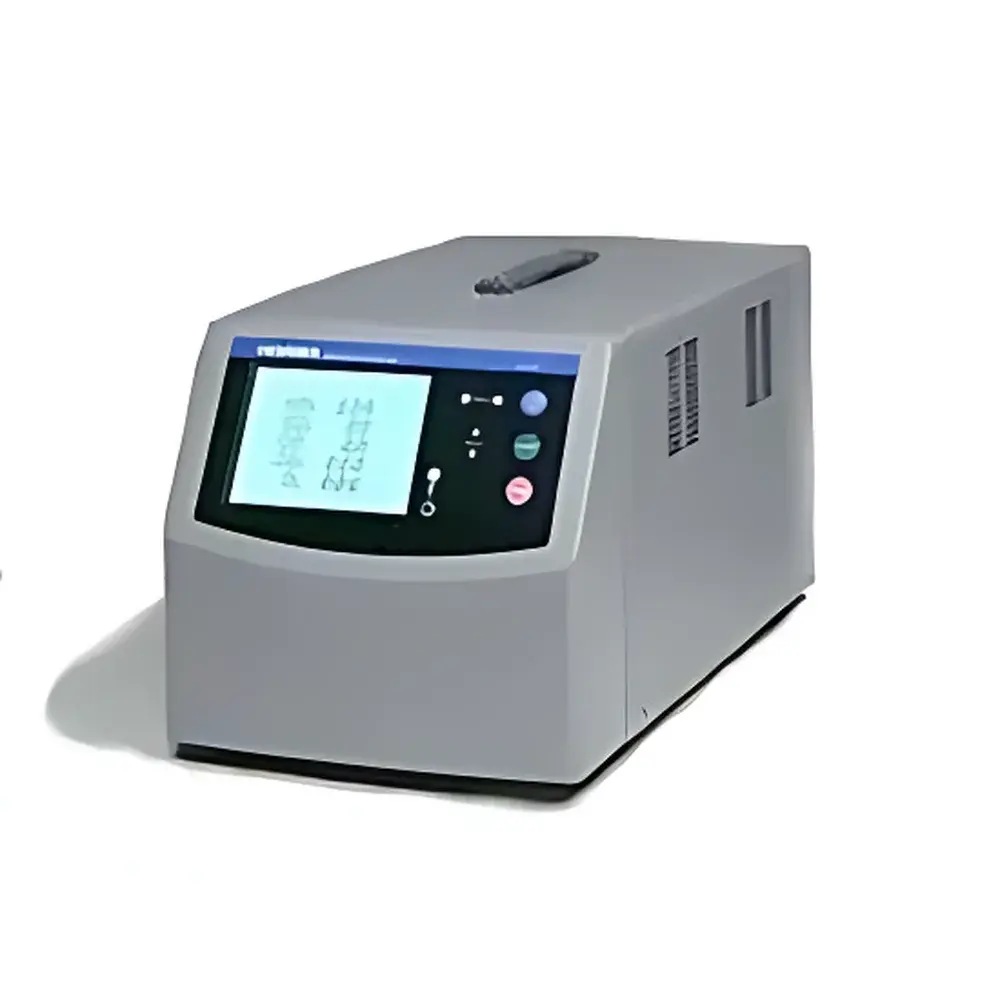
HORIBA PG-250 Portable Multi-Gas Emission Analyzer
| Brand | HORIBA |
|---|---|
| Origin | Japan |
| Model | PG-250 |
| Detection Principles | Chemiluminescence (NOₓ), NDIR (SO₂, CO, CO₂), Zirconia or Galvanic Cell (O₂) |
| Gas Channels | NOₓ, SO₂, CO, CO₂, O₂ (simultaneous 5-gas analysis) |
| Measurement Ranges | NOₓ (0–5000 ppm, 7 ranges), SO₂ (0–1000 ppm, 3 ranges), CO (0–5 vol%, 8 ranges), CO₂ (0–20 vol%, 3 ranges), O₂ (0–25 vol%, 3 ranges) |
| Portability | Integrated handle, stackable design, built-in sampling system (filter, demister, pump, thermoelectric cooler, NO-to-NO₂ converter) |
| Compliance | Designed for ASTM D6522, ISO 9096, EN 14792, EPA Method 7E/6C/10, and applicable GLP/GMP field-use requirements |
Overview
The HORIBA PG-250 Portable Multi-Gas Emission Analyzer is an engineered solution for in-situ, real-time quantification of combustion exhaust gases across industrial, regulatory, and research applications. Utilizing a hybrid detection architecture—chemiluminescence for nitrogen oxides (NOₓ), non-dispersive infrared (NDIR) spectroscopy for sulfur dioxide (SO₂), carbon monoxide (CO), and carbon dioxide (CO₂), and either zirconia-based electrochemical sensing or galvanic cell technology for oxygen (O₂)—the PG-250 delivers laboratory-grade accuracy in a field-deployable format. Its compact footprint (W × D × H: 370 × 420 × 220 mm), integrated carrying handle, and modular stackable chassis enable rapid deployment without fixed installation infrastructure. The analyzer meets the physical and operational demands of stack testing, boiler efficiency audits, waste incineration monitoring, catalyst development, and energy conservation studies—where spatial constraints, ambient temperature variability, and sample gas conditioning present persistent challenges.
Key Features
- Simultaneous five-component analysis: NOₓ, SO₂, CO, CO₂, and O₂—eliminating the need for multiple single-gas instruments or sequential measurement protocols.
- Dual-range NOₓ detection with 7 selectable full-scale spans (0–25 to 0–5000 ppm), supporting both low-emission compliance verification and high-concentration industrial process control.
- NDIR optical cells optimized for cross-interference minimization; each gas channel features dedicated wavelength filtering, temperature-stabilized detectors, and automatic zero/span compensation routines.
- Integrated sampling subsystem: particulate filter (1 µm absolute), condensate demister, diaphragm vacuum pump (≥2 L/min at −25 kPa), Peltier-cooled condenser (dew point ≤5 °C), and catalytic NO-to-NO₂ converter—all housed within the main unit.
- High-contrast 7-inch TFT-LCD display with intuitive icon-driven interface; supports multilingual menus (English, Japanese, Chinese, Korean) and real-time trend graphs for all channels.
- Flexible output architecture: analog outputs (4–20 mA, 0–10 V), RS-232/RS-485 serial communication, Ethernet (TCP/IP), and optional USB data logging—compatible with SCADA, DCS, and third-party environmental data management platforms.
Sample Compatibility & Compliance
The PG-250 is validated for use with hot, humid, and particulate-laden flue gases up to 200 °C (with optional heated probe extension). When paired with HORIBA’s optional front-end conditioning unit (e.g., PG-FU series), it accommodates extended unattended operation under ISO 9096 Class II sampling conditions—including acid gas corrosion resistance, continuous particulate removal, and dew point stabilization below −10 °C. Regulatory alignment includes ASTM D6522 (NOₓ by CLD), EPA Methods 7E (NOₓ), 6C (SO₂), and 10 (CO), EN 14792 (portable CEMS performance criteria), and ISO 12039 (CO/CO₂ by NDIR). All firmware and calibration logs support audit-ready timestamping and user-access-level authentication per FDA 21 CFR Part 11 guidelines for field-based GLP-compliant data acquisition.
Software & Data Management
HORIBA’s proprietary PG-Link software provides configuration, remote diagnostics, and post-processing capabilities via Windows-based desktop application or browser-based interface (HTML5). Raw sensor outputs are stored with metadata (date/time, GPS coordinates if equipped, operator ID, calibration history) in encrypted .CSV or .XML formats. Built-in data validation flags detect signal saturation, detector drift, flow loss, or cooling failure—triggering automated alerts and conditional data rejection per ISO/IEC 17025 traceability requirements. Audit trails record every parameter change, calibration event, and user login, ensuring full data integrity for regulatory submissions or internal QA/QC review.
Applications
- Combustion efficiency optimization in boilers, furnaces, and gas turbines—via real-time O₂/CO ratio analysis and excess air calculation.
- Regulatory emissions compliance testing for municipal solid waste incinerators, cement kilns, and cogeneration plants under EU IED, US Clean Air Act, or China GB 13271 standards.
- Catalyst evaluation in R&D laboratories—monitoring NOₓ reduction kinetics, SO₂ poisoning thresholds, and CO oxidation profiles under dynamic thermal cycling.
- Energy audit support—quantifying CO₂ emission factors, fuel-specific combustion stoichiometry, and carbon intensity metrics for ISO 50001-aligned energy management systems.
- Educational field training—enabling hands-on instruction in flue gas chemistry, emission control technologies, and portable instrumentation metrology.
FAQ
What sample gas temperature range is supported without external conditioning?
The PG-250 accepts sample gas up to 200 °C when used with its standard heated sampling line option; ambient operating temperature range is −5 to +45 °C.
Is the instrument certified for use in hazardous areas?
The base PG-250 is rated for general-purpose environments (IP22); ATEX/IECEx-certified variants (PG-250-EX) are available upon request for Zone 2/22 classified locations.
How often does the system require calibration verification?
Per ISO 9096, daily zero/span checks are recommended for regulatory reporting; full multi-point calibration is advised every 30 days or after maintenance events.
Can the PG-250 be operated autonomously for unattended monitoring?
Yes—when connected to an external power supply and configured with optional data logger and cellular telemetry module, it supports 72-hour continuous operation with alarm-triggered SMS/email notifications.
Does the analyzer support traceable calibration gas certification?
All factory calibrations are performed using NIST-traceable certified reference materials (CRM) from accredited providers; certificates include uncertainty budgets per ISO/IEC 17025 Annex A.3.







