
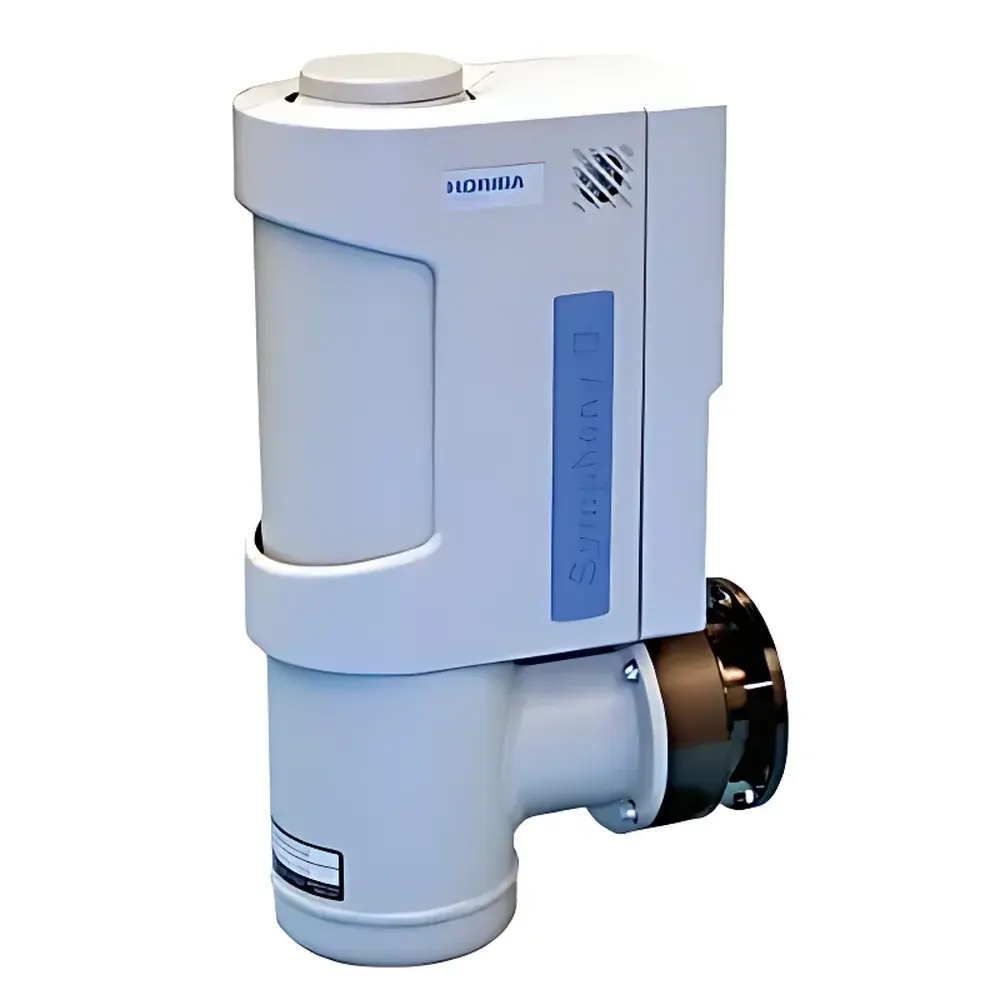
HORIBA Symphony CCD Detector
| Brand | HORIBA |
|---|---|
| Origin | USA |
| Manufacturer Type | Manufacturer |
| Origin Category | Imported |
| Model | Symphony CCD |
| Price | Upon Request |
Overview
The HORIBA Symphony CCD Detector is a high-performance, research-grade array detector engineered for precision optical spectroscopy applications. Based on charge-coupled device (CCD) imaging technology, it operates on the principle of photon-to-electron conversion within a silicon-based photosensitive array, followed by low-noise analog-to-digital readout. Designed and manufactured by HORIBA Scientific (formerly Jobin Yvon), a global leader in analytical and optical instrumentation, the Symphony series delivers exceptional quantum efficiency (QE), deep depletion capability, and thermoelectric or liquid nitrogen cooling—enabling ultra-low dark current and high dynamic range across UV-VIS-NIR spectral regions (typically 180–1100 nm). Its architecture supports both single-shot and time-resolved spectral acquisition, making it suitable for steady-state fluorescence, Raman, LIBS, plasma emission, and absorption spectroscopy in academic, industrial, and government laboratories.
Key Features
- Multiple scientific-grade CCD sensor options—including front-illuminated (FI) and back-illuminated (BI) architectures—with wavelength-specific enhancements (UV, VIS, deep-depletion)
- Liquid nitrogen cooling (down to –196 °C) for sub-electron read noise and dark current suppression below 0.001 e⁻/pixel/sec
- High quantum efficiency: up to >95% peak QE in back-illuminated configurations
- Flexible readout speeds: 20 kHz to 1 MHz via 16-bit ADC with onboard firmware-upgradable digitization
- Onboard memory buffer (up to 128 MB) for burst-mode acquisition without host PC dependency
- Software-selectable gain and offset for optimal signal-to-noise ratio across intensity regimes
- Gigabit Ethernet interface ensuring lossless, deterministic data transfer with CRC-32 error checking
- Hardware trigger support (TTL/CMOS) for synchronization with lasers, choppers, or pulsed sources
- Native compatibility with HORIBA’s iHR, TriVista, and LabRAM spectrometer platforms, as well as third-party Czerny–Turner and echelle systems
Sample Compatibility & Compliance
The Symphony CCD Detector is optimized for use with free-space and fiber-coupled optical spectrometers operating in standard laboratory environments (20–25 °C ambient, <60% RH non-condensing). It interfaces seamlessly with vacuum- and purged-spectrometer enclosures for UV applications below 200 nm. All detectors comply with CE marking requirements and meet IEC 61000-6-3 (EMC emission) and IEC 61000-6-2 (immunity) standards. Firmware and control software support audit trails, user access levels, and electronic signatures per FDA 21 CFR Part 11 when deployed in regulated GxP environments. Sensor packaging adheres to MIL-STD-883 mechanical shock and vibration specifications for long-term operational reliability.
Software & Data Management
Control and acquisition are managed through HORIBA’s SynerJY software suite—a Windows-based application supporting full automation of exposure time, binning, region-of-interest (ROI) selection, dark subtraction, flat-field correction, and spectral calibration. SynerJY provides real-time preview, multi-curve overlay, and export to ASCII, HDF5, and vendor-neutral JCAMP-DX formats. LabVIEW-compatible VIs (version 2015 and later) are provided for integration into custom test benches and automated QA/QC workflows. Raw frame metadata—including timestamp, temperature, gain setting, and ADC configuration—is embedded in every saved spectrum file. Data integrity is enforced via checksum validation at acquisition, storage, and export stages.
Applications
- High-resolution Raman spectroscopy requiring long integration times and low-frequency noise rejection
- Time-gated fluorescence lifetime measurements using pulsed excitation sources
- Plasma diagnostics and atomic emission spectroscopy in fusion and semiconductor process monitoring
- UV-Vis absorption kinetics for photochemical reaction monitoring
- Near-infrared reflectance analysis of biological tissues and agricultural samples
- LIBS (Laser-Induced Breakdown Spectroscopy) for elemental mapping and trace metal detection
- Calibration-grade reference measurements compliant with ISO/IEC 17025-accredited laboratories
FAQ
What cooling methods are supported?
Liquid nitrogen cooling is standard for all Symphony CCD variants; optional thermoelectric (TE) coolers are available for models rated for –80 °C operation.
Can the Symphony CCD be used with non-HORIBA spectrometers?
Yes—it features universal C-mount and F-mount mechanical interfaces, along with programmable trigger logic and SDK documentation for third-party integration.
Is dark current compensation automated?
Yes; SynerJY performs real-time dark frame acquisition and subtraction, with configurable dark library management and temperature-matched referencing.
What is the maximum usable full-well capacity?
Depends on sensor type and binning mode; typical values range from 100,000 to 600,000 electrons per pixel for BI-DD and FI-VIS variants.
Does the system support kinetic mode acquisition?
Yes—up to 1000 frames per second is achievable in sub-array readout modes, with hardware-timed inter-frame delays down to 1 µs.





