
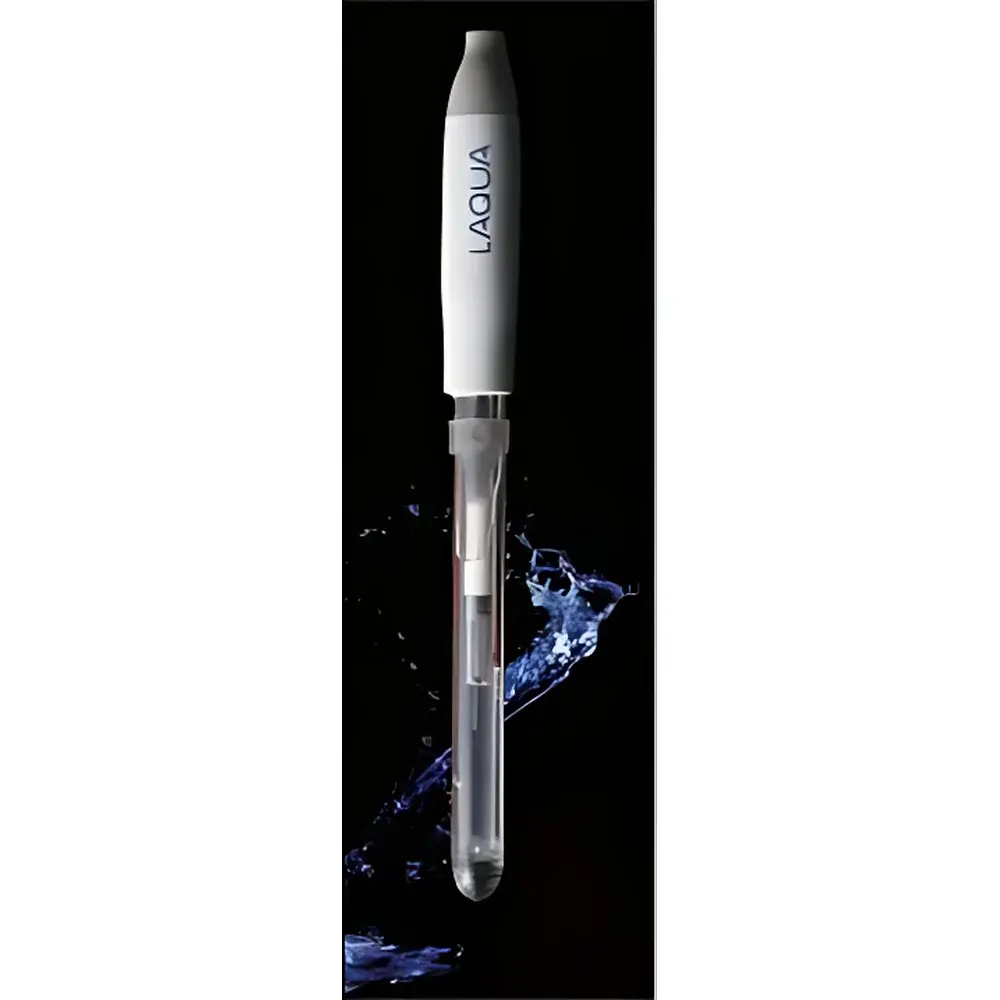
HORIBA ToupH™ 3-in-1 Integrated pH Electrode (Glass/Reference/Temp)
| Brand | HORIBA |
|---|---|
| Origin | Japan |
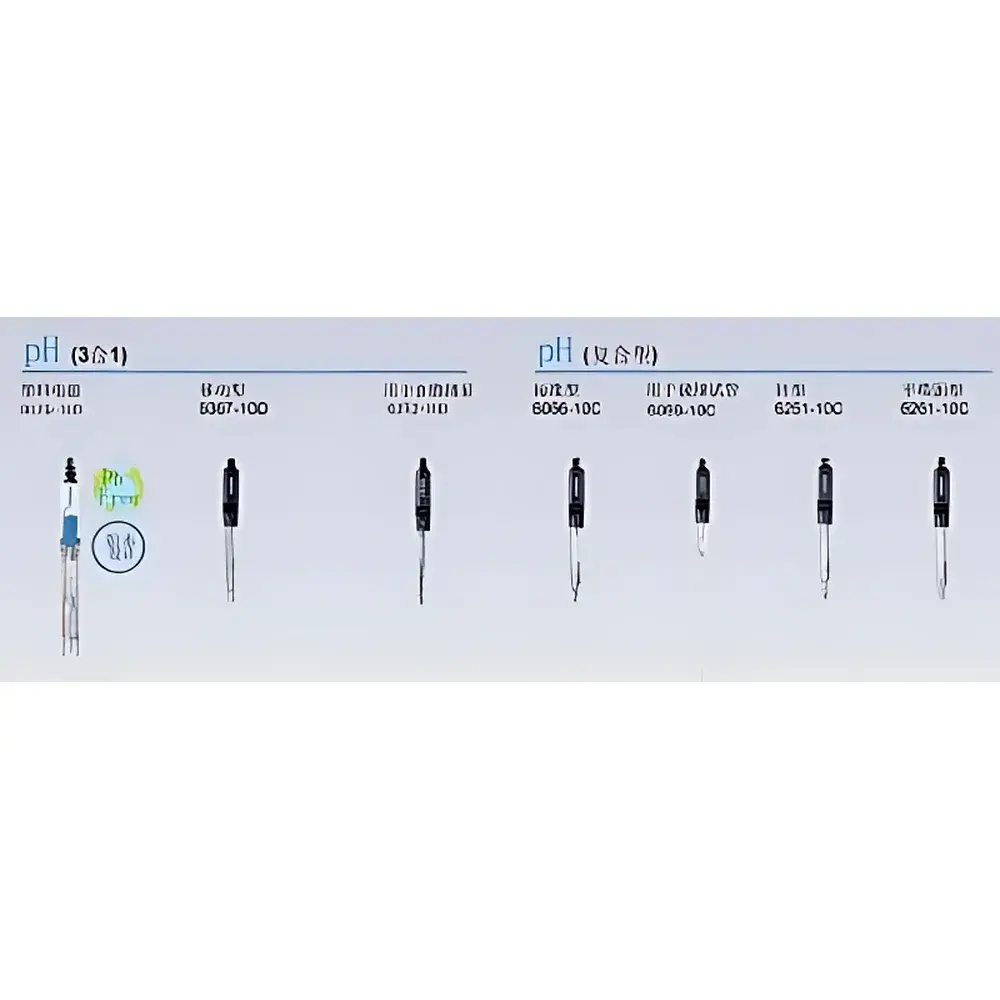
| Model | ToupH™ Series (e.g., 9615-10D, 9625-10D, 0040-10D) |
| Temperature Range | 0–100 °C (glass) |
| pH Range | 0–14 (standard) |
| Construction | Composite glass or ISFET sensing element with integrated temperature sensor and double-junction reference system |
| Compliance | Designed for ASTM D1293, ISO 10523, USP <791>, and GLP/GMP environments requiring traceable calibration and stable long-term drift performance |
Overview
The HORIBA ToupH™ 3-in-1 Integrated pH Electrode is an engineered electrochemical transducer combining pH-sensing glass (or ISFET), a high-stability reference system, and a precision Pt1000 temperature sensor within a single, compact probe body. It operates on the fundamental Nernst principle—measuring the potential difference between a hydrogen-ion-selective glass membrane and a stable internal reference electrode—while incorporating proprietary materials science and microstructural design to address three persistent limitations in routine pH metrology: response time, long-term drift, and mechanical robustness. Unlike conventional two- or three-electrode setups requiring separate temperature compensation, the ToupH™ eliminates inter-probe variability and thermal lag through on-sensor thermistor integration, enabling real-time, auto-compensated pH measurement per IUPAC-recommended protocols. Its architecture supports both aqueous and low-conductivity media (e.g., ultrapure water, ethanol/water mixtures), meeting critical requirements for pharmaceutical QC, semiconductor process monitoring, and academic electrochemistry labs.
Key Features
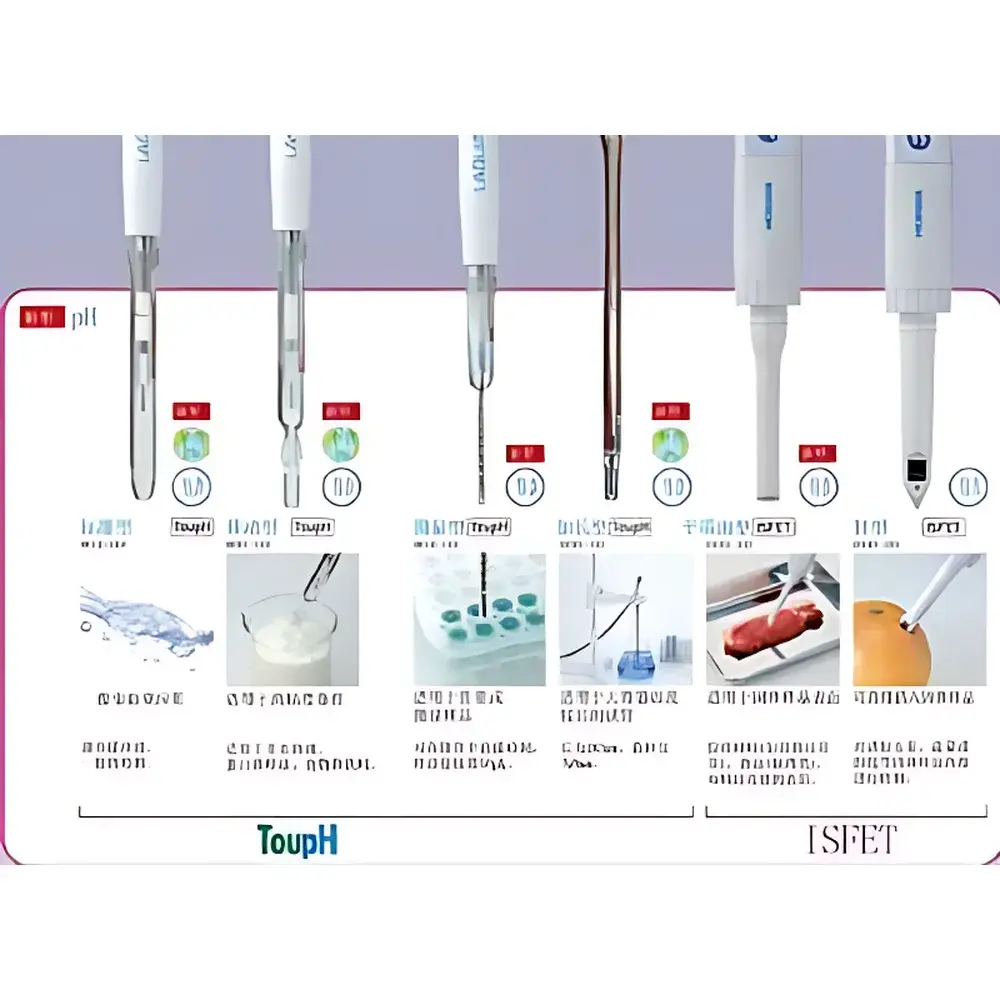
- Patented Rare-Earth-Doped Glass Membrane: Incorporates HORIBA-developed lanthanide-based additives to reduce hydration layer thickness and accelerate H⁺ ion exchange kinetics—cutting typical response time (t95%) by up to 50% versus standard pH glasses while increasing fracture resistance beyond JIS R 3502 strength specifications by >10×.
- Double-Junction Reference System with Hollow-Fiber Cationic Membrane: Minimizes Ag⁺ leaching and silver complex precipitation at the liquid junction by >99.9%, maintaining constant KCl concentration in the inner reference chamber and stabilizing E°ref over extended operation (>6 months under continuous use).
- Flat-End Sensing Geometry (≤100 µm gap between tip and protective sleeve): Enables surface pH mapping of solids (e.g., hydrogels, tablet coatings, biofilms), micro-volume measurements (<10 µL), and bubble-free contact in viscous or foaming samples—critical for formulation development and quality control in biologics manufacturing.
- ISFET Variant Options (0030-10D / 0040-10D): Solid-state silicon-based sensing eliminates glass fragility; features dry-storage capability (no KCl soaking required), toothbrush-cleanable surface, and intrinsic immunity to alkaline error above pH 12—ideal for field deployment and high-throughput screening.
- ESD-Resistant Semiconductor Architecture: Integrates HORIBA’s custom gate-oxide passivation and shielded signal conditioning circuitry to suppress electrostatic discharge events (per IEC 61340-5-1), preventing irreversible threshold voltage shift in ISFET elements during handling or glove-box transfer.
Sample Compatibility & Compliance
The ToupH™ series demonstrates validated performance across diverse matrices: aqueous buffers (pH 4–10), low-conductivity water (≥0.1 µS/cm), non-aqueous solvents (methanol, IPA, acetone), semi-solid gels, and biological surfaces (skin, mucosal tissue). Each model is CE-marked and compliant with ISO/IEC 17025 calibration traceability requirements when used with HORIBA’s certified buffer kits (NIST-traceable). For regulated environments, the electrode supports 21 CFR Part 11-compliant data integrity workflows when paired with HORIBA LAQUA Smart software—enabling electronic signatures, audit trails, and secure user access controls aligned with FDA GMP Annex 11 expectations.
Software & Data Management
When connected to HORIBA LAQUA Smart or LAQUA Twin software (Windows/macOS), the ToupH™ delivers full digital metadata logging—including timestamped calibration history (up to 5-point), slope/offset diagnostics, temperature-compensated mV readings, and drift rate trending (µV/h). Raw sensor outputs are stored in .csv and .xlsx formats with embedded instrument ID, operator credentials, and environmental context (ambient T/RH). Firmware updates preserve calibration coefficients across reboots, and encrypted firmware signing ensures chain-of-custody integrity for GLP audits.
Applications
- Pharmaceutical: Dissolution testing of coated tablets (surface pH mapping), lyophilized product residual moisture analysis, and cleaning validation swab eluate testing.
- Food & Beverage: Real-time pH profiling during fermentation (yogurt, kombucha), cheese curd acidification, and shelf-life stability studies under refrigerated conditions.
- Academic Research: In situ pH monitoring in microfluidic organ-on-chip devices, corrosion studies of metallic implants, and enzyme kinetics in immobilized systems.
- Environmental: Field-deployable monitoring of acid mine drainage (AMD) and wetland sediment porewater—leveraging ISFET variants’ tolerance to particulate fouling and desiccation.
FAQ
Can the ToupH™ electrode be used in non-aqueous solvents such as acetonitrile or DMF?
Yes—models equipped with sleeve junctions (e.g., 6367-10D, 6377-10D) are specifically designed for low-conductivity and organic media; however, calibration must be performed in matching solvent-basis buffers per ISO 10523 Annex B guidelines.
What is the recommended recalibration frequency for GMP-compliant operations?
Per USP and EU GMP Annex 8, recalibration is required before each analytical batch, after every 24 h of continuous use, and following any physical shock or temperature excursion beyond rated limits.
Is the ISFET version suitable for steam sterilization (autoclaving)?
No—the ISFET sensors (0030-/0040-10D) are not autoclavable; only selected glass-body models (e.g., 9681-10D with stainless-steel shaft) support SIP (steam-in-place) at 121 °C for 30 min—verify compatibility with HORIBA’s Process Interface Guide prior to installation.
How does the hollow-fiber reference junction prevent clogging in protein-rich samples?
The cation-selective polymeric membrane excludes anionic macromolecules (e.g., albumin, casein) while permitting K⁺ diffusion, reducing junction fouling incidence by >95% compared to ceramic or woodchip junctions in cell culture harvest streams.
Does the flat-end design affect measurement accuracy in stirred solutions?
No—hydrodynamic modeling confirms laminar flow adherence at tip geometry ensures <±0.02 pH deviation vs. spherical-tip electrodes under ISO 8655-defined stirring conditions (500 rpm, 2 cm depth).



