
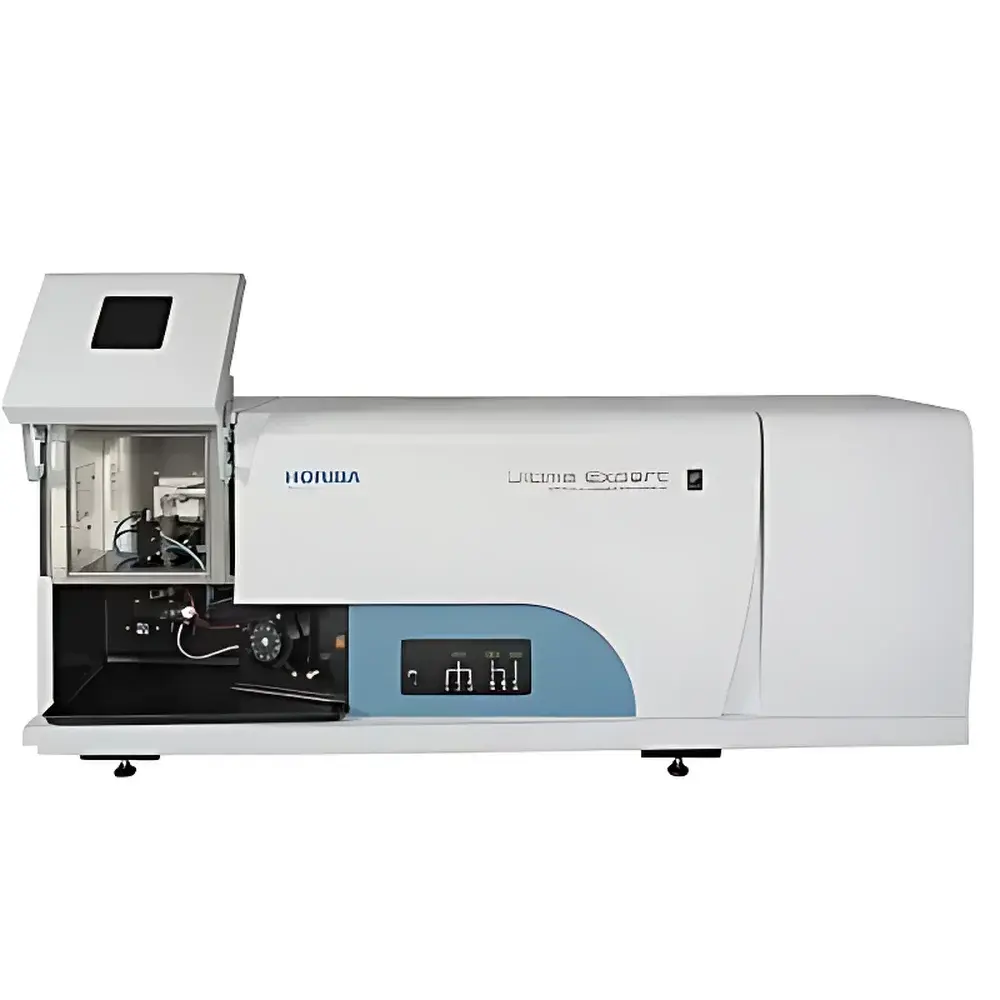
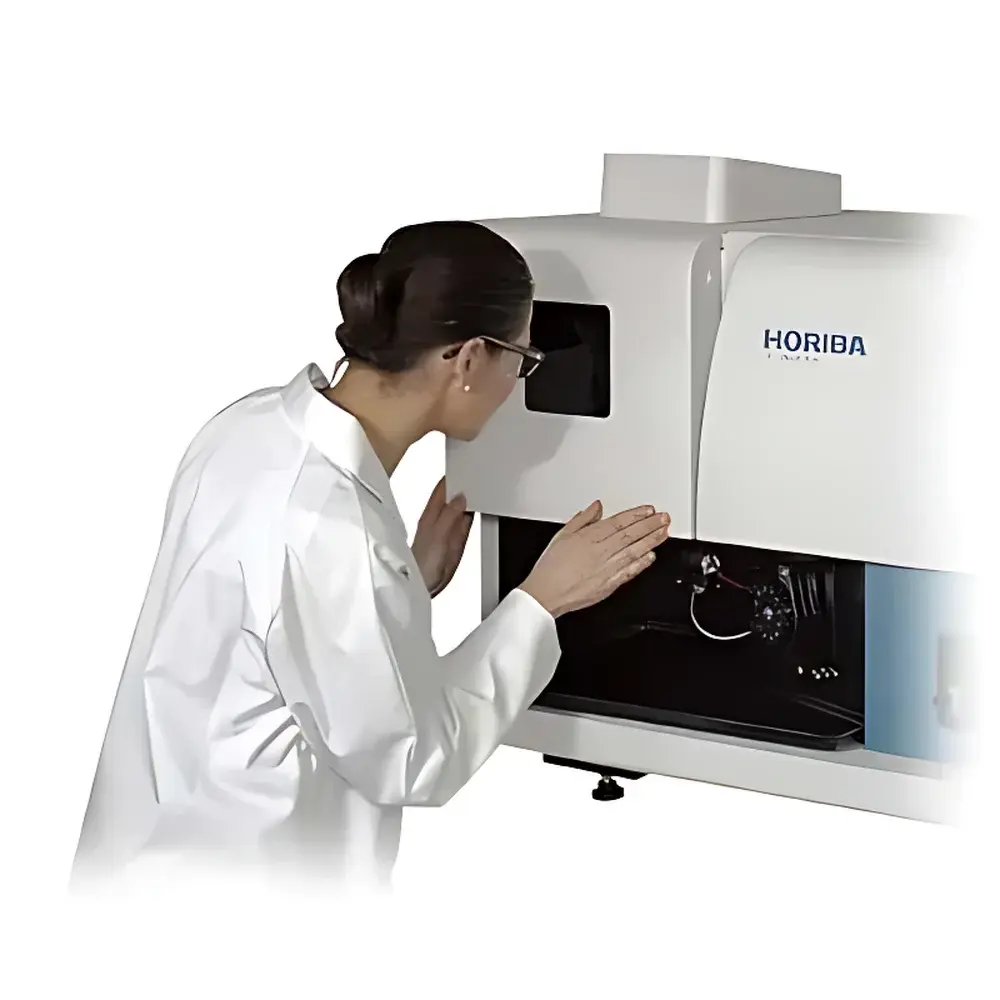
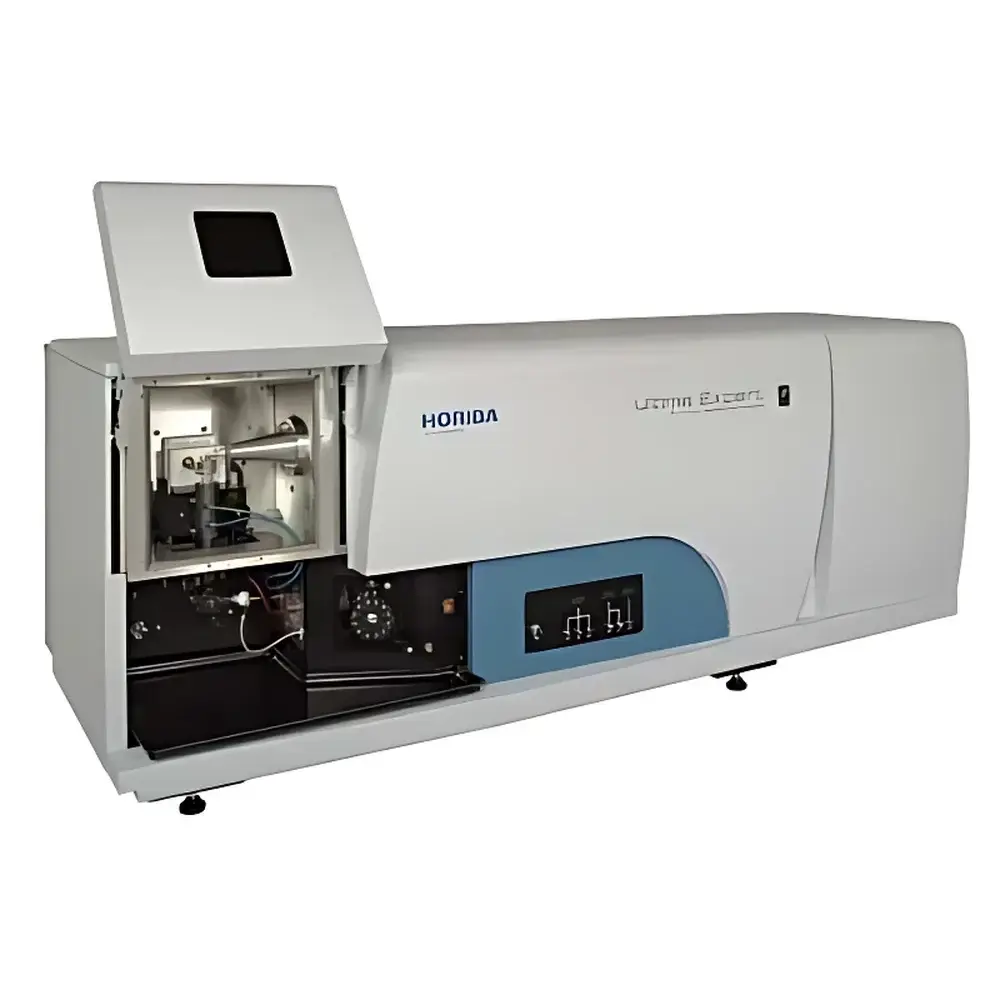
HORIBA Ultima Expert High-Performance Inductively Coupled Plasma Optical Emission Spectrometer
| Brand | HORIBA |
|---|---|
| Origin | France |
| Manufacturer Type | Original Equipment Manufacturer (OEM) |
| Import Status | Imported |
| Model | Ultima Expert |
| Instrument Type | Sequential Scanning ICP-OES |
| Detection Limit | Not Specified |
| Precision (RSD) | ≤1% |
| Long-Term Stability (RSD) | ≤2% |
| Wavelength Range | 160–800 nm |
| Optical Resolution | ≤0.005 nm at 200 nm (Constant Resolution Across Full Range) |
Overview
The HORIBA Ultima Expert is a high-performance, sequential-scanning inductively coupled plasma optical emission spectrometer (ICP-OES) engineered for precision elemental analysis in complex matrices. It operates on the fundamental principle of atomic emission spectroscopy: liquid samples are nebulized into an argon plasma operating at ~6,000–10,000 K, where atoms and ions are thermally excited and emit characteristic photons upon relaxation. These emissions are dispersed via a high-fidelity Czerny–Turner optical system derived from Jobin Yvon heritage optics and detected with a high-sensitivity CCD or CID detector. The instrument’s constant-resolution monochromator ensures spectral fidelity across its full 160–800 nm range—critical for resolving overlapping lines in multi-element analysis of metallurgical slags, high-salinity brines, or rare-earth concentrates. Designed for laboratory environments requiring regulatory compliance and method robustness, the Ultima Expert supports routine operation under ISO/IEC 17025, ASTM D1976, EPA Method 200.7, and USP guidelines.
Key Features
- Constant optical resolution of ≤0.005 nm at 200 nm—maintained uniformly across the entire spectral range—enabling reliable separation of adjacent emission lines (e.g., Fe II 238.204 nm / Cr II 238.207 nm) without mechanical recalibration.
- Optimized plasma torch geometry and RF generator stability ensure consistent excitation conditions, contributing to ≤1% RSD for replicate analyses and ≤2% RSD over 4-hour drift tests—validated per ISO 11885 Annex B protocols.
- Modular configuration options include axial-viewing, radial-viewing, or dual-view plasma interfaces; variable nebulizer types (concentric, cross-flow, micro-concentric); and optional autosamplers compatible with 48- or 144-position racks.
- Integrated plasma monitoring system continuously tracks reflected power, coolant flow, and argon pressure—triggering automated shutdown if parameters deviate beyond predefined safety thresholds per IEC 61000-6-2 EMC requirements.
- Sealed, purged optical bench minimizes ozone generation and moisture-induced spectral noise below 190 nm—essential for accurate determination of P, S, As, and Se in environmental digests and petrochemical samples.
Sample Compatibility & Compliance
The Ultima Expert accommodates aqueous solutions (0.1–20% v/v HNO₃/HCl), organic solvents (up to 30% MIBK or xylene with oxygen ashing), and dissolved solids up to 0.5% w/v—making it suitable for direct analysis of acid-digested geological samples, metallurgical fluxes, pharmaceutical excipients, and wastewater extracts. Its hardware and software architecture comply with GLP/GMP data integrity principles: audit trails record all method modifications, calibration events, and user logins; electronic signatures adhere to FDA 21 CFR Part 11 requirements when paired with validated LIMS integration. Instrument qualification documentation supports IQ/OQ/PQ execution per ASTM E2500 and EU Annex 11.
Software & Data Management
Ultima Expert is controlled by the dedicated Ultima Suite software—a Windows-based platform supporting method development, sequence programming, real-time spectral visualization, and automated QC checks. Key modules include:
- Image Acquisition Mode: Captures full-spectrum snapshots (160–800 nm) for rapid qualitative screening and semi-quantitative profiling of unknowns—particularly valuable during method scouting or contamination investigations.
- Multi-Task Sequencing: Enables concurrent execution of calibration, sample analysis, and QC verification within a single run—reducing turnaround time without compromising traceability.
- Smart Background Correction: Applies polynomial or multi-point background modeling at each wavelength, mitigating matrix-induced continuum interference in high-TDS samples such as seawater or fertilizer extracts.
- Data export conforms to ASTM E1382-compliant CSV and XML formats; raw spectra are stored in vendor-neutral .spc format for third-party spectral library matching or chemometric preprocessing.
Applications
The Ultima Expert delivers validated performance across regulated and research-driven workflows:
- Metallurgy & Mining: Quantification of major (Fe, Al, Si), minor (Nb, Ta), and trace (U, Th, REEs) elements in ores, slags, and alloys—even in high-iron matrices where spectral interferences challenge conventional ICP-OES systems.
- Environmental Monitoring: Simultaneous determination of regulated metals (Pb, Cd, Cr, Ni, As) in drinking water (EPA 200.7), soils (EPA 6010D), and airborne particulates (NIOSH 7300).
- Pharmaceutical & Biotech: Elemental impurity testing per ICH Q3D guidelines—including catalyst residues (Pd, Pt, Rh) in API intermediates and leachables (Al, Cr, Ni) from stainless-steel bioreactors.
- Geochemistry & Petrochemistry: Multi-acid digestion analysis of silicate rocks, crude oil fractions, and lubricant additives—with detection capability extended to refractory elements (Zr, Hf, W) via optimized plasma viewing and background subtraction.
FAQ
Is the Ultima Expert capable of analyzing solid samples directly?
No—samples must be introduced as homogeneous liquid solutions. Solids require certified digestion protocols (e.g., microwave-assisted HNO₃/HF/H₂O₂) prior to analysis.
Does the system support hyphenated techniques such as HPLC-ICP-OES?
Yes—the instrument features TTL-compatible analog/digital I/O ports and software triggers for synchronized coupling with chromatographic systems for speciation analysis.
Can the optical resolution be adjusted during acquisition?
No—the ≤0.005 nm resolution is fixed by the monochromator’s grating and slit design, ensuring reproducible line profiles across all measurements.
What regulatory standards does the software meet for data integrity?
Ultima Suite supports ALCOA+ principles: Attributable, Legible, Contemporaneous, Original, Accurate, Complete, Consistent, Enduring, and Available—fully aligned with FDA 21 CFR Part 11 and EU Annex 11 when deployed in validated configurations.
Is remote diagnostics available?
Yes—HORIBA’s SecureConnect service enables encrypted remote access for firmware updates, spectral alignment verification, and predictive maintenance alerts—subject to customer IT policy approval.



