
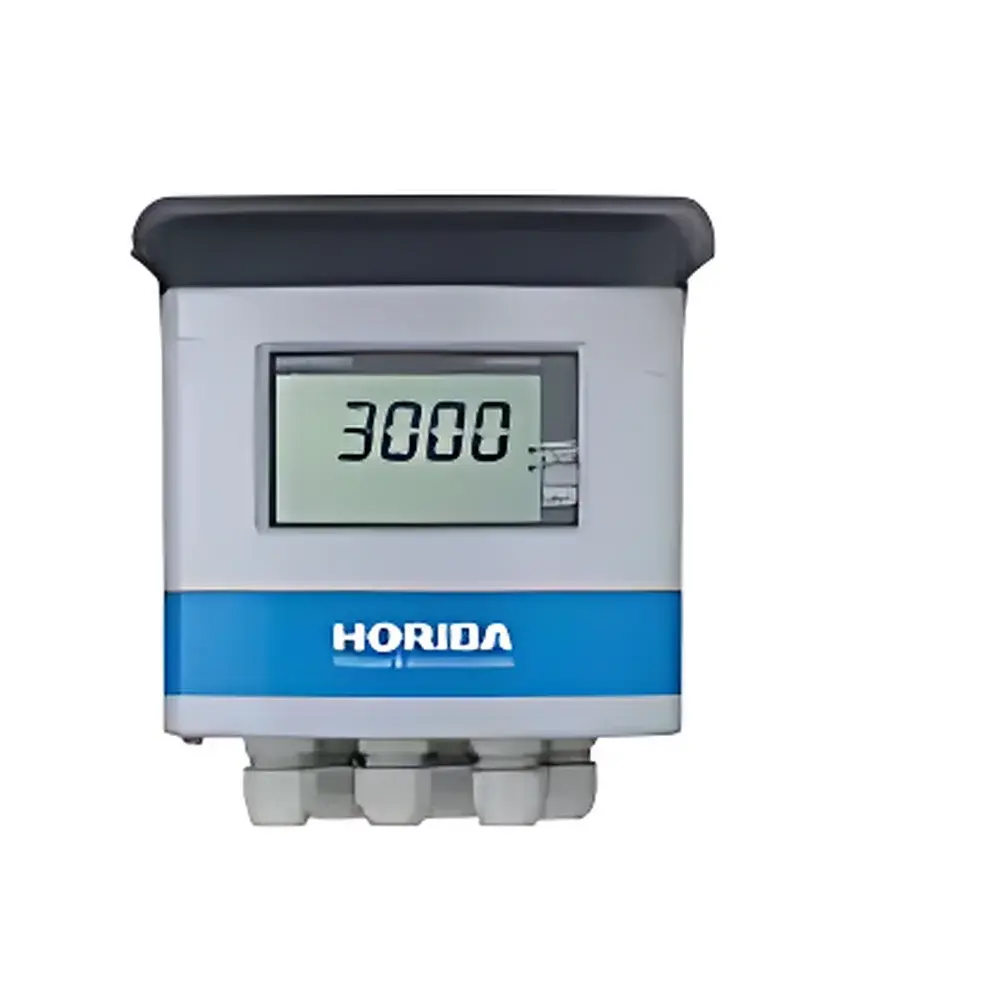
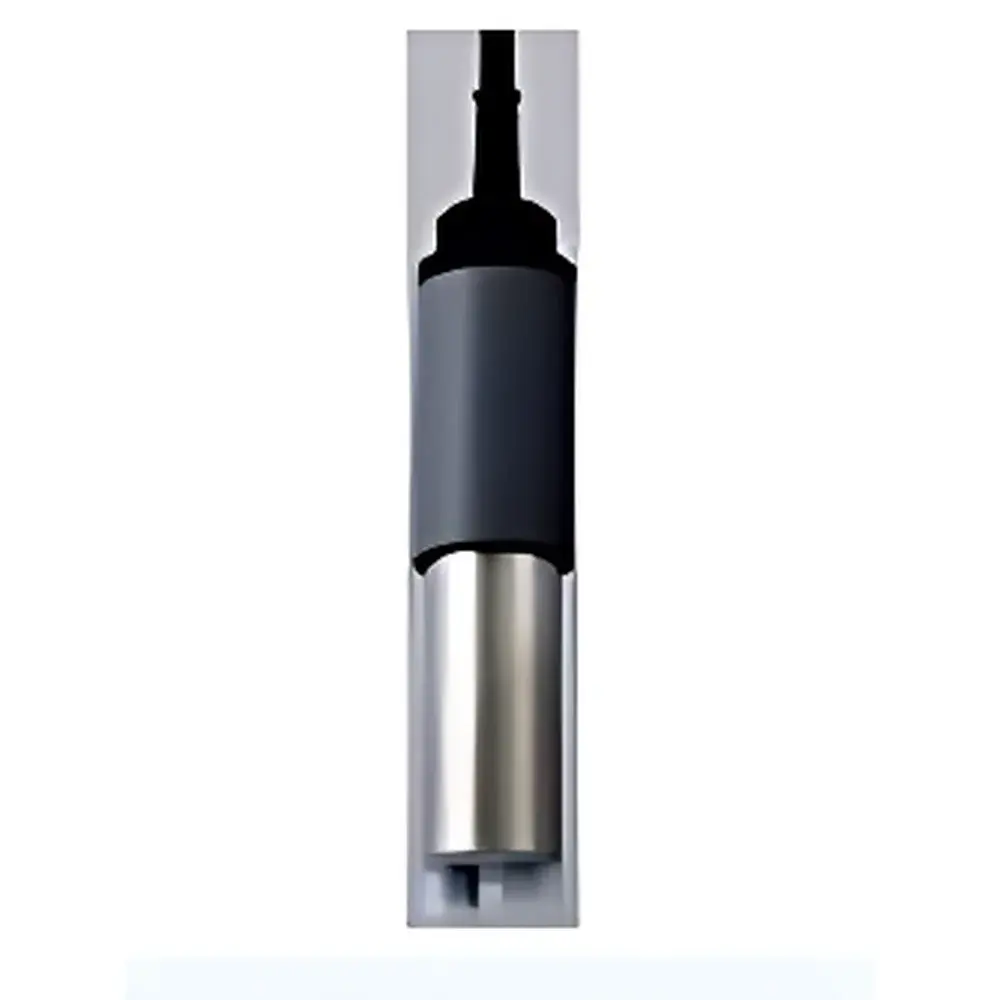
HU-200SS Sludge Concentration Online Analyzer by HORIBA
| Brand | HORIBA |
|---|---|
| Origin | Japan |
| Model | HU-200SS |
| Measurement Range | 100–20,000 ppm (as suspended solids) |
| Sensor Type | Submersible optical backscatter (nephelometric) |
| Output Signal | 4–20 mA / RS-485 (Modbus RTU) |
| IP Rating | IP68 |
| Operating Temperature | 0–40 °C |
| Power Supply | 24 VDC |
Overview
The HORIBA HU-200SS Sludge Concentration Online Analyzer is an industrial-grade, submersible optical sensor engineered for continuous, real-time monitoring of suspended solids concentration in wastewater, activated sludge basins, and secondary clarifiers. It operates on the principle of near-infrared (NIR) backscatter photometry—emitting a calibrated light beam into the medium and detecting the intensity of scattered light proportional to particle density. Unlike turbidity meters optimized for low-concentration potable water, the HU-200SS is specifically designed for high-solids environments (100–20,000 ppm), where conventional sensors suffer from signal saturation, fouling, or poor dynamic response. Its optical path is optimized to minimize interference from air bubbles, coloration, and organic film buildup—critical for stable operation in biologically active treatment zones. The analyzer integrates seamlessly into plant-wide SCADA and DCS architectures via standard 4–20 mA analog output or Modbus RTU over RS-485, supporting both standalone deployment and centralized process control.
Key Features
- Enhanced self-cleaning optical window: Patented hydrophilic coating and optimized flow dynamics reduce biofilm adhesion and particulate accumulation—extending maintenance intervals by up to 3× compared to legacy models.
- High dynamic range measurement: Linear response across 100–20,000 ppm SS (suspended solids), validated per ISO 7027 for backscatter-based concentration estimation in non-homogeneous sludge streams.
- Real-time drift compensation: Built-in temperature and zero-point reference algorithms correct for thermal lensing effects and baseline drift without manual recalibration.
- Rugged submersible housing: Stainless steel (SUS316L) body with IP68 ingress protection; rated for continuous immersion at depths up to 10 m in aggressive wastewater matrices.
- Low-power operation: 24 VDC supply with <1.5 W consumption—compatible with solar-powered remote monitoring stations and explosion-proof enclosures (optional ATEX/IECEx certification kits available).
Sample Compatibility & Compliance
The HU-200SS is validated for use in municipal and industrial wastewater streams containing mixed liquor suspended solids (MLSS), return activated sludge (RAS), waste activated sludge (WAS), and thickened sludge. It exhibits minimal sensitivity to particle size distribution shifts within the 1–500 µm range—making it suitable for both aerobic and anaerobic digestion influents. The sensor conforms to IEC 61000-6-2 (EMC immunity) and IEC 61000-6-4 (EMC emissions), and its analog output meets NAMUR NE43 standards for fault signaling. While not certified for direct FDA-regulated pharmaceutical effluent compliance, its data integrity architecture—including timestamped raw scatter values, diagnostic logs, and configurable alarm thresholds—supports GLP/GMP-aligned validation protocols when deployed with HORIBA’s optional audit-trail-enabled data logger.
Software & Data Management
The HU-200SS communicates natively with HORIBA’s LAQUA Connect software suite (v3.2+), enabling configuration, real-time waveform visualization, historical trend analysis, and automated calibration logging. All measurement data—including raw scatter intensity, temperature-compensated SS value, sensor health status (e.g., window contamination index), and communication error counters—are timestamped with millisecond precision and exportable in CSV or OPC UA format. When integrated with enterprise-level LIMS or MES platforms, the device supports FDA 21 CFR Part 11-compliant electronic signatures and audit trails via optional secure authentication modules. Firmware updates are delivered over-the-air (OTA) via encrypted HTTPS, ensuring long-term cybersecurity alignment with IEC 62443-3-3 requirements.
Applications
- Optimizing aeration basin dissolved oxygen (DO) setpoints based on real-time MLSS load—reducing energy consumption by up to 18% in pilot-scale studies.
- Monitoring RAS concentration to prevent under- or over-return scenarios that destabilize clarifier hydraulics.
- Tracking WAS draw-off consistency during sludge wasting cycles to maintain target sludge age (SRT).
- Providing feed-forward signals to polymer dosing systems in dewatering centrifuges, improving cake dryness and reducing polymer consumption.
- Supporting digital twin modeling of secondary sedimentation tanks through high-frequency SS profile acquisition at multiple depth layers (multi-sensor array configuration).
FAQ
What is the recommended calibration frequency for the HU-200SS in continuous wastewater service?
Calibration verification using traceable suspended solids standards (e.g., ISO 11923 kaolin suspensions) is recommended every 3 months; field zero checks with clean water may be performed weekly.
Can the HU-200SS distinguish between organic and inorganic suspended solids?
No—it reports total suspended solids (TSS)-equivalent concentration based on optical scattering cross-section; compositional differentiation requires complementary techniques such as TOC or XRF analysis.
Is the sensor compatible with chlorinated or ozonated effluent streams?
Yes—the SUS316L wetted parts and optical window materials exhibit full resistance to residual chlorine (<5 mg/L) and ozone (<2 mg/L) under continuous exposure at ≤40 °C.
Does the HU-200SS support Modbus TCP or only Modbus RTU?
Standard firmware supports Modbus RTU over RS-485; Modbus TCP is available via optional gateway module (HORIBA GW-200) with dual Ethernet ports and DHCP/Static IP configuration.
How is sensor fouling diagnosed remotely?
The device continuously calculates and reports a Window Contamination Index (WCI) derived from baseline scatter deviation and signal-to-noise ratio decay—triggering configurable alarms before measurement accuracy degrades beyond ±5% FS.
Related Products







