
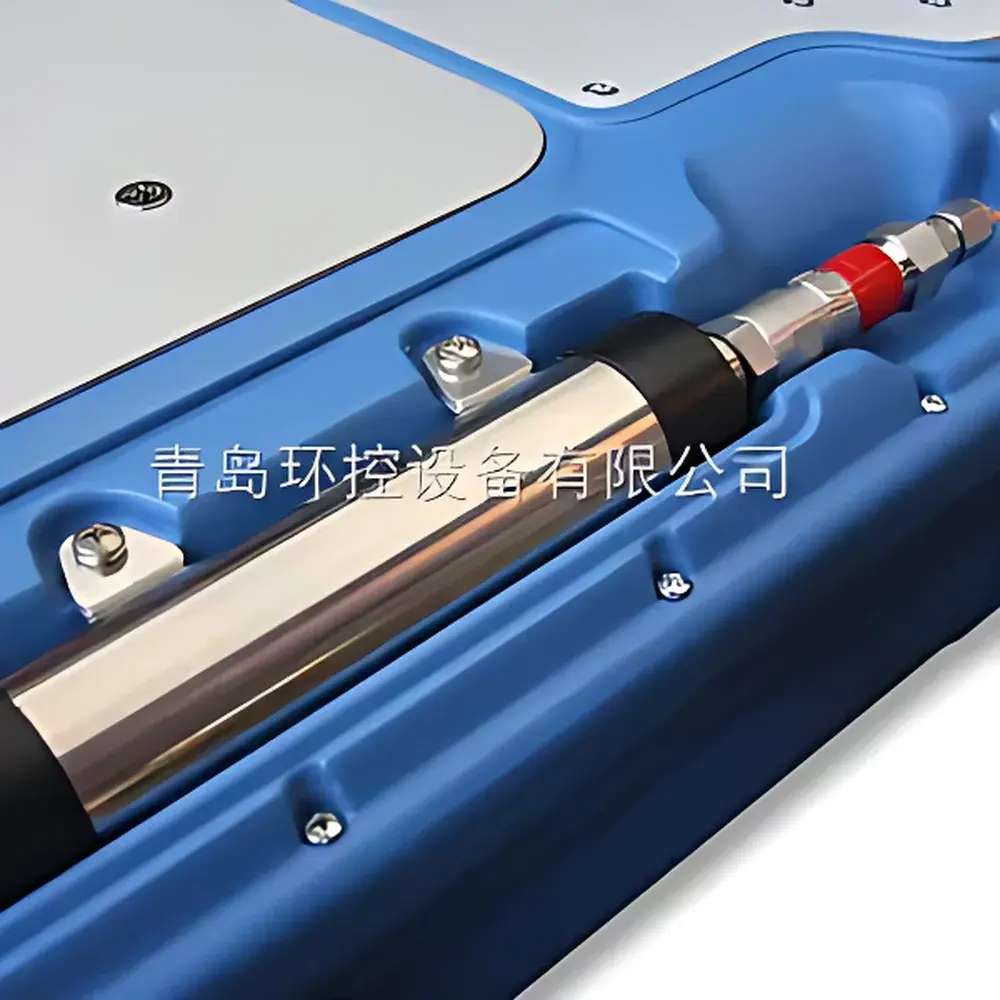
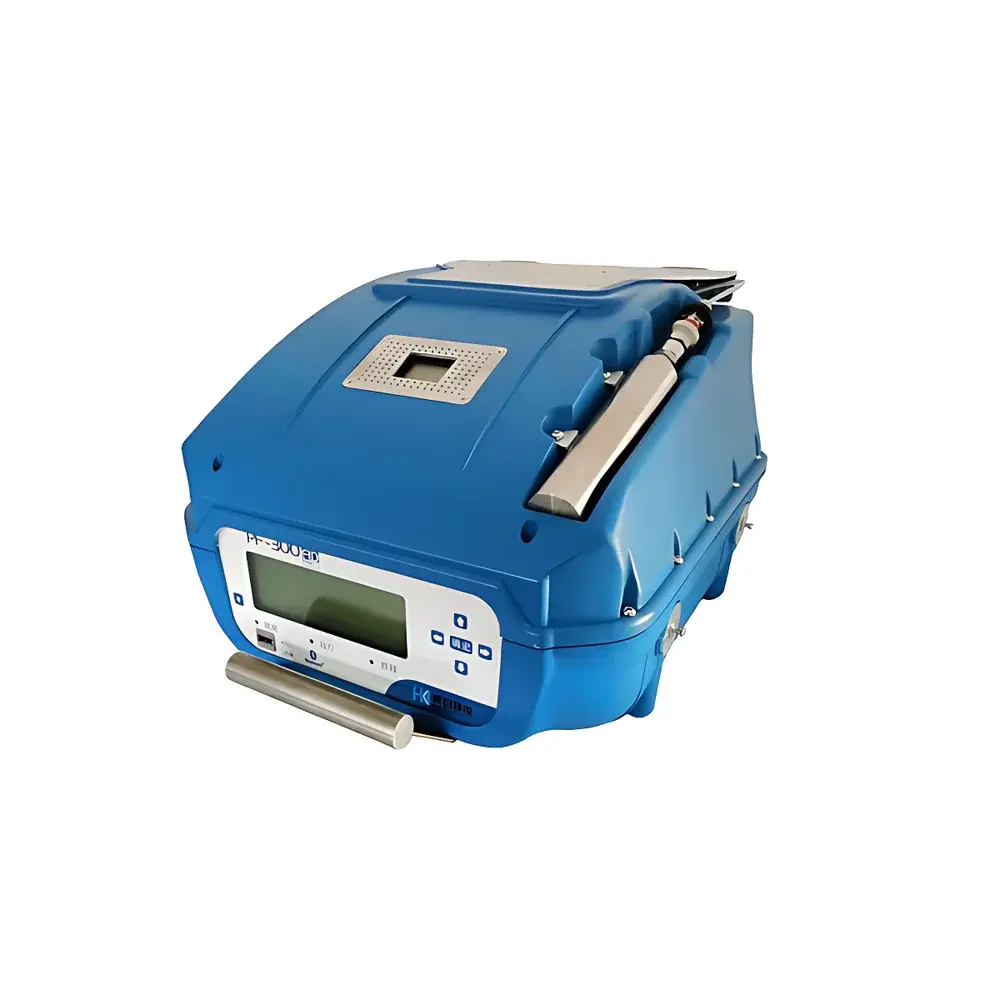
HUANKONG PF-300 Portable Methane / Non-Methane Hydrocarbons Analyzer with Benzene Extension
| Brand | HUANKONG |
|---|---|
| Origin | Shandong, China |
| Manufacturer Type | Direct Manufacturer |
| Country of Origin | China |
| Model | PF-300 (Benzene Extension Version) |
| Instrument Type | Portable |
| Detection Principle | High-Temperature Catalytic Oxidation + Flame Ionization Detection (FID) |
| Measured Parameters | Methane (CH₄), Total Hydrocarbons (THC), Non-Methane Hydrocarbons (NMHC), Benzene, Toluene, Ethylbenzene, Xylenes (BTEX) |
| Detection Limit | < 0.1 ppm (as benzene) |
| Repeatability | RSD < 3% |
| Sample Path Temperature Control | Full-path heated up to 200 °C |
| FID Operating Temperature | Heated to 250 °C |
| Internal Gas Supply | Solid-state metal hydride hydrogen generator (3000 refills, 30 h continuous operation) |
| Calibration | Multi-range built-in calibration curves traceable to NIST-certified standards |
| Data Interface | Bluetooth/Wi-Fi, USB-C, mobile app support with real-time cloud sync |
Overview
The HUANKONG PF-300 Portable Methane / Non-Methane Hydrocarbons Analyzer with Benzene Extension is a field-deployable analytical system engineered for regulatory-grade measurement of gaseous hydrocarbon species in ambient air, fence-line monitoring, and stack emissions. It operates on the principle of high-temperature catalytic oxidation followed by flame ionization detection (FID), enabling simultaneous quantification of methane (CH₄), total hydrocarbons (THC), non-methane hydrocarbons (NMHC), and individual aromatic compounds—specifically benzene, toluene, ethylbenzene, and xylenes (BTEX). Unlike conventional portable FID analyzers limited to total carbon response, the PF-300 integrates a selective catalytic converter that oxidizes all non-methane organics while preserving methane integrity, thereby supporting compliant NMHC calculation per EPA Method 25A and ISO 11890-2. Its fully heated sample pathway—from probe tip through catalytic reactor to FID detector—eliminates condensation artifacts in high-humidity or low-temperature flue gas environments, ensuring measurement robustness across diverse industrial settings.
Key Features
- Fully integrated portable architecture: Compact footprint (≤380 × 220 × 180 mm), net weight < 8.5 kg—including internal solid-state hydrogen generation, zero air supply, and certified calibration gas reservoirs.
- Heated catalytic oxidation module: Precisely temperature-controlled (100–450 °C range) to ensure complete oxidation of NMHC while maintaining methane stability under variable matrix conditions.
- Heated FID detector: All wetted surfaces maintained at ≥250 °C to prevent adsorption or condensation of semi-volatile aromatics; optimized for BTEX sensitivity and long-term baseline stability.
- Quantitative loop sampling: Dual-loop configuration enables sequential, time-synchronized analysis of total hydrocarbons and methane from the same gas aliquot—minimizing temporal drift and improving NMHC accuracy per ASTM D6420.
- NIST-traceable multi-range calibration: Pre-loaded calibration curves covering 0.1–10,000 ppm C₁–C₈ hydrocarbons; auto-ranging logic selects optimal curve based on real-time signal amplitude.
- Onboard data management: Embedded Linux OS with dual-mode connectivity (Wi-Fi 5/Bluetooth 5.0); supports local CSV export, remote telemetry via MQTT/HTTP(S), and secure TLS-encrypted cloud synchronization.
Sample Compatibility & Compliance
The PF-300 is validated for direct analysis of undiluted stack gases (up to 20% O₂, ≤300 °C, ≤95% RH), ambient air, and soil vapor samples. It meets performance criteria specified in EPA Methods 25A, 18, and TO-17 for NMHC and BTEX determination, and aligns with ISO 11890-2 (paints and varnishes), ISO 12039 (stationary source emissions), and China’s HJ 1012–2018 standard for field-use NMHC analyzers. Internal audit logs record all calibration events, gas cylinder pressure trends, detector gain adjustments, and user authentication—supporting GLP/GMP-compliant data integrity requirements. The instrument complies with IEC 61000-6-2 (EMC immunity) and IEC 60079-0 (explosion-proof design principles), with optional ATEX Zone 2 certification available upon request.
Software & Data Management
The PF-300 is operated via the HUANKONG FieldLink mobile application (iOS/Android) and desktop software suite (Windows/macOS). Real-time chromatogram visualization, peak integration, and automated NMHC calculation (NMHC = THC − CH₄) are performed onboard. All raw and processed data include embedded metadata: GPS coordinates, ambient T/P/RH, operator ID, instrument serial number, and calibration certificate expiry. Audit trails conform to FDA 21 CFR Part 11 requirements—including electronic signatures, immutable event logging, and role-based access control. Firmware updates are delivered over-the-air with cryptographic signature verification; historical datasets remain fully compatible across version upgrades.
Applications
- Regulatory compliance monitoring at petroleum refineries, petrochemical plants, coke ovens, and pharmaceutical manufacturing facilities.
- Fence-line and community air monitoring for benzene and other carcinogenic VOCs under EPA Risk Management Program (RMP) and EU Industrial Emissions Directive (IED).
- Source testing and QA/QC validation of continuous emission monitoring systems (CEMS) for THCs and NMHCs.
- Emergency response and spill characterization during VOC leaks, tank overfills, or pipeline ruptures.
- Research applications in atmospheric chemistry, landfill gas composition profiling, and biogas upgrading process optimization.
FAQ
Does the PF-300 require external hydrogen cylinders?
No. It uses an internally mounted solid-state metal hydride hydrogen generator rated for 3,000 refill cycles and up to 30 hours of continuous operation.
Can it meet EPA Method 25A equivalency requirements?
Yes—the catalytic oxidation efficiency (>95% for C₂–C₁₀ aliphatics and aromatics), methane recovery (>98%), and NMHC precision (RSD < 2.5% at 1 ppm) satisfy Method 25A performance specifications.
Is calibration traceable to international standards?
All factory and field calibrations use NIST-traceable gas standards certified per ISO 6141; calibration certificates include uncertainty budgets and metrological chain documentation.
What environmental conditions can it withstand during field deployment?
Operating range: −10 °C to +50 °C ambient, 0–95% RH non-condensing; IP54-rated enclosure with thermal management for sustained use in outdoor and stack-side environments.
How is data security ensured during wireless transmission?
All Wi-Fi and Bluetooth communications employ AES-256 encryption; cloud data storage adheres to ISO/IEC 27001-certified infrastructure with end-to-end TLS 1.3 tunneling and quarterly penetration testing reports available upon NDA.
Related Products







