
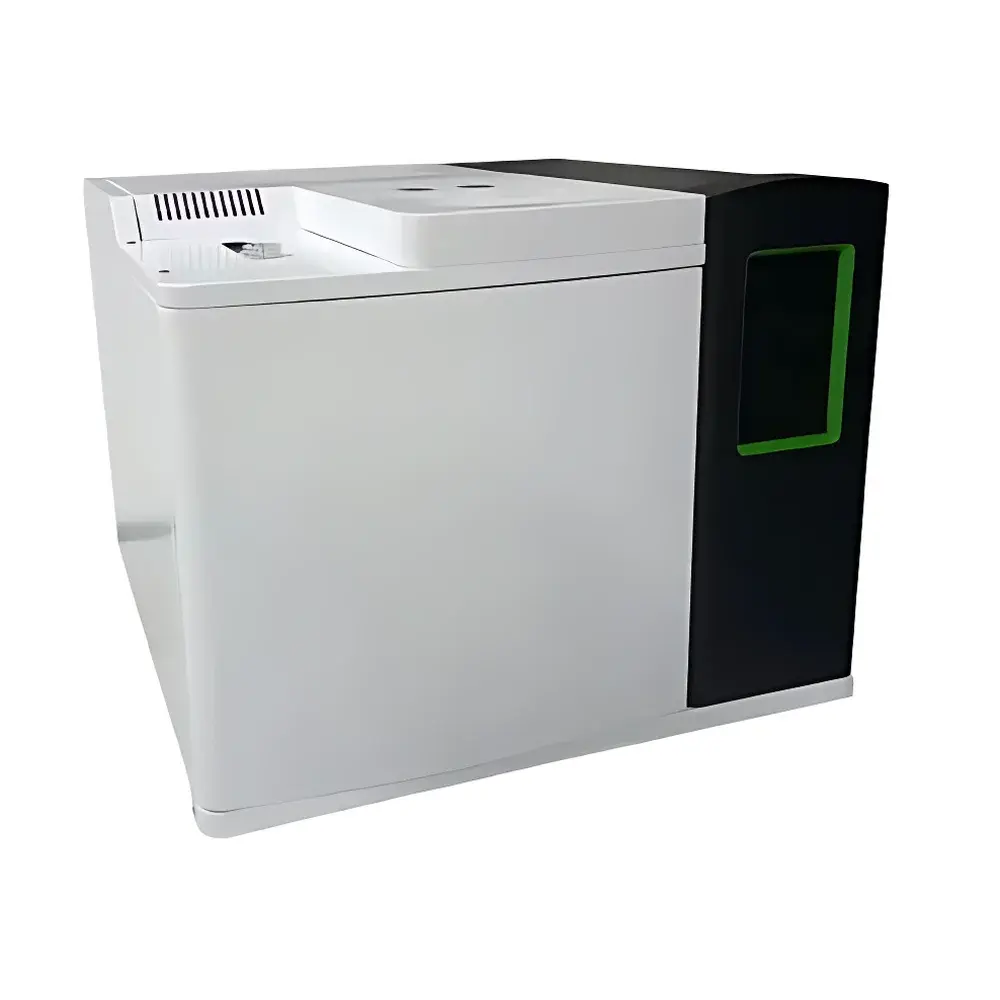
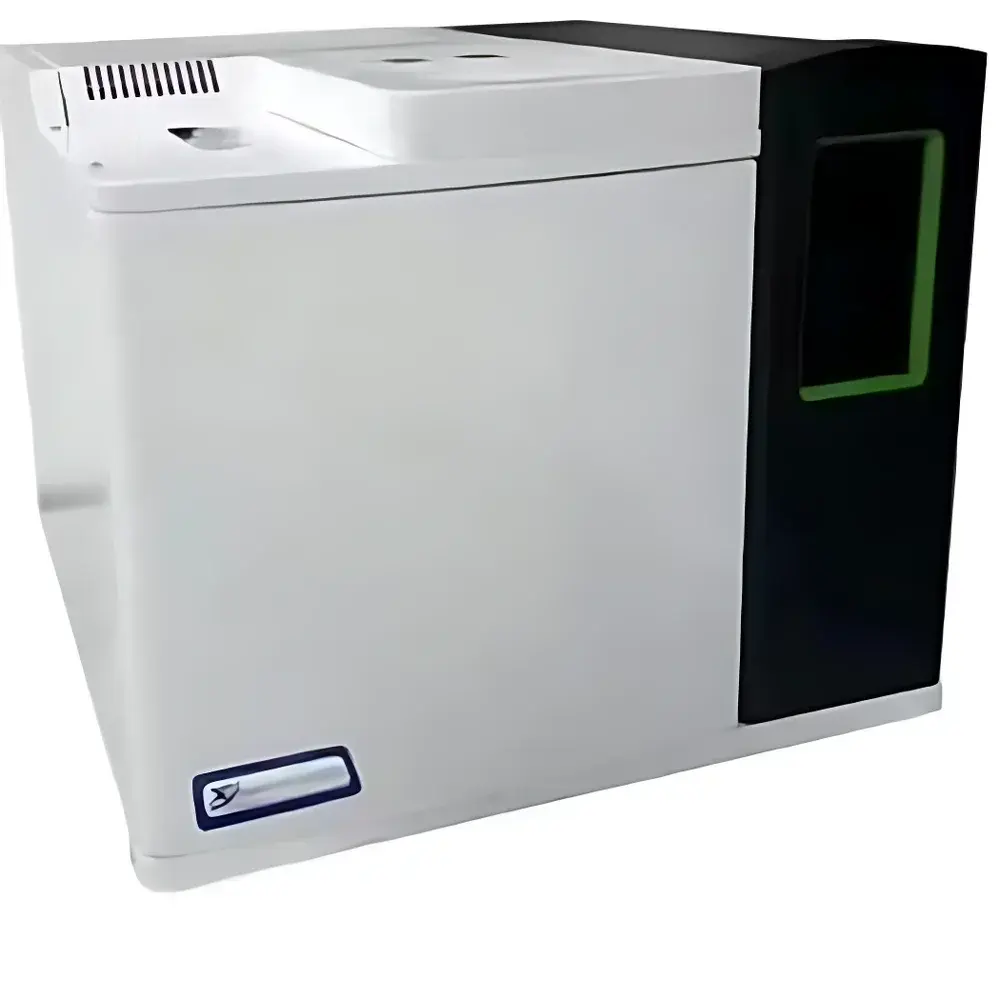
HuaSheng HSPX GC-2024 Laboratory Gas Chromatograph
| Brand | HuaSheng Puxin (HSPX) |
|---|---|
| Origin | Beijing, China |
| Manufacturer Type | Direct Manufacturer |
| Instrument Type | Benchtop Laboratory Gas Chromatograph |
| Application Focus | Petrochemical & Liquefied Petroleum Gas (LPG) Analysis |
| Temperature Control Range | Ambient +5°C to 400°C |
| Ramp Rate | 0.1–40°C/min |
| Cool-down Time | ~6 min (from 450°C to 50°C) |
| Carrier Gas Flow Range & Control | 0–1000 mL/min |
| Carrier Gas Pressure Range & Control | 0–970 kPa |
| Injector Maximum Operating Temperature | 400°C |
| Injector Pressure Setting Range | 0–0.6 MPa |
| Injector Total Flow Setting Range | 0–1000 mL/min |
Overview
The HuaSheng HSPX GC-2024 is a benchtop laboratory gas chromatograph engineered for high-reproducibility analysis of hydrocarbon mixtures in petrochemical applications—particularly liquefied petroleum gas (LPG), propane-butane blends, and related fuel streams. It operates on the principle of partition chromatography, where volatile analytes are separated based on differential distribution between a mobile phase (inert carrier gas, e.g., N₂, H₂, or He) and a stationary phase coated inside a fused-silica capillary or packed column. The system integrates precision temperature programming, digitally controlled pneumatic modules, and dual independent gas circuits to support simultaneous or sequential analysis of complex compositional profiles. Designed in alignment with upcoming national standards for LPG quality control, it delivers full compositional quantification—including detection and resolution of dimethyl ether (DME) adulteration—in under 15 minutes per run, meeting routine QC throughput requirements in refinery labs, terminal testing facilities, and regulatory compliance centers.
Key Features
- Modular thermal architecture with three independently programmable zones: oven, injector(s), and detector(s); each with ±0.1°C stability over time and across setpoints.
- Dual parallel gas paths supporting simultaneous operation of two packed columns—ideal for method redundancy, confirmation analysis, or split-stream applications.
- Integrated six-port valve injection system with backflush capability, enabling robust handling of non-volatile residues and extended column lifetime.
- Thermal conductivity detector (TCD) configured for universal, non-destructive detection of permanent gases and light hydrocarbons (C₁–C₅), with optimized filament current control and balanced bridge circuitry.
- Intuitive Chinese-language LCD interface with embedded diagnostic routines—including real-time fault logging, power-loss recovery, and automatic baseline drift compensation during programmed temperature ramps.
- Front-panel accessible modular design: injector liners, detector components, and electronic control boards are field-replaceable without tools or calibration recalibration.
Sample Compatibility & Compliance
The GC-2024 accommodates gaseous and liquefied samples via direct vapor-phase injection or through calibrated liquid syringe introduction with flash vaporization. It supports standard ASTM D2505 (LPG composition), GB/T 13290 (Chinese LPG specification), and ISO 6974-2 (natural gas analysis) workflows. All temperature and flow parameters are traceable to NIST-certified references. The instrument’s firmware implements audit-trail functionality compliant with GLP documentation requirements, and its pressure/flow control subsystem meets ISO/IEC 17025 metrological validation criteria for analytical instrumentation. While not pre-certified for FDA 21 CFR Part 11, the system architecture permits integration with validated third-party LIMS platforms supporting electronic signature and data integrity controls.
Software & Data Management
Data acquisition and processing are performed using HSPX ChromoView v3.2 software (Windows-based), which provides real-time chromatogram display, peak integration with customizable baselines and retention time windows, and automated report generation in PDF or CSV formats. The software includes method templates for LPG component identification (e.g., ethane, propane, propylene, isobutane, n-butane, isopentane), DME quantification, and impurity profiling. Raw data files are stored in vendor-neutral .CDF format (compatible with OpenChrom and Chromeleon), ensuring long-term archival accessibility. All method parameters, sequence logs, and user actions are timestamped and recorded in an encrypted internal database supporting retrospective review and QA/QC audits.
Applications
- Routine quality assurance of commercial LPG shipments against compositional limits (e.g., DME adulteration ≤ 3% v/v).
- Refinery process stream monitoring: C₂–C₅ hydrocarbon distribution in FCC off-gas, alkylation feedstocks, and isomerization products.
- Fuel blending verification in bulk terminals and cylinder-filling stations.
- Environmental emission screening for VOCs in storage tank vent streams (when coupled with appropriate sampling traps).
- Research-grade method development for alternative fuel characterization, including bio-propane and synthetic methane blends.
FAQ
What carrier gases are compatible with this instrument?
Nitrogen, hydrogen, and helium are supported; flow and pressure control modules are calibrated for all three gases with selectable viscosity compensation algorithms.
Does the system support capillary column installation?
Yes—the oven accommodates standard 0.53 mm ID packed columns and 0.25–0.53 mm ID fused-silica capillaries up to 60 m in length, with optional split/splitless inlet configuration.
Is remote operation or network connectivity available?
The GC-2024 features RS-232 and USB 2.0 interfaces; Ethernet connectivity is available via optional add-on module for LAN-based instrument control and data streaming.
What maintenance intervals are recommended for routine operation?
Injector liner replacement every 200 injections; TCD filament inspection every 6 months; oven seal integrity check annually; carrier gas filter replacement quarterly under continuous use.
Can the instrument be upgraded with additional detectors?
Yes—FID and ECD modules are available as factory-installed options; retrofit requires mechanical mounting kit and firmware update, both provided by HSPX service engineers.





