
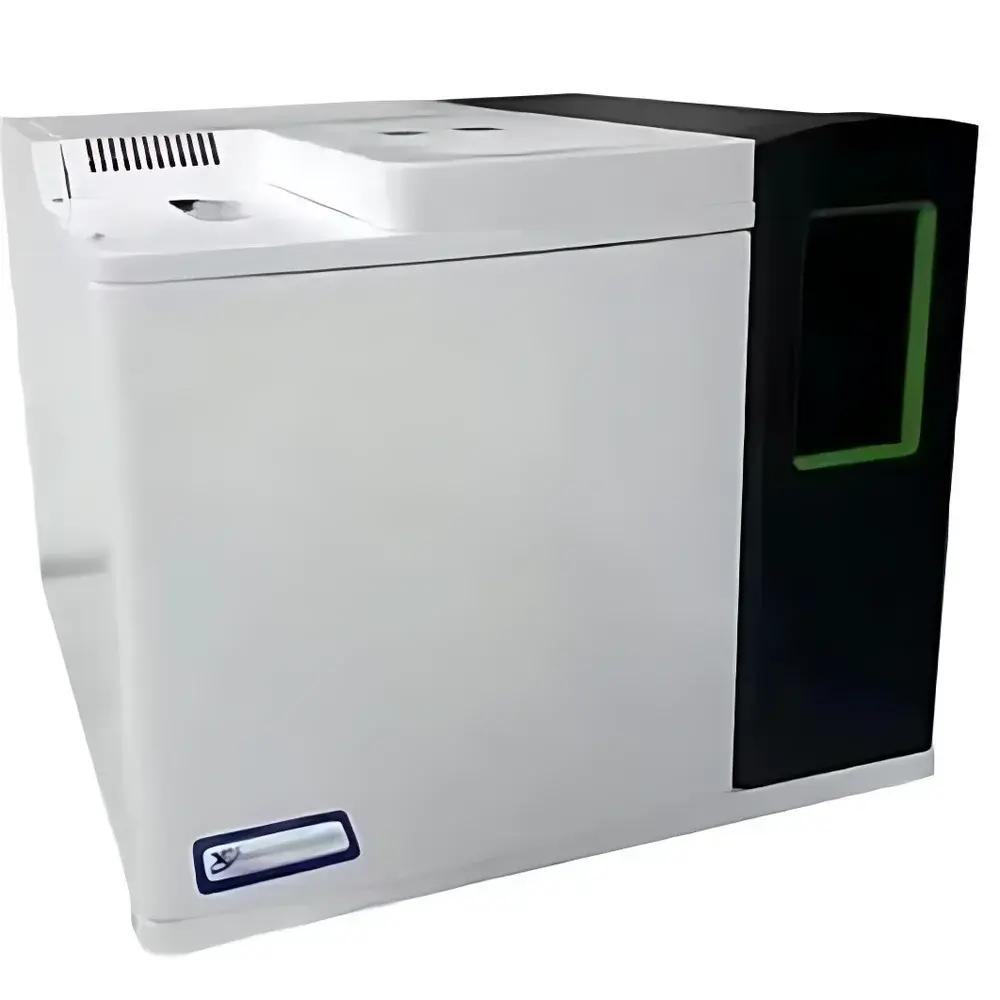
HuaShengPuXin LC3000 High-Performance Liquid Chromatograph
| Brand | HuaShengPuXin (HSPX) |
|---|---|
| Origin | Beijing, China |
| Manufacturer Type | Original Equipment Manufacturer (OEM) |
| Instrument Category | Domestic |
| Model | LC3000 |
| Price Range | USD 7,000 – 14,000 (FOB China) |
| Instrument Type | Conventional High-Performance Liquid Chromatograph (HPLC) |
| Pump Type | Dual-Piston Reciprocating High-Pressure Solvent Delivery System (P3000 Series) |
| Detector Type | UV/VIS Absorbance Detector (UV3000) |
| Display | 320 × 240 dot-matrix LCD with adjustable blue backlight |
| Control Modes | Standalone front-panel operation & RS232 serial interface |
| Power Supply | 220 V ±10%, 50 Hz, 400 W (pump) |
| Dimensions (D×H×W) | 398 × 149 × 267 mm |
| Weight | 14 kg |
| GLP Data Logging | Lamp operating time, lamp ignition count, lamp replacement history, and instrument serial number |
Overview
The HuaShengPuXin LC3000 is a benchtop high-performance liquid chromatograph engineered for routine analytical separations in quality control laboratories, academic research settings, and small-scale method development environments. Built upon a dual-piston reciprocating pump architecture (P3000 series), the system delivers stable solvent delivery under high backpressure conditions typical of reversed-phase C18 column applications. The integrated UV3000 ultraviolet-visible absorbance detector operates on fixed-wavelength detection principles—optimized for sensitivity and baseline stability across common analyte absorption bands (e.g., 254 nm, 280 nm). Unlike UHPLC platforms, the LC3000 is designed for robustness and operational simplicity rather than ultra-high pressure or sub-2-µm particle separations; it conforms to classical HPLC performance expectations per ISO 17025-compliant workflows and supports method transfer from legacy systems.
Key Features
- Dual-piston reciprocating high-pressure pump with programmable pressure limits (min/max), soft-start/stop functionality, and automatic parameter retention upon power cycle
- 320 × 240 pixel monochrome LCD with user-adjustable blue backlight for clear visibility under varied ambient lighting conditions
- Standalone front-panel operation—no PC required for basic isocratic or binary gradient runs
- RS232 serial interface enabling external control via third-party software or laboratory information management systems (LIMS)
- UV3000 detector featuring real-time absorbance monitoring, lamp usage tracking, and GLP-compliant event logging (lamp hours, ignitions, replacements)
- Modular mechanical design with standardized 1/8-inch stainless steel tubing connections for rapid maintenance and leak-free integration
- Compact footprint (398 × 149 × 267 mm) and low thermal load suitable for shared lab benches without dedicated ventilation
Sample Compatibility & Compliance
The LC3000 accommodates standard 4.6 mm ID analytical columns packed with silica-based or polymer-based stationary phases (e.g., C18, C8, NH₂, SCX). It supports mobile phases including aqueous buffers (e.g., phosphate, acetate), organic modifiers (acetonitrile, methanol), and low-concentration ion-pairing reagents. While not rated for >400 bar operation, the system maintains consistent flow accuracy across typical HPLC pressure ranges (up to ~300 bar) when used with 5-µm particles and flow rates between 0.2–5.0 mL/min (dependent on column dimensions and viscosity). All firmware and data handling comply with basic GLP documentation requirements—including timestamped lamp usage logs, operator-accessible service history, and non-volatile memory for method parameters. The hardware meets IEC 61010-1 safety standards for laboratory electrical equipment and CE marking criteria for electromagnetic compatibility (EMC).
Software & Data Management
The LC3000 operates without proprietary acquisition software in standalone mode; however, optional Windows-based workstation software (sold separately) provides full method development, peak integration, calibration curve generation, and report export (PDF, CSV, XML). Raw detector analog output (0–1 V) and digital RS232 signals are fully accessible for integration into custom Python- or LabVIEW-driven automation frameworks. Audit trails include detector lamp runtime counters, pump pressure deviation logs, and user-initiated parameter changes—all stored in non-erasable flash memory. Though not natively 21 CFR Part 11 compliant, the system supports manual electronic record retention practices aligned with FDA-regulated QC labs conducting compendial testing (e.g., USP , EP 2.2.46).
Applications
- Pharmaceutical assay and dissolution testing per USP monographs
- Food additive quantification (e.g., preservatives, sweeteners, colorants)
- Environmental water analysis for phenolic compounds and pesticide residues
- Polymer additive screening (antioxidants, UV stabilizers)
- Academic teaching labs for fundamental chromatographic theory and retention mechanism studies
- Raw material identity verification in GMP-aligned manufacturing support labs
FAQ
Does the LC3000 support gradient elution?
Yes—the P3000-series pump supports binary high-pressure gradient formation when two identical pumps are synchronized, with one acting as master and the other as slave; gradient profiles can be verified visually via the LCD’s real-time pressure and flow curve display.
Is the UV3000 detector wavelength-programmable?
No—it is a fixed-wavelength detector; users select a single operational wavelength during setup (commonly 254 nm or 280 nm) via front-panel controls.
Can the LC3000 be integrated into an existing LIMS environment?
Yes—through its RS232 interface, using ASCII command protocols documented in the technical manual; no proprietary drivers are required.
What column dimensions are recommended for optimal performance?
Standard 150 mm × 4.6 mm ID columns with 5-µm particles are validated for use; shorter columns (e.g., 100 mm) may be employed for faster throughput at reduced resolution.
Is preventive maintenance training available?
HuaShengPuXin offers on-site or remote technician certification programs covering pump seal replacement, detector lamp alignment, and system performance qualification (PQ) procedures.





