
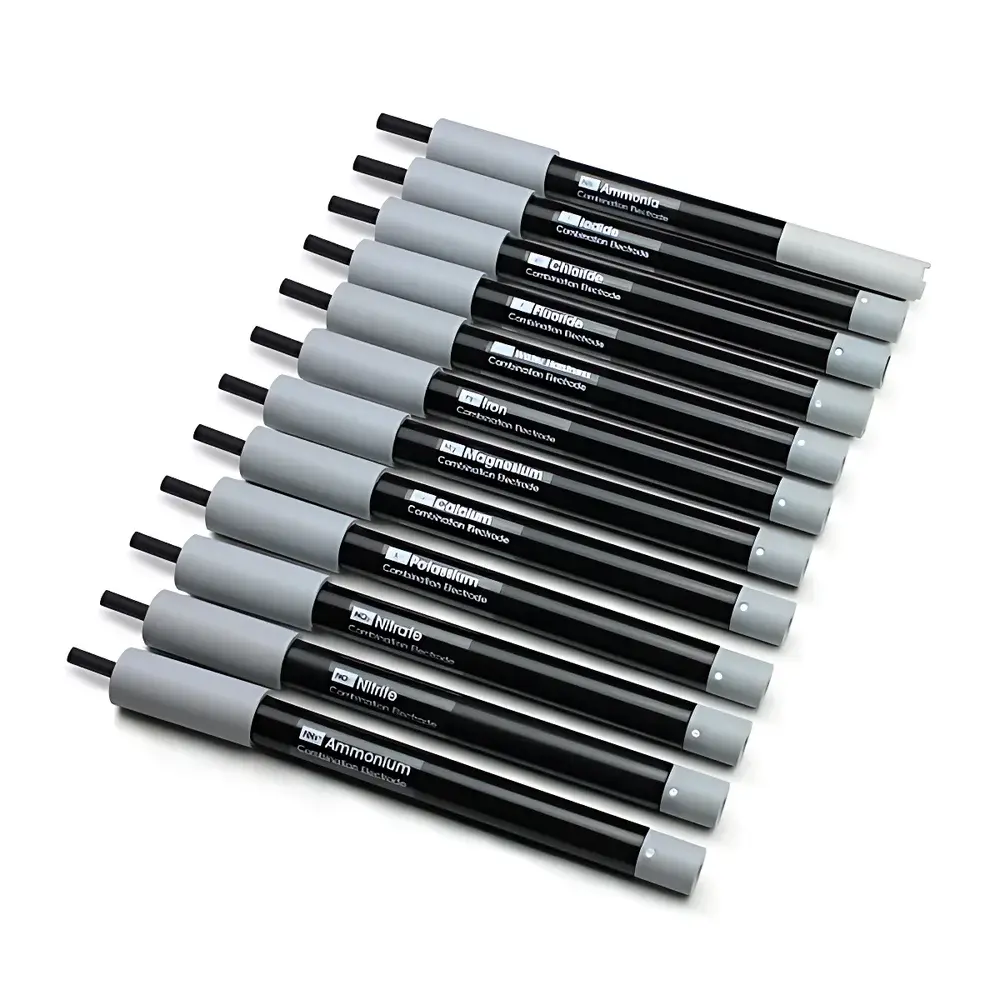
CLEAN CS6510NH4 Ammonium Ion-Selective Electrode (NH₄⁺)
| Brand | CLEAN |
|---|---|
| Origin | USA |
| Model | CS6510NH4 |
| Instrument Type | Online ISE |
| Measurement Range | 0–99,999 mg/L (ppm) NH₄⁺ |
| Detection Limit | 0–99,999 mg/L (ppm) NH₄⁺ |
| Response Time | ≤30 s to 95% of final value |
| Accuracy | ±2.5% of reading |
| Operating Temperature Range | –10 °C to +150 °C |
| pH Range for Measurement | 4–10 |
| Reference Electrode | Dual-salt-bridge with annular ceramic junction |
| Body Material | Glass |
| Dimensions | Ø12 × 110 mm |
| Cable Length | 1 m |
| Connector | BNC |
| Output Impedance | ≥100 MΩ |
| Temperature Compensation | Integrated |
| Pressure Rating | Not specified |
| Interference | K⁺ (significant), other monovalent cations (moderate) |
| Storage | Long-term — dry |
Overview
The CLEAN CS6510NH4 Ammonium Ion-Selective Electrode (NH₄⁺) is a potentiometric sensor engineered for continuous, real-time measurement of ammonium ion concentration in aqueous solutions. Based on the principle of selective membrane potential generation—where an ionophore-doped polymeric or crystalline membrane develops a Nernstian response proportional to the logarithm of NH₄⁺ activity—the electrode delivers stable, reproducible output in compliance with ISO 10304-1 (determination of dissolved ions by ion chromatography) and ASTM D1426 (standard test methods for nitrogen in water). Designed for integration into online water quality monitoring systems, industrial process control loops, and laboratory benchtop analyzers, the CS6510NH4 operates across a broad temperature range (–10 °C to +150 °C), enabling deployment in boiler feedwater, geothermal effluents, fertilizer production streams, and municipal wastewater treatment processes. Its glass-bodied construction ensures chemical resistance to common oxidants, chloramines, and low-pH environments typical of industrial water circuits.
Key Features
- Glass-body construction with high mechanical stability and thermal shock resistance
- Dual-salt-bridge reference system with annular ceramic junction for minimized liquid junction potential drift and extended service life under variable flow conditions
- Nernstian slope of 55 ± 3 mV/decade at 25 °C, verified per IUPAC guidelines for ion-selective electrode characterization
- Fast electrochemical equilibration: ≤30 seconds to reach 95% of steady-state potential
- Integrated temperature compensation circuitry supporting automatic correction across the full operating range
- BNC connector and 1-meter shielded cable compliant with IEC 61000-4-3 (EMC immunity) for reliable signal transmission in electrically noisy plant environments
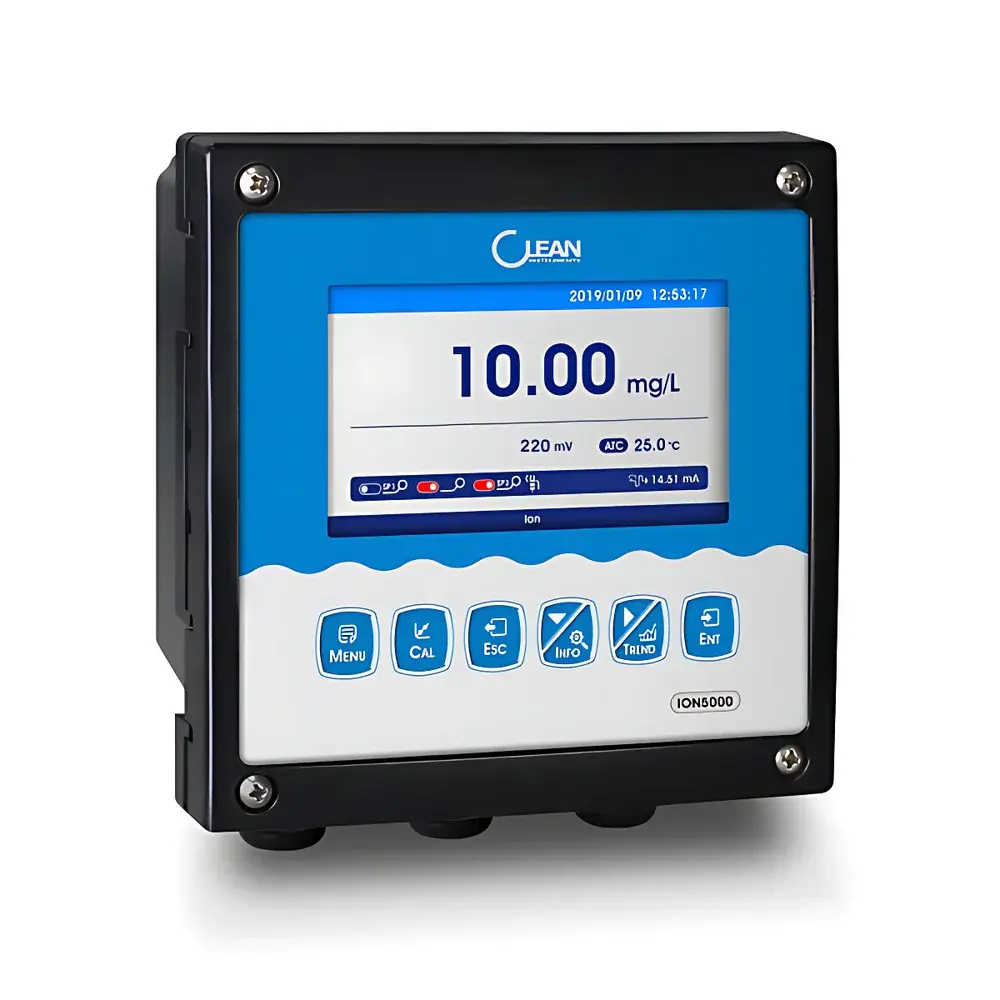
- Compatible with standard pH/ion meters, data loggers, and CLEAN ION5000 Online Ion Monitor platforms
Sample Compatibility & Compliance
The CS6510NH4 is validated for use in natural waters (surface water, groundwater), treated effluents, boiler feedwater, agricultural runoff, and fertilizer solutions. It exhibits minimal interference from Ca²⁺, Mg²⁺, and Na⁺ at typical environmental concentrations; however, elevated K⁺ (>100 mg/L) requires empirical correction or sample pretreatment (e.g., addition of potassium-selective masking agents). Operation within pH 4–10 ensures optimal selectivity and avoids hydrolysis-induced NH₃ volatilization. The electrode meets functional requirements of EPA Method 350.1 (ammonia/ammonium determination) when used in conjunction with appropriate calibration protocols and matrix-matched standards. For regulated applications—including GLP-compliant environmental reporting and GMP-aligned pharmaceutical water system monitoring—the electrode supports audit-ready documentation when paired with CLEAN ION5000’s 21 CFR Part 11-compliant data logging and electronic signature capabilities.
Software & Data Management
When interfaced with the CLEAN ION5000 Online Ion Monitor, the CS6510NH4 benefits from a fully traceable digital workflow: multi-point calibration curves (up to 5 points), automatic temperature-compensated slope validation, real-time drift monitoring, and configurable alarm thresholds. All measurements are timestamped, stored with metadata (operator ID, calibration history, ambient temperature), and exportable in CSV or Modbus RTU format for integration into SCADA, LIMS, or cloud-based asset management platforms. The system logs calibration events, sensor diagnostics, and maintenance records—enabling full compliance with ISO/IEC 17025:2017 clause 7.7 (ensuring measurement traceability) and supporting internal QA audits.
Applications
- Continuous monitoring of NH₄⁺ in power plant boiler feedwater and condensate return lines
- In-line ammonium tracking in municipal wastewater nitrification/denitrification basins
- Quality control of nitrogen content in liquid fertilizers and agricultural nutrient solutions
- Regulatory compliance testing for ammonia discharge limits under NPDES permits
- Process optimization in anaerobic digestion and aquaculture recirculating systems
- Research-grade ammonium profiling in limnological and estuarine studies
FAQ
What is the recommended calibration frequency for continuous online operation?
For critical applications (e.g., boiler water monitoring), daily single-point verification against a mid-range standard (e.g., 50 mg/L NH₄⁺) is advised; full two-point calibration should be performed weekly or after maintenance.
Can the CS6510NH4 be used in seawater or high-salinity brines?
Yes—its dual-salt-bridge design mitigates junction clogging and potential error from ionic strength effects; however, salinity-dependent activity coefficient corrections must be applied for quantitative accuracy.
Is cleaning required between measurements?
Routine rinsing with deionized water suffices; for fouling-prone matrices (e.g., wastewater sludge), periodic immersion in 0.1 M HCl for 2 minutes followed by thorough rinsing restores baseline stability.
Does the electrode require a separate reference electrode?
No—the CS6510NH4 incorporates a built-in dual-salt-bridge reference system; no external reference is needed for standard operation.
How does temperature affect measurement accuracy?
The integrated thermistor enables automatic temperature compensation; uncompensated operation introduces ~0.2% error per °C deviation from calibration temperature.
Related Products







