
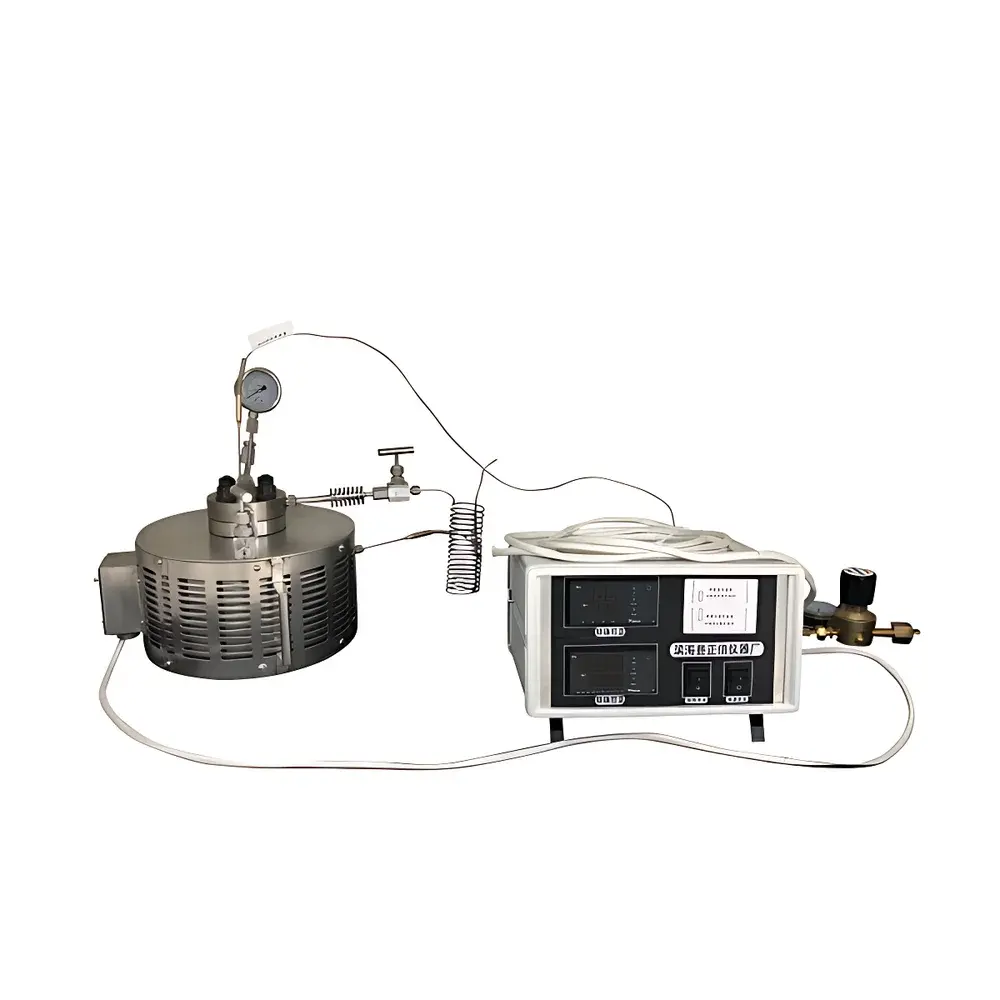
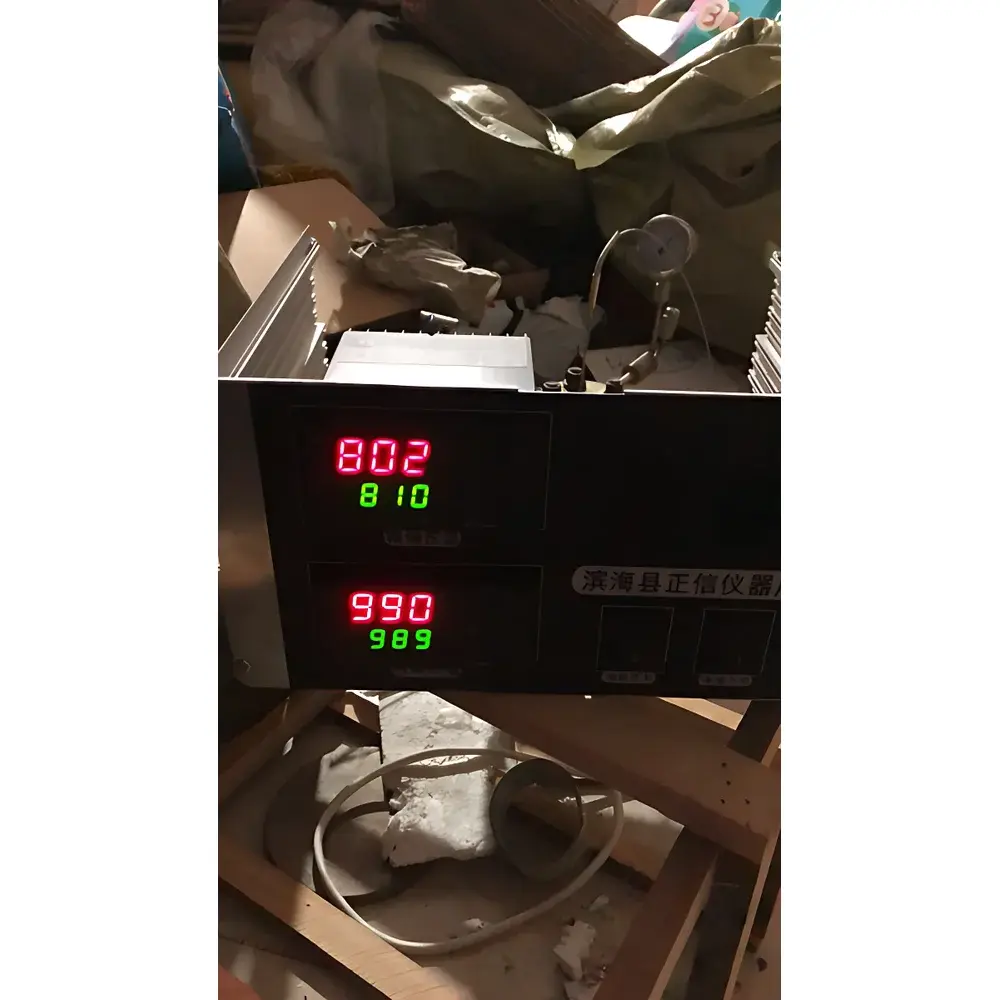
Zhengxin YSA-100ML High-Temperature Batch Reactor
| Brand | Zhengxin Instrument Factory |
|---|---|
| Origin | Jiangsu, China |
| Manufacturer Type | Authorized Distributor |
| Country of Origin | China |
| Model | YSA-100ML |
| Usable Volume | 100 mL |
| Construction Material | Stainless Steel (304/316L standard) |
| Operating Pressure Range | -0.1 to 70 MPa |
| Maximum Temperature | 1000 °C |
| Vacuum Level | -0.1 MPa (absolute) |
| Heating Method | Integrated Modular Electric Heater |
| Temperature Control | LCD PID Controller with Auto-Tuning (AT) and Timer Function |
| Temperature Accuracy | ±1 °C (standard), optional ±0.1 °C |
| Heating Rate | ≤10 °C/min (adjustable) |
| Safety Features | Burst-Disk Relief Valve, Overpressure Automatic Release System |
| Cooling Option | External Jacket or Fins |
| Optional Linings | Quartz, Hastelloy, Titanium, Zirconium |
| Inlet/Outlet Fittings | 3 mm (1/8″) and 6 mm (1/4″) Swagelok®-compatible Compression Ports |
| Pressure Gauge | Stainless Steel Bourdon Tube Gauge |
| Stirring | Bidirectional Motor (optional) |
Overview
The Zhengxin YSA-100ML High-Temperature Batch Reactor is a precision-engineered laboratory-scale pressure reactor designed for controlled synthesis, catalytic studies, hydrothermal reactions, and high-temperature/pressure material processing under inert, reducing, or oxidizing atmospheres. Based on robust Couette-type sealed vessel architecture, it operates on the principle of static batch reaction—where reactants are loaded into a fixed-volume chamber, sealed, and subjected to precisely regulated thermal and pressure profiles. Its modular construction enables rapid assembly/disassembly without compromising structural integrity or sealing reliability. The reactor complies with fundamental mechanical design principles outlined in ASME BPVC Section VIII Division 1 (for non-certified lab-grade vessels) and incorporates fail-safe pressure containment features aligned with ISO 4775 and EN 13445-3 guidelines for experimental pressure equipment.
Key Features
- Modular Thermal Management: Integrated fixed-position electric heating modules ensure uniform radial heat distribution; external stainless steel cladding provides mechanical protection, moisture resistance, and long-term dimensional stability.
- Precision Temperature Regulation: LCD-based PID controller with auto-tuning (AT) algorithm delivers stable setpoint tracking and programmable ramp/soak cycles; timer function supports unattended operation up to 99 hours 59 minutes.
- High-Fidelity Process Monitoring: K-type thermocouple (IEC 60584-2 Class 2) mounted directly at the reactor wall enables real-time internal temperature feedback with traceable calibration paths.
- Pressure Integrity & Safety: Dual-stage overpressure protection includes a calibrated stainless steel Bourdon tube pressure gauge (0–100 MPa range) and a rupture disk–based relief system rated for instantaneous activation above user-defined thresholds.
- Configurable Fluid Handling: Standard 1/8″ and 1/4″ Swagelok®-compatible compression fittings allow connection of high-purity gas lines, vacuum pumps, or sampling manifolds; inlet/outlet needle valves withstand continuous service up to 70 MPa and 600 °C.
- Thermal Dissipation Design: Aluminum alloy finned heat sink integrated into the upper flange facilitates passive cooling during cooldown phases, minimizing thermal shock to internal components and extending gasket service life.
Sample Compatibility & Compliance
The YSA-100ML accommodates heterogeneous and homogeneous reaction mixtures—including slurries, viscous organometallics, aqueous precursors, and corrosive halide-based systems—when equipped with appropriate liner materials (e.g., quartz for acid resistance, Hastelloy C-276 for chloride environments, or titanium for high-temperature hydrogenation). Vessel bodies conform to ASTM A240/A240M for stainless steel grades 304 and 316L. All wetted surfaces undergo passivation per ASTM A967 and electropolishing per ASTM B912 where specified. While not CE-marked or ASME-stamped, the unit meets general-purpose laboratory safety expectations under ISO/IEC 17025-accredited facility protocols and supports GLP-compliant data recording when paired with validated software interfaces.
Software & Data Management
The reactor operates as a standalone instrument but supports analog output (4–20 mA or 0–5 V) for integration into centralized SCADA or LabVIEW-controlled environments. Optional RS485 Modbus RTU interface enables bidirectional communication with third-party DAQ systems for time-synchronized logging of temperature, pressure, and stirrer status. All PID controller event logs—including AT activation, setpoint changes, alarm triggers, and power cycling—are timestamped and exportable via USB flash drive in CSV format. Audit trails comply with FDA 21 CFR Part 11 requirements when deployed within validated electronic record systems.
Applications
- Hydrothermal synthesis of metal oxides, MOFs, and quantum dots
- Catalytic hydrogenation/dehydrogenation under elevated H₂ partial pressures
- Supercritical fluid reactions (e.g., CO₂-assisted polymerization)
- Thermal decomposition kinetics of energetic materials
- Corrosion testing of alloys in simulated geothermal brines
- High-temperature solid-state reactions for ceramic precursor development
- Gas-solid adsorption/desorption isotherm measurements
FAQ
What materials are available for reactor liners?
Quartz, stainless steel (304/316L), Hastelloy C-276, titanium Grade 2, and zirconium Grade 7 can be selected based on chemical compatibility and maximum operating temperature requirements.
Is the reactor suitable for vacuum applications?
Yes—it achieves ultimate vacuum levels down to –0.1 MPa (absolute) and supports repeated vacuum/nitrogen purge cycles via dual needle valves.
Can stirring be added to this model?
A magnetically coupled overhead stirrer (0–600 rpm, torque-limited) is available as an optional accessory with ceramic-coated shaft and PTFE-sealed feedthrough.
What is the typical lead time for custom configurations?
Standard YSA-100ML units ship within 10 business days; lined or alloy-bodied variants require 4–6 weeks following final engineering review and drawing approval.
Does the unit include calibration certificates?
Factory calibration reports for temperature sensor and pressure gauge are provided; NIST-traceable certification is available upon request at additional cost.



