
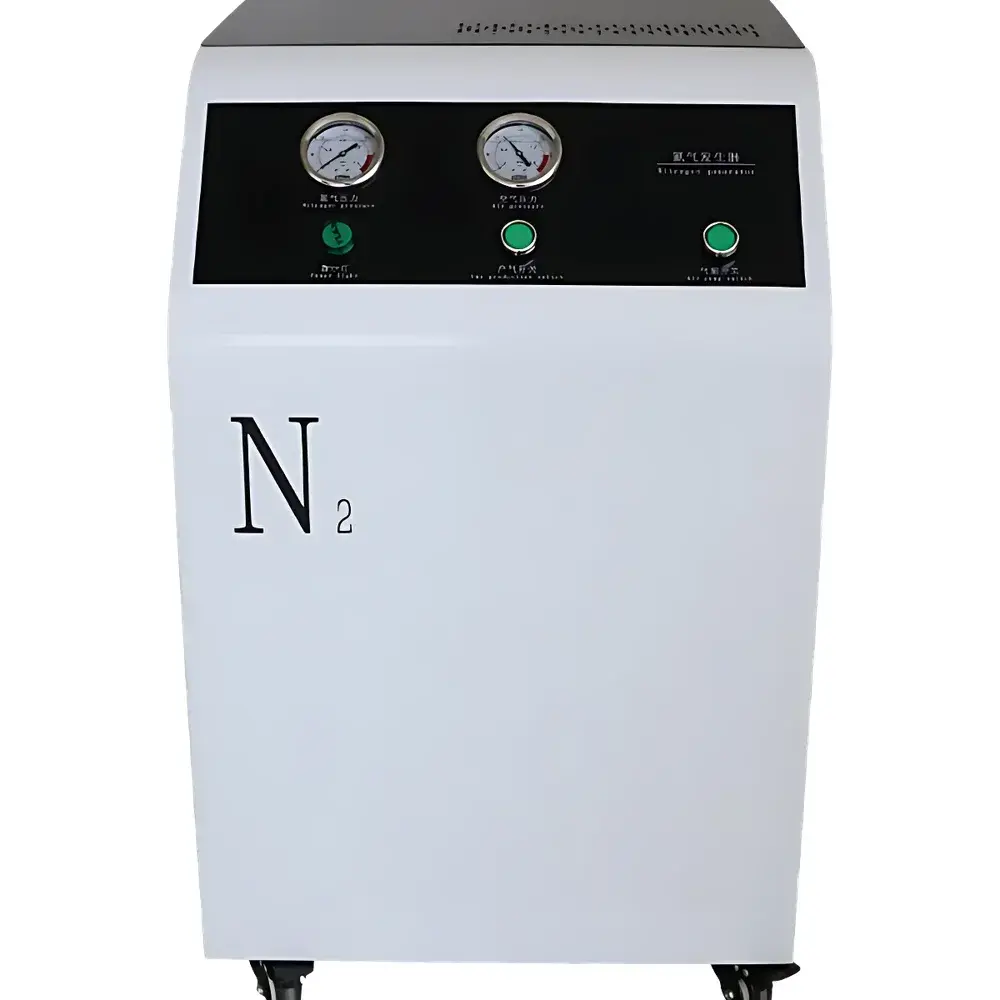
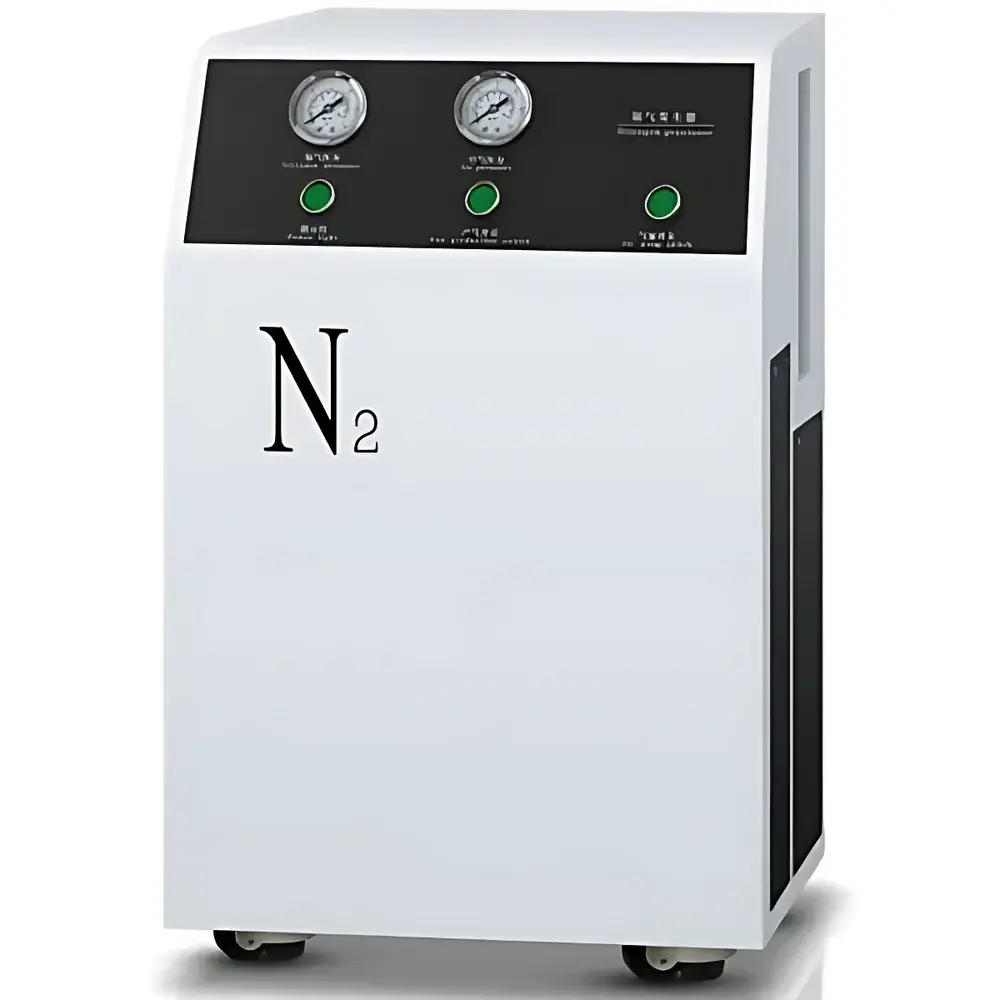
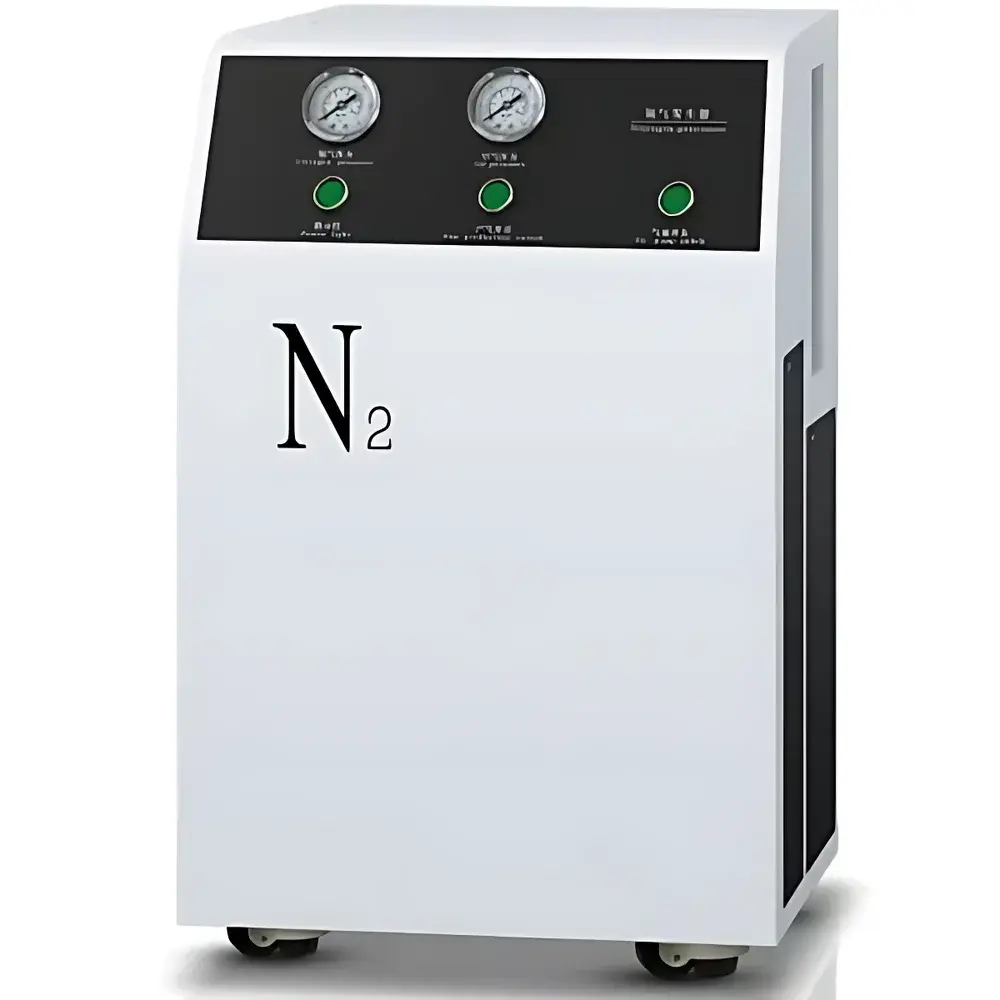
Huayisanpu PGN-30L PSA Nitrogen Generator
| Brand | Huayisanpu (Beijing Huayisanpu Instrument Co., Ltd.) |
|---|---|
| Origin | Beijing, China |
| Model | PGN-30L |
| Output Flow | 30 L/min |
| Output Pressure Range | 0.1–0.4 MPa |
| Nitrogen Purity | 99–99.9% |
| Dew Point | < −60 °C |
| Feed Gas | Oil-free Compressed Air |
| Power Supply | 220 V AC ±10%, 50 Hz, 1100 W |
| Dimensions | 600 × 700 × 1100 mm |
| Weight | 120 kg |
| Compliance | Designed for GLP-compliant lab environments |
| compatible with ISO 8573-1 Class 2 | 2:2 compressed air input |
Overview
The Huayisanpu PGN-30L PSA Nitrogen Generator is an on-site, membrane-free, pressure-swing adsorption (PSA) system engineered for continuous, reliable nitrogen production from ambient compressed air. It operates on the principle of selective adsorption—utilizing high-performance carbon molecular sieve (CMS) beds in dual-tower configuration to preferentially retain oxygen, moisture, and CO₂ under elevated pressure, while allowing nitrogen molecules to pass through with high selectivity. The alternating adsorption/desorption cycle between two CMS columns ensures uninterrupted nitrogen delivery at stable flow and purity. Designed for laboratory-scale applications requiring inert gas supply—such as LC-MS carrier gas, GC detector make-up gas, sample preparation (e.g., nitrogen blow-down), and inert atmosphere maintenance—the PGN-30L delivers up to 30 L/min of nitrogen at purities ranging from 99.0% to 99.9%, with a certified dew point below −60 °C. Its integrated oil-free air compressor eliminates external air source dependency, and its fully automated PLC-controlled operation—including auto-start/stop based on outlet pressure feedback (0.4–0.6 MPa setpoint)—supports unattended 24/7 operation within standard laboratory environments (5–45 °C, ≤80% RH).
Key Features
- Dual-tower PSA architecture with time-synchronized electromagnetic valve sequencing for continuous nitrogen output without interruption
- Integrated oil-free scroll air compressor (0.6–0.8 MPa discharge pressure, <0.01 ppm oil carryover) meeting ISO 8573-1 Class 2:2:2 requirements
- Real-time nitrogen purity monitoring via built-in electrochemical or thermal conductivity sensor, with digital display calibrated per ISO 8573-7
- Adjustable output pressure (0.1–0.4 MPa) and flow (0–30 L/min) via precision needle valve and pressure regulator
- Onboard dew point sensor and automatic condensate drain system to maintain CMS integrity and extend service life
- Comprehensive safety logic: overpressure cut-off, thermal overload protection, ground-fault detection, and automatic shutdown upon low inlet air pressure or CMS saturation alarm
- Modular design with front-access service panels—no tools required for CMS replacement or filter cartridge changeout
Sample Compatibility & Compliance
The PGN-30L is compatible with analytical instruments requiring high-purity, low-dew-point nitrogen, including but not limited to gas chromatographs (GC), liquid chromatography–mass spectrometers (LC-MS), elemental analyzers, and glovebox inerting systems. Its nitrogen output meets ASTM D6866-22 specifications for instrument-grade nitrogen and satisfies the minimum gas quality requirements outlined in USP for pharmaceutical stability testing and packaging. While not certified to FDA 21 CFR Part 11 out-of-the-box, the system supports audit-ready operation when paired with validated third-party data logging software that captures timestamped purity, pressure, flow, and runtime parameters with user-accessible audit trails. All electrical components comply with IEC 61010-1 for laboratory equipment safety.
Software & Data Management
The PGN-30L features embedded firmware with RS-232 and optional Ethernet connectivity for remote status monitoring and parameter configuration via ASCII command protocol. While no proprietary GUI is included, it supports integration into centralized lab infrastructure via Modbus RTU or TCP/IP for SCADA-level visibility. Critical operational data—including cumulative runtime, CMS cycle count, purity deviation history, and compressor duty cycle—is stored in non-volatile memory and exportable as CSV files for trend analysis. For regulated environments, users may implement compliant data capture using validated third-party platforms (e.g., LabArchives, DeltaV, or custom Python-based logging scripts) that enforce electronic signature, change control, and retention policies aligned with ALCOA+ principles.
Applications
- Chromatography: Carrier gas for GC-FID/TCD/ECD; make-up gas for LC-MS ion sources; purge gas for autosampler vial septa
- Sample Preparation: Nitrogen evaporation (N₂ blow-down) for solvent removal in environmental, food, and clinical sample workflows
- Material Protection: Inert blanketing of reactive standards, hygroscopic reagents, and reference materials during storage or transfer
- Pharmaceutical Packaging: Nitrogen flushing of blister packs and vials per USP and Ph. Eur. 2.2.44
- Electronics Manufacturing: Localized inert atmosphere for solder paste handling and PCB component aging tests
- Research Labs: Controlled-atmosphere reaction vessels, glovebox replenishment, and catalyst passivation protocols
FAQ
What compressed air quality is required for optimal PGN-30L performance?
The unit requires oil-free, desiccated compressed air at 0.6–0.8 MPa and ≤−10 °C pressure dew point. Failure to meet ISO 8573-1 Class 2:2:2 specifications will accelerate CMS degradation and reduce nitrogen purity.
Can the PGN-30L operate continuously for 24/7 applications?
Yes—its thermal management system, duty-cycle optimized compressor, and redundant pressure control logic support uninterrupted operation when installed in ventilated environments within specified ambient conditions (5–45 °C).
How often does the carbon molecular sieve require replacement?
Under typical lab usage (8 h/day, 5 days/week) and compliant inlet air, CMS service life exceeds 20,000 hours. Replacement interval should be determined by purity drift (>0.3% drop at rated flow) or increased pressure differential across the bed.
Is external cooling or ventilation required?
No dedicated chiller is needed, but ambient airflow around the rear heat exchanger and compressor housing must remain unobstructed. Avoid installation in enclosed cabinets or near heat-generating equipment.
Does the unit include validation documentation for GxP environments?
Factory test reports (FAT), IQ/OQ templates, and CMS material certificates are provided. Full qualification support—including PQ protocol development and calibration traceability to NIST standards—requires engagement with Huayisanpu’s international technical services team.



