
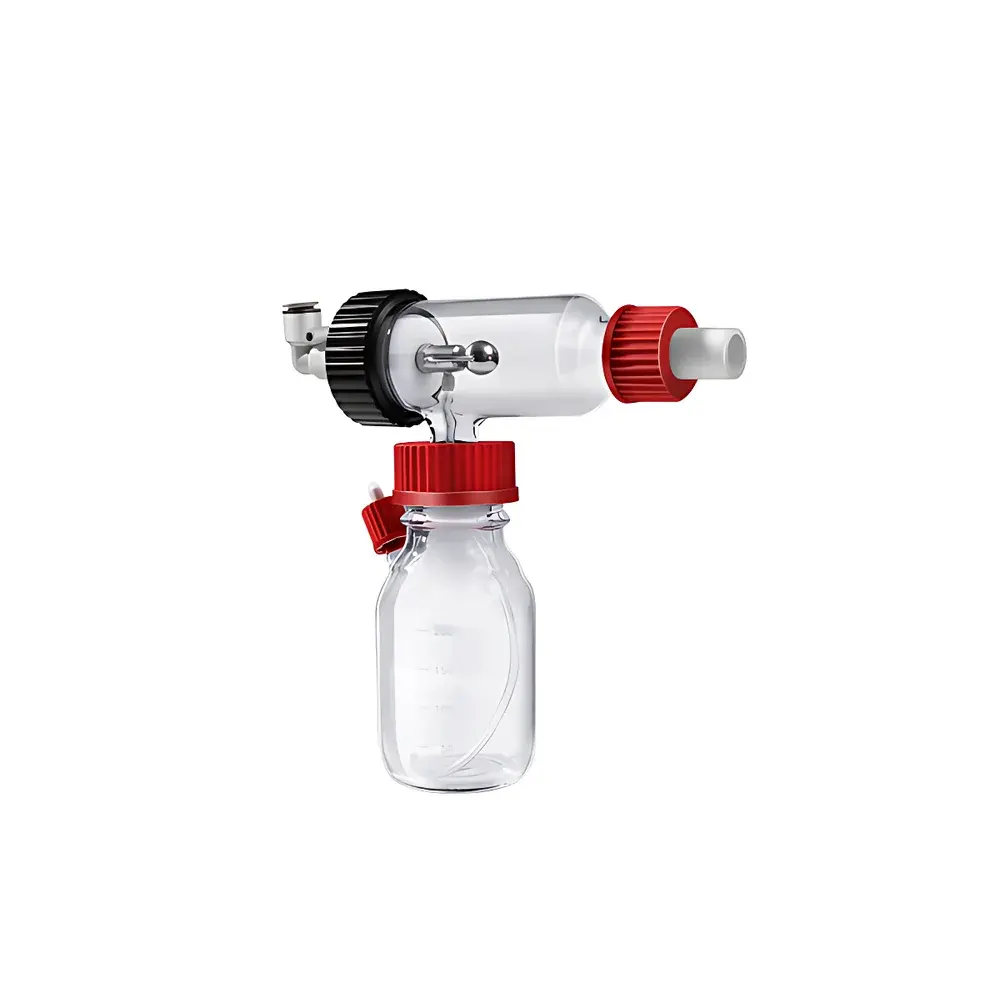
Huiron HRH-BAG1 Impactor-Type Liquid Aerosol Generator
| Brand | Huiron |
|---|---|
| Model | HRH-BAG1 |
| Type | Impactor-based liquid aerosol generator |
| Aerosol Mass Median Aerodynamic Diameter (MMAD) | 1–3 µm |
| Geometric Standard Deviation (GSD) | 1.5–3 |
| Liquid feed tubing | Silicone tube, 2 mm ID × 4 mm OD |
| Compressed air inlet | PU tubing, 6.5 mm ID × 10 mm OD |
| Aerosol outlet port | 16 mm ID × 20 mm OD |
| Compliance | OECD TG 403, 412, 413, 436 |
Overview
The Huiron HRH-BAG1 Impactor-Type Liquid Aerosol Generator is an engineered solution for the controlled generation of respirable liquid aerosols in preclinical inhalation toxicology and immunology research. It operates on the principle of jet impaction—where a high-velocity stream of compressed gas accelerates liquid through a narrow orifice and directs it onto a solid impactor surface, inducing shear-driven atomization. This physical mechanism produces polydisperse aerosols with predictable aerodynamic characteristics optimized for deposition in the deep lung regions of rodent and non-rodent test subjects. Unlike ultrasonic or vibrating mesh generators, the HRH-BAG1 avoids thermal degradation of thermolabile compounds and eliminates piezoelectric component wear, offering stable output over extended exposure durations. Its design targets the physiologically relevant respirable fraction defined by ISO 2942 and ICH S7A, with MMAD tightly constrained between 1 and 3 µm and GSD ranging from 1.5 to 3—parameters validated against cascade impactor measurements per USP & Ph. Eur. guidelines.
Key Features
- Impactor-based atomization architecture ensures consistent droplet breakup without heating or electrical excitation—critical for preserving biological activity of proteins, vaccines, or live microorganisms.
- Integrated bubble suppression geometry minimizes foam formation during nebulization of surfactant-containing or low-surface-tension formulations, reducing carryover and improving delivery fidelity.
- Compatible with low-concentration suspensions (e.g., bacterial or viral particulates in saline or cell culture media), enabling reproducible microbial aerosol generation for inhalation infection modeling.
- Chemically inert fluid path constructed from medical-grade silicone and stainless steel components; supports aqueous solutions, light hydrocarbon oils, and ethanol/water mixtures without leaching or swelling.
- Modular pneumatic interface accommodates standard lab-grade compressed air (4–6 bar) with pressure regulation and particulate filtration—no external humidification or temperature control required.
Sample Compatibility & Compliance
The HRH-BAG1 is validated for use with sterile-filtered liquids, including Gram-negative and Gram-positive bacterial suspensions, lentiviral vectors, influenza A/H1N1 preparations, and model antigens such as ovalbumin or LPS. Its aerosol output profile meets the inhalation dosing criteria specified in OECD Test Guidelines 403 (acute), 412 (28-day subacute), 413 (90-day subchronic), and 436 (acute tiered testing). The system is compatible with whole-body or nose-only exposure chambers compliant with GLP requirements, and its mechanical design allows integration into ISO 17025-accredited inhalation laboratories. Documentation packages include traceable calibration records, material biocompatibility reports (USP Class VI), and verification protocols aligned with FDA Guidance for Inhalation Toxicology Studies (2021).
Software & Data Management
The HRH-BAG1 is a stand-alone, manually operated device with no embedded firmware or digital interface. All operational parameters—including airflow rate, liquid feed volume, and exposure duration—are controlled externally via calibrated mass flow controllers, precision syringe pumps, and time-synchronized data loggers. This analog architecture simplifies 21 CFR Part 11 compliance: users maintain full audit trails through independent instrument logging systems (e.g., LabVIEW or MATLAB-based acquisition), eliminating software validation overhead. Process parameters are recorded in raw CSV or Excel formats, supporting retrospective analysis under GLP or GMP frameworks. Optional accessories include real-time optical particle sizers (e.g., TSI OPS 3330) for in-line MMAD/GSD verification during exposure runs.
Applications
- Preclinical evaluation of inhaled therapeutics, including mRNA-LNPs, monoclonal antibodies, and dry powder formulations reconstituted in volatile carriers.
- Development and validation of animal models for pulmonary infectious disease—e.g., Mycobacterium tuberculosis, SARS-CoV-2, or Aspergillus fumigatus aerosol challenge studies.
- Assessment of occupational inhalation hazards from industrial nanomaterials, pesticide formulations, or combustion-derived particulates.
- Method development for regulatory submissions requiring OECD-compliant aerosol generation, particularly where thermal instability or electrostatic charge interference precludes alternative nebulizer technologies.
- Reference aerosol source in inter-laboratory proficiency testing programs coordinated by ECETOC or NIOSH.
FAQ
What types of liquids can be aerosolized with the HRH-BAG1?
Aqueous buffers, isotonic saline, cell culture media, light mineral oils, ethanol-water mixtures, and low-viscosity suspensions (≤5 cP) containing microbial cells or nanoparticles—provided they are free of undissolved aggregates larger than 10 µm.
Is the HRH-BAG1 suitable for GLP-compliant studies?
Yes—its mechanical design, absence of proprietary software, and compatibility with third-party calibrated instrumentation enable full adherence to OECD Principles of Good Laboratory Practice and FDA GLP regulations (21 CFR Part 58).
How is aerosol size distribution verified?
Users perform cascade impactor analysis (e.g., Andersen or Next Generation Impactors) according to ISO 14644-3 or USP <1207>, with MMAD and GSD calculated from stage-wise gravimetric or microbiological recovery data.
Does the generator require routine maintenance?
Daily cleaning of the impactor plate and orifice with isopropanol and deionized water is recommended; annual inspection of silicone tubing integrity and air filter replacement ensures long-term reproducibility.
Can the HRH-BAG1 be integrated into automated exposure systems?
Yes—its standardized pneumatic and mechanical interfaces allow direct coupling to programmable exposure chambers, robotic liquid handling modules, and centralized airflow management systems via 0–10 V or 4–20 mA analog signals.
Related Products







