
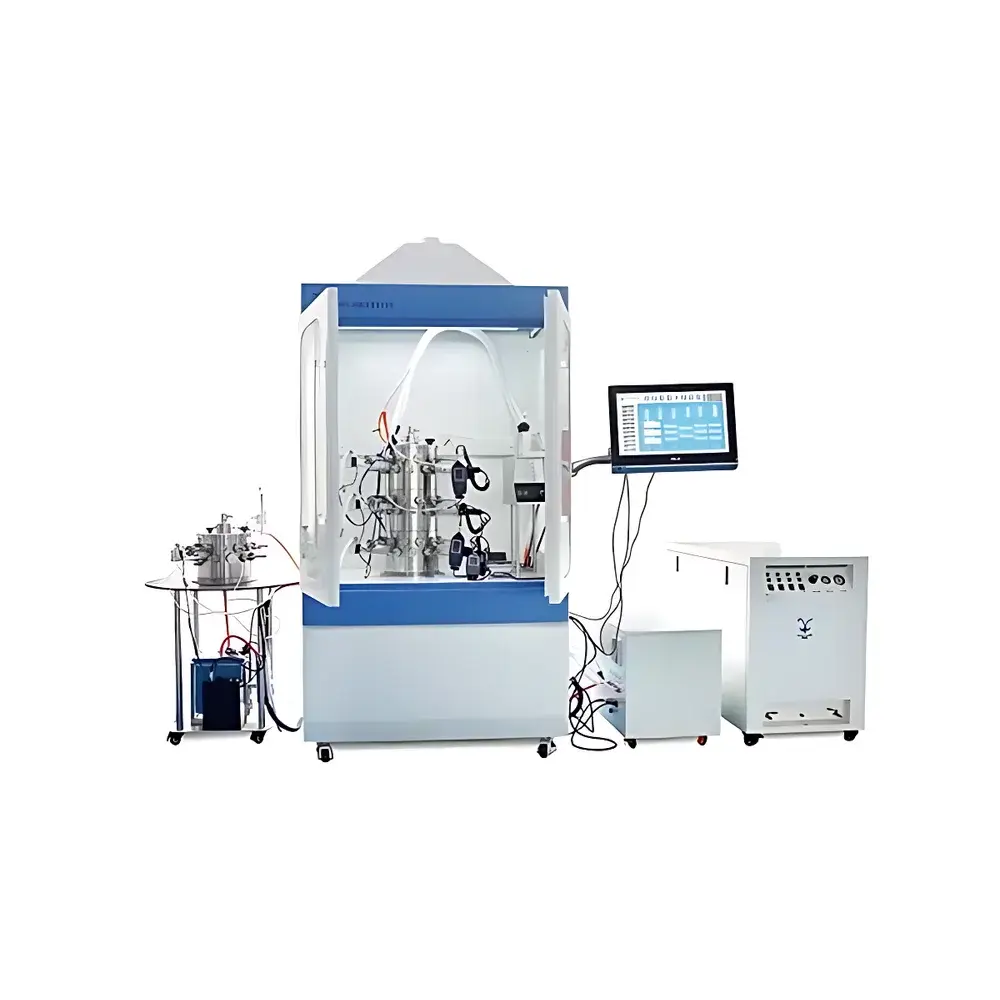
Huiron HRH-MNE63120 Multi-Concentration Nose-Only Inhalation Exposure System
| Brand | Huiron |
|---|---|
| Origin | Beijing, China |
| Model | HRH-MNE63120 |
| Regulatory Compliance | OECD TG 403/412/413/436, GB/T 15670.6–2017 to GB/T 15670.26–2017 |
| Concentration Gradients | Up to 5 simultaneous, independently controlled dose levels |
| Aerosol Uniformity (gas/vapor) | ±8% CV |
| Aerosol Uniformity (liquid aerosol) | ±10% CV |
| Aerosol Uniformity (dust/aerosolized powder) | ±20% CV |
| Operating Principle | Single-source aerosol generation with vortex-assisted dilution cascade |
| Safety | Integrated negative-pressure containment |
| Footprint | Compact benchtop design |
Overview
The Huiron HRH-MNE63120 Multi-Concentration Nose-Only Inhalation Exposure System is an engineered platform for regulatory-compliant, quantitative inhalation toxicology studies in rodents. It operates on the principle of single-source aerosol generation followed by precision dilution via a proprietary vortex mixing cascade—enabling simultaneous delivery of three to five discrete, stable concentration gradients from one aerosol source. This architecture eliminates inter-group variability arising from sequential or parallel aerosol generation, ensuring identical particle size distribution, chemical composition, and temporal stability across all exposure ports. Designed specifically for nose-only exposure, the system minimizes dermal and oral contamination while maximizing pulmonary deposition efficiency in conscious, unrestrained animals. Its mechanical and control architecture supports exposure to gaseous analytes, volatile organic compounds (VOCs), liquid-based aerosols (e.g., nebulized therapeutics or pesticides), and dry powdered particulates—including nanostructured and respirable dust fractions—within defined aerodynamic diameter ranges relevant to human health risk assessment.
Key Features
- Single-aerosol-source multiplexed exposure: Generates up to five independent concentration levels from one primary aerosol stream, reducing sample consumption by ≥60% compared to conventional multi-chamber setups.
- Vortex-assisted dilution cascade: Ensures rapid, homogeneous mixing across all dilution stages; validated uniformity performance meets OECD TG 412 Annex 3 requirements for intra-chamber mass concentration variance.
- Real-time closed-loop concentration control: Integrated photometric and/or gravimetric sensors feed back to proportional control valves, enabling dynamic adjustment to maintain target exposure levels within specified tolerances throughout the dosing period.
- Negative-pressure containment: Entire exposure manifold operates under −25 Pa relative to ambient laboratory air, with HEPA-filtered exhaust and leak-tested seals compliant with ISO 14644-1 Class 7 cleanroom integrity standards.
- Modular port configuration: Supports up to 12 simultaneous nose-only exposure tubes (standard rodent sizes: mice, rats); each tube features individually adjustable flow rate (0.5–3.0 L/min) and calibrated inlet pressure monitoring.
- Energy-efficient thermal management: Low-power heating/cooling elements maintain chamber temperature within ±1.5°C of setpoint (18–30°C range), minimizing animal thermoregulatory stress during prolonged exposures.
Sample Compatibility & Compliance
The HRH-MNE63120 accommodates a broad spectrum of test agents without requiring hardware modification: volatile liquids (e.g., acetone, formaldehyde), water- or solvent-based suspensions (e.g., lipopolysaccharide, influenza virus aerosols), and dry powders (e.g., TiO₂, silica, pesticide formulations). All aerosol generation modules—including ultrasonic nebulizers, collision jet atomizers, and fluidized bed dry powder dispersers—are pre-qualified per ISO 27427:2012 for respirable fraction generation. The system fully supports Good Laboratory Practice (GLP) audit readiness: full traceability of exposure parameters (time-stamped concentration logs, flow calibration certificates, maintenance records), electronic signature capability, and 21 CFR Part 11–compliant audit trails are embedded in the control software. It satisfies the technical execution criteria of OECD Test Guidelines 403, 412, 413, and 436, as well as Chinese national standards GB/T 15670.6–2017 through GB/T 15670.26–2017 for acute, subacute, subchronic, and chronic inhalation toxicity testing.
Software & Data Management
The dedicated Huiron Exposure Control Suite (v3.2+) provides intuitive graphical workflow setup, real-time exposure monitoring, and automated report generation. Users define exposure protocols—including duration, concentration ramp profiles, hold phases, and recovery intervals—via drag-and-drop timeline interface. All sensor data (mass concentration, airflow, temperature, humidity, pressure differentials) are sampled at 1 Hz and stored in encrypted SQLite databases with SHA-256 checksum verification. Export options include CSV, PDF (with embedded GLP metadata), and XML formats compatible with enterprise LIMS platforms. Audit trail functionality logs every user action—including parameter edits, calibration events, and emergency shutdowns—with immutable timestamps and operator ID linkage. Remote access via TLS 1.2–secured web interface enables off-site monitoring without compromising network security.
Applications
- Regulatory safety pharmacology: Acute and repeated-dose inhalation toxicity assessment per ICH S7A/S7B and OECD guidelines.
- Inhalation drug development: Preclinical PK/PD modeling of inhaled biologics, mRNA-LNPs, and small-molecule aerosols.
- Respiratory disease modeling: Controlled induction of COPD, asthma, or fibrosis using standardized allergen or irritant challenges (e.g., ovalbumin, LPS, bleomycin).
- Environmental health science: Dose-response characterization of airborne pollutants (PM₂.₅, diesel exhaust particles, wildfire smoke condensate).
- Radiobiology: Low-dose alpha-emitter (e.g., ²¹⁰Po, ²³⁹PuO₂) aerosol exposure under ALARA-compliant containment.
- Military and aerospace medicine: Evaluation of novel countermeasures against chemical warfare agent simulants or hypobaric/hyperoxic inhalation stressors.
FAQ
What aerosol generation methods are supported?
The system integrates interchangeable modules for ultrasonic nebulization (liquid aerosols), jet atomization (volatile/semi-volatile compounds), and fluidized-bed dispersion (dry powders), all pre-validated for respirable fraction output.
Can exposure concentration be adjusted mid-experiment?
Yes—real-time feedback control allows dynamic re-targeting of any concentration level during active exposure, with stabilization typically achieved within 90 seconds.
Is the system suitable for BSL-2 pathogens?
When equipped with optional HEPA + carbon dual-stage exhaust filtration and validated leak-tight seals, it complies with CDC/NIH BSL-2 aerosol containment requirements for non-replicating viral vectors and bacterial endotoxins.
How is inter-port concentration uniformity verified?
Each shipment includes a factory-issued Certificate of Uniformity, based on gravimetric sampling per ISO 15714 using cascade impactors across all ports under representative operating conditions.
Does the software support 21 CFR Part 11 compliance?
Yes—electronic signatures, role-based access control, audit trail archiving, and data integrity validation are enabled by default and documented in the System Validation Protocol (SVP) package.
Related Products



