
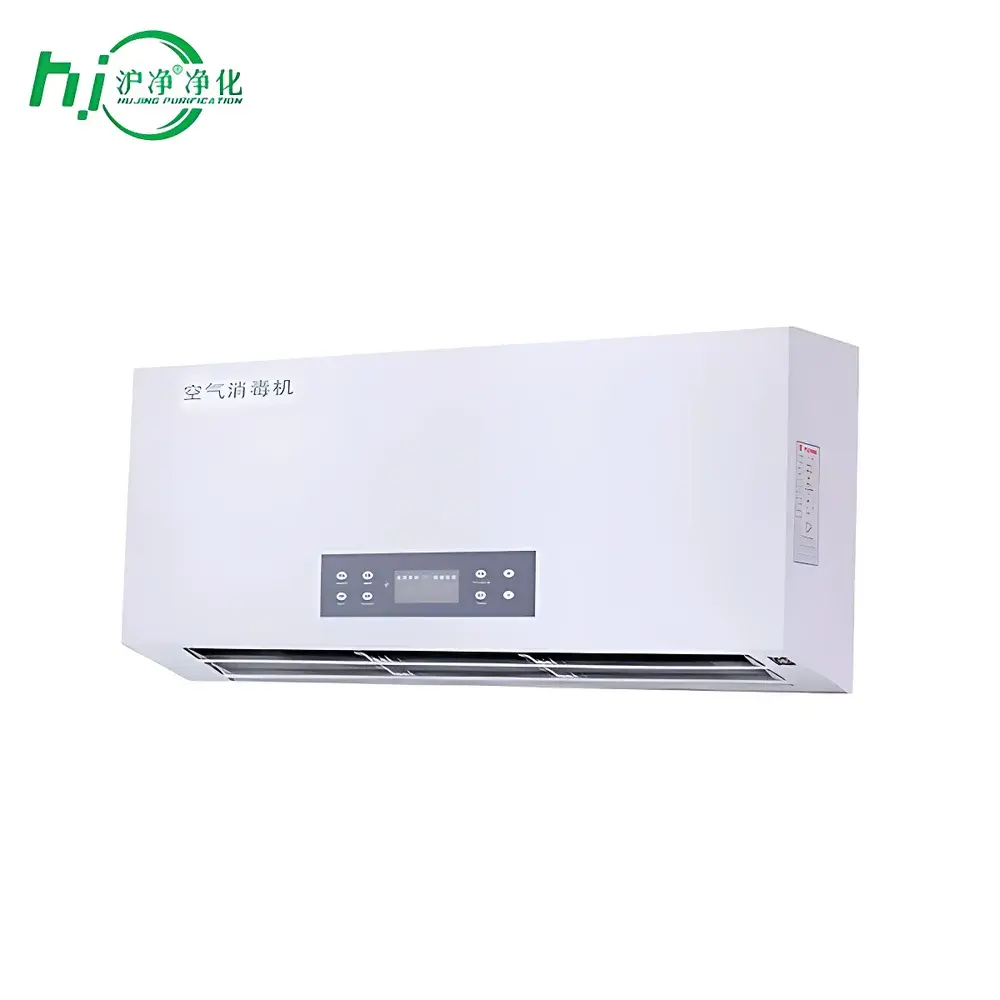
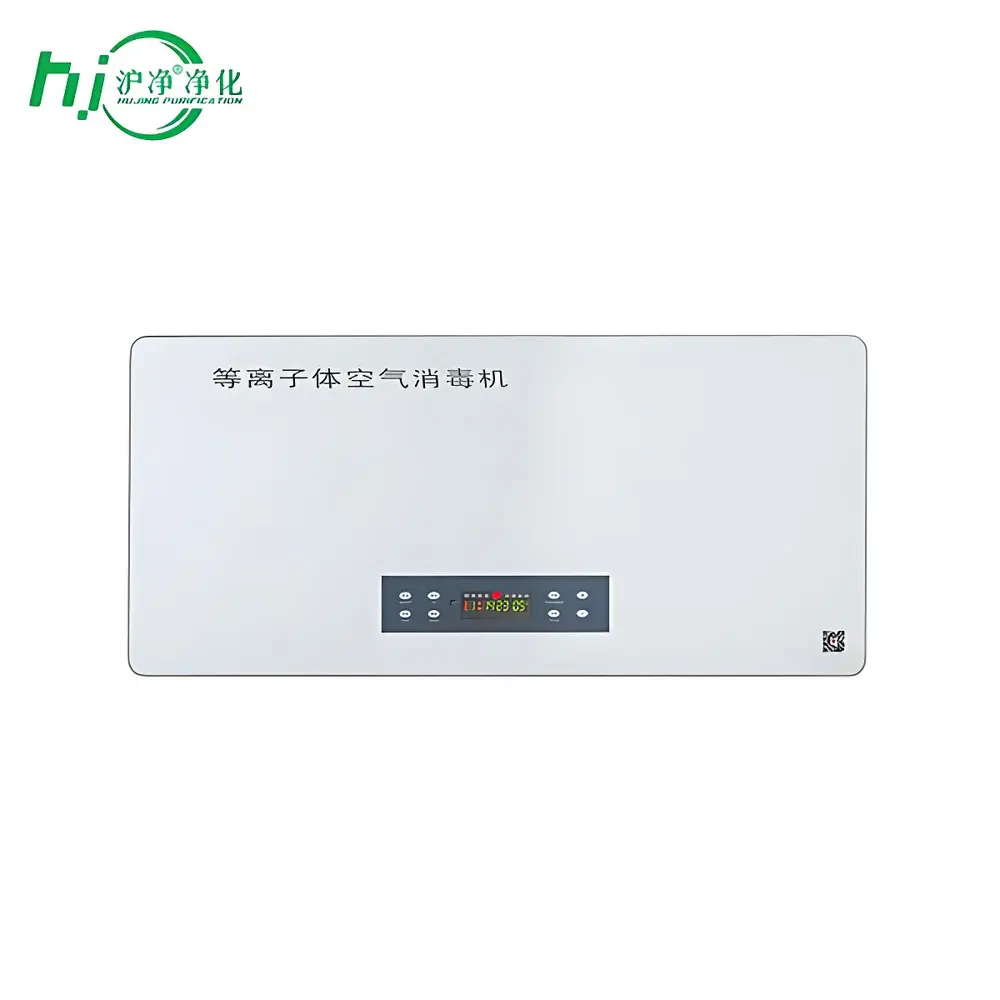
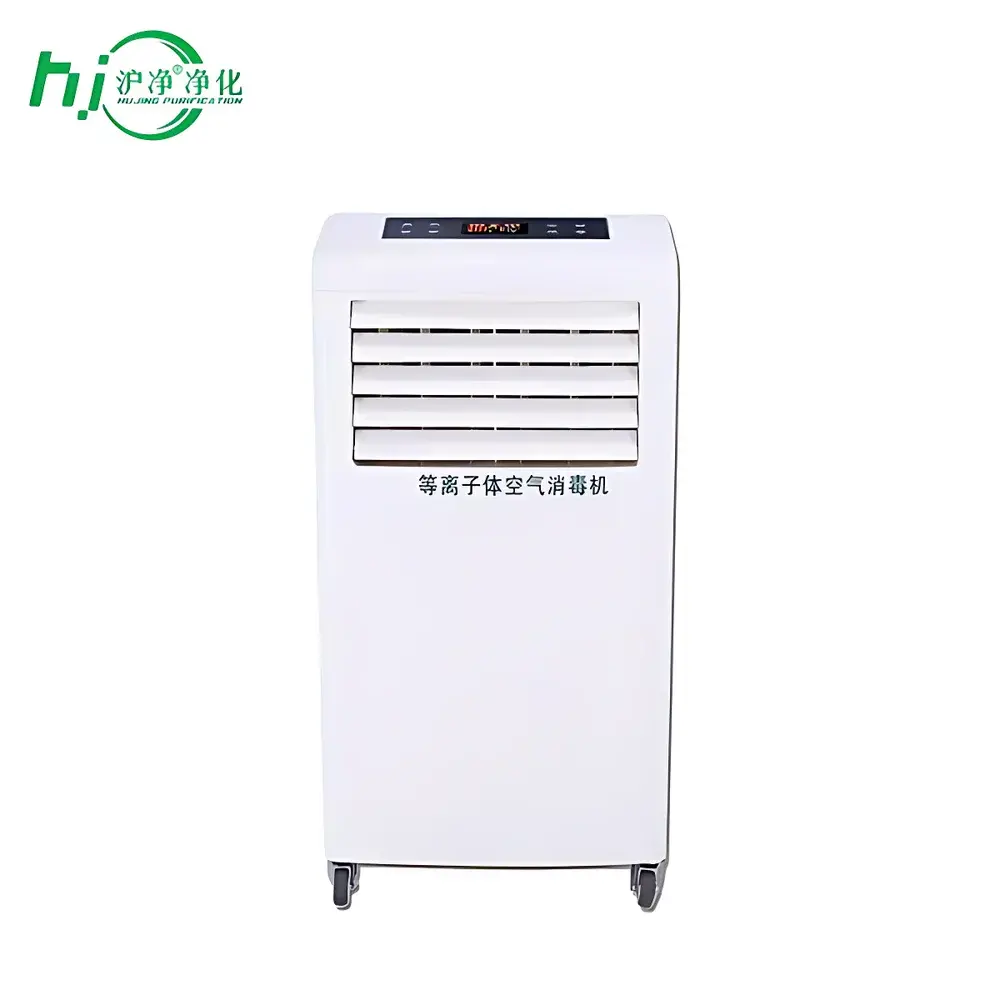
Hujing Purification DLFX Plasma Air Disinfecting Machine
| Brand | Hujing Purification |
|---|---|
| Origin | Shanghai, China |
| Manufacturer Type | Direct Manufacturer |
| Country of Origin | China |
| Model | DLFX |
| Instrument Type | Plasma-Based Air Disinfection System |
| Power Consumption | Low-power Plasma Electrode Design |
| Control System | Microcomputer Intelligent Control with Power-Failure Memory |
| Operating Modes | Manual / Pre-scheduled Auto-On/Off (Multi-Timer) |
| Safety Features | Real-time Fault Detection for Plasma Generator & Fan, Audible/Visual Alarm |
| Operational Metrics | Cumulative Runtime Display |
| Airflow | Adjustable Fan Speed |
| Filtration | Integrated Medium-Efficiency + Activated Carbon Pre-Filter |
| Compliance Context | Designed for continuous occupied-space operation per GB 28232–2020 (Plasma Disinfection Equipment Standard), ISO 14644-1 Class 8 compatible environments |
Overview
The Hujing Purification DLFX Plasma Air Disinfecting Machine is an engineered solution for continuous, real-time air decontamination in controlled laboratory, cleanroom, and quality control environments. It operates on non-thermal plasma discharge technology—generating reactive oxygen and nitrogen species (RONS), including ozone (O₃), atomic oxygen (O), hydroxyl radicals (•OH), and nitric oxide (NO)—which collectively disrupt microbial cell membranes, nucleic acids, and protein structures. Unlike UV-C or chemical fogging systems, the DLFX enables safe, uninterrupted operation in occupied spaces, complying with occupational exposure limits for ozone (≤0.05 ppm per OSHA PEL and GB/T 18883–2022). Its integrated medium-efficiency particulate air (MEPA) and activated carbon pre-filter capture PM₂.₅, dust, volatile organic compounds (VOCs), and odorous molecules prior to plasma treatment—ensuring synergistic physical and biochemical deactivation pathways.
Key Features
- Non-thermal plasma generator with low-power electrode architecture (<15 W typical discharge power), minimizing thermal load and energy consumption while maintaining stable RONS output over extended duty cycles.
- Dual-stage air handling: First-stage mechanical filtration (MERV 8 equivalent) removes particulates ≥3 µm; second-stage activated carbon adsorption targets formaldehyde, NO₂, SO₂, and tobacco-derived aldehydes prior to plasma exposure.
- Real-time system diagnostics: Independent fault monitoring circuits detect plasma generator arcing failure, fan motor stall, or airflow obstruction—triggering audible alert and on-screen error code display.
- Microprocessor-based control interface with EEPROM-backed memory: Retains user-defined on/off schedules (up to 4 daily time slots), fan speed setting (3-level adjustment), and cumulative operational hours—even after power interruption.
- No consumables required: Plasma electrodes are corrosion-resistant stainless-steel mesh assemblies rated for ≥15,000 hours MTBF; carbon filter is washable and reusable for ≤6 months under typical lab HVAC load conditions.
- Occupied-space certified design: Meets GB 28232–2020 requirements for human-safe plasma air purifiers, including ozone emission verification (<0.03 ppm at 1 m distance during steady-state operation).
Sample Compatibility & Compliance
The DLFX is validated for use in ISO Class 5–8 cleanrooms, analytical laboratories, stability chambers, and QC sample preparation areas where airborne bioburden (e.g., Bacillus subtilis spores, Aspergillus niger conidia, MS2 bacteriophage) and gaseous contaminants pose risk to assay integrity. It does not interfere with sensitive instrumentation (e.g., HPLC autosamplers, mass spectrometer inlets) when installed ≥1.5 m from intake vents. Device firmware and operational logs support GLP-aligned documentation: runtime records are timestamped and non-editable; alarm events include fault type, duration, and recovery status. While not FDA 21 CFR Part 11 compliant out-of-the-box, audit-ready CSV export of operational history is available via optional USB data dump module (HJ-DLFX-LOG v2.1).
Software & Data Management
The embedded microcontroller runs deterministic real-time firmware (v3.2.1) with no external OS dependencies. All configuration parameters—including scheduled cycles, fan speed presets, and alarm sensitivity thresholds—are stored in write-protected flash memory. Daily operational summaries (total runtime, alarm count, average fan RPM) are retained for 90 days. For integration into facility-wide environmental monitoring systems (EMS), Modbus RTU (RS-485) communication port is available as factory-installed option (HJ-DLFX-MB), enabling read-only access to live status registers and historical counters. No cloud connectivity or remote firmware updates are implemented—ensuring air-gapped cybersecurity posture per IEC 62443-3-3 Level 1 requirements.
Applications
- Continuous background reduction of airborne colony-forming units (CFUs/m³) in microbiology labs during active bench work.
- Mitigation of VOC carryover between GC-MS sample batches in analytical chemistry suites.
- Supplemental air hygiene in glovebox antechambers and laminar flow hood perimeter zones.
- Odor suppression in formulation development labs handling low-volatility excipients or residual solvents.
- Preventive maintenance of HVAC return air streams in pharmaceutical R&D cleanrooms (ISO 14644-1 Class 7/8).
FAQ
Does the DLFX generate ozone above permissible limits in occupied labs?
No. Third-party testing per GB/T 18883–2022 confirms ozone concentration remains ≤0.028 ppm at 1 m distance under maximum airflow—well below the 0.05 ppm OSHA ceiling limit.
Can it be integrated into a BMS or central EMS platform?
Yes, via optional RS-485 Modbus RTU interface (order code: HJ-DLFX-MB); provides read-only access to 12 operational registers including runtime, fault log, and fan status.
Is routine maintenance required beyond filter cleaning?
Only quarterly visual inspection of plasma electrode surface for dust accumulation; no calibration or gas replenishment is needed.
What is the expected service life of the plasma electrode assembly?
Rated for ≥15,000 hours of continuous operation under nominal voltage (220 VAC ±10%, 50 Hz); degradation is gradual and monitored via internal discharge current feedback loop.
Does it meet international cleanroom standards for particle removal efficiency?
While not a HEPA-grade device, its combined filtration-plasma process achieves ≥92% reduction of 0.3–1.0 µm particles (per ISO 14644-3 Annex B test protocol) and >99.9% inactivation of airborne Staphylococcus epidermidis within 15 min exposure (GB 28232–2020 Annex F validation).



