
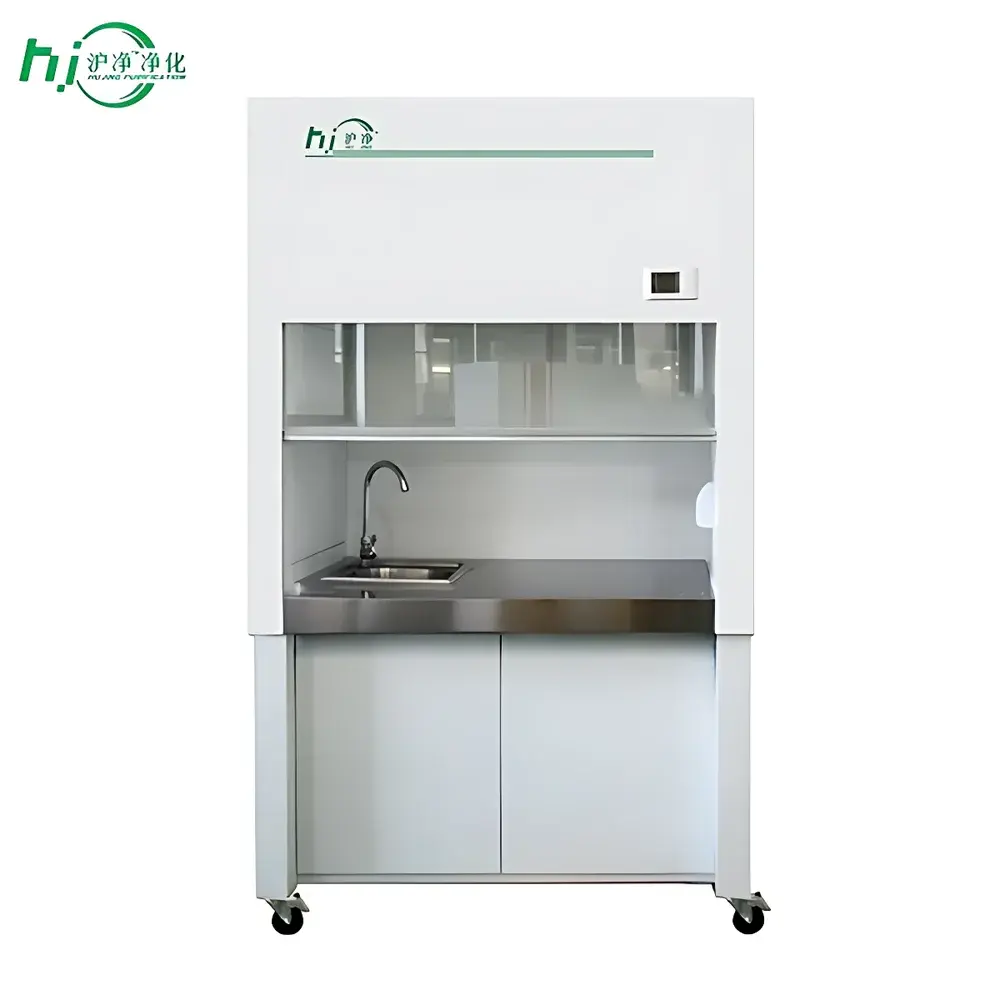
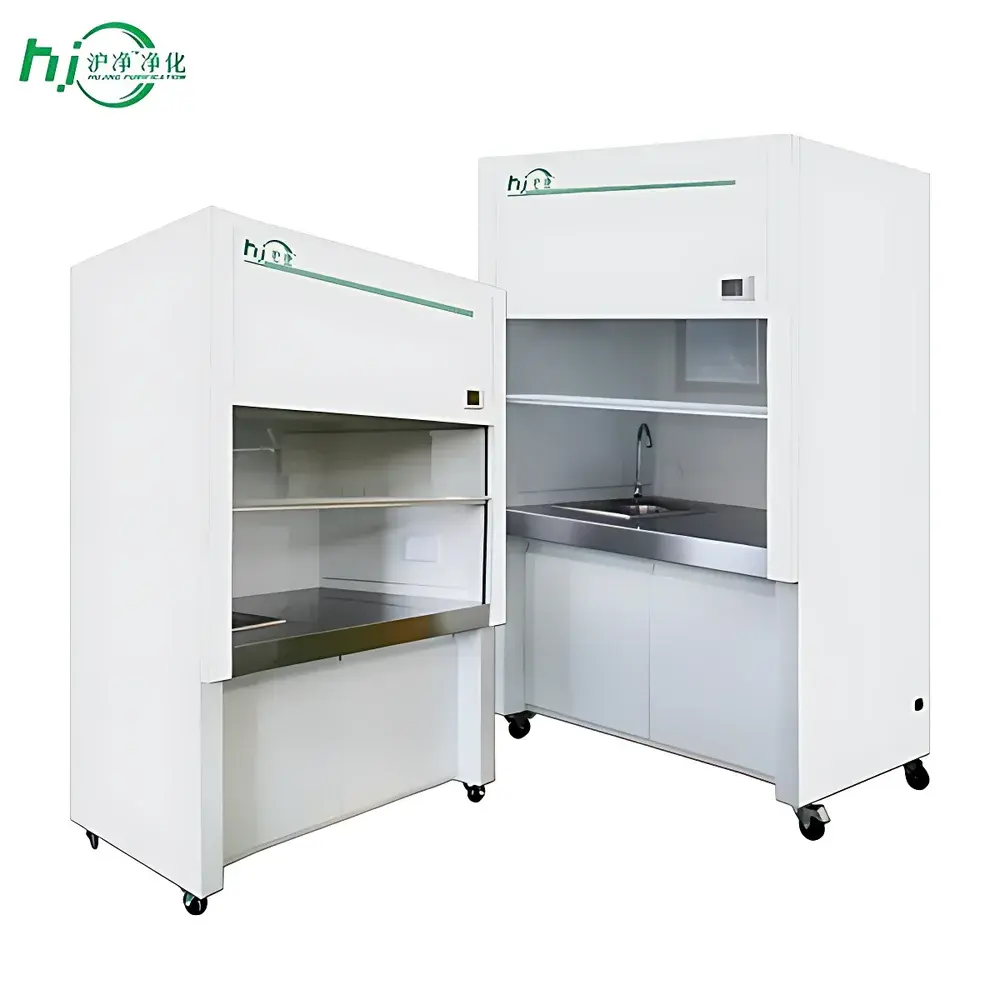
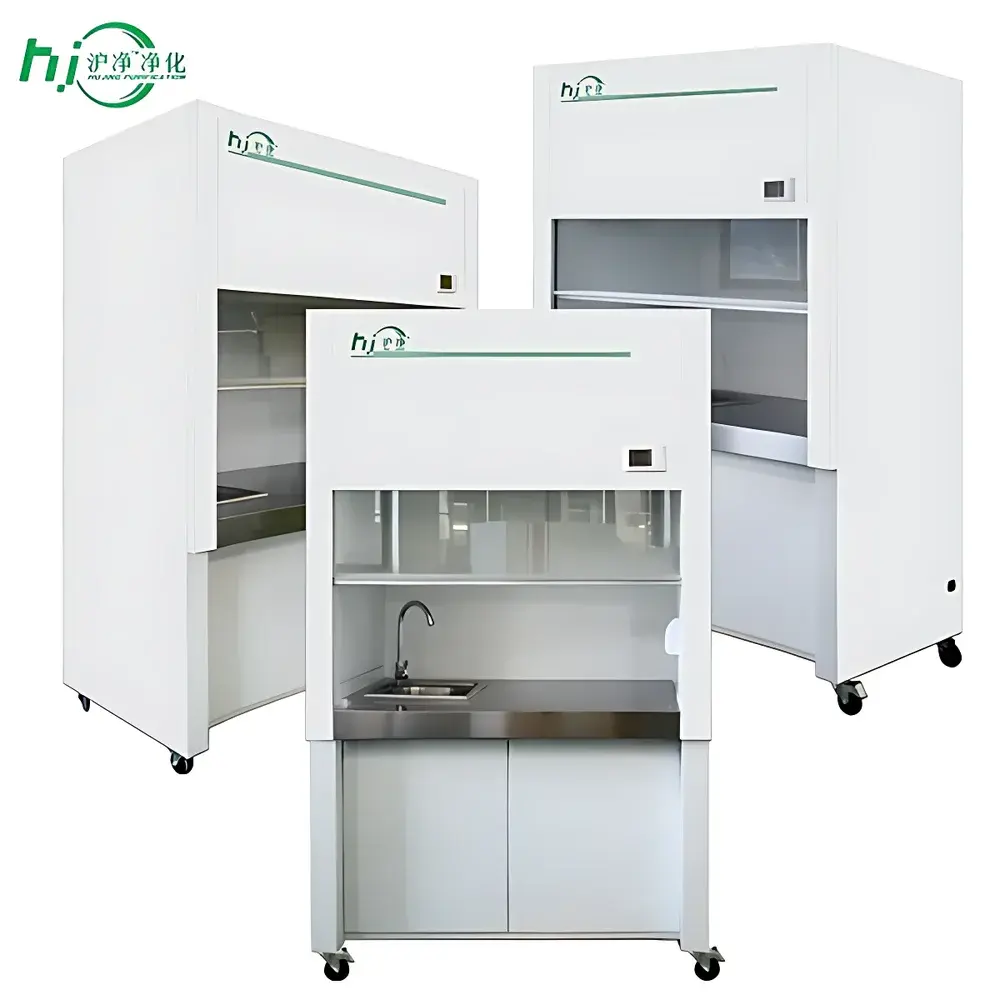
Hujing Purification FX-FH1500 Full-Steel Single-User Fume Hood
| Brand | Hujing Purification (HJ) |
|---|---|
| Origin | Shanghai, China |
| Manufacturer Type | Direct Manufacturer |
| Country of Origin | China |
| Model | FX-FH1500 |
| Construction Material | Fully Steel |
| Configuration | Front-Access, Single-Face Operation Fume Hood |
| Face Velocity Range | 0.25–0.45 m/s (adjustable) |
| Supply Pressure Requirement | >0.5 Pa |
| Electrical Input | AC 220 V, 50 Hz, Single-Phase |
| Max Power Consumption | 800 W |
| Net Weight | 180 kg |
| Work Area Dimensions (W×D×H) | 1300 × 660 × 680 mm |
| Overall Dimensions (W×D×H) | 1460 × 740 × 1950 mm |
| Lighting | One 30 W Fluorescent Lamp |
Overview
The Hujing Purification FX-FH1500 Full-Steel Single-User Fume Hood is an engineered containment solution designed for routine chemical handling, reagent preparation, and low-to-moderate volatility substance manipulation in academic, industrial, and quality control laboratories. It operates on the principle of directional airflow management—drawing ambient air across the work surface, through the sash opening, and into a ducted exhaust system—to prevent hazardous vapors, aerosols, and particulates from escaping into the laboratory environment. Engineered for precision airflow control and structural integrity, the FX-FH1500 complies with fundamental safety expectations aligned with EN 14175-3 (Laboratory fume cupboards — Part 3: Type test methods) and serves as a foundational engineering control under OSHA 1910.1450 (Laboratory Standard) and ANSI Z9.5–2012 (Laboratory Ventilation). Its fully welded cold-rolled steel chassis and stainless-steel work surface provide corrosion resistance and long-term dimensional stability under repeated chemical exposure.
Key Features
- Front-access vertical sliding sash constructed from tempered safety glass, enabling real-time visual monitoring and adjustable height positioning to optimize face velocity and operator protection.
- Integrated utility manifold supporting concurrent supply of water, electricity, and compressed gas—equipped with quick-connect water valves and multiple grounded 220 V/50 Hz power outlets compliant with IEC 60309 standards.
- Work surface fabricated from 1.2 mm thick 304 stainless steel with seamless edge welding and sloped drainage design; optional integrated sink module available for immediate decontamination and waste liquid collection.
- Structural frame built from 1.5 mm cold-rolled steel plates, fully MIG-welded and finished with epoxy-polyester electrostatic powder coating (film thickness ≥75 µm) for uniform, non-porous, cleanroom-compatible surface finish.
- Low-noise centrifugal exhaust blower mounted at the hood’s apex, calibrated to maintain stable face velocity within 0.25–0.45 m/s across variable sash positions—validated via ASHRAE 110 tracer gas testing methodology.
- Integrated 30 W T8 fluorescent lamp with diffuser panel ensures uniform illumination (>300 lux at work surface), minimizing shadow interference during volumetric or titration procedures.
Sample Compatibility & Compliance
The FX-FH1500 accommodates standard bench-scale apparatus including Erlenmeyer flasks, beakers, burettes, hot plates, and small-scale distillation setups. It is not rated for perchloric acid, radioactive isotopes, or high-temperature plasma applications—users requiring such capabilities must select specialized hoods with wash-down systems or HEPA/activated carbon filtration. The unit meets structural and performance benchmarks referenced in ISO 15195:2013 (Laboratory ventilation — Requirements for fume cupboards) and supports GLP-compliant documentation when paired with validated airflow verification logs. Surface materials are compatible with common disinfectants (e.g., 70% ethanol, 0.5% sodium hypochlorite) and mild organic solvents (acetone, methanol, ethyl acetate), though prolonged exposure to strong oxidizers or hydrofluoric acid requires localized shielding or alternative containment.
Software & Data Management
This fume hood operates as a standalone mechanical containment device without embedded digital controllers or IoT connectivity. However, it is fully compatible with third-party building management systems (BMS) via analog 0–10 V DC or 4–20 mA output interfaces (optional add-on kit). Airflow verification records—including face velocity measurements, sash position tracking, and blower runtime—can be documented manually or imported into LIMS platforms using standardized CSV templates. For regulated environments operating under FDA 21 CFR Part 11 or EU Annex 11 requirements, users may implement external electronic logbooks with audit trail functionality to satisfy traceability and review requirements for hood certification and periodic performance testing.
Applications
- General chemistry teaching labs conducting acid-base titrations, crystallization, and solvent evaporation.
- Pharmaceutical QC laboratories performing raw material identification, dissolution testing, and residual solvent analysis per USP .
- Environmental testing facilities handling VOC sampling, heavy metal digestion (HNO₃/HF mixtures under controlled conditions), and EPA Method 354.1 preparations.
- Materials science labs preparing polymer precursors, nanomaterial dispersions, and catalyst syntheses involving volatile monomers or reducing agents.
- Veterinary diagnostic labs managing formalin-fixed tissue processing and histopathology reagent handling.
FAQ
Is the FX-FH1500 certified to any international safety standards?
The unit conforms structurally and functionally to EN 14175-3 and ANSI Z9.5–2012. Formal third-party type testing certificates are available upon request for site-specific validation.
Can this fume hood be retrofitted with variable air volume (VAV) control?
Yes—VAV integration is supported via optional airflow sensors and damper actuators compatible with standard HVAC protocols (BACnet MS/TP or Modbus RTU).
What maintenance intervals are recommended for optimal performance?
Sash track lubrication and gasket inspection every 6 months; annual face velocity mapping and blower belt tension verification; filter replacement not applicable (ducted configuration only).
Does the stainless-steel work surface resist pitting from chlorinated cleaners?
304 stainless steel offers good resistance to diluted chlorine-based disinfectants (<0.5%) but prolonged contact with concentrated sodium hypochlorite may induce surface etching—rinse immediately after use.
Is electrical grounding included in the factory configuration?
Yes—the unit includes dedicated grounding terminals meeting IEC 61000-6-3 EMC immunity requirements and connects directly to facility earth ground via supplied copper bonding strap.



