
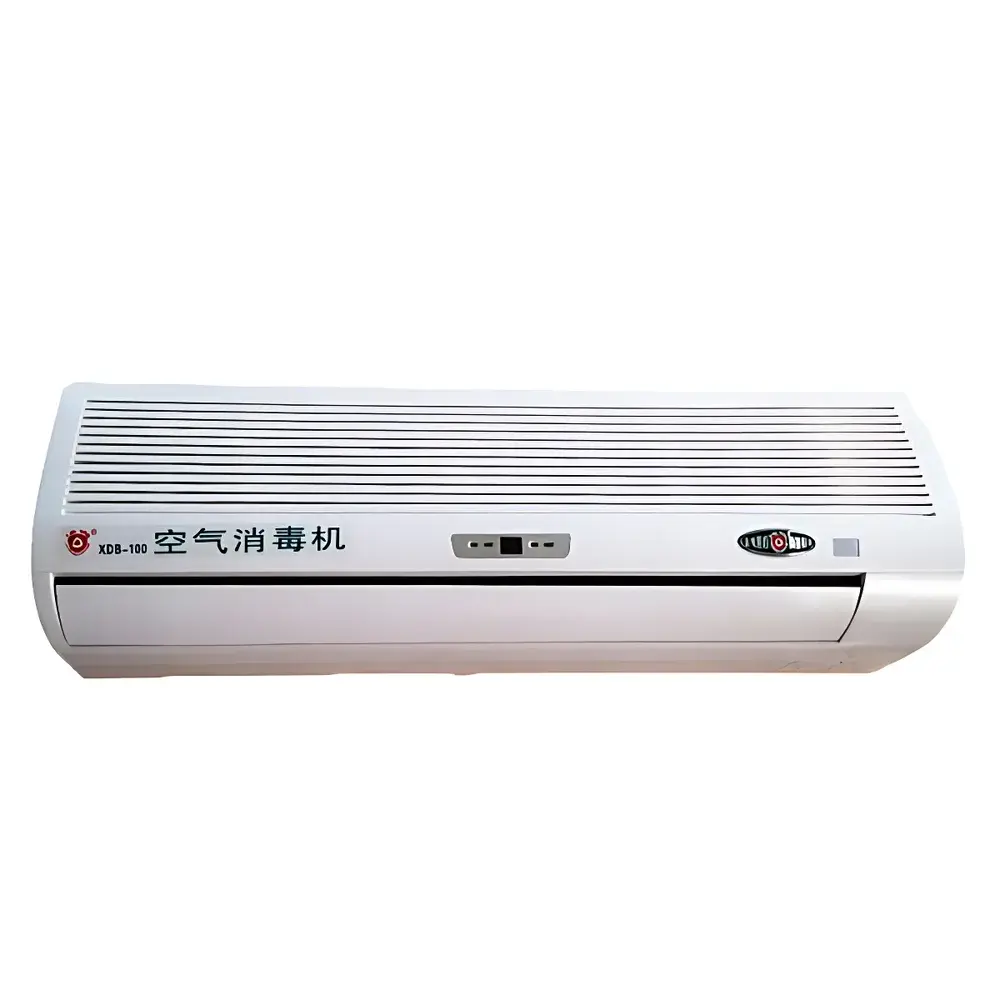
Hujing ZJQ-300 Ceiling-Mounted Air Disinfection Unit
| Brand | Hujing Purification (HJ) |
|---|---|
| Origin | Shanghai, China |
| Manufacturer Type | Direct Manufacturer |
| Region of Origin | Domestic (China) |
| Model | ZJQ-300 |
| Price | USD 720 (approx.) |
| Mounting Type | Ceiling-Mounted |
| Disinfection Modes | Dynamic (UVC + Filtration + Negative Ions) and Static (Ozone) |
| Ozone Output | 10,000 mg/h |
| UV-C Lamp Power | 432 W (12 × 36 W lamps) |
| UV Irradiance | ≥10,000 µW/cm² at 1 m |
| Airflow Capacity | ≥800 m³/h |
| Filtration Stages | Pre-filter + HEPA-grade electrostatic adsorption + activated carbon + stainless steel mesh |
| Negative Ion Output | ≥5 × 10⁶ ions/cm³ |
| Operating Noise | ≤50 dB(A) |
| Ambient Temp. Range | 5–40 °C |
| Power Supply | 220 VAC / 50 Hz |
| Safety Class | Class I, Type B |
| Compliance | GB 28235–2020, WS/T 367–2012, YY 0505–2012 |
Overview
The Hujing ZJQ-300 Ceiling-Mounted Air Disinfection Unit is an integrated, hardwired environmental control system engineered for continuous or scheduled microbial decontamination in controlled laboratory, cleanroom, and clinical support spaces. It operates on a dual-mode principle: dynamic disinfection—enabling safe occupancy during operation via broad-spectrum 254 nm ultraviolet C (UVC) irradiation, multi-stage mechanical and electrostatic filtration, activated carbon adsorption, and negative ion generation; and static disinfection—employing high-yield ozone (O₃) generation for terminal sterilization of air and exposed surfaces when the space is unoccupied. The unit complies with Chinese national standards GB 28235–2020 (“Ultraviolet Disinfection Equipment”) and WS/T 367–2012 (“Guidelines for Disinfection in Healthcare Settings”), and meets electromagnetic compatibility requirements per YY 0505–2012. Its ceiling-mounted architecture eliminates floor footprint, ensures uniform air recirculation, and minimizes turbulence-induced particle resuspension—critical in ISO Class 5–8 environments.
Key Features
- Multi-modal disinfection architecture supporting both occupied (UVC + filtration + ions) and unoccupied (ozone) protocols
- 12 high-output, low-ozone UVC lamps (36 W each), delivering ≥10,000 µW/cm² irradiance at 1-meter distance—validated per GB 28235–2020 photometric testing procedures
- High-efficiency ozone generation via dielectric-barrier discharge (DBD) tubes rated for >10,000 mg/h output, with enhanced thermal stability and moisture resistance
- Four-stage air treatment: washable stainless-steel pre-filter → electrostatic precipitator (ESP) for sub-1 µm particulates → granular activated carbon bed for VOC and odor removal → continuous negative ion emission (≥5 × 10⁶ ions/cm³)
- Embedded fault-detection logic monitoring UVC lamp integrity, ozone generator status, and blower motor performance—with audible/visual alarms and automatic shutdown on critical failure
- Programmable timer with memory retention enabling up to 7-day weekly scheduling; cumulative runtime logging for maintenance tracking and GLP-aligned recordkeeping
- CE-marked electrical design (per YY 0505–2012) and Class I, Type B safety classification per IEC 60601-1
Sample Compatibility & Compliance
The ZJQ-300 is validated for use in non-sterile and semi-restricted laboratory zones—including analytical prep rooms, QC microbiology support areas, sample holding cabinets, and instrument enclosures—where ambient bioburden control is required between operations. It does not replace sterilization-grade isolators or laminar flow hoods but serves as a supplementary environmental hygiene layer. All disinfection cycles are calibrated to meet the minimum efficacy thresholds defined in the Chinese Ministry of Health’s Disinfection Technical Guidelines: ≥90% reduction of natural airborne flora within 30 minutes (dynamic mode) and ≥90% reduction of surface-adhered microorganisms after 60 minutes (static ozone mode, achieving ≥60 mg/m³ residual ozone). The unit’s materials—304 stainless steel housing, ozone-resistant gaskets, and UV-stabilized polycarbonate lens—comply with ISO 14644-1 particle retention expectations and resist degradation under repeated oxidative exposure.
Software & Data Management
The ZJQ-300 operates via an embedded microcontroller with non-volatile EEPROM for parameter storage and event logging. It records cumulative operational hours for UVC lamps, ozone generator duty cycles, and fan runtime—exportable via RS-485 interface (optional Modbus RTU protocol) for integration into facility-wide BMS or LIMS audit trails. While it lacks cloud connectivity or GUI software, its event log supports retrospective verification of disinfection compliance per GLP Annex 11 and FDA 21 CFR Part 11 principles when paired with time-stamped, tamper-evident printed reports generated by external PLC systems. All alarm events include timestamp, error code, and mode context—facilitating root-cause analysis during internal quality audits.
Applications
- Ambient air bioburden reduction in analytical laboratories handling non-sterile pharmaceutical intermediates
- Pre-use decontamination of glovebox antechambers and weighing room vestibules
- Maintenance of low-microbial-load environments for polymerase chain reaction (PCR) setup areas
- Terminal disinfection of biosafety cabinet workspaces between user shifts (ozone mode only)
- Odor and VOC abatement in solvent storage or waste handling zones adjacent to lab corridors
- Supplemental pathogen control in animal holding support rooms where HVAC-based UVGI is impractical
FAQ
Can the ZJQ-300 be used while personnel are present in the room?
Yes—only in dynamic mode (UVC + filtration + ions). Ozone generation must be disabled and interlocked with occupancy sensors per local safety policy.
What is the recommended maintenance interval for the stainless-steel filter and activated carbon bed?
Pre-filter cleaning every 7 days; carbon replacement every 6 months under continuous operation; UVC lamp replacement at 8,000-hour nominal life or upon irradiance decay >20% (verified with calibrated radiometer).
Does the unit comply with international standards such as ISO 15714 or EN 17272?
No—it is certified to Chinese national standards (GB/WS/T series) and YY 0505–2012. It has not undergone third-party validation against EU or ASTM ozone efficacy benchmarks.
Is ozone concentration monitoring integrated into the unit?
No. External ozone monitors (e.g., electrochemical or UV-absorption sensors) compliant with GB/T 18204.2–2014 are required for real-time ambient O₃ verification prior to re-entry.
Can the ZJQ-300 be integrated into a building management system (BMS)?
Yes—via optional RS-485 Modbus RTU interface for status polling, start/stop commands, and alarm forwarding; custom integration requires commissioning by qualified facility engineers.



