
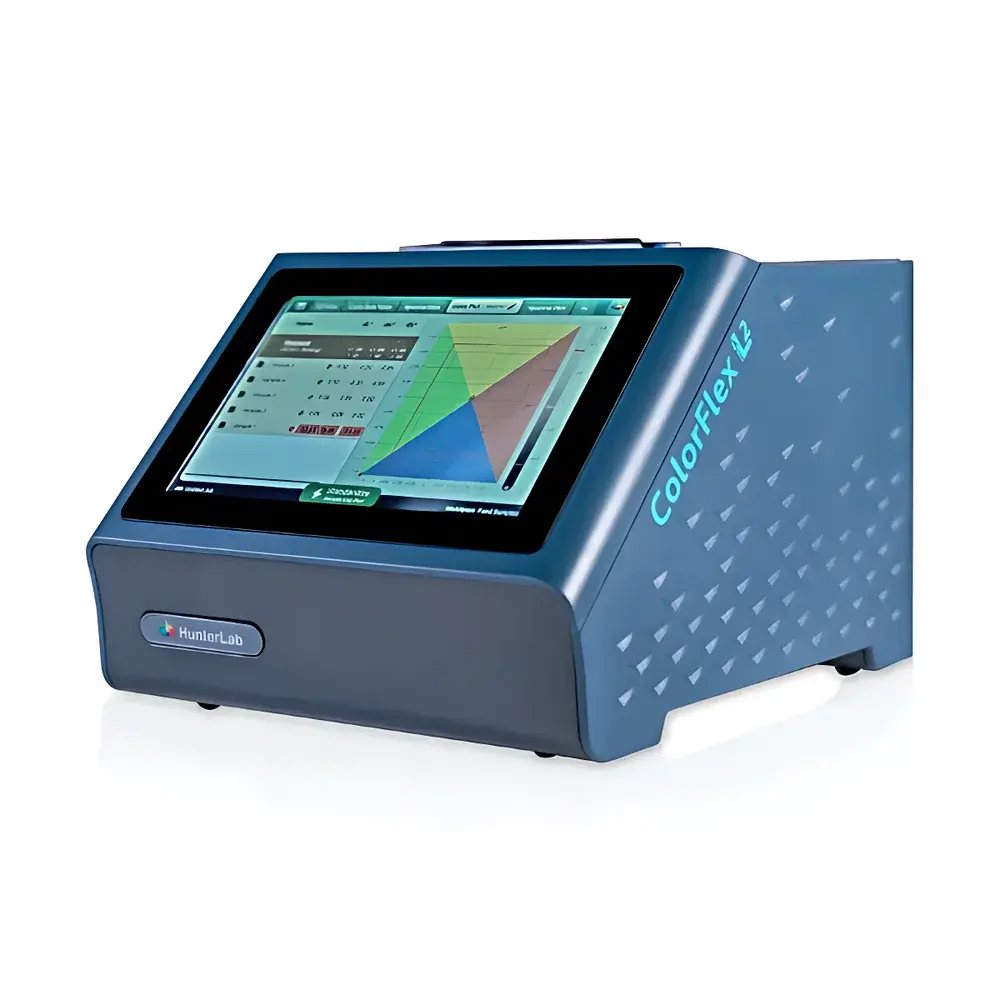
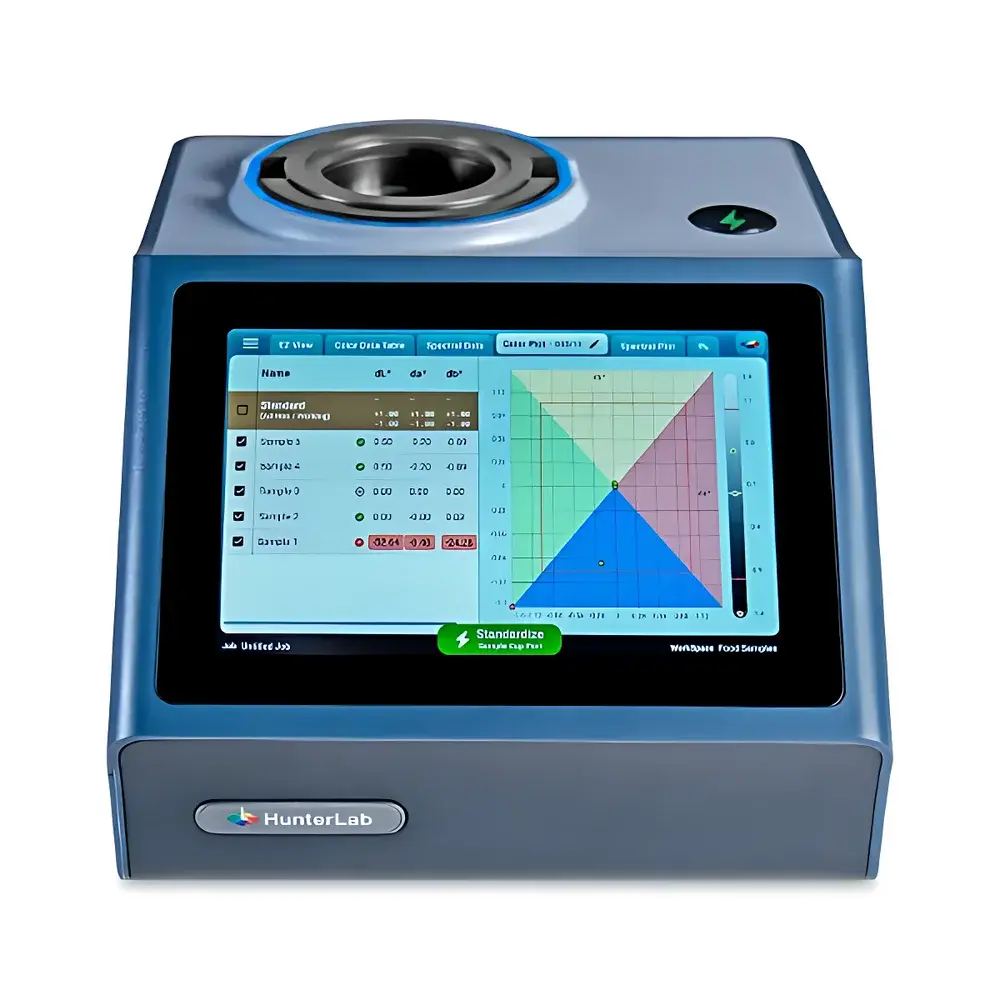
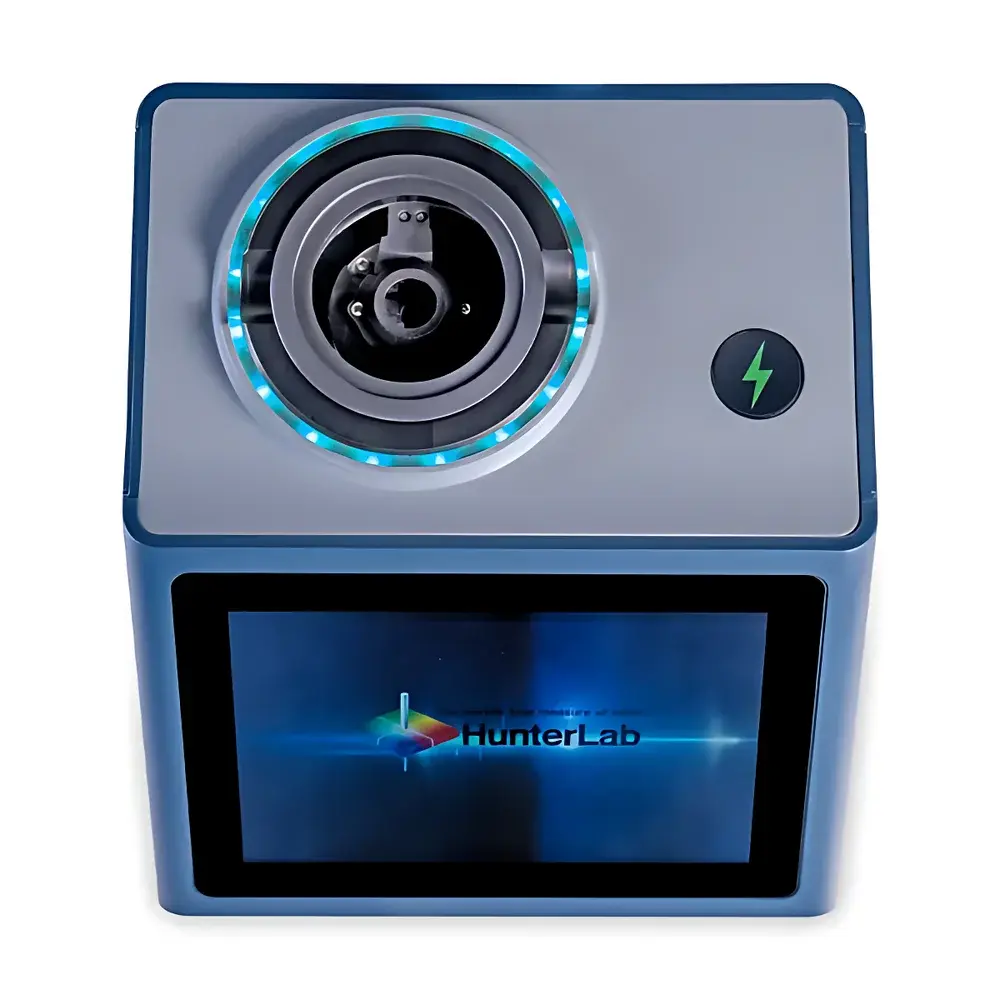
HunterLab ColorFlex L2 (CFL2) Spectrophotometric Colorimeter
| Brand | HunterLab |
|---|---|
| Origin | USA |
| Model | ColorFlex L2 |
| Spectral Range | 400–700 nm |
| Spectral Resolution | < 3 nm |
| Effective Bandwidth | 10 nm |
| Illuminant Options | A, C, D50, D55, D65, D75, F2, F7, F11 |
| Observer Angles | 2° and 10° |
| Geometry | 45°/0° directional (specular component excluded) |
| Aperture | 31.8 mm illumination / 25.4 mm measurement |
| Repeatability | ΔE*2000 < 0.03 (D65/10°, white tile, 20 readings) |
| Inter-instrument Agreement | ΔE*2000 < 0.15 (D65/10°, BCRA CCSII tiles) |
| Light Source | Pulsed xenon lamp (10-year typical lifetime) |
| Measurement Time | 1 second |
| Compliance | CIE 15:2004, ISO 7724-1, ASTM E1164, DIN 5033-7, JIS Z 8722 Condition C |
| Traceability | NIST-traceable calibration per CIE Pub. 44 and ASTM E259 |
| Display | 7-inch capacitive touchscreen (1280×800) |
| Dimensions (H×W×D) | 16 × 21 × 24 cm |
| Weight | 2.75 kg |
| Power | 90–240 VAC, 47–63 Hz, converted to 24 VDC/3.75 A |
| Operating Environment | 10–30 °C, 10–90% RH (non-condensing) |
Overview
The HunterLab ColorFlex L2 (CFL2) is a high-precision, 45°/0° directional spectrophotometric colorimeter engineered for rigorous industrial quality control environments. It employs dual-beam spectral analysis with a pulsed xenon light source and a fixed-grating spectrometer to deliver stable, repeatable measurements across the visible spectrum (400–700 nm). Unlike filter-based tristimulus meters, the CFL2 captures full spectral reflectance or transmittance data at <3 nm resolution, enabling accurate calculation of all major color spaces—including CIE L*a*b*, L*C*h, Yxy, and XYZ—as well as specialized indices such as whiteness (E313), yellowness (D1925, E313), opacity, color strength, and metamerism. Its 45°/0° optical geometry excludes specular reflection, ensuring consistent evaluation of textured, matte, or semi-gloss surfaces without requiring gloss compensation. Designed as a direct evolution of the ColorFlex EZ platform, the CFL2 maintains backward compatibility with legacy standards, calibration sets, and measurement protocols—enabling seamless migration while delivering enhanced signal-to-noise ratio, faster acquisition (<1 s per reading), and improved inter-instrument agreement (ΔE*2000 < 0.15 on BCRA tiles under D65/10°).
Key Features
- 7-inch high-resolution capacitive touchscreen (1280×800) with intuitive, context-aware UI—optimized for gloved operation and low-light factory floors.
- Robust industrial-grade housing with chemically strengthened glass front panel, rated for continuous use in production environments subject to vibration, dust, and incidental impact.
- Integrated high-resolution camera enables image capture synchronized with spectral data—critical for correlating visual defects (e.g., specks, streaks, phase separation) with quantitative color deviation.
- Essentials 2.0 software suite pre-installed: supports automated pass/fail evaluation against user-defined tolerances, multi-read averaging, nearest-standard matching, and automatic sample naming with timestamping and metadata tagging.
- Full USB flash drive support for configuration cloning, firmware updates, encrypted data export (CSV, Excel-compatible), and offline backup—no network dependency required.
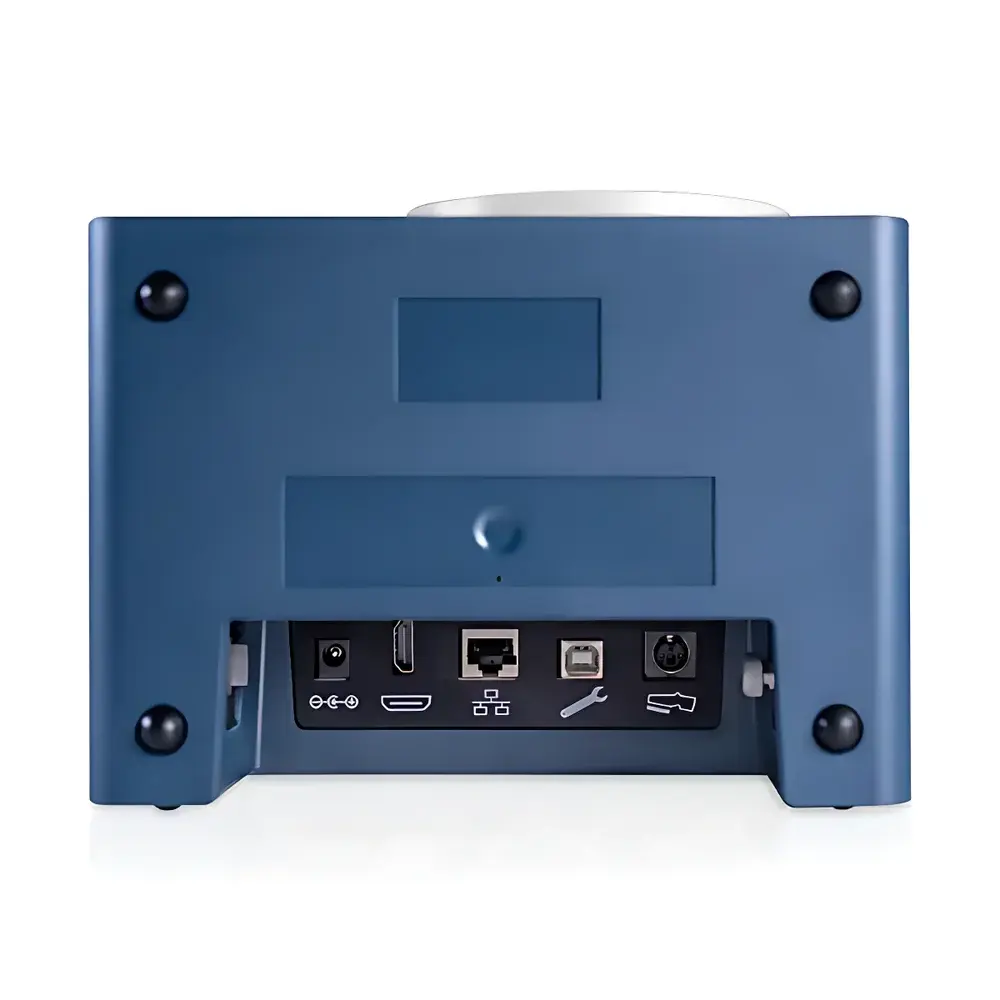
- Dual USB ports, HDMI video output, Ethernet interface, footswitch input, and dedicated hardware measurement button ensure flexible integration into automated QC stations or benchtop workflows.
Sample Compatibility & Compliance
The ColorFlex L2 accommodates diverse physical forms without accessory changes: opaque solids (plastic pellets, painted panels, cheese blocks), translucent liquids (juices, sauces, solvents), powders (coffee, cement, pharmaceutical excipients), granules (sugar, resins), and pastes (adhesives, grouts). Its 25.4 mm measurement aperture and 31.8 mm illumination ring provide sufficient area coverage for heterogeneous samples while minimizing edge effects. All measurements comply with international colorimetric standards including ISO 7724-1 (instrumental color measurement), ASTM E1164 (practice for obtaining spectra), CIE 15:2004 (colorimetry fundamentals), and JIS Z 8722 Condition C (industrial color evaluation). Instrument calibration is traceable to NIST reference materials per CIE Publication 44 and ASTM E259, supporting GLP/GMP audit readiness and FDA 21 CFR Part 11 compliance when paired with validated Essentials 2.0 software configurations.
Software & Data Management
Essentials 2.0 provides an auditable, version-controlled environment for color data lifecycle management. Each measurement record includes embedded spectral curves, tristimulus values, color difference metrics (ΔE*, ΔE CMC, ΔL*a*b*), and optional image capture. Data auto-saves with time/date stamps, operator ID (if configured), and instrument serial number. Backup and recovery are supported via USB media or network share; historical datasets remain fully searchable by batch ID, material code, or date range. The software supports customizable report templates compliant with internal SOPs or external customer requirements (e.g., automotive ASAM, food industry AIB). Audit trails log all user actions—including tolerance edits, calibration events, and data deletions—with immutable timestamps—meeting regulatory expectations for electronic records integrity.
Applications
The CFL2 serves as a primary color verification tool across regulated and high-volume manufacturing sectors. In food & beverage, it quantifies batch-to-batch consistency of liquid dairy products, fruit juices, sauces, and powdered mixes while detecting oxidation-induced yellowing or Maillard browning. In paints & coatings, it validates shade matching for OEM automotive refinishes and architectural coatings under multiple illuminants (D65, F11) and observers (2°/10°). Polymer producers rely on its repeatability for pellet color grading and additive dispersion assessment. Pharmaceutical manufacturers apply it to solid dosage form appearance testing per USP , while cosmetics labs use it for foundation shade development and stability monitoring. Its compact footprint (21 × 24 cm base) and low power draw make it suitable for cleanroom benches, pilot plant lines, and field-deployed QA carts.
FAQ
Is the ColorFlex L2 compatible with existing ColorFlex EZ standards and databases?
Yes. The CFL2 uses identical 45°/0° optics, spectral response, and mathematical algorithms—ensuring full backward compatibility. Existing EZ standard sets, tolerance files, and historical data can be imported directly into Essentials 2.0.
Does the instrument require annual recalibration?
No scheduled recalibration is mandated. Daily verification using the supplied NIST-traceable white tile and black glass standard satisfies routine performance qualification. Full recalibration is only necessary if inter-instrument agreement drift exceeds ΔE*2000 < 0.15 or after physical damage.
Can the CFL2 measure transparent liquids in transmission mode?
No. The CFL2 operates exclusively in reflectance mode (45°/0°). For transmission measurements (e.g., clear solvents, beverages), HunterLab recommends the UltraScan VIS or MiniScan EZ platforms.
What languages does the interface support?
English, Simplified Chinese, Traditional Chinese, French, German, Italian, Japanese, and Spanish—all accessible without software reinstallation.
Is remote diagnostics or firmware update possible over Ethernet?
Yes. Firmware updates, configuration exports, and diagnostic logs can be transferred via Ethernet using standard FTP or SMB protocols—enabling centralized IT management across global facilities.




