
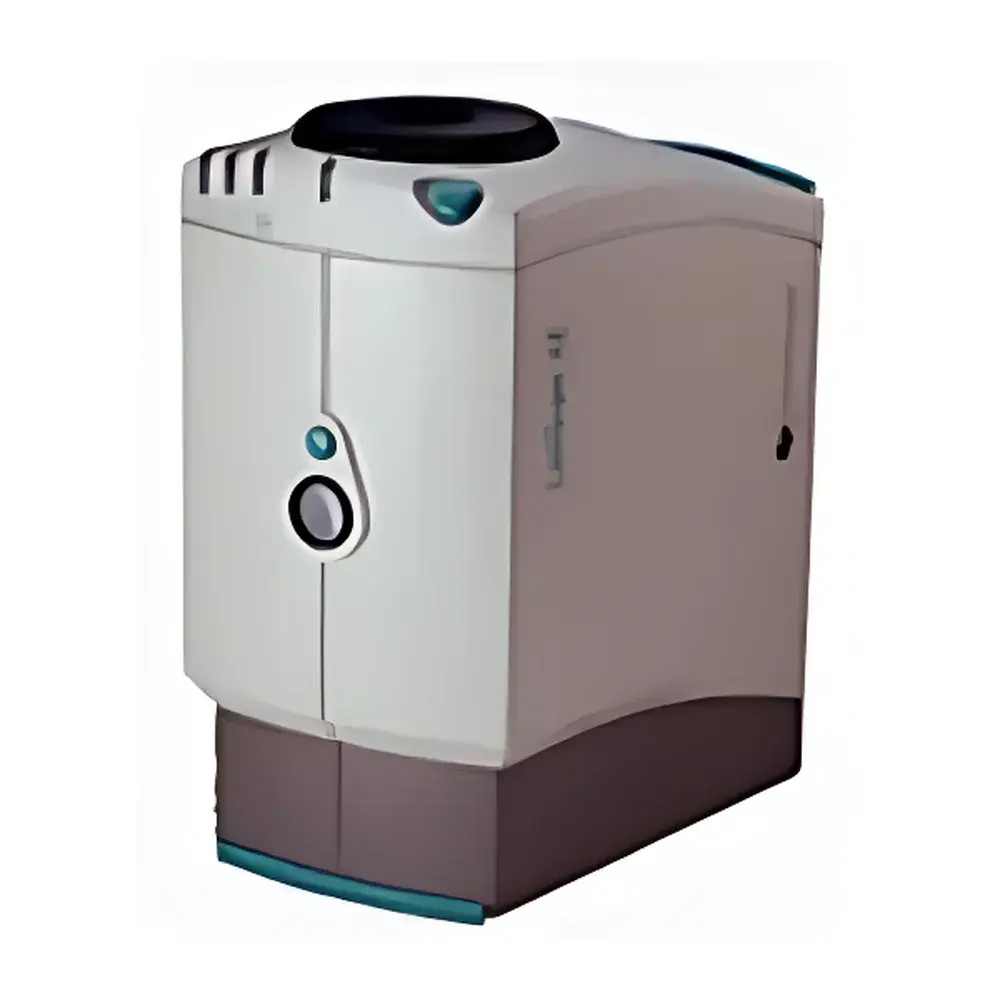
HunterLab LabScan XE Colorimeter for Carbon Black Tinting Strength Measurement
| Origin | USA |
|---|---|
| Manufacturer Type | Authorized Distributor |
| Origin Category | Imported |
| Model | LabScan XE |
| Pricing | Available Upon Request |
Overview
The HunterLab LabScan XE is a high-precision, research-grade colorimeter engineered specifically for quantitative color evaluation in demanding industrial applications—including carbon black tinting strength (Tinting Strength, TS) analysis in rubber, plastics, and pigment manufacturing. It employs a rigorously standardized 0°/45° optical geometry—comprising 0° directional illumination and 45° annular viewing via a 15-fiber optic ring—to replicate human visual perception under controlled D65 illuminant conditions. Unlike diffuse/8° sphere instruments, this geometry isolates surface-related chromatic effects (e.g., texture, gloss, directional scattering), making it the preferred method for ASTM D3243, ISO 787-19, and ISO 28178-compliant tinting strength assessment of carbon black dispersions. The instrument’s flash xenon light source delivers over 1 billion flashes with spectral stability traceable to NIST standards, eliminating lamp drift and ensuring long-term repeatability without recalibration or replacement.
Key Features
- 0°/45° Annular Geometry: Illuminates at normal incidence and collects reflected light from 15 equidistant points around a 45° cone—averaging spatial heterogeneity caused by particle orientation, surface roughness, or dispersion non-uniformity in carbon black masterbatches.
- Flash Xenon Illuminant: Simulates CIE Standard Illuminant D65 with spectral power distribution certified per CIE 15:2018; optional UV cutoff filter (420 nm) enables controlled UV exclusion for fluorescence-compensated measurements per ISO 11475.
- Dual-Beam Optical Architecture: Integrates reference and sample paths within a single optical train to minimize thermal drift and photodetector aging effects—critical for GLP-compliant batch-to-batch comparison in QC labs.
- 50 mm Aperture: Maximizes signal-to-noise ratio for low-reflectance carbon black samples (typical L* < 15), reducing measurement uncertainty in dark-toned formulations.
- Integrated Calibration Validation: On-board ceramic tile reference standard (certified per ISO 13655) performs automatic daily verification; deviation alerts trigger audit-trail logging per FDA 21 CFR Part 11 requirements.
- Ergonomic Sample Interface: Configurable measurement orientation (aperture-up, aperture-forward, or aperture-down with optional stand) accommodates solids, pellets, powders, pastes, and liquid dispersions without repositioning or accessory swapping.
Sample Compatibility & Compliance
The LabScan XE supports routine measurement of carbon black–loaded elastomers, PVC compounds, polyolefin granules, ink vehicles, and aqueous pigment slurries. Its 0°/45° geometry meets the geometric specification required by ASTM D3243 for carbon black tinting strength determination and aligns with ISO 28178 Annex A for industrial black pigment evaluation. Instrument validation protocols support IQ/OQ/PQ documentation per GMP Annex 15 and are compatible with laboratory accreditation under ISO/IEC 17025:2017. All firmware and calibration data are stored with immutable timestamps and user authentication logs to satisfy audit readiness for FDA, EMA, and MHRA inspections.
Software & Data Management
Operated via HunterLab’s Universal Software Suite (v5.0+), the LabScan XE enables automated calculation of ΔEcmc(2:1), ΔE00, and tinting strength ratios (TS = Lref/Lsample × 100) against master standards. Data export complies with ASTM E2912 for colorimetric metadata tagging and supports CSV, XML, and SQL database integration. Audit trail functionality records all parameter changes, calibration events, and user actions with digital signatures—fully compliant with FDA 21 CFR Part 11 and EU Annex 11 electronic record requirements. Optional cloud synchronization enables centralized fleet monitoring across multi-site manufacturing networks.
Applications
- Quantitative tinting strength grading of N110–N990 series carbon blacks per ASTM D3243
- Batch release testing of rubber compound color consistency in tire tread and sidewall formulations
- Dispersion quality assessment of carbon black in thermoplastic resins (PP, PE, ABS)
- QC of conductive polymer composites where optical density correlates with filler loading
- Raw material qualification of pigment batches prior to compounding
- Process troubleshooting of extrusion-induced agglomeration or thermal degradation affecting blackness uniformity
FAQ
Does the LabScan XE comply with ASTM D3243 for carbon black tinting strength?
Yes—the 0°/45° annular geometry, D65 illumination, and 50 mm aperture meet all optical and procedural requirements specified in ASTM D3243 Section 6.1.
Can it measure wet paste or slurry samples directly?
Yes—using the aperture-forward or aperture-down configuration with optional liquid cell holder (Part No. LCH-45), enabling reproducible transmission-free reflectance measurement of non-drying dispersions.
Is UV correction mandatory for carbon black analysis?
No—carbon black exhibits negligible fluorescence; however, the UV filter is recommended when measuring TiO₂-blended or fluorescent-whitened reference standards to prevent spectral interference.
How often must the instrument be calibrated?
Factory calibration remains valid for 24 months; daily verification using the onboard standard is required per ISO 9001 Clause 7.1.5.2 and documented in the electronic audit trail.
Does the software support statistical process control (SPC) charting?
Yes—Universal Software includes real-time X-bar/R chart generation, capability indices (Cp/Cpk), and out-of-spec alerting with configurable tolerance bands aligned to internal QC limits or customer specifications.
Related Products






