
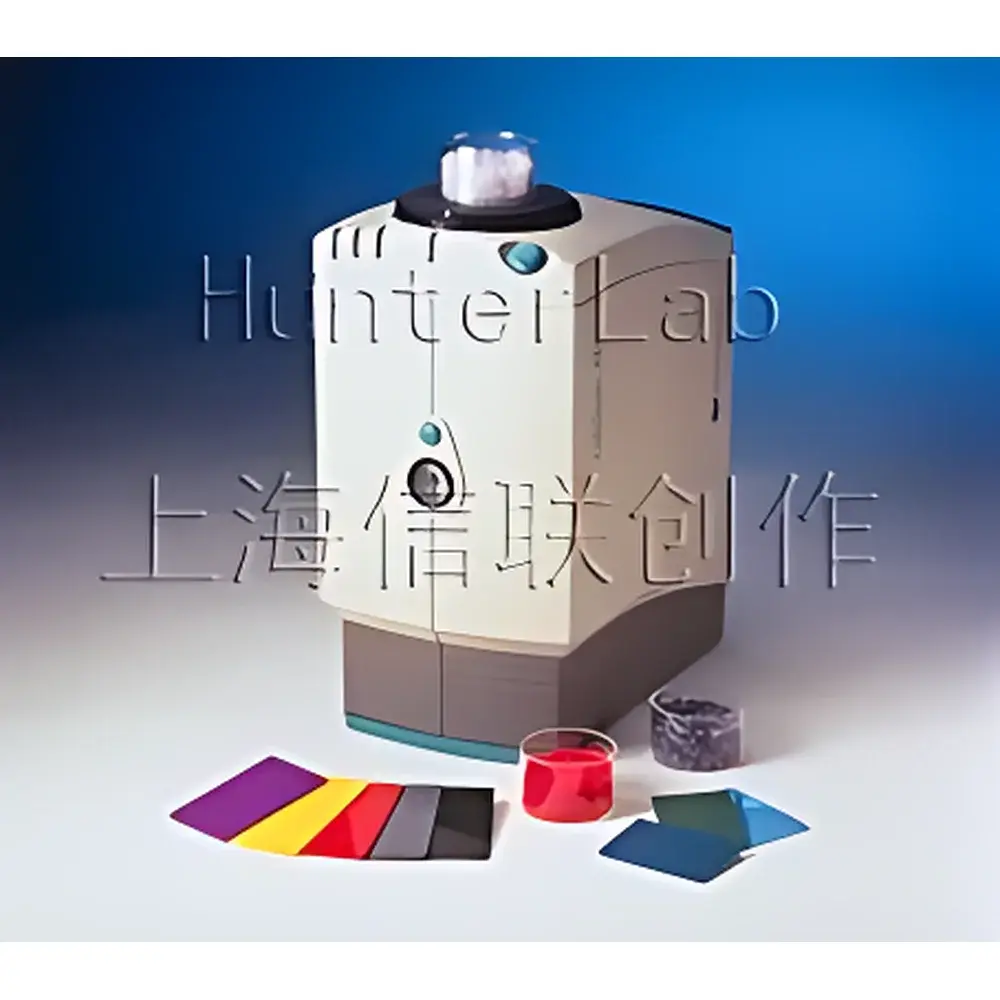
HunterLab LSXE Tomato Colorimeter
| Brand | HunterLab |
|---|---|
| Origin | USA |
| Model | LSXE Tomato |
| Optical Geometry | 45°/0° (45-degree annular illumination, 0-degree viewing) |
| Aperture Size | 44 mm |
| Compliant Standards | ASTM E313-96, USDA Tomato Color Grading Protocol, BCR Certified Reference Tiles |
| Built-in Tomato-Specific Indices | Tomato Color Score, Tomato Juice Score, Tomato Catsup Score, Tomato Paste Score, Tomato Sauce Score, Lycopene Estimation (457 nm Brightness), A/B Ratio, Hunter L,a,b (C/2° & D65/10°) |
Overview
The HunterLab LSXE Tomato Colorimeter is a purpose-engineered 45°/0° geometry benchtop spectrophotometer designed exclusively for objective, repeatable color evaluation of tomato-based products across the entire supply chain—from raw tomato pulp and juice to concentrated paste, ketchup, and sauce formulations. Unlike general-purpose colorimeters, the LSXE Tomato integrates USDA-validated spectral algorithms and proprietary tomato-specific color indices directly into its firmware, enabling compliance with official U.S. Department of Agriculture grading protocols for commercial tomato processing. Its 44 mm large-area aperture accommodates heterogeneous, viscous, or particulate-laden samples without requiring homogenization or dilution—critical for maintaining measurement integrity in real-world QC environments. The instrument operates on CIE 1931 2° standard observer and CIE 1964 10° standard observer illuminants (C/2° and D65/10°), supporting both legacy and modern color specification requirements in global food manufacturing.
Key Features
- USDA-recognized reference instrument for tomato product color grading per official USDA Agricultural Marketing Service (AMS) guidelines
- Dedicated firmware suite with embedded tomato indices: Tomato Color Score, Tomato Juice Score, Tomato Catsup Score, Tomato Paste Score, and Tomato Sauce Score—calculated in real time without post-processing
- Lycopene estimation algorithm based on 457 nm brightness measurement, traceable to NIST-traceable BCR-certified tomato reference tiles
- Hunter L,a,b color space output with dual illuminant support (C/2° and D65/10°), plus chroma, hue angle, and A/B ratio reporting for pigment ratio analysis
- 45°/0° optical geometry optimized for minimizing specular reflectance interference from glossy or semi-gloss tomato surfaces
- Robust stainless-steel sample compartment with integrated temperature-stabilized LED illumination and thermally compensated photodiode array
- Compliance-ready audit trail functionality supporting GLP/GMP workflows, including user authentication, method versioning, and timestamped result logging
Sample Compatibility & Compliance
The LSXE Tomato accepts opaque, semi-opaque, and highly viscous tomato matrices—including unfiltered juice, pulpy puree, cooked paste, and stabilized ketchup—without sample preparation artifacts. Its 44 mm aperture enables representative area averaging across non-uniform textures, reducing inter-operator variability. Instrument validation follows ASTM E313-96 for yellowness index (YI) and whiteness index (WI), while tomato-specific scoring aligns with USDA AMS Standard Grade Requirements for Tomatoes (7 CFR Part 51). All factory calibrations are traceable to NIST SRM 2036 (Diffuse Reflectance Standard) and BCR-401 (Tomato Powder Reference Material). The system supports IQ/OQ/PQ documentation packages compliant with FDA 21 CFR Part 11 for electronic records and signatures.
Software & Data Management
The instrument operates with Vision® software v5.x, providing full data governance for regulated environments. Features include customizable SOP-driven test methods, automated pass/fail flagging against configurable specification limits (e.g., Tomato Color Score ≥ 85.0), and export to CSV, PDF, or XML for LIMS integration. Audit trails record operator ID, calibration status, measurement parameters, and any manual overrides—with immutable timestamps and digital signature capability. Software modules support statistical process control (SPC) charting, trend analysis across batches, and comparative analysis against historical reference libraries of validated tomato standards.
Applications
- QC release testing of tomato paste, sauce, and ketchup against USDA grade specifications
- R&D formulation optimization for lycopene retention during thermal processing and concentration
- Raw material inspection of incoming tomato pulp and juice for consistency prior to blending
- Export documentation compliance for EU, Canada, and ASEAN markets requiring ASTM E313-96–aligned color reporting
- Internal calibration verification using BCR-certified tomato reference tiles (BCR-401 series)
- Process deviation detection via real-time A/B ratio trending to monitor carotenoid degradation kinetics
FAQ
Is the LSXE Tomato compliant with USDA official grading procedures?
Yes—the LSXE Tomato is explicitly referenced in USDA AMS Procedure TP-100 and serves as the primary instrument for color evaluation in USDA-certified tomato product inspections.
Does the instrument require external software licenses for tomato index calculations?
No—all tomato-specific indices—including Tomato Color Score, Paste Score, and Lycopene estimation—are embedded in firmware and enabled at time of purchase.
Can the LSXE Tomato measure non-tomato food products?
Yes—it retains full Hunter L,a,b, YI, WI, and chromaticity functionality for general food color assessment, though tomato-specific algorithms are only applied when the “Tomato Mode” is selected.
What reference standards are supported for routine verification?
The system is validated for use with BCR-401 certified tomato powder tiles and NIST SRM 2036 diffuse reflectance standards; optional traceable liquid calibration kits are available for juice/paste matrix verification.
How is data integrity ensured under FDA 21 CFR Part 11 requirements?
Vision® software provides role-based access control, electronic signatures, full audit trail generation, and secure database encryption—fully configurable to meet Part 11 technical and procedural criteria.
Related Products






