
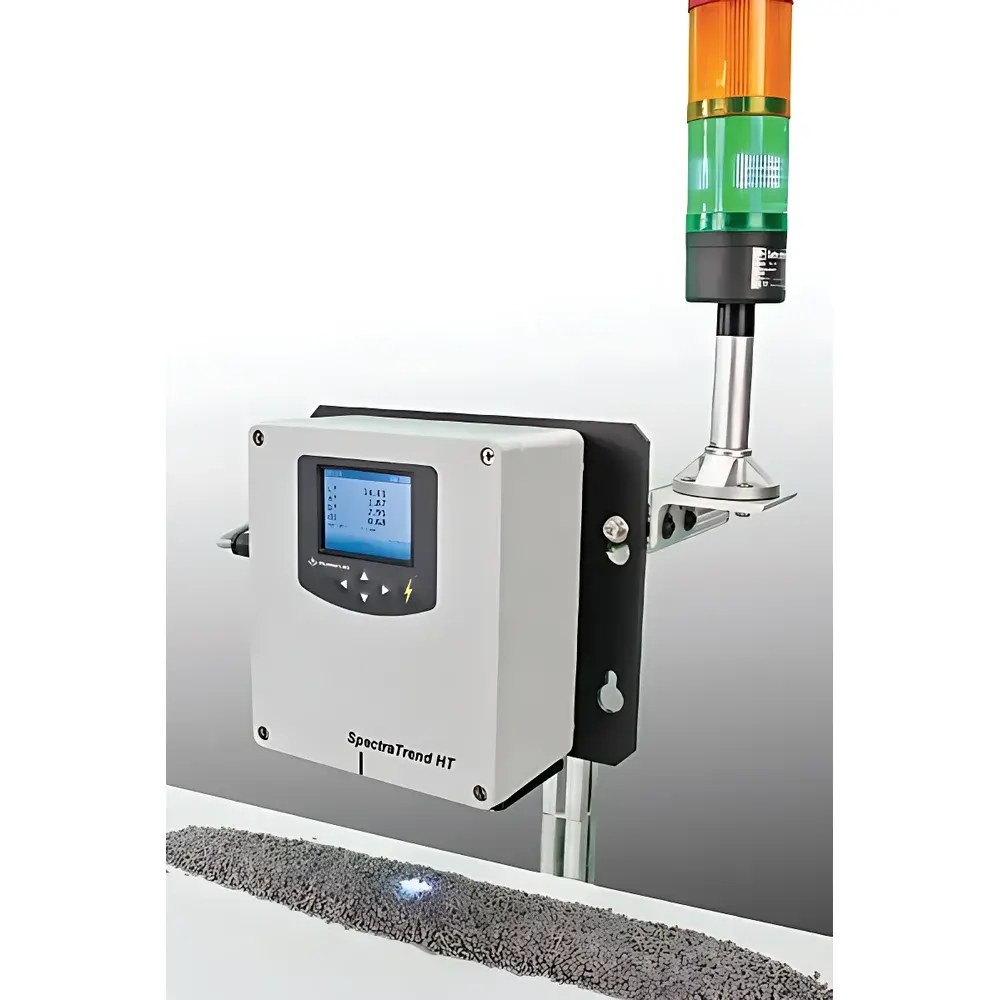
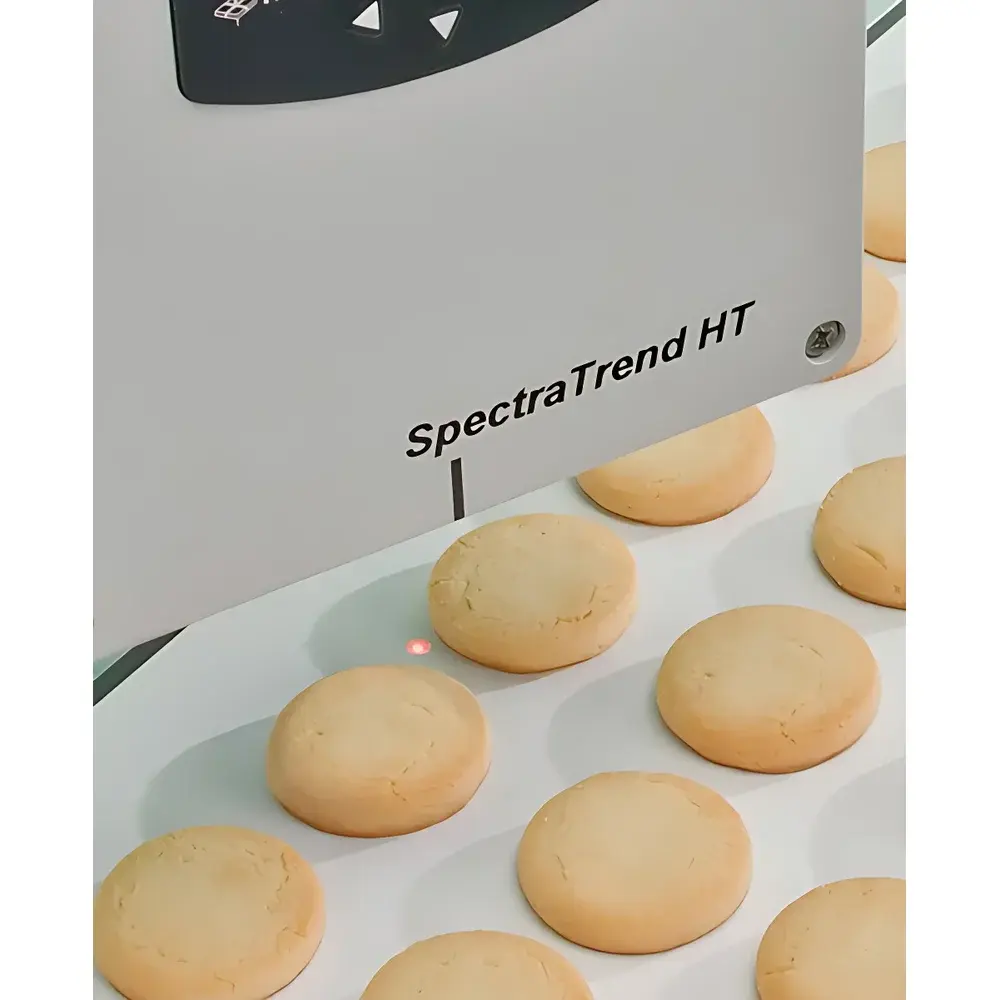
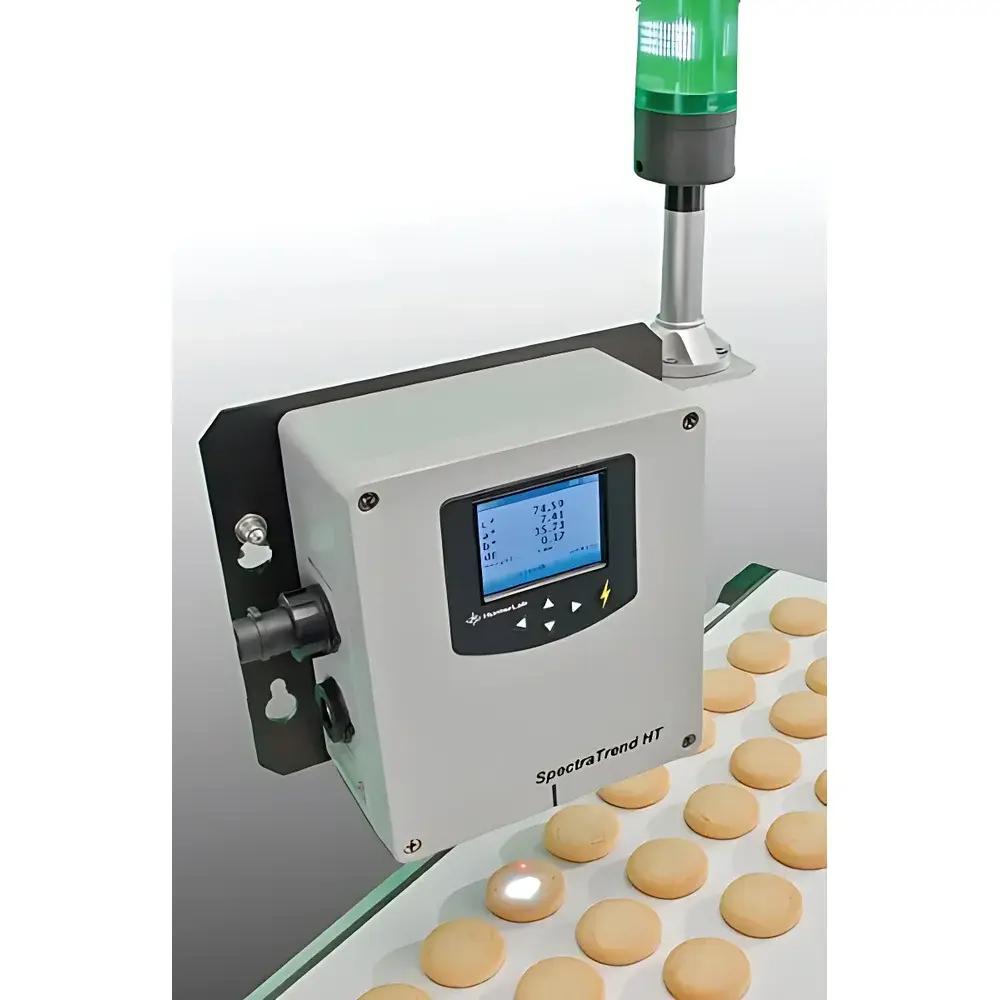
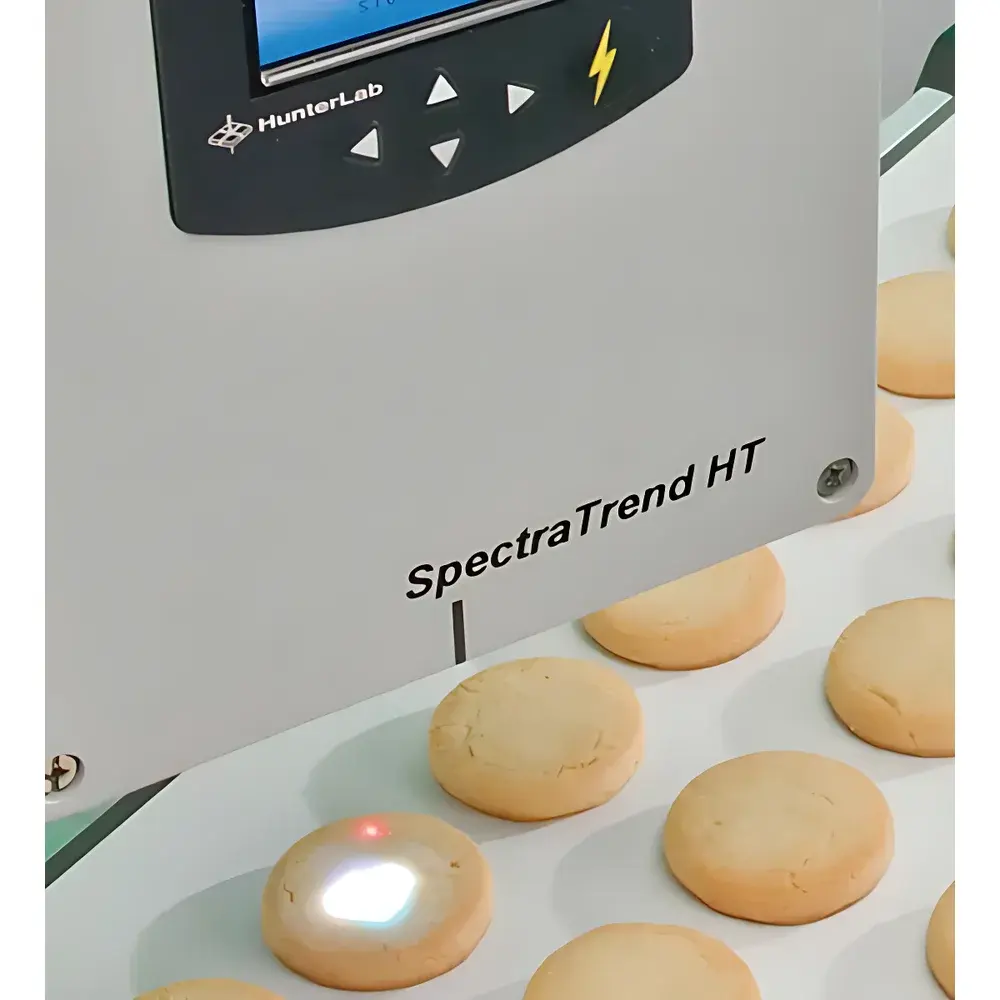
HunterLab SpectraTrend HT Online Non-Contact Spectrophotometer
| Brand | HunterLab |
|---|---|
| Origin | USA |
| Manufacturer Status | Authorized Distributor |
| Origin Category | Imported |
| Model | SpectraTrend HT |
| Product Type | Color Difference Meter |
| Instrument Type | Online |
| Optical Geometry | 0°/45° Integrating Sphere |
| Light Source | LED |
| Spectral Range | 400–700 nm |
| Repeatability | ΔE* ≤ 0.03 (mean, measured 20× on standard white tile) |
Overview
The HunterLab SpectraTrend HT is an industrial-grade, online non-contact spectrophotometer engineered for real-time color monitoring in continuous manufacturing environments. Operating on the principle of diffuse reflectance spectroscopy with a calibrated 0°/45° optical geometry, it delivers high-fidelity spectral data across the visible spectrum (400–700 nm) without physical contact—eliminating wear, contamination risk, and measurement variability associated with probe-based systems. Unlike traditional benchtop colorimeters or handheld devices, the SpectraTrend HT is purpose-built for integration into production lines where ambient vibration, product height fluctuation, and environmental contaminants are routine. Its robust NEMA-4/IP66-rated enclosure ensures reliable operation in wet, dusty, or chemically aggressive settings typical of food processing, plastics extrusion, paint & coating lines, and pharmaceutical tablet coating facilities. The system captures full spectral reflectance at 10 nm intervals using a 256-element silicon photodiode array and a holographic grating, enabling CIE-compliant color space calculations (L*a*b*, L*C*h*, ΔE*00, etc.) traceable to NIST standards.
Key Features
- True non-contact measurement at working distances of 63.5–140 mm—no mechanical alignment required
- Integrated infrared height sensor enables automatic focus compensation for ±12.5 mm vertical product movement, ensuring consistent measurement geometry regardless of conveyor belt vibration or material flow variation
- Stable, long-life LED illumination with spectral output optimized for photometric accuracy and thermal stability—no warm-up time, no lamp replacement cycles
- Real-time spectral acquisition in 100 ms; full-color report generation in ≤1 second; continuous streaming via Ethernet at user-defined intervals (e.g., per part, per second, or per zone)
- Configurable measurement zones: single-point, left-center-right triplet, or continuous line-scan mode for width-wise color uniformity analysis
- Self-calibrating optical path with automated dark/light reference routines—supports unattended “lights-out” factory operation
- Onboard spectral storage and timestamped metadata (including height, temperature, and trigger source) for full auditability
Sample Compatibility & Compliance
The SpectraTrend HT accommodates diverse sample morphologies—including granules, pellets, films, sheets, coated tablets, and textured surfaces—without requiring surface preparation or fixturing. Its 0°/45° geometry minimizes specular interference from glossy or structured surfaces (e.g., brushed metals, embossed polymers), conforming to ASTM E308 and ISO/CIE 15:2004 spectral computation standards. All colorimetric outputs comply with CIE 1931 2° standard observer and D65 illuminant definitions. For regulated industries, the system supports 21 CFR Part 11-compliant user access control, electronic signatures, and immutable audit trails when deployed with HunterLab’s Universal Software Suite. It meets GLP/GMP documentation requirements for QC release testing and process validation in FDA-regulated environments.
Software & Data Management
Controlled via HunterLab’s Universal Software Platform (v5.0+), the SpectraTrend HT integrates seamlessly into MES/SCADA architectures through native Modbus TCP, OPC UA, and RESTful API interfaces. Raw spectral data (31-point or full 10 nm resolution) and derived color metrics are streamed in real time to SQL databases or cloud historians. Trend charts, SPC control limits (X-bar/R, Cpk), and deviation alerts can be configured per product SKU or batch ID. Laboratory-to-line correlation is validated using HunterLab’s MatchPort™ algorithm, ensuring <±0.1 ΔE* agreement between online and benchtop measurements (e.g., against UltraScan VIS or MiniScan EZ). All calibration events, firmware updates, and operator actions are logged with ISO 17025-aligned traceability.
Applications
- Real-time color consistency monitoring in plastic pellet extrusion and compounding lines
- In-line verification of pigment dispersion uniformity in automotive paint application booths
- Continuous tablet coating color release testing in pharmaceutical fluid-bed coaters
- Batch-to-batch shade matching for textile dyeing and paper manufacturing
- Quality gate inspection for food products (e.g., cheese rind, confectionery coatings, baked goods)
- Automated rejection triggering based on configurable ΔE* thresholds integrated with PLC-controlled divert mechanisms
FAQ
Does the SpectraTrend HT require periodic recalibration with physical standards?
Yes—though automated daily dark/light reference cycles maintain baseline stability, NIST-traceable ceramic tile calibration (e.g., HunterLab Calibration Standards Kit) is recommended every 30 days or after major environmental shifts.
Can it measure translucent or backlit materials?
No—the 0°/45° geometry is optimized for opaque, diffusely reflecting surfaces. Translucent samples require transmission-mode instrumentation (e.g., SpectraTrend HT-Transmit variant).
Is height compensation mandatory for accurate measurement?
Height sensing is enabled by default and critical for maintaining fixed measurement area (25 mm Ø) across variable product topography; disabling it voids repeatability specifications.
What network security protocols does it support?
TLS 1.2 encryption, IEEE 802.1X authentication, and role-based access control (RBAC) are supported when configured with enterprise-grade IT infrastructure.
How is compliance with ISO/IEC 17025 demonstrated?
HunterLab provides a Factory Acceptance Test (FAT) report including spectral bandwidth verification, stray light assessment, and inter-instrument agreement data—serving as foundational evidence for laboratory accreditation bodies.




