
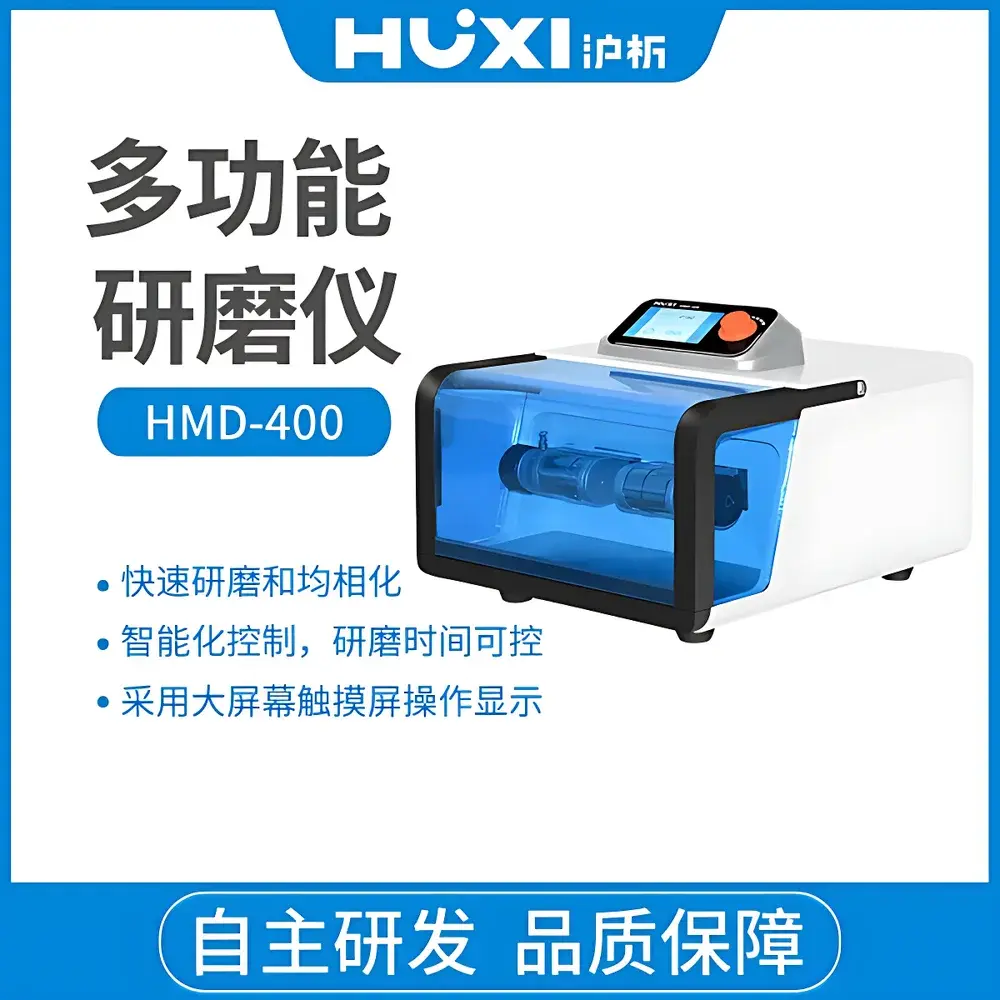
HUXI HMD-400 Multi-Function Vibratory Ball Mill
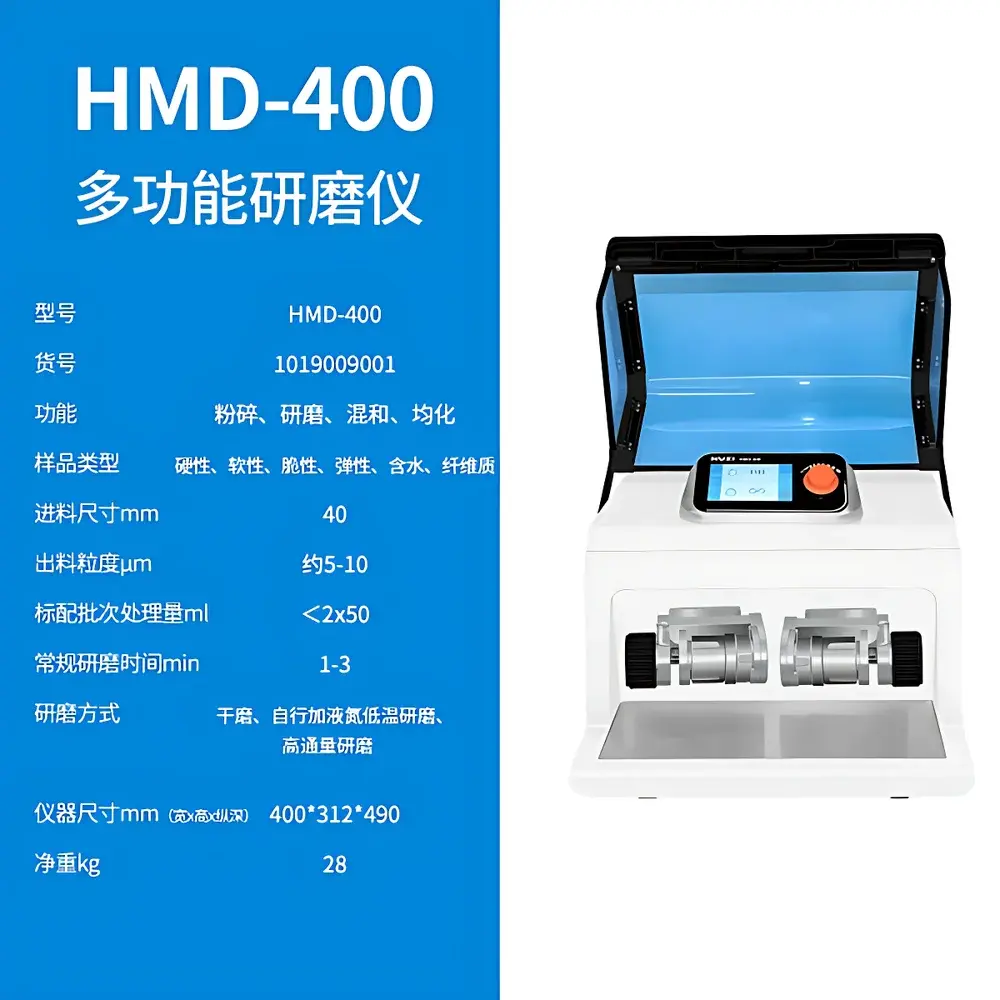
| Brand | HUXI |
|---|---|
| Origin | Shanghai, China |
| Manufacturer | Yes |
| Country of Origin | China |
| Model | HMD-400 |
| Instrument Type | Vibratory Ball Mill |
| Sample Suitability | Hard, brittle, medium-hard, fibrous, hydrated, elastic, and soft materials |
| Feed Size | ≤ 40 mm |
| Final Particle Size | 5–10 µm (typical) |
| Batch Capacity | < 2 × 50 mL |
| Vibration Speed | 180–2100 rpm |
| Frequency Range | 3–35 Hz |
| Grinding Time Range | 0–8 h 00 min 00 s |
| Power Consumption | 250 W |
| Dimensions (W×H×D) | 400 × 312 × 490 mm |
| Net Weight | ~28 kg |
| Grinding Modes | Dry, Wet, Cryogenic, High-Throughput |
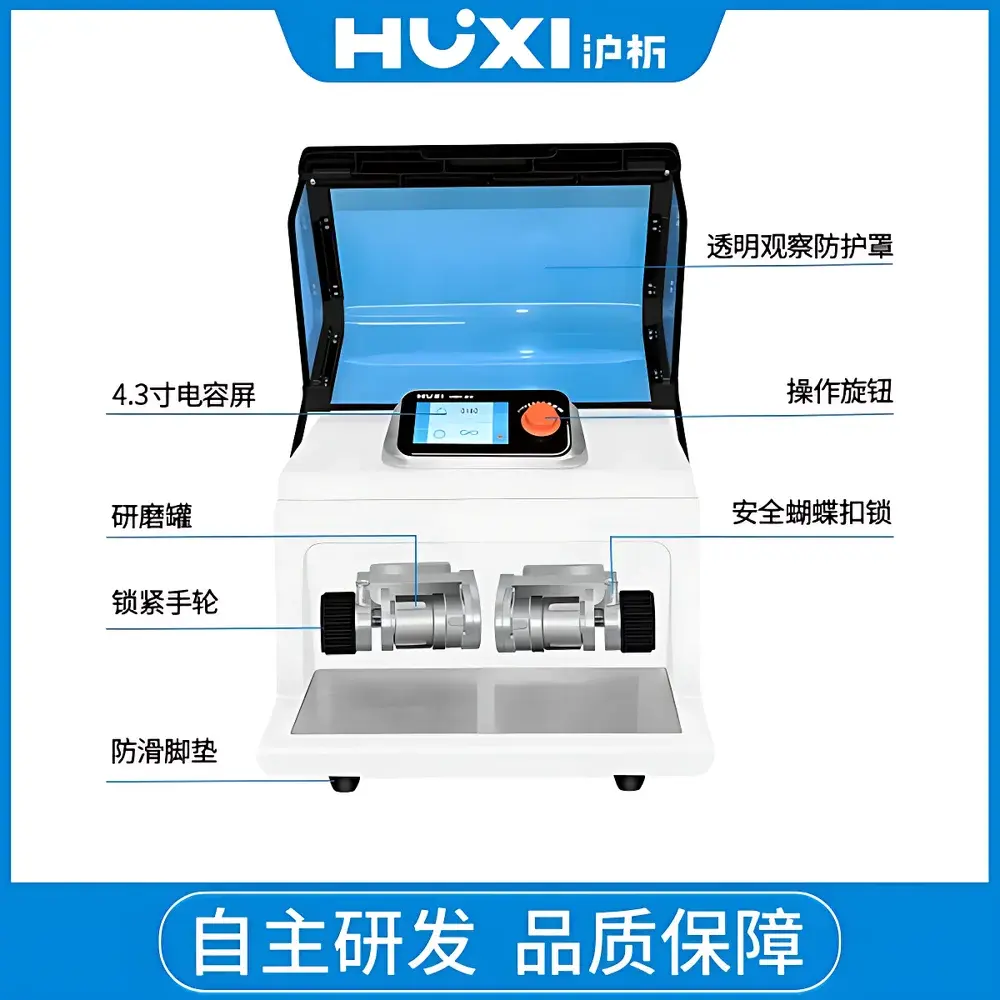
| Jar Quantity | 2 |
| Jar Type | Screw-Cap Vial (Stainless Steel, Tungsten Carbide, Zirconia, PTFE options available) |
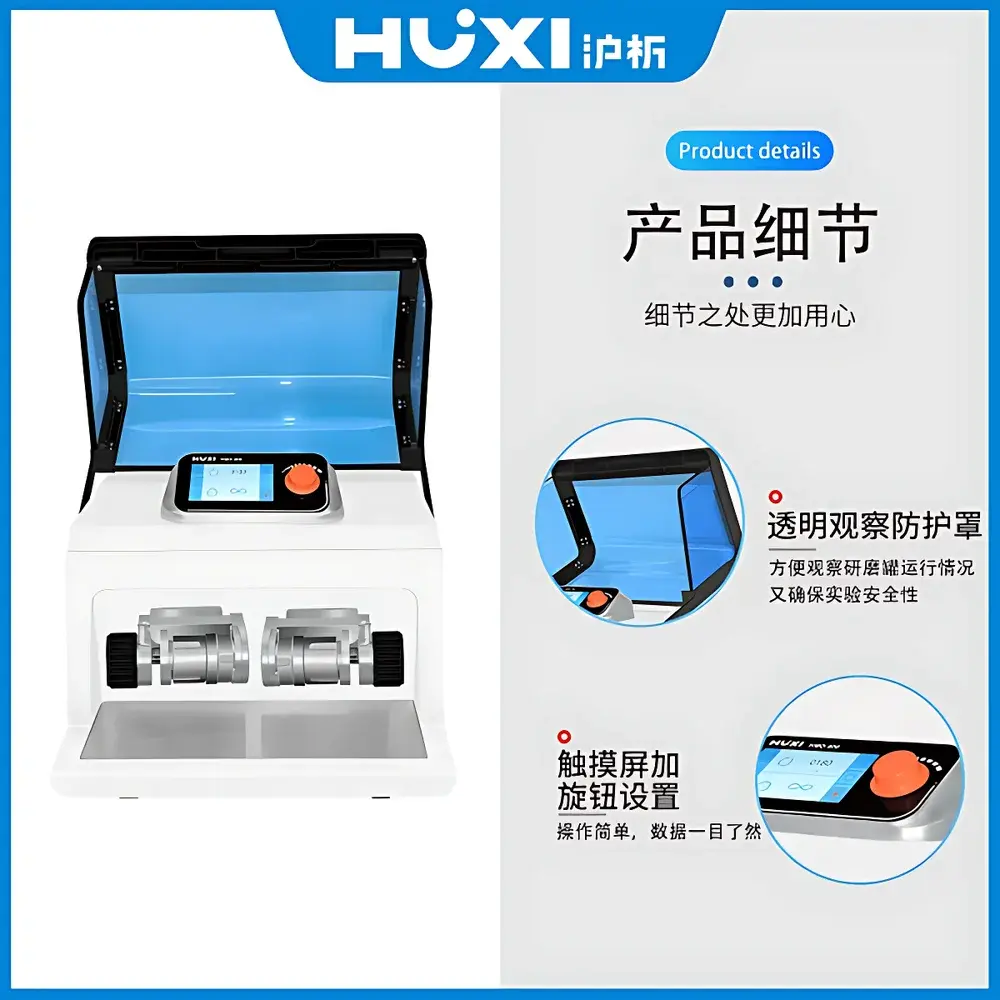
| Display | Touchscreen Interface with Program Memory |
| Reproducibility | High inter-batch consistency under controlled parameters |
Overview
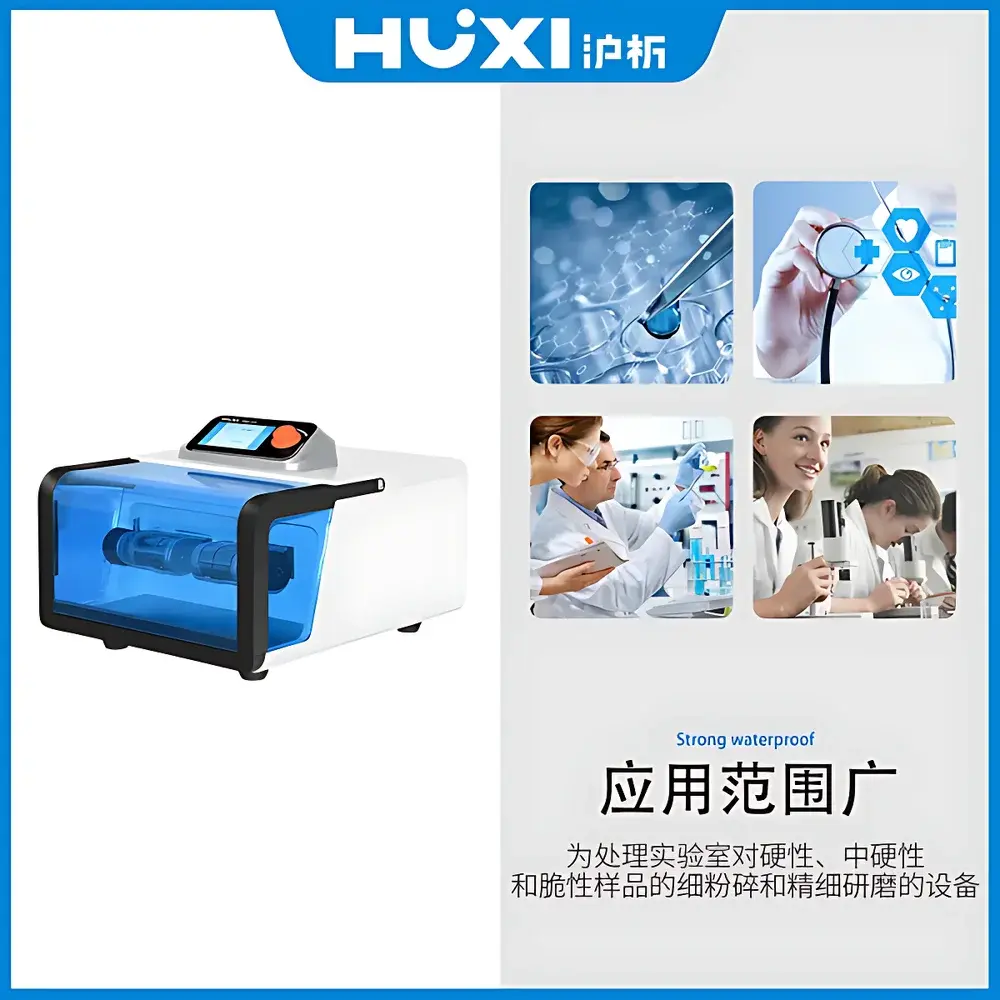
The HUXI HMD-400 Multi-Function Vibratory Ball Mill is an engineered laboratory instrument designed for high-efficiency size reduction, homogenization, and mixing of diverse solid samples. It operates on the principle of high-frequency vibrational energy transfer to grinding media within sealed sample vessels, inducing intense impact, shear, and friction forces between balls and sample particles. This mechanism enables rapid comminution of hard, brittle, fibrous, hydrated, or elastic materials—without thermal degradation or cross-contamination—making it especially suitable for preparation of samples prior to elemental analysis (e.g., XRF, ICP-OES), molecular extraction (e.g., DNA/RNA isolation), mineralogical characterization, and pharmaceutical QA/QC workflows. Its dual-jar configuration supports parallel processing, while programmable time, speed, and pause cycles ensure method standardization across users and laboratories.
Key Features
- Intuitive 7-inch capacitive touchscreen interface with real-time parameter display and multi-step program storage (up to 20 user-defined protocols)
- Dual independent grinding stations with synchronized or asynchronous operation modes
- Adjustable vibration frequency (3–35 Hz) and rotational speed (180–2100 rpm) for precise control over energy input
- Configurable grinding duration from seconds to 8 hours, with 1-second resolution and automatic shutdown
- Robust cast-alloy frame with anti-vibration damping feet and electromagnetic safety interlock system
- Wide compatibility with cryogenic adapters for low-temperature grinding (e.g., liquid nitrogen-cooled jars)
- High reproducibility validated per ISO 13320:2020 guidelines for particle size distribution repeatability
Sample Compatibility & Compliance
The HMD-400 accommodates heterogeneous sample matrices including geological specimens (ores, coal, slag), biological tissues (bone, hair, plant roots), agricultural products (grains, seeds, feed), polymers, ceramics, electronic waste, and pharmaceutical excipients. It complies with general laboratory safety standards (IEC 61010-1) and supports GLP-compliant documentation when paired with external audit-trail-capable LIMS software. While not intrinsically certified for GMP environments, its closed-jar design, traceable parameter logging, and absence of lubricant exposure align with USP recommendations for non-sterile equipment used in analytical sample prep. Optional zirconia and PTFE jars meet USP Class VI biocompatibility requirements for life science applications.
Software & Data Management
The embedded firmware records timestamped operational logs—including speed, duration, cycle count, and jar identification—for each run. Export is supported via USB flash drive in CSV format for integration into laboratory information management systems (LIMS). Though no proprietary PC software is bundled, the device’s RS-232 port enables third-party automation via SCPI-compatible commands, facilitating integration into automated sample prep lines compliant with ASTM E2655-21 (Standard Guide for Laboratory Automation in Analytical Chemistry). All stored methods retain full parameter integrity and are recallable without reconfiguration.
Applications
- Rapid homogenization of soil and sediment samples for heavy metal screening by XRF or AAS
- Preparation of ultra-fine powders (<10 µm) from alloys and ceramics for SEM-EDS or XRD analysis
- High-yield mechanical lysis of microbial cells and plant tissues for nucleic acid extraction
- Uniform blending of active pharmaceutical ingredients (APIs) with excipients during formulation development
- Cryogenic grinding of thermolabile compounds (e.g., alkaloids, lipids) to prevent degradation
- Particle size reduction of recycled electronic components for RoHS compliance testing
FAQ
What types of grinding jars are compatible with the HMD-400?
Stainless steel (304/316), tungsten carbide, zirconium oxide (ZrO₂), and PTFE vials are available in 10–50 mL capacities. Jar material selection must consider sample chemistry, required purity level, and abrasion resistance.
Can the HMD-400 be used for wet grinding?
Yes—sealed screw-cap jars support solvent-based milling. Recommended solvent volume does not exceed 30% of jar capacity to maintain effective impact dynamics.
Is the instrument suitable for regulated environments requiring audit trails?
While the device logs all runtime parameters locally, full 21 CFR Part 11 compliance requires integration with validated LIMS or ELN platforms that provide electronic signatures and change control.
How is temperature rise managed during extended grinding cycles?
The unit includes passive heat dissipation via aluminum housing and optional air-cooling kits; for heat-sensitive samples, cryogenic grinding using pre-chilled jars or liquid nitrogen jackets is recommended.
What maintenance is required for long-term reliability?
Routine inspection of vibration isolators, jar sealing O-rings, and touchscreen calibration is advised every 500 operating hours. No internal lubrication is required due to brushless motor architecture.



