
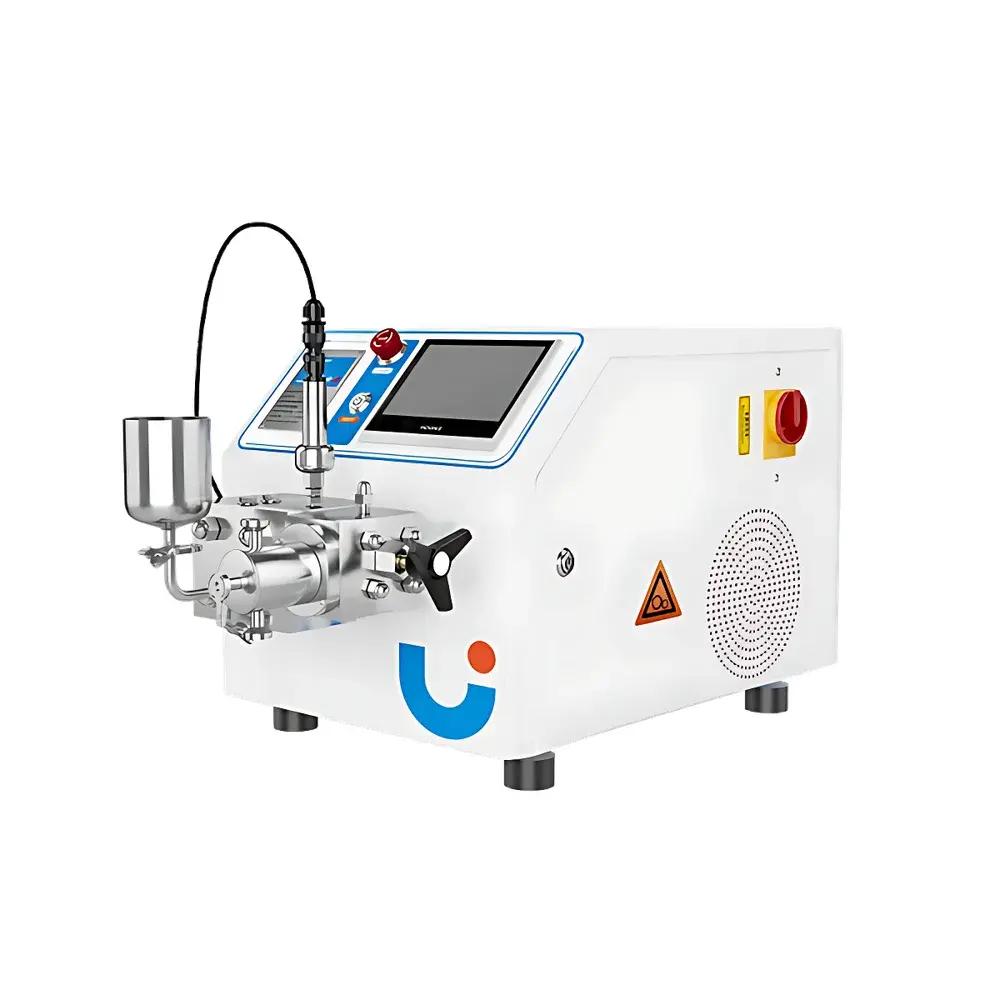
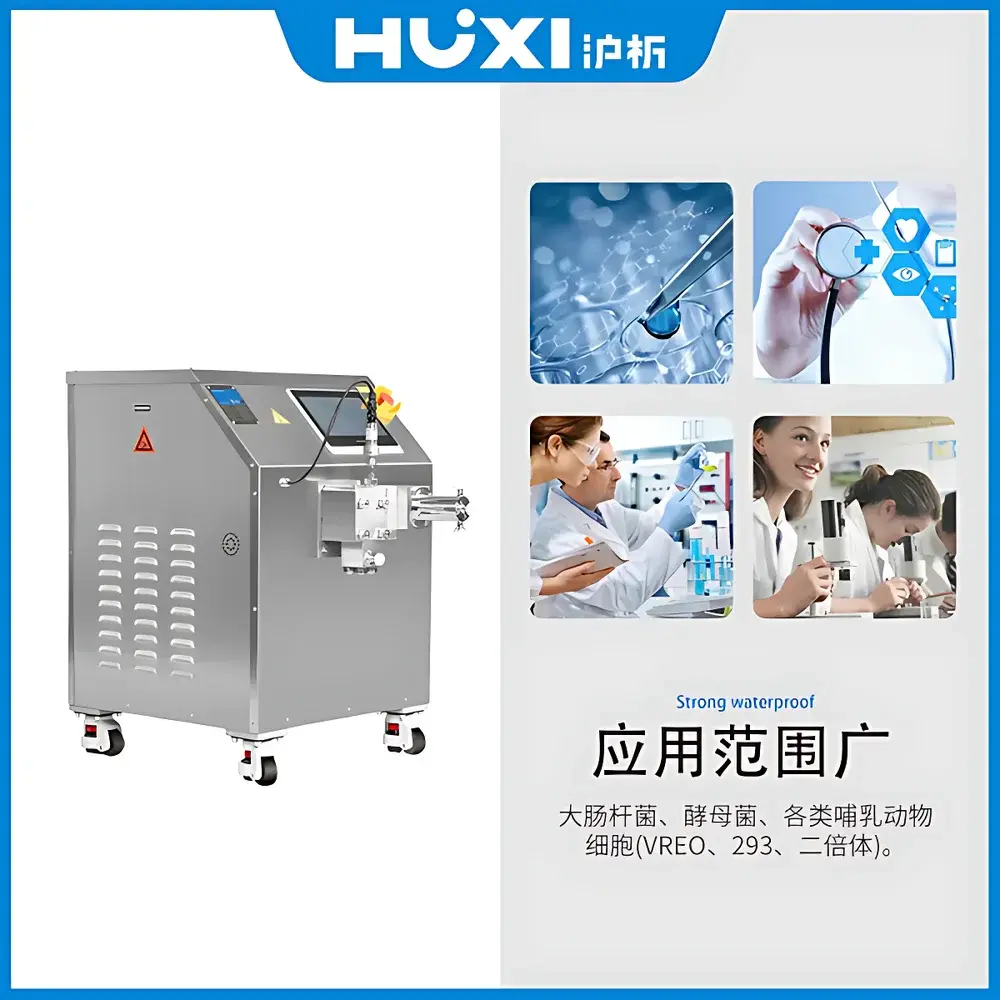
HUXI HR-1500 High-Pressure Nano-Homogenizer & Emulsifier
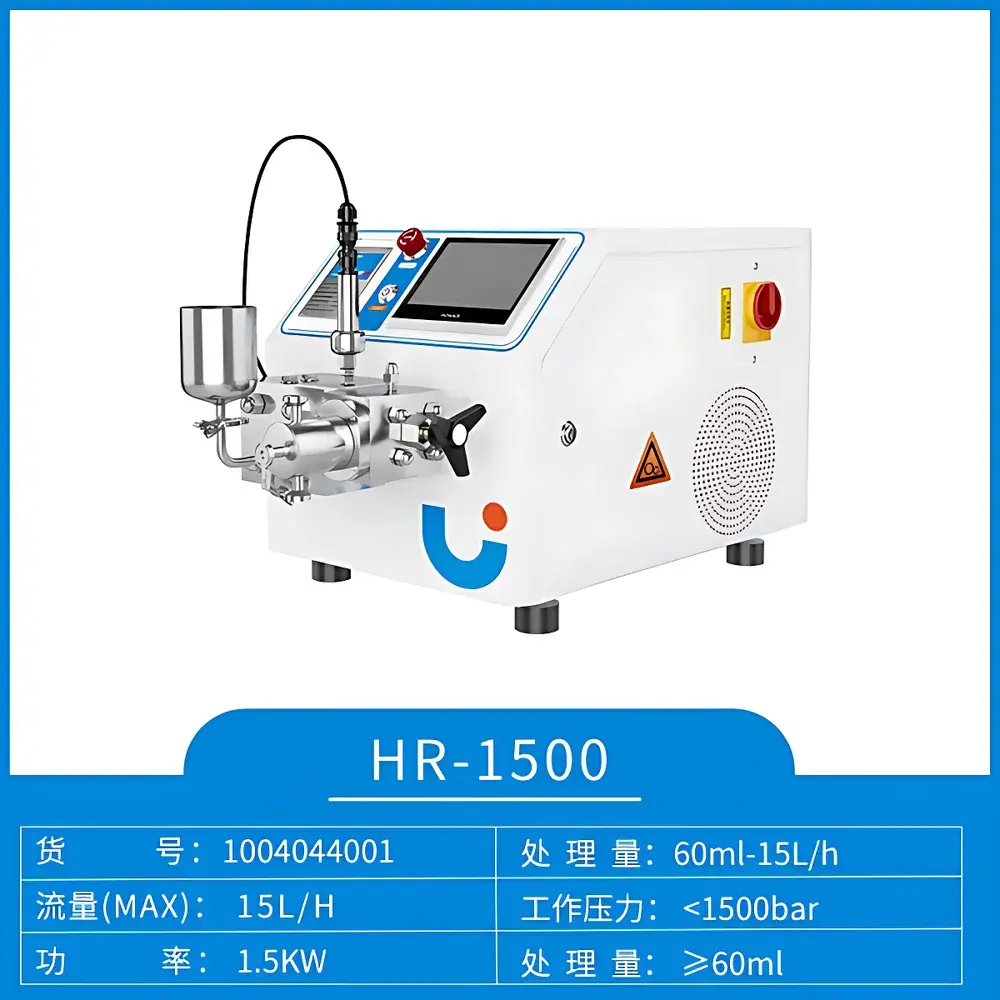
| Brand | HUXI |
|---|---|
| Origin | Shanghai, China |
| Manufacturer Type | Direct Manufacturer |
| Country of Origin | China |
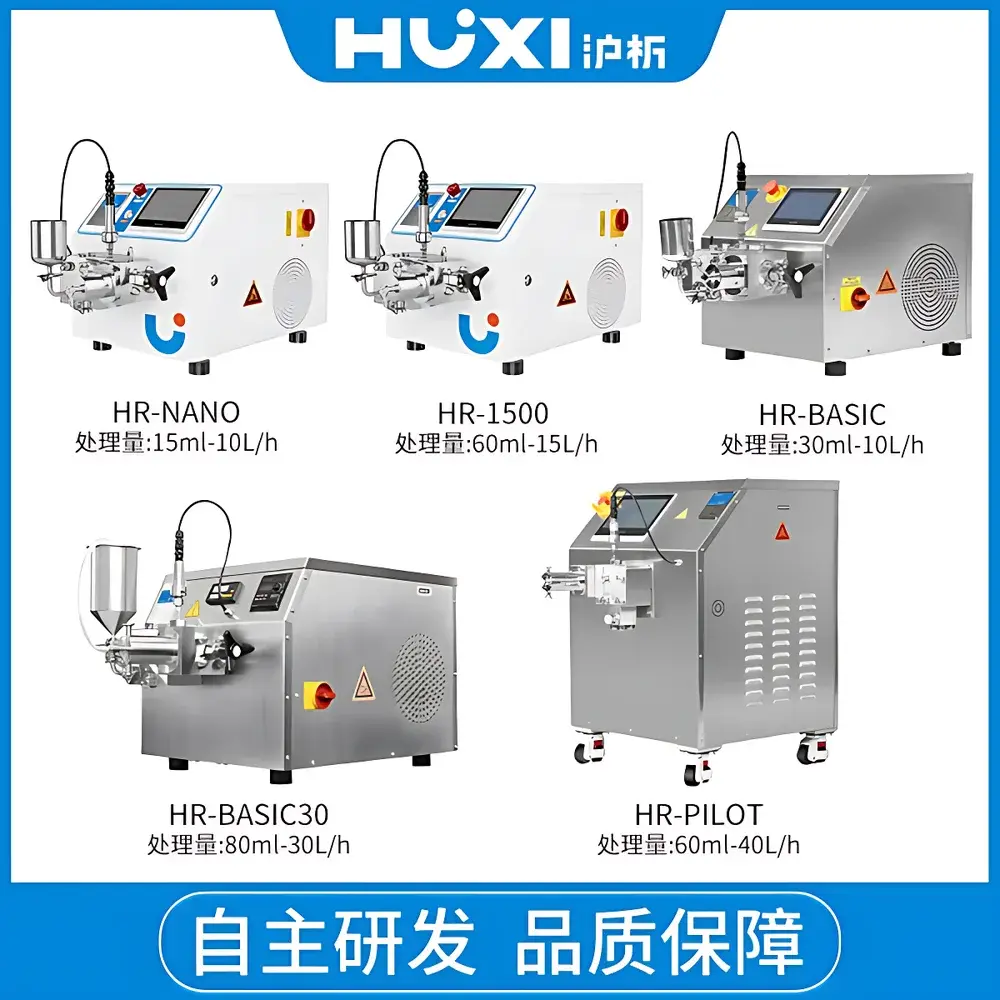
| Model | HR-1500 |
| Pricing | Upon Request |
| Homogenization Principle | High-pressure cavitation, impact, and shear via adjustable valve system |
| Max Operating Pressure | 1500 bar |
| Design Pressure | 2000 bar |
| Flow Rate | 5–15 L/h |
| Minimum Sample Volume | 60 mL |
| Max Viscosity | <2000 cP |
| Inlet Temperature Limit | <90 °C |
| Cooling System | Integrated chiller (4 °C operational temperature) |
| Valve Material Options | Diamond or hardened alloy |
| Pressure Monitoring | Digital sanitary pressure sensor |
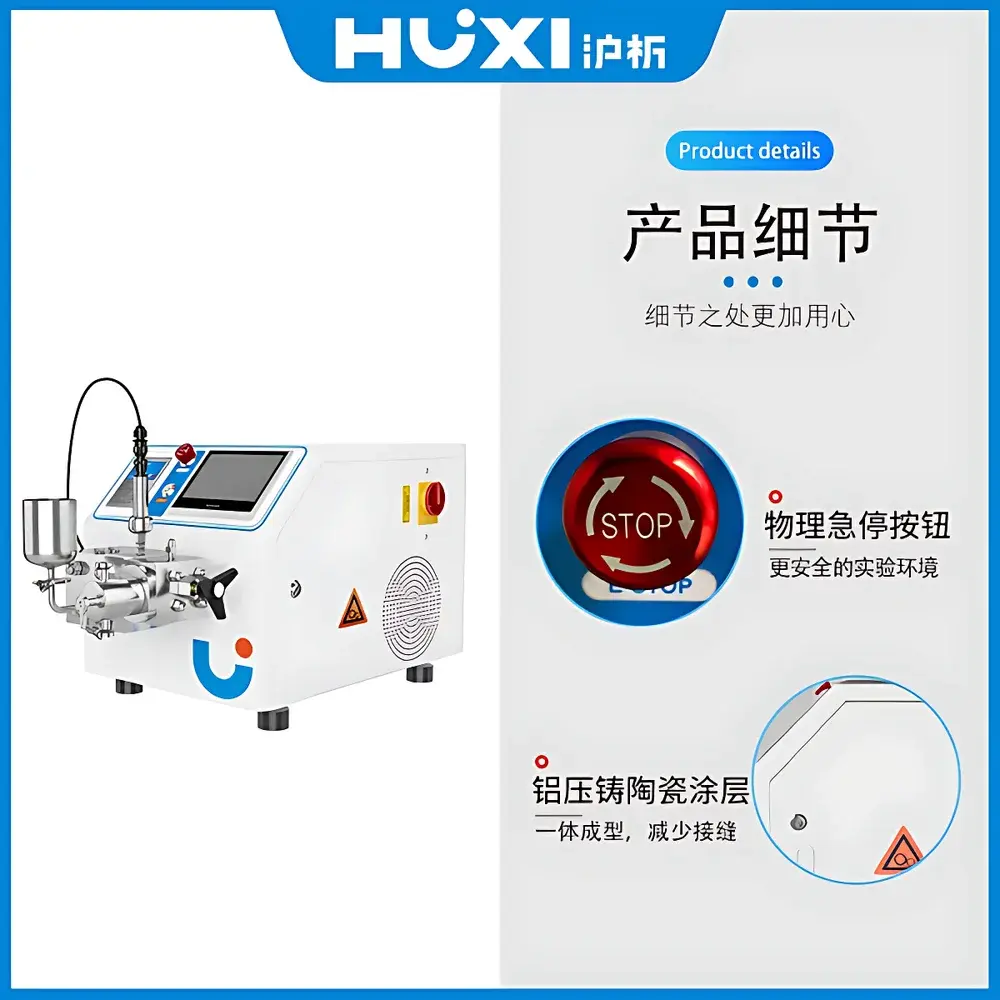
| Overpressure Protection | Electronic safety cutoff |
| Power Supply | 220 V, 50 Hz, three-phase |
| Motor Power | 1.5 kW |
| Dimensions (W×H×L) | 785×450×475 mm |
| Net Weight | 110 kg |
| Cleaning/Maintenance | Tri-Clamp fluid path, CIP/SIP compatible (max cleaning temp: 90 °C |
| max sterilization temp | 145 °C |
| cycle time | 30 min |
| water consumption | 30 L/h) |
Overview
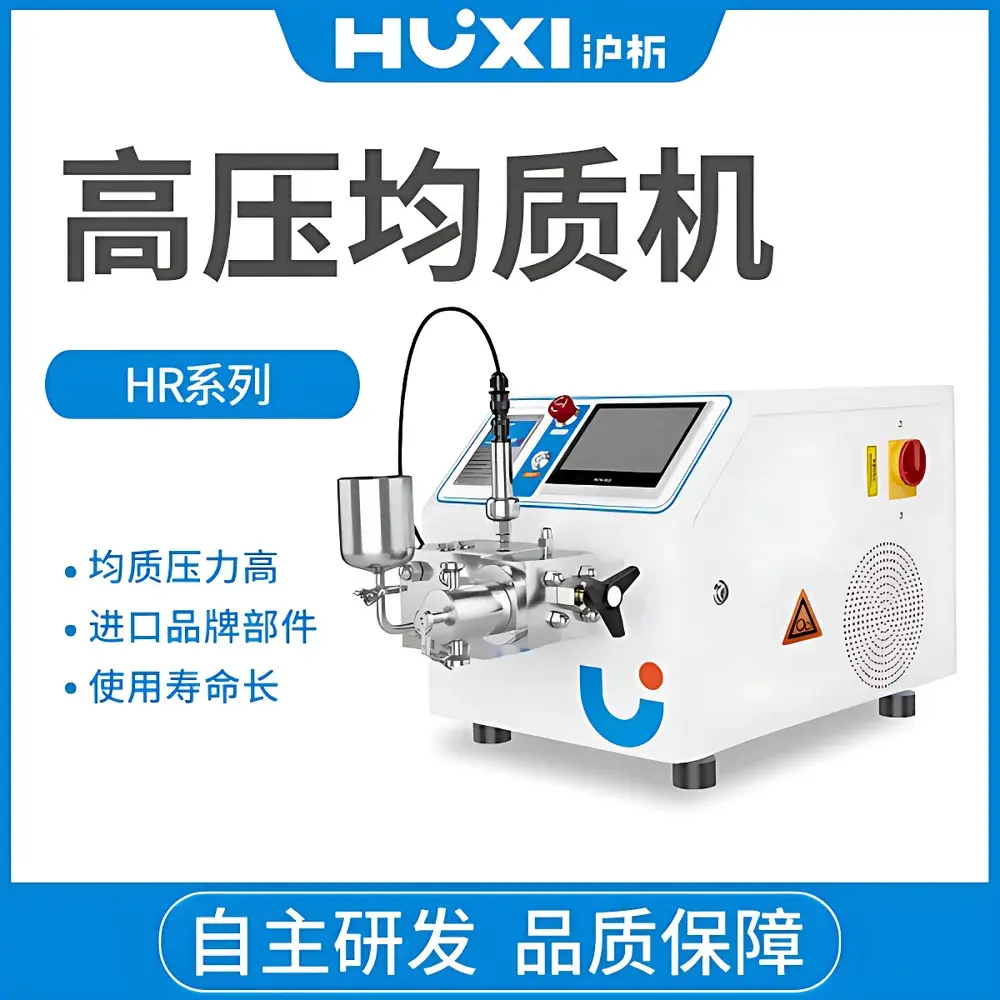
The HUXI HR-1500 High-Pressure Nano-Homogenizer & Emulsifier is an engineered solution for scalable, reproducible cell disruption and nano-emulsion formation in research and early-stage process development laboratories. It operates on the principle of high-pressure homogenization—where sample suspension is forced under controlled hydraulic pressure through a precisely engineered, adjustable homogenization valve. As the fluid passes through the narrow clearance of the valve seat, it experiences rapid decompression, intense turbulent flow, localized cavitation, high-velocity micro-jet impact against the valve surface, and transient shear gradients exceeding 10⁶ s⁻¹. These combined physical mechanisms effectively disrupt cellular membranes (e.g., E. coli, yeast, insect, and mammalian cells including CHO, HEK293, and diploid lines), reduce particle/agglomerate size to sub-200 nm median diameters, and stabilize oil-in-water or polymer nanoparticle dispersions. Critically, the HR-1500 integrates a closed-loop internal heat exchange system enabling continuous operation at ≤4 °C—preserving thermolabile biomolecules such as enzymes, monoclonal antibodies, viral vectors, and exosomes without thermal denaturation or aggregation.
Key Features
- Robust dual-material homogenization valve options: industrial-grade diamond-coated or tungsten carbide alloy—engineered for extended service life under repeated 1500 bar cycling and abrasive biological feedstocks.
- Digital sanitary pressure transducer with real-time display and programmable electronic overpressure cutoff—compliant with ISO 13485 and GMP-aligned operational safety protocols.
- Compact benchtop footprint (785 × 450 × 475 mm) with modular architecture: all major components—including pump head, valve assembly, and cooling interface—are accessible without tools for routine maintenance or validation.
- Tri-Clamp (DIN 11851) compliant inlet/outlet connections ensure leak-tight, aseptic fluid path integrity and compatibility with standard bioprocessing tubing and single-use manifolds.
- Integrated chiller loop maintains sample temperature ≤4 °C throughout processing—verified by calibrated PT100 sensors at inlet, valve block, and outlet ports per ASTM E2877-22 guidelines for thermal monitoring in bioprocess equipment.
Sample Compatibility & Compliance
The HR-1500 supports a broad range of biological and colloidal feedstocks: bacterial cultures (including high-density E. coli fermentations), yeast suspensions, insect cell pellets (Sf9, Sf21), and adherent or suspension mammalian cells (HEK293, CHO-K1, VERO). Feedstock viscosity must remain below 2000 cP at operating temperature; particulate input size is limited to <500 µm to prevent valve clogging. The system meets ASME BPE-2021 surface finish requirements (Ra ≤ 0.4 µm) on wetted parts and is validated for Clean-in-Place (CIP) and Steam-in-Place (SIP) cycles: maximum cleaning temperature 90 °C (30 min, 30 L/h water flow), maximum sterilization temperature 145 °C (30 min saturated steam). All electrical components conform to IEC 61000-6-2/6-4 EMC standards and IP54 ingress protection.
Software & Data Management
While the HR-1500 operates as a standalone unit with analog/digital hybrid controls, its pressure sensor output (4–20 mA or 0–10 V) is compatible with external data acquisition systems (e.g., LabVIEW, DeltaV, or SCADA platforms) for audit-trail-enabled logging. Pressure, runtime, and temperature events are timestamped and exportable in CSV format—supporting compliance with FDA 21 CFR Part 11 when integrated into validated laboratory information management systems (LIMS). Optional RS485 Modbus RTU interface enables remote parameter setting and fault diagnostics in multi-unit lab environments.
Applications
- Downstream processing of recombinant proteins: lysis of inclusion body-containing E. coli while minimizing protease activation.
- Nanoparticle formulation: preparation of lipid nanoparticles (LNPs) for mRNA delivery, polymeric micelles, and nanoemulsions for vaccine adjuvants.
- Exosome isolation workflows: gentle yet efficient membrane shearing to release extracellular vesicles without RNA degradation.
- Enzyme and organelle extraction: high-yield recovery of active mitochondria or lysosomal fractions from mammalian tissues.
- Quality control of colloidal stability: accelerated batch-to-batch assessment of particle size distribution (PSD) via inline DLS coupling post-homogenization.
FAQ
What is the maximum allowable feed concentration for mammalian cell lysates?
Cell density should not exceed 1.5 × 10⁸ cells/mL for consistent valve throughput and minimal clogging risk—pre-filtration through 100 µm mesh is recommended for pelleted samples.
Can the HR-1500 be used for sterile processing under ISO Class 5 conditions?
Yes—when paired with pre-sterilized Tri-Clamp tubing, SIP-validated valves, and aseptic sampling ports, the system supports Grade A environment integration per EU GMP Annex 1 (2022) when operated within laminar flow hoods or isolators.
Is third-party calibration of the pressure sensor traceable to NIST standards available?
HUXI provides factory calibration certificates (ISO/IEC 17025-accredited partner labs); on-site recalibration services include full uncertainty budget documentation and cross-reference to deadweight tester standards.
How does the internal cooling system maintain 4 °C during extended runs?
A recirculating chiller (included) interfaces with a stainless-steel jacketed homogenizer block and heat-exchange coil in the inlet line—thermal load is actively dissipated at ≥1.2 kW capacity, verified across 4-h continuous operation at 1500 bar.
What validation documentation is supplied with the instrument?
Each unit ships with Factory Acceptance Test (FAT) report, material compliance certificates (3.1 EN 10204), pressure vessel design calculations (ASME Section VIII Div. 1), and IQ/OQ protocol templates aligned with ASTM E2500-13 and ICH Q5A(R2).



