
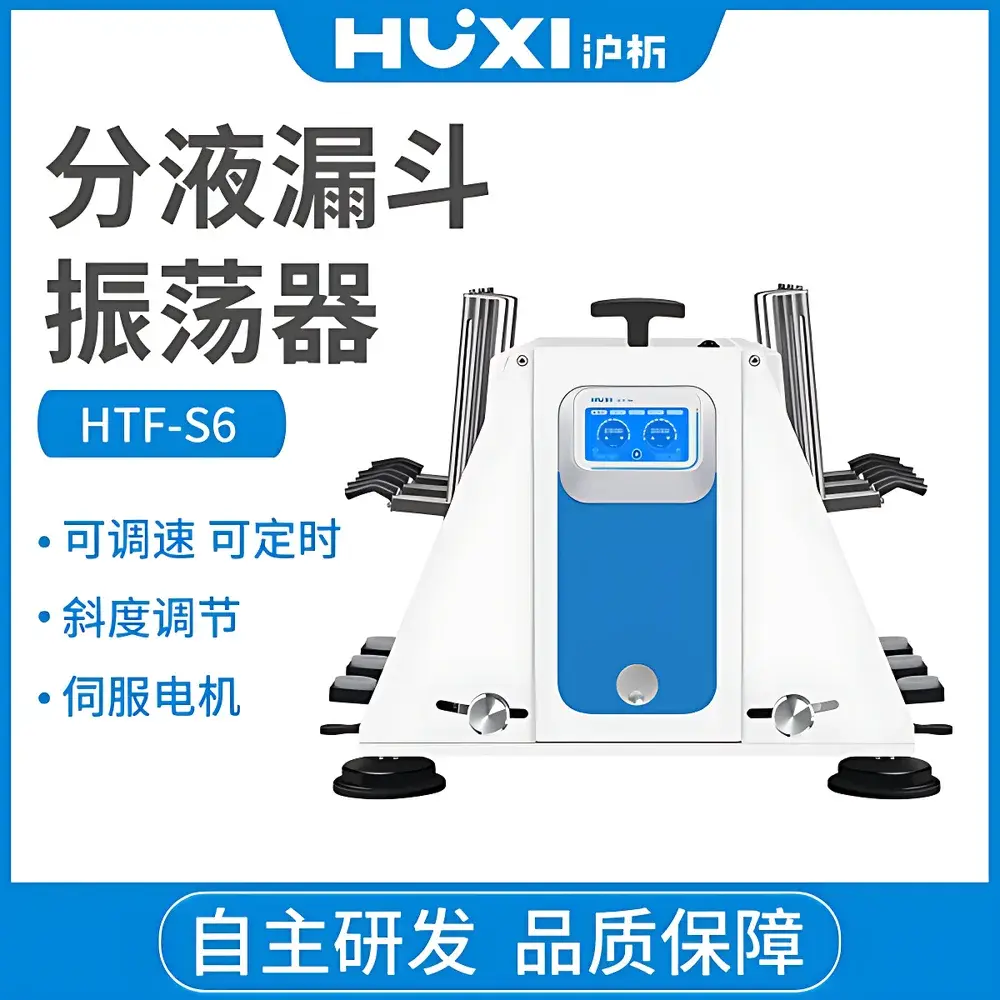
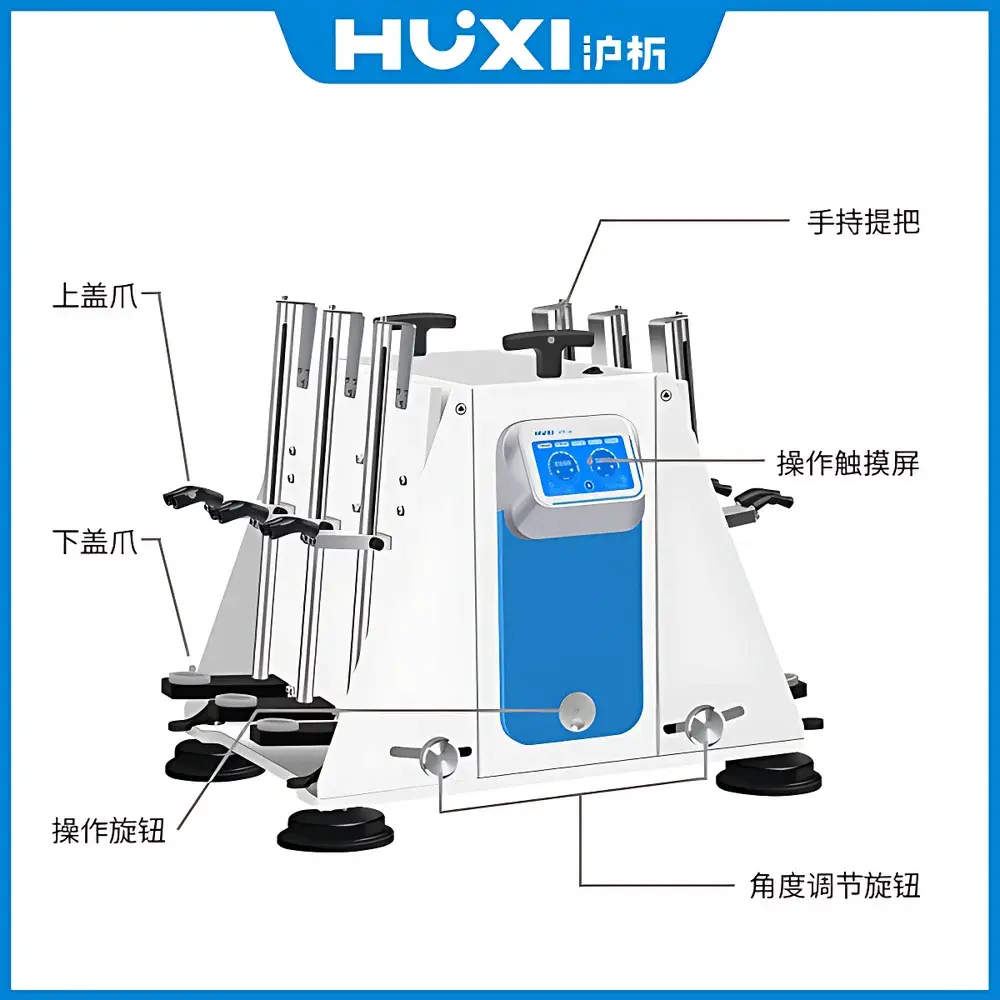
HUXI HTF-S6 Separatory Funnel Shaker
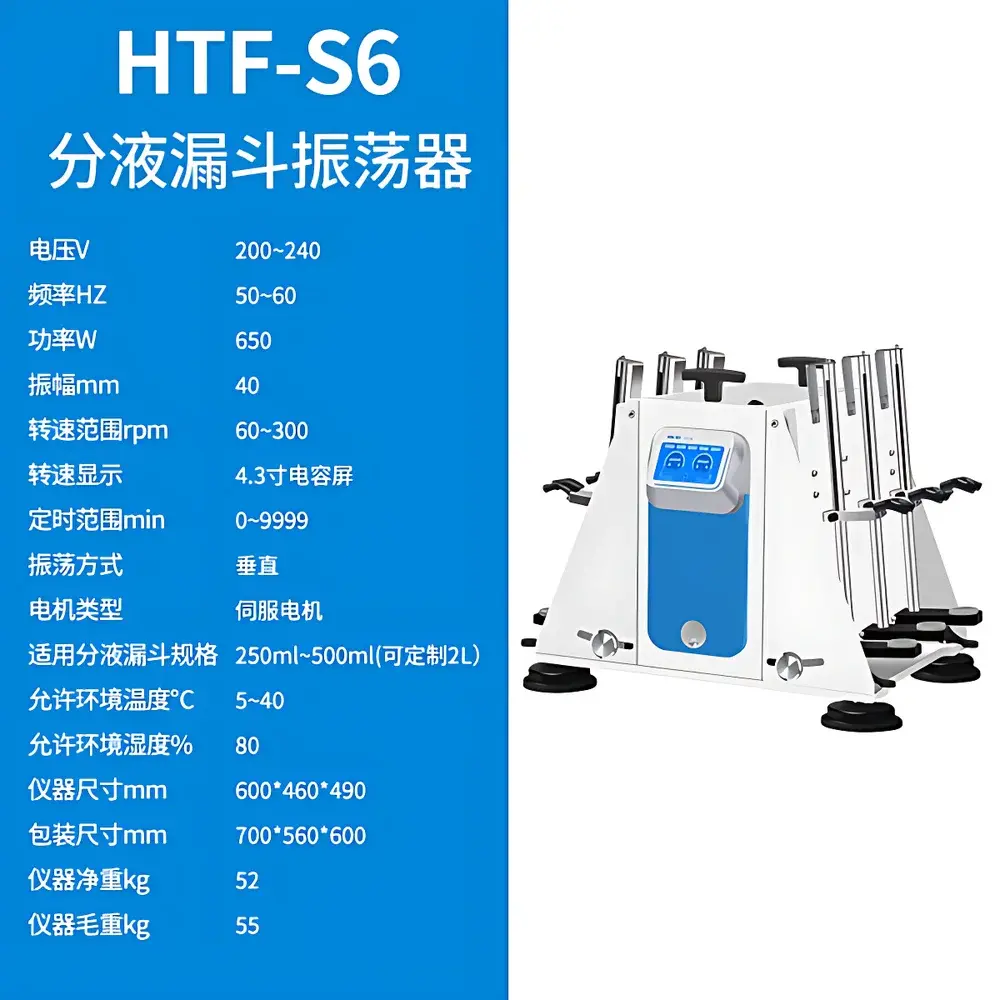
| Brand | HUXI |
|---|---|
| Origin | Shanghai, China |
| Manufacturer Type | Direct Manufacturer |
| Region of Origin | Domestic (China) |
| Model | HTF-S6 |
| Instrument Category | Other Shakers & Oscillators |
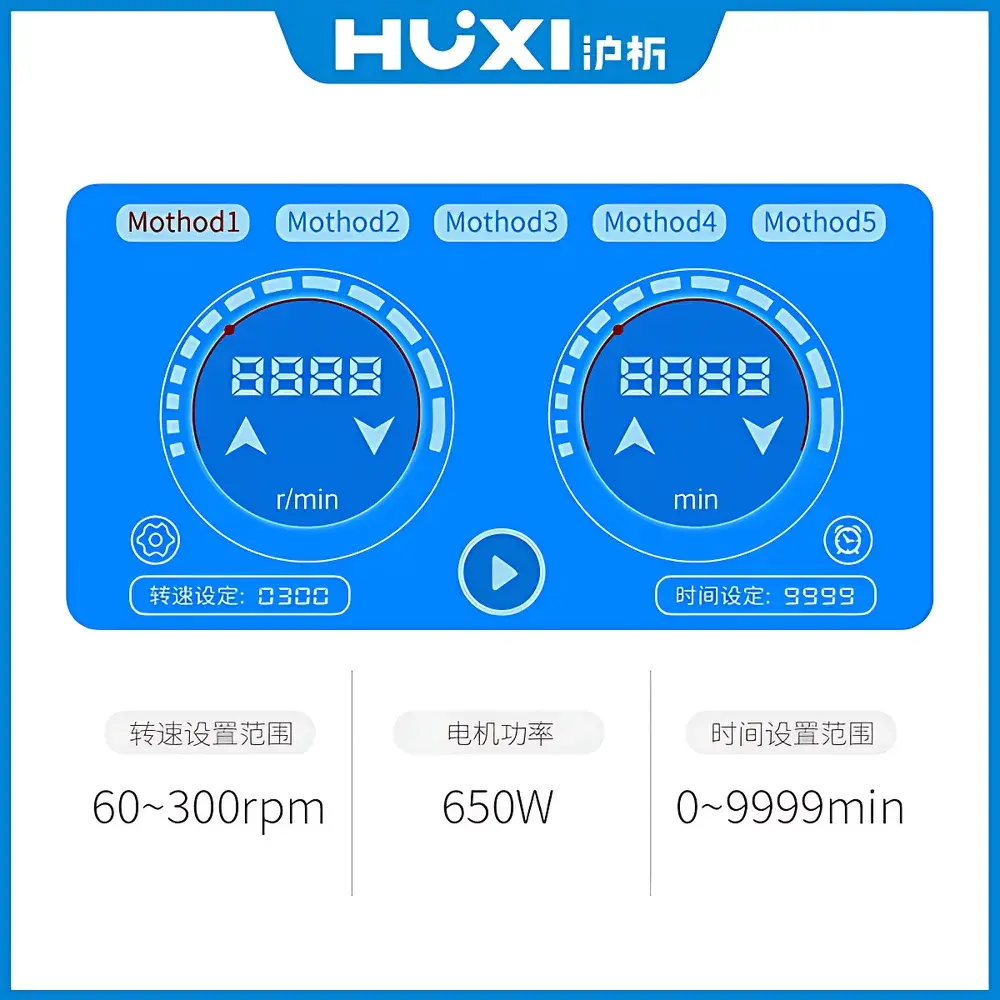
| Timer Range | 0–9999 min |
| Oscillation Frequency | 60–300 rpm |
| Oscillation Amplitude | 40 mm |
| Voltage | 200–240 V |
| Frequency | 50–60 Hz |
| Power Consumption | 650 W |
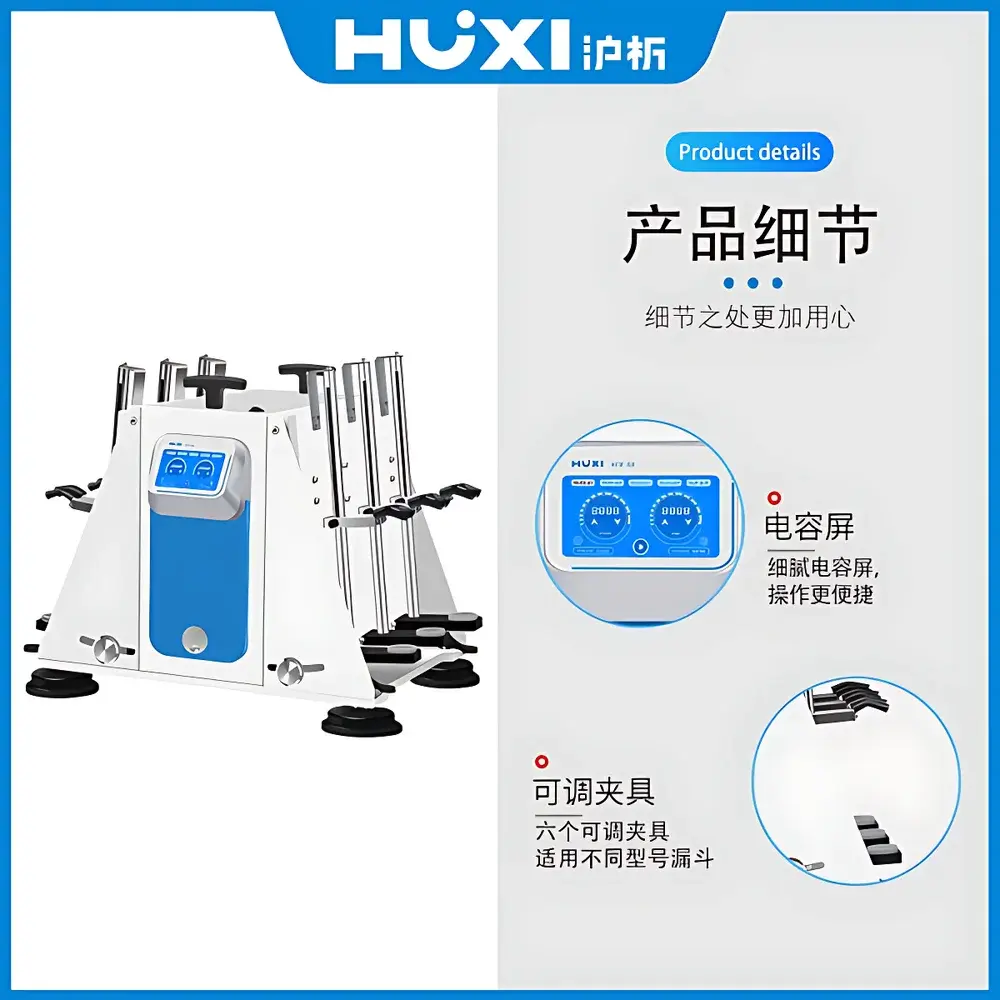
| Display | 4.3-inch capacitive touchscreen |
| Oscillation Mode | Vertical |
| Motor Type | Servo motor |
| Compatible Funnel Capacity | 250–500 mL (customizable up to 2 L) |
| Operating Ambient Temperature | 5–40 °C |
| Max. Relative Humidity | 80 % RH |
| Dimensions (W×D×H) | 600 × 460 × 490 mm |
| Net Weight | 52 kg |
| Gross Weight | 55 kg |
Overview
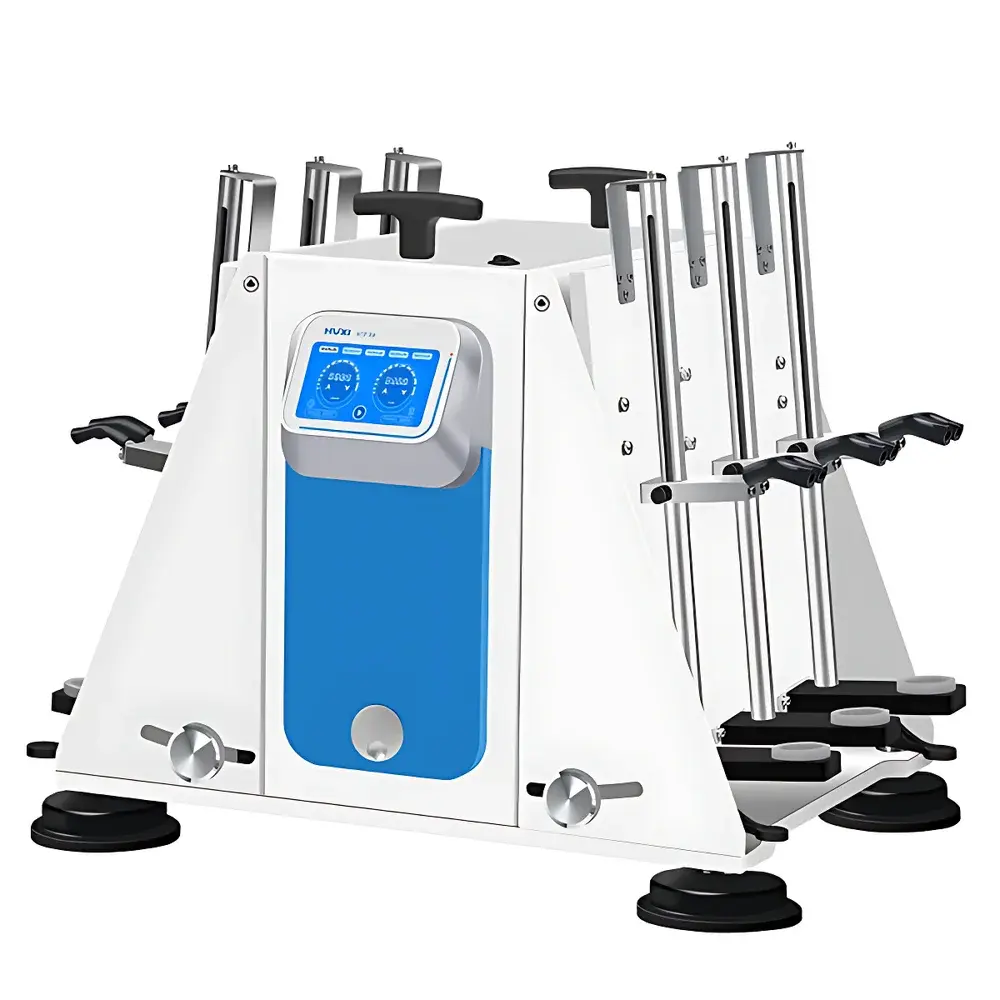
The HUXI HTF-S6 Separatory Funnel Shaker is an engineered laboratory shaker specifically designed for reproducible, high-throughput liquid–liquid extraction workflows. It operates on a vertical reciprocating oscillation principle—generating controlled sinusoidal motion along the Z-axis—to ensure uniform mixing and phase separation in separatory funnels without emulsion over-stabilization or mechanical stress-induced glass fracture. Unlike general-purpose orbital or rotary shakers, the HTF-S6 integrates funnel-specific mechanical constraints—including fixed vertical travel path, calibrated amplitude (40 mm), and servo-driven acceleration profiling—to maintain consistent shear input across variable funnel volumes (250–500 mL). Its architecture supports GLP-aligned experimental traceability via digital time-speed logging and eliminates manual intervention during multi-step extraction protocols common in environmental, food safety, and pharmaceutical analytical laboratories.
Key Features
- Vertical oscillation mechanism with precise 40 mm amplitude and servo-controlled acceleration/deceleration profiles—minimizing sample splashing and container impact forces during start-up and speed transitions.
- Full-range continuous speed control (60–300 rpm) with real-time feedback displayed on a 4.3-inch capacitive touchscreen interface—enabling fine-tuned optimization for solvent immiscibility, density differential, and interfacial tension requirements.
- Dual-mode timer functionality: programmable run duration from 0 to 9999 minutes (166.7 hours), supporting both single-batch and unattended overnight extractions.
- Modular funnel support tray with low-friction linear rails—allowing rapid insertion, alignment, and removal of up to six standard 250–500 mL separatory funnels; optional custom brackets available for 2 L funnels upon request.
- Compact footprint (600 × 460 × 490 mm) and acoustic-damped enclosure—meets ISO 15712-2 noise emission standards (<55 dB(A) at 1 m), suitable for shared lab environments and laminar flow hoods.
- Integrated thermal management system with ambient temperature monitoring (5–40 °C operational range) and automatic thermal cut-off—ensuring stable performance during extended operation under varying HVAC conditions.
Sample Compatibility & Compliance
The HTF-S6 is validated for use with borosilicate glass and PTFE-stopcock separatory funnels conforming to ASTM E202–22 specifications for volumetric glassware. It accommodates standard tapered ground-glass joints (ISO 1773, Boro 3.3) and supports routine validation per USP Analytical Instrument Qualification protocols. The device complies with IEC 61010-1:2010 for laboratory electrical equipment safety and meets CE marking requirements under the EU Low Voltage Directive (2014/35/EU) and EMC Directive (2014/30/EU). While not inherently 21 CFR Part 11 compliant, audit-ready electronic logs (time-stamped speed/timer settings) can be exported via USB for inclusion in GMP/GLP documentation packages.
Software & Data Management
The HTF-S6 features embedded firmware with non-volatile memory storing up to 99 user-defined method presets—including rpm setpoint, duration, ramp rate, and hold intervals. All operational parameters are timestamped and retained after power cycling. Data export is supported via USB 2.0 port (FAT32-formatted flash drive), generating CSV files compatible with LIMS integration (e.g., LabWare, STARLIMS) and statistical process control tools (Minitab, JMP). No proprietary software installation is required; raw logs include columns for session ID, start/stop timestamps, mean rpm deviation (<±0.5%), and thermal status flag.
Applications
- Environmental analysis: EPA Method 3510C (separatory funnel extraction for organochlorine pesticides), ASTM D7087 (oil-in-water determination), and ISO 11466 (heavy metal leaching from soils).
- Food & beverage testing: AOAC 992.15 (synthetic preservatives), EN 15662 (pesticide multiresidue analysis), and ISO 17360 (fatty acid methyl ester synthesis).
- Pharmaceutical R&D: Solvent-based API partitioning studies, residual solvent removal validation, and extractables/leachables screening per USP .
- Academic research: Kinetic modeling of liquid–liquid equilibrium systems, surfactant-mediated phase transfer reactions, and green solvent substitution trials (e.g., ethyl acetate vs. 2-methyltetrahydrofuran).
FAQ
Can the HTF-S6 accommodate funnels larger than 500 mL?
Yes—custom mounting brackets for 1 L and 2 L separatory funnels are available upon request; maximum load capacity remains 6 units at reduced speed (≤200 rpm) to maintain mechanical stability.
Is the touchscreen interface compatible with glove use in fume hoods?
The 4.3-inch capacitive display supports stylus input and has adjustable touch sensitivity; nitrile or latex gloves may require light pressure calibration—refer to Section 4.2 of the Operator Manual.
Does the unit provide password-protected method locking for regulated labs?
No native user-level access control is implemented; however, method export/import via USB enables centralized version-controlled protocol distribution and audit trail linkage.
What maintenance intervals are recommended for the servo motor and rail system?
Lubrication-free linear rails require no scheduled maintenance; servo motor bearings are rated for 20,000 hours MTBF—routine inspection every 12 months is advised per ISO 13374 Condition Monitoring standards.
How is vibration isolation achieved during high-rpm operation?
The base frame incorporates dual-stage elastomeric mounts (Shore A60 durometer) and mass-balanced counterweights, reducing transmitted vibration to <0.15 mm/s RMS at 300 rpm on concrete lab benches.
Related Products



