
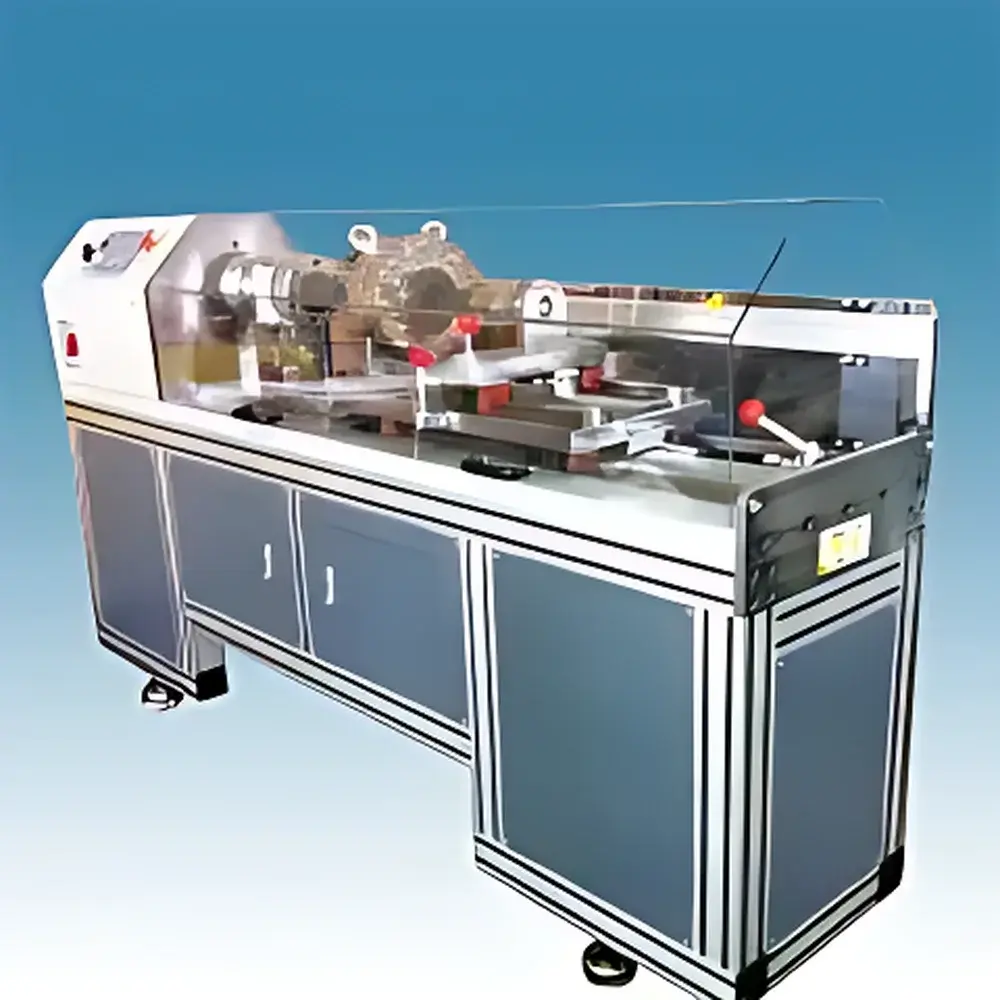
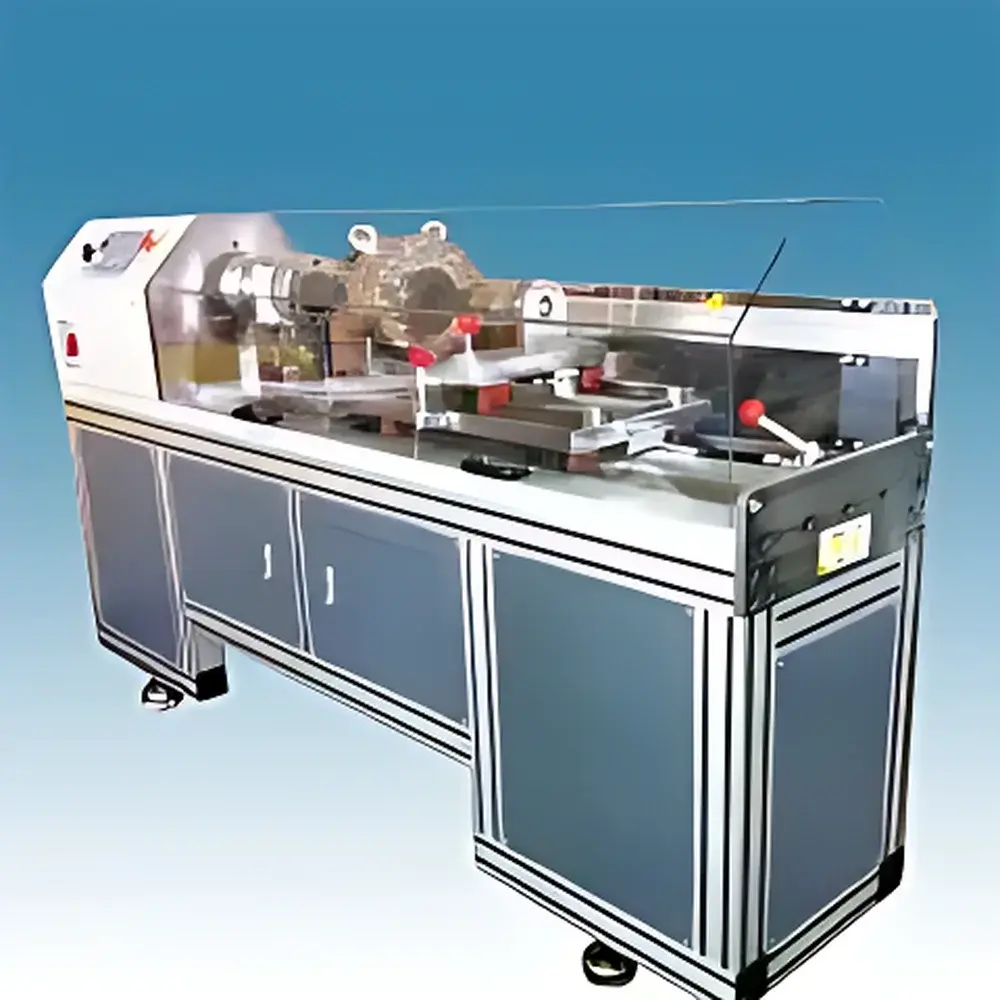
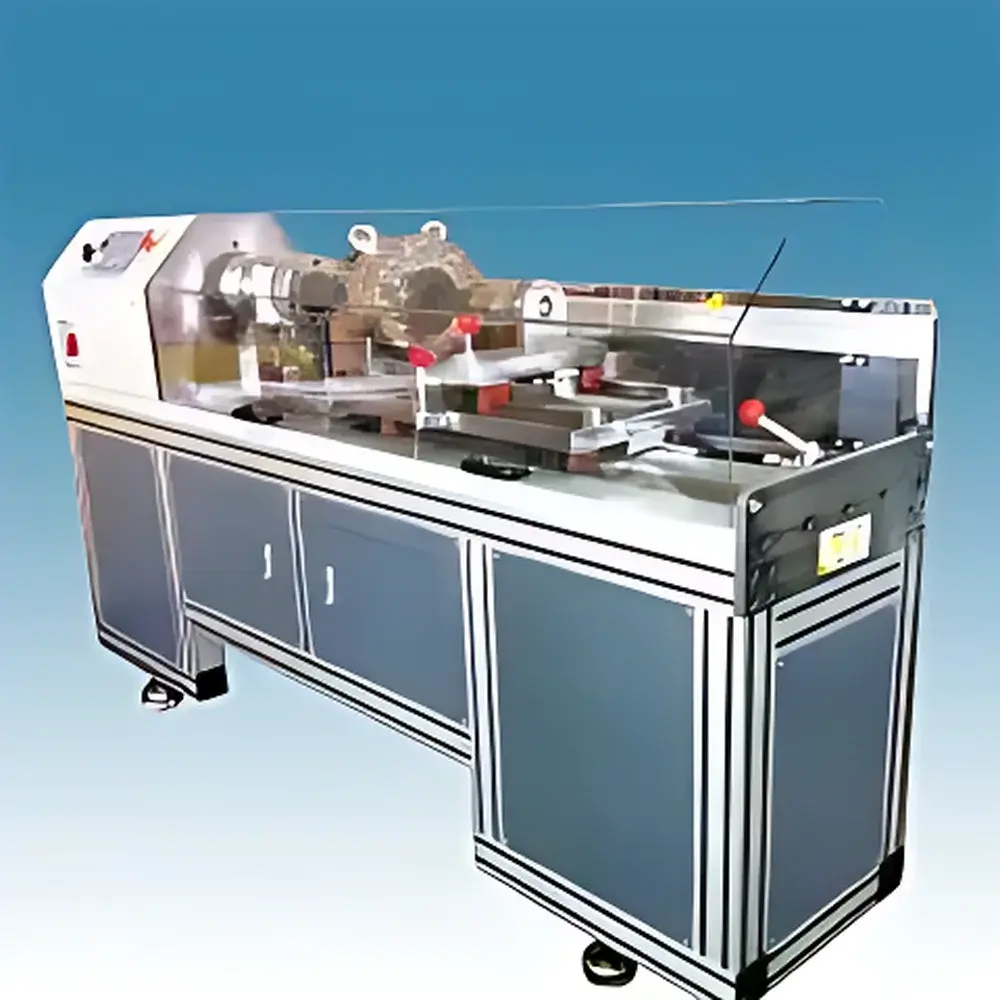
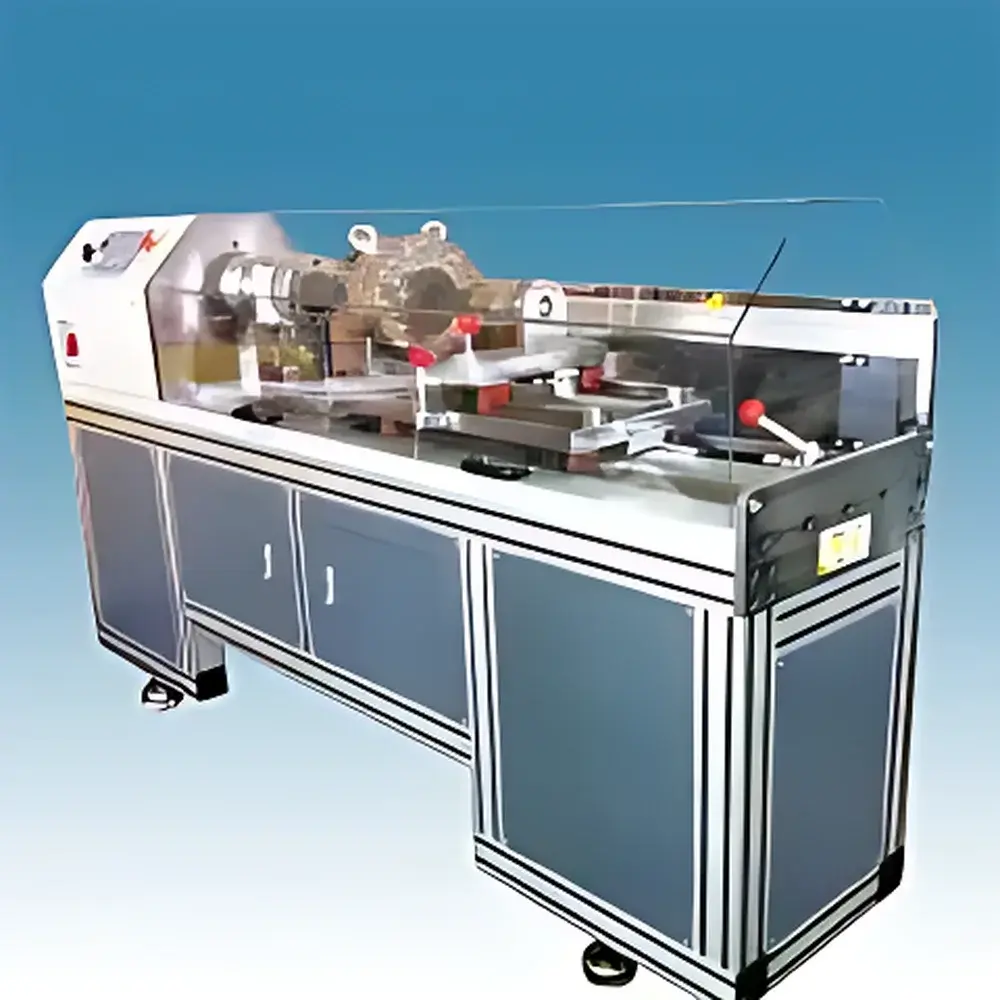
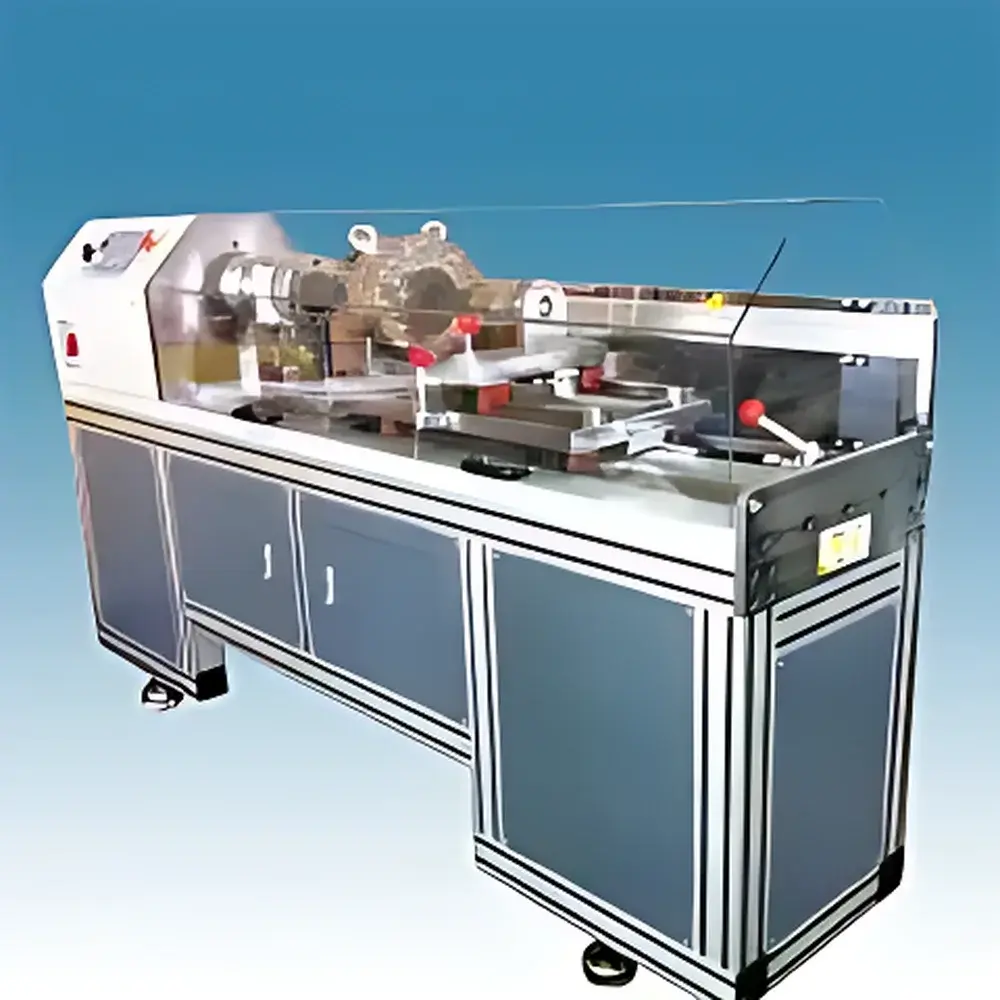
HY-5000NMT Hengyi Torsion Testing Machine for End-Face Friction Coefficient Measurement
| Brand | Hengyi |
|---|---|
| Origin | Shanghai, China |
| Manufacturer | Hengyi Test Equipment Co., Ltd. |
| Model | HY-5000NMT |
| Max Torque | 5000 N·m |
| Torque Measurement Range | 50–5000 N·m |
| Torque Resolution | 1/500000 full scale |
| Torsion Angle Range | 0–100000° (or continuous) |
| Motor Power | 2000 W |
| Torque Accuracy | ±0.5% FS |
| Angular Position Accuracy | ±0.5% FS |
| Torsion Speed | 0–30 rpm |
| Gauge Length Adjustment | 1000 mm |
| Specimen Clamping Range | M10–M30 (customizable) |
| Power Supply | Single-phase 220 V, 3 kW |
| Dimensions (L×W×H) | 2200 × 540 × 1250 mm |
| Weight | 1200 kg |
Overview
The HY-5000NMT is a precision-engineered horizontal torsion testing machine designed specifically for quantitative determination of end-face friction coefficients, thread friction coefficients, and total coefficient of friction in fasteners and cylindrical mechanical components. It operates on the principle of controlled quasi-static torsional loading under simultaneous axial force application—enabling direct measurement of torque-angle response curves with synchronized axial load monitoring. This dual-parameter acquisition architecture conforms to standardized test protocols defined in ISO 16047, ASTM F568M, DIN 946, and GB/T 3098.9 for fastener friction characterization. The system employs a high-rigidity frame, servo-controlled torsional actuation, and calibrated multi-axis transduction to ensure traceable, repeatable, and GLP-compliant data generation in quality control laboratories, R&D facilities, and third-party certification institutes.
Key Features
- High-torque capacity (5000 N·m maximum) with dual-range torque sensing (primary: 2000 N·m; secondary: 1000 N·m) for enhanced resolution across low- and high-load regimes
- Integrated axial force measurement channel (5–500 kN range) enabling concurrent torque–tension analysis per ISO 16047 Annex A
- Japanese Panasonic AC servo drive system with 1:2,000,000 speed regulation ratio and ±0.5% speed accuracy over 0–30 rpm
- Imported high-resolution optical encoder for torsion angle measurement (0–100000°, ±0.5% FS accuracy) and real-time angular position feedback
- ARM32-based embedded controller (56 MIPS processing capability) with 100 Hz sampling rate, supporting dynamic event capture and sub-cycle parameter logging
- Modular fixture interface accommodating M10–M30 threaded specimens; custom jaw sets available for non-standard geometries and composite fasteners
- Compliance-ready software architecture supporting audit trails, electronic signatures, and 21 CFR Part 11–compliant data integrity controls
Sample Compatibility & Compliance
The HY-5000NMT accommodates standard and non-standard fasteners—including bolts, screws, studs, and anchor assemblies—under both free-running and preloaded conditions. Specimen clamping is achieved via hardened steel jaws with adjustable centering mechanisms to minimize eccentric loading errors. The system supports testing in accordance with international standards including ISO 16047 (determination of frictional properties), ASTM F568M (mechanical properties of carbon and alloy steel bolts), DIN 946 (friction coefficients of bolt/nut assemblies), and GB/T 3098.9 (Chinese national standard for fastener friction testing). All calibration procedures follow ISO/IEC 17025 requirements, and torque transducers are traceably certified to NIST or CNAS-accredited reference standards.
Software & Data Management
The proprietary Hengyi TorsionTest™ software provides full test sequence programming, real-time curve overlay, and automated parameter extraction—including breakaway torque, yield torque, ultimate torque, prevailing torque, torque coefficient K, axial preload, end-face friction coefficient (µf), thread friction coefficient (µt), and total friction coefficient (µtotal). Raw data is stored in ASCII CSV format with time-stamped metadata, and all test reports include digital signature fields, instrument ID, operator ID, calibration date, and environmental condition tags. The software supports configurable pass/fail thresholds, statistical process control (SPC) charting, batch reporting, and export to LIMS-compatible XML or PDF/A-2 formats. Audit logs record all user actions—including method edits, data deletions, and calibration interventions—with immutable timestamps.
Applications
- Quantitative evaluation of lubricant efficacy on bolted joints under simulated service loads
- Validation of surface treatments (e.g., phosphate coating, zinc flake, PTFE dry film) for friction consistency
- Development and verification of torque-tension relationships in automotive powertrain and chassis assemblies
- Root cause analysis of joint loosening, galling, or thread stripping failures
- Material qualification of high-strength fasteners for aerospace and energy infrastructure applications
- Supporting Design Failure Mode and Effects Analysis (DFMEA) through empirical friction database generation
- Accredited testing for ISO/TS 16949 and AS9100-certified suppliers requiring documented friction performance evidence
FAQ
What standards does the HY-5000NMT support for friction coefficient testing?
ISO 16047, ASTM F568M, DIN 946, JIS B1083, GB/T 3098.9, and EN 14399.
Can the system measure both torque and axial force simultaneously?
Yes—dual-channel synchronized acquisition enables real-time torque–tension mapping essential for K-factor and friction partitioning calculations.
Is the software compliant with FDA 21 CFR Part 11 requirements?
Yes—the system includes role-based access control, electronic signatures, and immutable audit trails meeting Part 11 Subpart B criteria.
What is the minimum resolvable torque increment?
At full scale (5000 N·m), resolution is 0.01 N·m (1/500000 FS); at 50 N·m range, resolution improves to 0.0001 N·m.
Does the machine support automated test sequences for production line integration?
Yes—scriptable test protocols, PLC-compatible I/O ports, and Ethernet/IP communication enable seamless integration into automated QA workflows.
How is calibration maintained and verified?
Torque and axial load sensors are calibrated annually using NIST-traceable deadweight standards; angle encoder calibration is verified via laser interferometry per ISO 230-2.



