
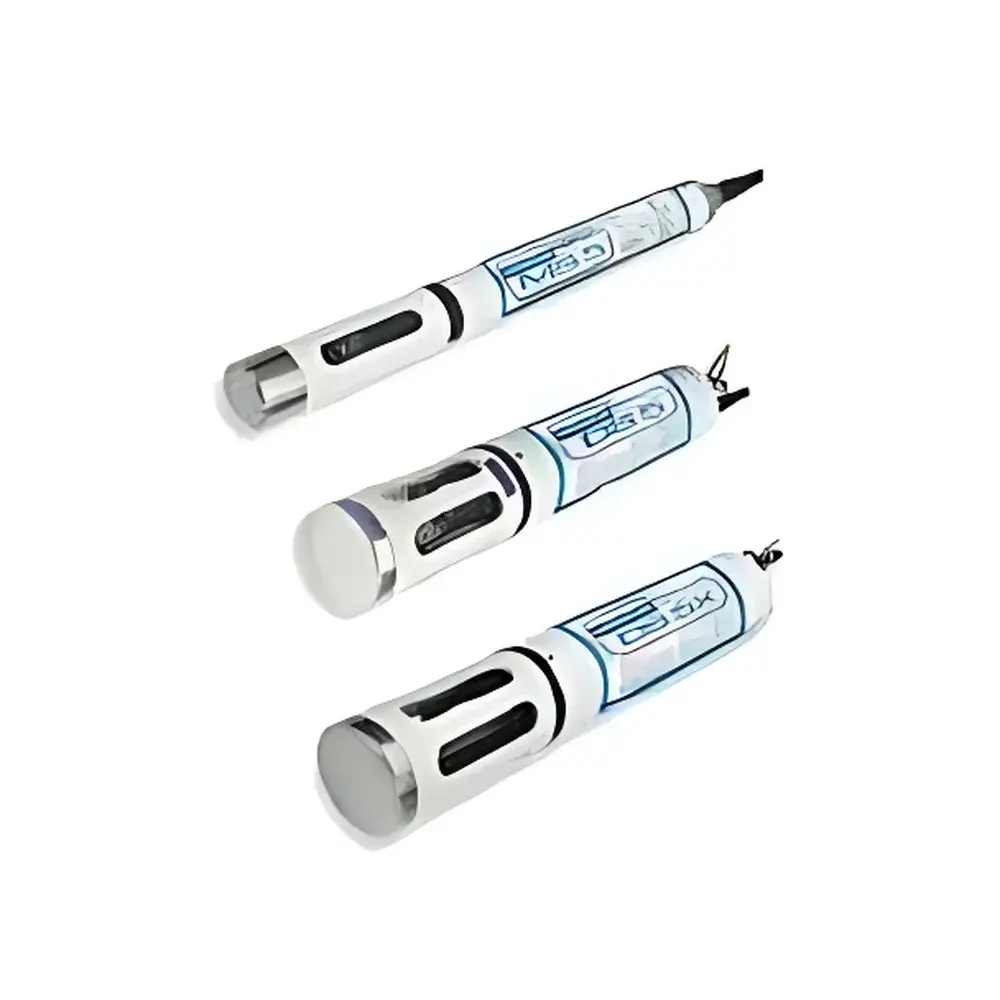
Hydrolab DS5X / MS5 Multi-Parameter Groundwater Water Quality Analyzer
| Origin | USA |
|---|---|
| Manufacturer Type | Authorized Distributor |
| Origin Category | Imported |
| Model | Hydrolab-1 |
| Instrument Type | Portable/Handheld Water Quality Analyzer |
Overview
The Hydrolab DS5X and MS5 series multi-parameter groundwater water quality analyzers are engineered for high-reliability, field-deployable environmental monitoring in hydrogeological, regulatory, and utility applications. These instruments operate on a modular sensor architecture grounded in electrochemical, optical fluorescence, and physical transduction principles—enabling simultaneous, real-time measurement of up to fifteen critical water quality parameters in situ. Designed specifically for groundwater monitoring wells, shallow aquifers, and borehole profiling, the system supports both portable grab sampling and long-term unattended deployment via optional telemetry and data loggers. Its robust pressure-rated housing (up to 300 m depth rating for DS5X) ensures operational integrity across variable hydraulic head conditions typical of confined and unconfined aquifer systems. Unlike benchtop or lab-based analyzers, the Hydrolab platform delivers calibrated, traceable measurements directly at the point of interest—minimizing sample degradation, transport artifacts, and temporal lag between collection and analysis.
Key Features
- Modular, field-swappable sensor cartridges—including pH, ORP, dissolved oxygen (optical luminescence), conductivity (with automatic salinity/TDS/resistivity compensation), temperature, depth/pressure, turbidity (nephelometric), chlorophyll-a (in vivo fluorescence), phycocyanin (for cyanobacteria quantification), rhodamine WT (tracer dye detection), ammonium, nitrate, chloride, environmental light (PAR), and total dissolved gas (TDG).
- In vivo chlorophyll-a detection using dual-wavelength excitation (460 nm) and emission (685 nm) with detection limit ≤0.03 µg/L—eliminating solvent extraction and enabling continuous algal biomass trending.
- Cyanobacteria-specific phycocyanin fluorescence sensing (excitation 590 nm, emission 650 nm) with three selectable sensitivity ranges (100–2×10⁶ cells/mL), supporting early-bloom detection and risk assessment for drinking water source protection.
- Dedicated environmental light sensor measuring photosynthetically active radiation (PAR, 400–700 nm) to assess light availability for benthic and planktonic phototrophs—critical for reservoir trophic state evaluation and macrophyte habitat modeling.
- IP68-rated, corrosion-resistant titanium or PVC housings; DS5X (Ø8.9 cm × 58.4 cm); MS5 (Ø4.4 cm × 74.9 cm with battery compartment); compatible with standard well casings ≥2 inch diameter.
Sample Compatibility & Compliance
The Hydrolab DS5X/MS5 is validated for direct immersion in natural groundwater matrices—including low-conductivity freshwater aquifers (0.01–10 mS/cm), brackish transition zones, and iron/manganese-rich reducing environments. Sensor calibration protocols align with ASTM D3370 (sampling of water from wells), ISO 5667-3 (preservation and handling), and US EPA Method 160.1 (field measurement of pH and conductivity). Data integrity meets GLP and GMP requirements through onboard audit-trail logging (time-stamped sensor diagnostics, calibration history, and operator ID), and optional 21 CFR Part 11-compliant software modules support regulated utilities and environmental consultants undergoing regulatory audits.
Software & Data Management
Hydrolab’s HydroView™ desktop application and mobile companion app provide real-time telemetry visualization, automated QA/QC flagging (e.g., drift detection, sensor saturation alerts), and export-ready reporting in CSV, Excel, and XML formats. All raw sensor outputs—including raw fluorescence intensity, temperature-compensated conductivity, and PAR irradiance values—are stored with metadata (GPS coordinates, depth, operator notes). Cloud synchronization enables centralized fleet management for multi-site groundwater monitoring networks, with role-based access control and encrypted TLS 1.2 transmission compliant with NIST SP 800-53 controls.
Applications
- Long-term groundwater quality trend analysis in municipal wellfields and contaminated site remediation programs (e.g., plume migration tracking of NO₃⁻, NH₄⁺, Cl⁻).
- Early-warning monitoring for cyanobacterial blooms in karst aquifer-fed springs and bank filtration intakes serving potable water treatment plants.
- Regulatory compliance reporting under SDWA (Safe Drinking Water Act) Source Water Assessment Programs and EU WFD (Water Framework Directive) groundwater body status classification.
- Hydrogeological characterization—correlating redox potential (ORP), dissolved oxygen, and TDG profiles with geochemical zonation in stratified aquifers.
- Climate resilience studies assessing groundwater response to drought-induced drawdown and recharge event dynamics via integrated temperature-depth-turbidity time-series analysis.
FAQ
What is the maximum operational depth rating for the DS5X probe?
The DS5X is rated to 300 meters water column (mwc) with full sensor functionality and pressure compensation—suitable for deep monitoring wells and artesian conditions.
Can the instrument measure ammonium and nitrate simultaneously in low-ionic-strength groundwater?
Yes—ion-selective electrodes (ISEs) for NH₄⁺ and NO₃⁻ are optimized for sub-100 µS/cm conductivity matrices, with automatic ionic strength correction algorithms embedded in firmware.
Is the environmental light sensor calibrated to PAR units (µmol/m²/s)?
Yes—the integrated cosine-corrected photodiode sensor is factory-calibrated against NIST-traceable PAR standards and reports absolute irradiance values in µmol photons/m²/s.
How often does the optical DO sensor require recalibration in groundwater applications?
Under stable field conditions, the luminescent dissolved oxygen sensor maintains ±0.1 mg/L accuracy for ≥6 months; annual factory recalibration is recommended per ISO/IEC 17025 guidelines.
Does the system support third-party telemetry integration (e.g., cellular or satellite modems)?
Yes—RS-485 and SDI-12 digital interfaces enable seamless integration with Campbell Scientific, Teledyne ISCO, and other OEM telemetry platforms for SCADA-grade remote monitoring.







