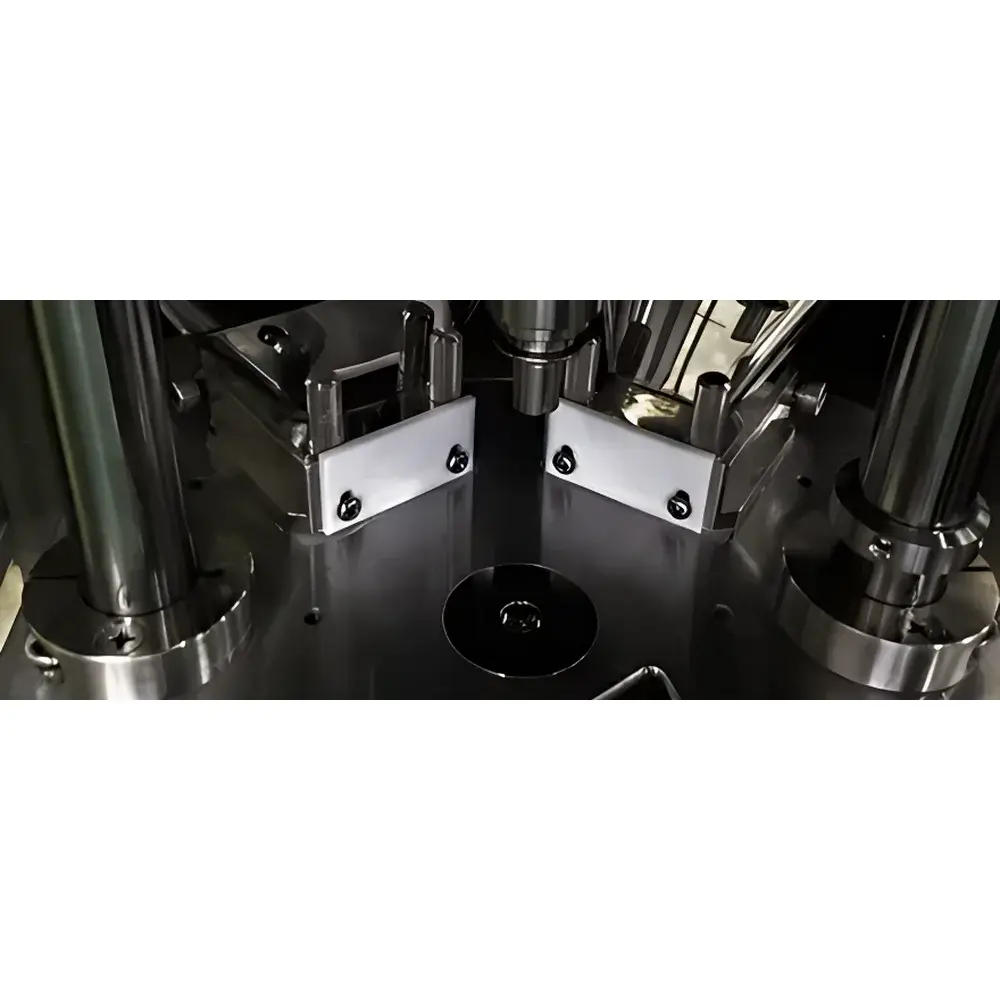
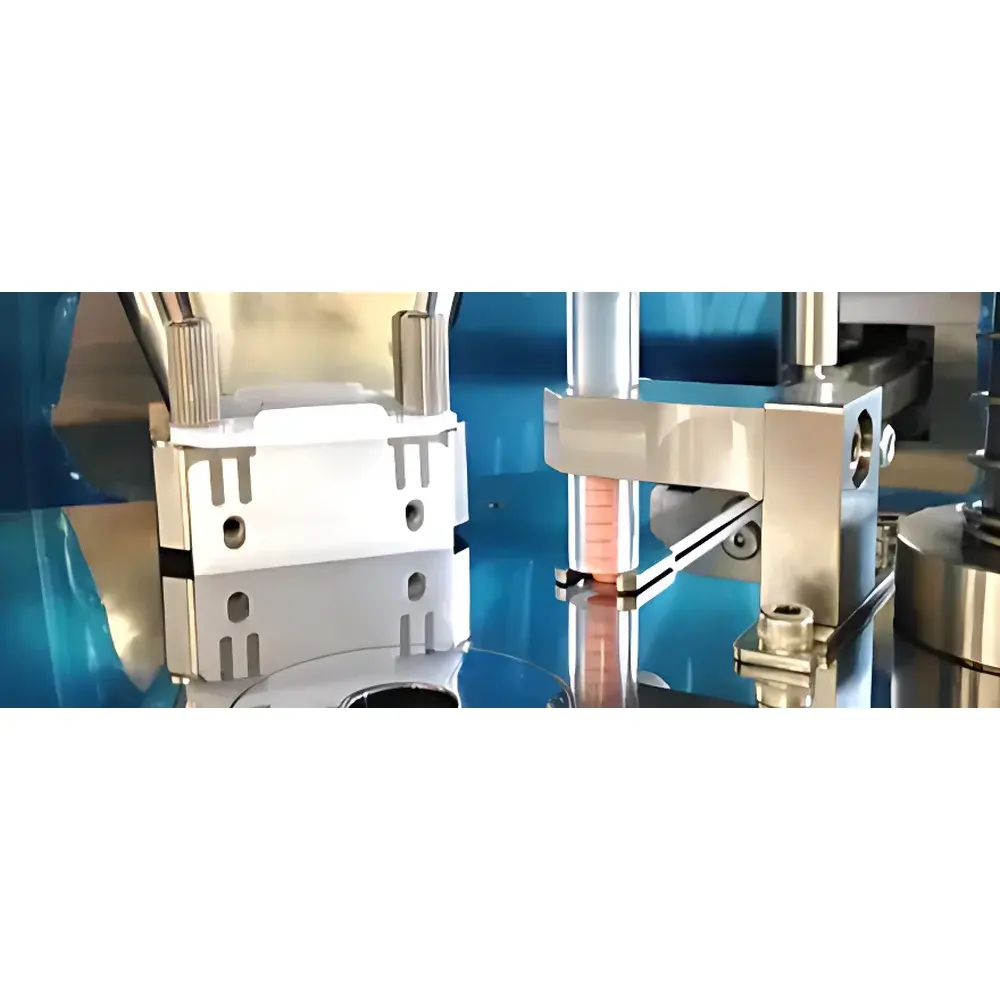
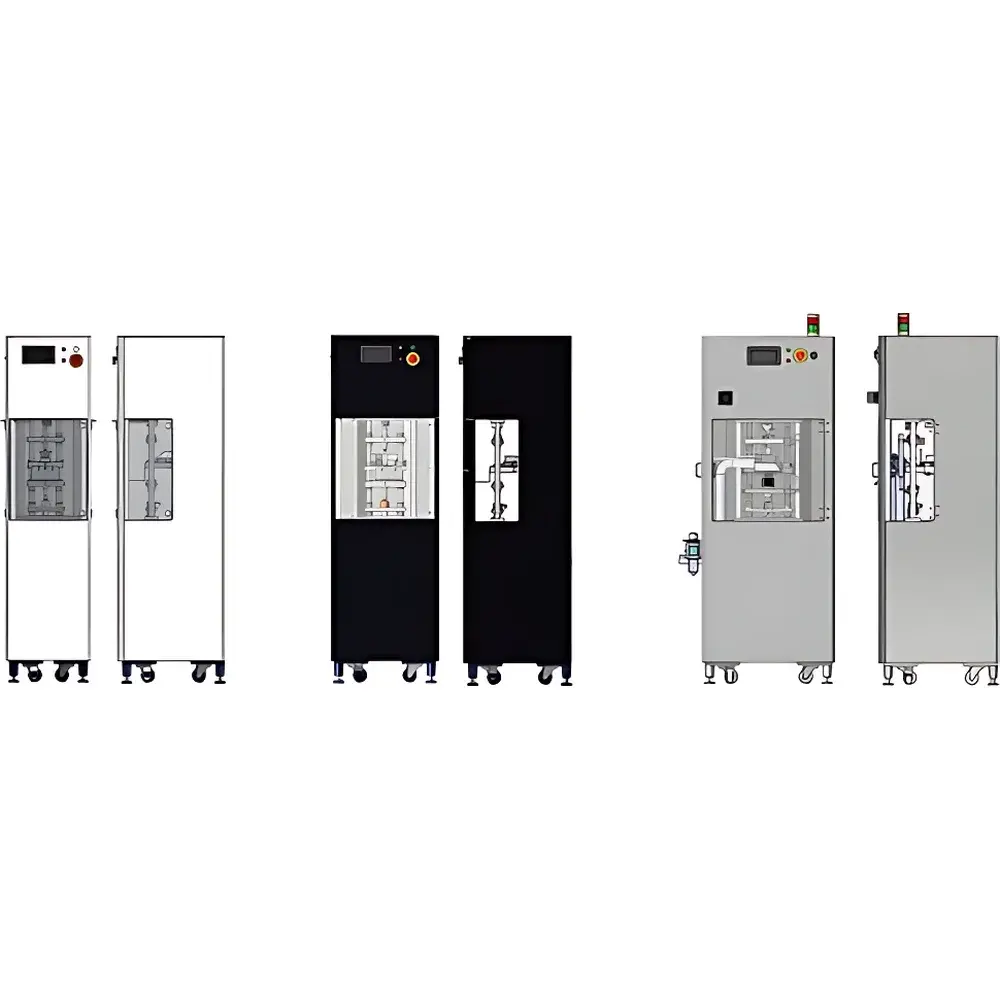
Ichihashi Seiki Autotab-200TR Fully Automated Triple-Layer Tablet Press
| Brand | Ichihashi Seiki |
|---|---|
| Origin | Japan |
| Model | Autotab-200TR |
| Maximum Compression Force | 40 kN |
| Max Tablet Diameter | Φ16 mm (IPT/TSM-B) / Φ23 mm (IPT/TSM-D) |
| Fill Depth | ~18 mm |
| Tooling Standard | IPT/TSM-B or D |
| Cycle Time | 30–60 sec per tablet |
| Motor Power | 0.8 kW |
| Voltage | 100/110 V or 200/220 V |
| Weight | 240 kg |
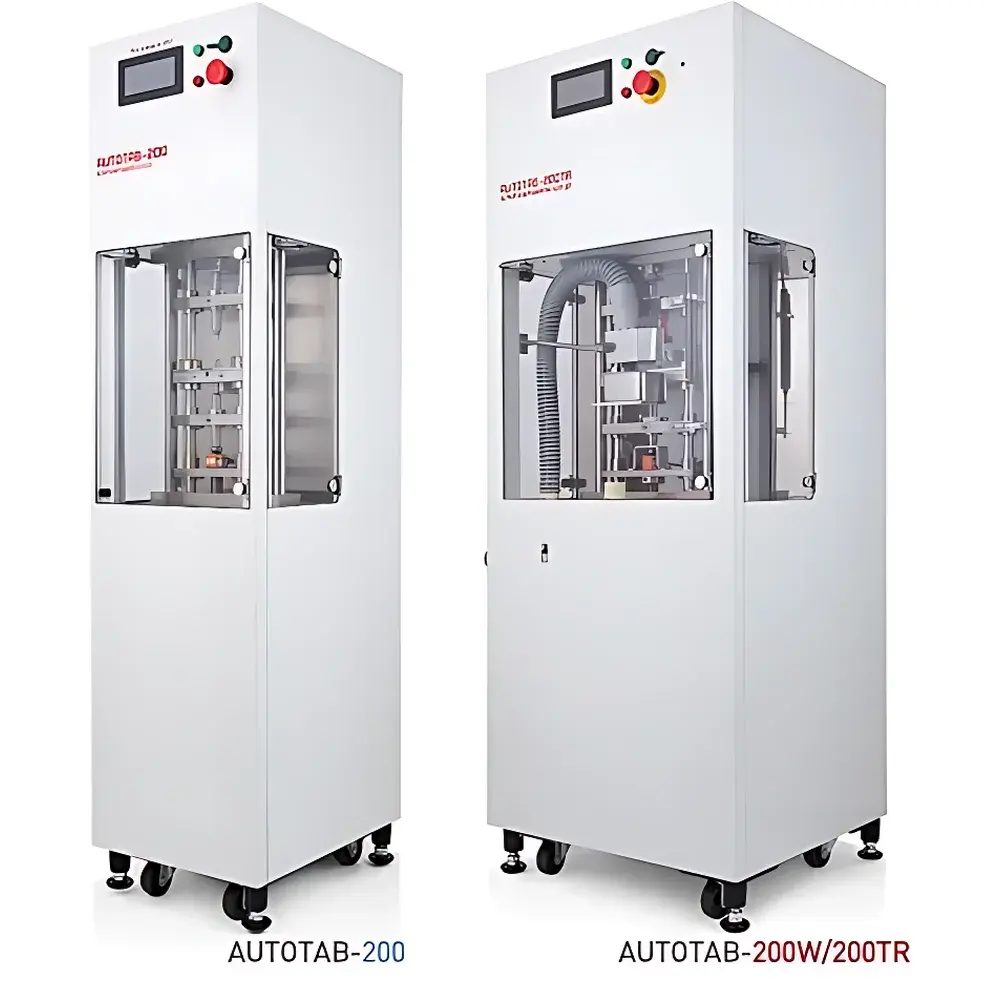
| Dimensions (W×D×H) | 600 × 500 × 1540 mm |
| Hopper Capacity | 70 mL × 3 |
| Safety Interlock | Three-side mechanically and programmatically interlocked doors |
| Data Export | USB interface with proprietary PC software for compression force, ejection force, and cycle log export |
Overview
The Ichihashi Seiki Autotab-200TR is a benchtop, fully automated triple-layer tablet press engineered for precision formulation development and small-batch manufacturing in regulated R&D environments. Based on single-station eccentric cam-driven compression mechanics, it applies controlled axial force via upper and lower punches within a rigid C-frame architecture to compact powder blends into structurally defined tablets. Unlike rotary presses, its deterministic single-punch design ensures full traceability of every compression event—including pre-compression, main compression, and ejection—making it ideal for method development, excipient compatibility studies, and GLP-compliant formulation screening. The Autotab-200TR extends the Autotab-200 platform with three independently actuated feed hoppers and synchronized multi-stage fill control, enabling reproducible fabrication of layered dosage forms including bilayer, trilayer, and core-in-shell (tablet-in-tablet) architectures.
Key Features
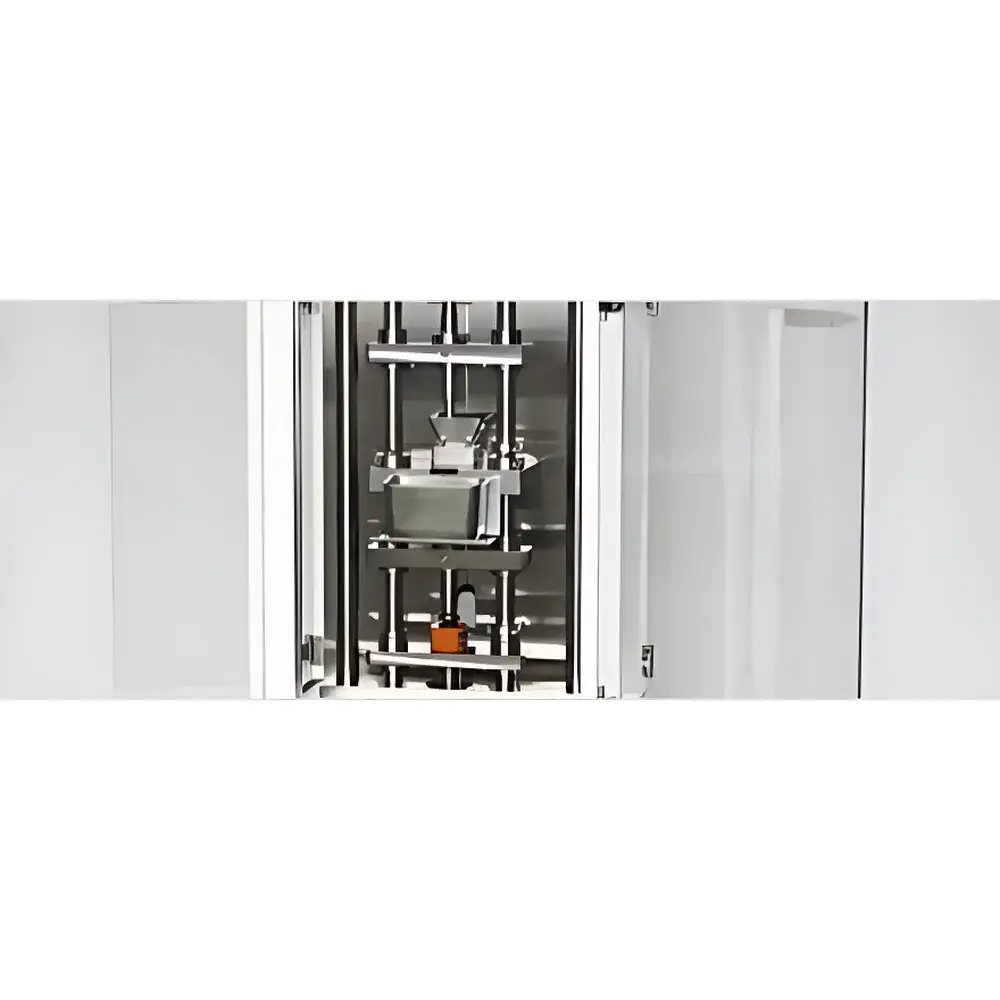
- Triple independent feed system with three 70 mL stainless-steel hoppers, each equipped with motorized auger feeders and programmable fill-depth control for Layer 1, Layer 2, and Layer 3.
- Integrated pre-compression stage using upper punch displacement to densify first-layer powder prior to main compression—critical for minimizing interlayer delamination.
- Touchscreen HMI with intuitive parameter mapping: compression force (0–40 kN), fill depth (0–18 mm), punch penetration, dwell time, and total tablet count—all adjustable without tooling change.
- Interlocked three-side access doors with dual mechanical and software-based safety logic preventing simultaneous upper/lower punch movement during maintenance or tooling exchange.
- IPT/TSM-standard tooling compatibility (B- and D-series) supporting round, oval, and custom-shaped punches up to Φ23 mm; rapid-change die cavity assembly minimizes downtime.
- Optional vacuum-assisted powder clearance and compressed-air blow-off nozzles mounted adjacent to the die table—reduces cross-contamination between layers during sequential filling.
- USB-host interface for real-time export of compression force profiles, ejection force values, and cycle timestamps to external PCs running Ichihashi’s certified data acquisition software.
Sample Compatibility & Compliance
The Autotab-200TR accommodates a broad range of free-flowing and cohesive powders used across pharmaceutical, catalytic, ceramic, and functional materials research. Its low minimum batch requirement (as few as 1 tablet) supports early-stage API-excipient feasibility testing under ICH Q5A/Q5C conditions. All contact parts meet ISO 8573-1 Class 3 air purity standards when paired with optional clean-air modules. The system supports audit-ready operation: electronic logs include user ID, timestamp, parameter set version, and force calibration status—fully compatible with FDA 21 CFR Part 11 requirements when deployed with validated software and access controls. Tooling configurations comply with USP , EP 2.9.40, and JP XVII standards for tablet geometry and mechanical strength assessment.
Software & Data Management
The embedded controller runs a deterministic real-time OS with deterministic loop timing (<10 ms resolution) for synchronized punch motion and force transducer sampling. Compression force data is acquired at ≥1 kHz and stored in non-volatile memory with checksum validation. The proprietary PC application (v3.2+) provides CSV export with column headers compliant with ASTM E2500-13 Annex A3 for raw process data archiving. Audit trail functionality records all parameter modifications, user login/logout events, and emergency stop triggers—retained for ≥36 months. Optional integration with LIMS via OPC UA (add-on module) enables automated metadata tagging against sample IDs and SOP version numbers.
Applications
- Pharmaceutical R&D: Development of extended-release bilayer tablets (immediate + sustained release), taste-masked core-in-shell formulations, and targeted delivery systems requiring spatially segregated active ingredients.
- Catalyst & Ceramics: Fabrication of composite pellets with gradient porosity or functionally graded compositions for heterogeneous reaction studies.
- Materials Science: Preparation of solid-state battery electrode laminates with cathode/anode/current collector layer stratification under controlled compaction stress.
- Regulatory Support: Generation of in-process data packages for ANDA submissions, including force-displacement curves, tablet hardness correlation matrices, and interlayer adhesion metrics per USP .
- Academic Research: Teaching unit operations in pharmaceutics labs—demonstrating powder flow, compressibility, and Heckel analysis principles with full parameter transparency.
FAQ
What tooling standards does the Autotab-200TR support?
It accepts IPT/TSM-B (up to Φ16 mm) and IPT/TSM-D (up to Φ23 mm) tooling sets, including flat, concave, embossed, and custom-profile punches.
Can the system be validated for GMP use?
Yes—when configured with IQ/OQ documentation packages, calibrated load cells (traceable to NIST), and Part 11-compliant software, it meets GMP Annex 15 and EU GMP Chapter 4 requirements for lab-scale equipment.
Is vacuum dust collection included as standard?
No—vacuum-assisted powder removal is an optional add-on kit requiring external industrial vacuum source and HEPA-filtered collector.
How is layer alignment accuracy maintained during triple-layer compression?
Layer registration is achieved through synchronized encoder feedback from each feeder auger and closed-loop position control of the upper punch during pre-compression dwell—typical layer thickness deviation ≤ ±25 µm (RSD < 3.2%) across 50-unit batches.
Does the system support remote monitoring or network connectivity?
Standard Ethernet port supports Modbus TCP for supervisory SCADA integration; full remote desktop access requires optional IT-hardened firmware and firewall configuration.
Related Products