IdeaOptics R2 Transmission Spectroscopy System
| Brand | IdeaOptics |
|---|---|
| Origin | Shanghai, China |
| Manufacturer Type | Original Equipment Manufacturer (OEM) |
| Country of Origin | China |
| Model | R2 |
| Pricing | Available Upon Request |
Overview
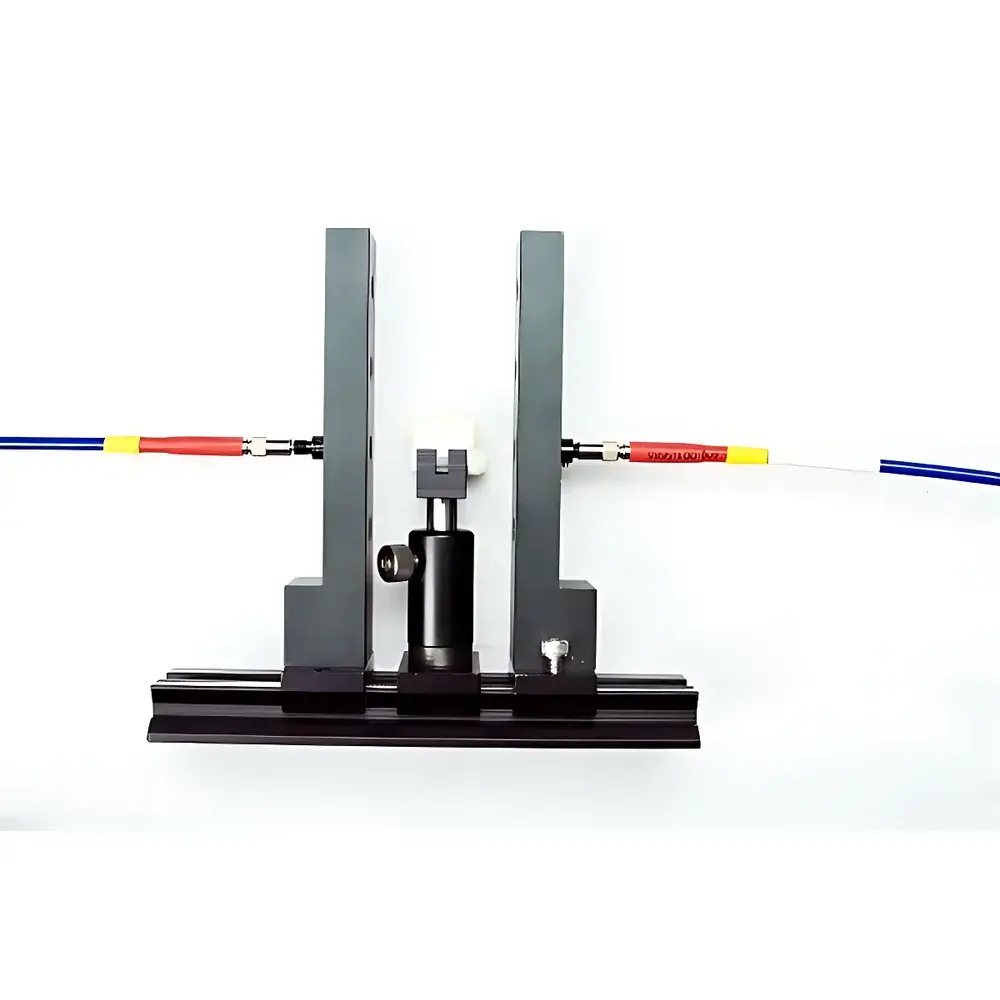
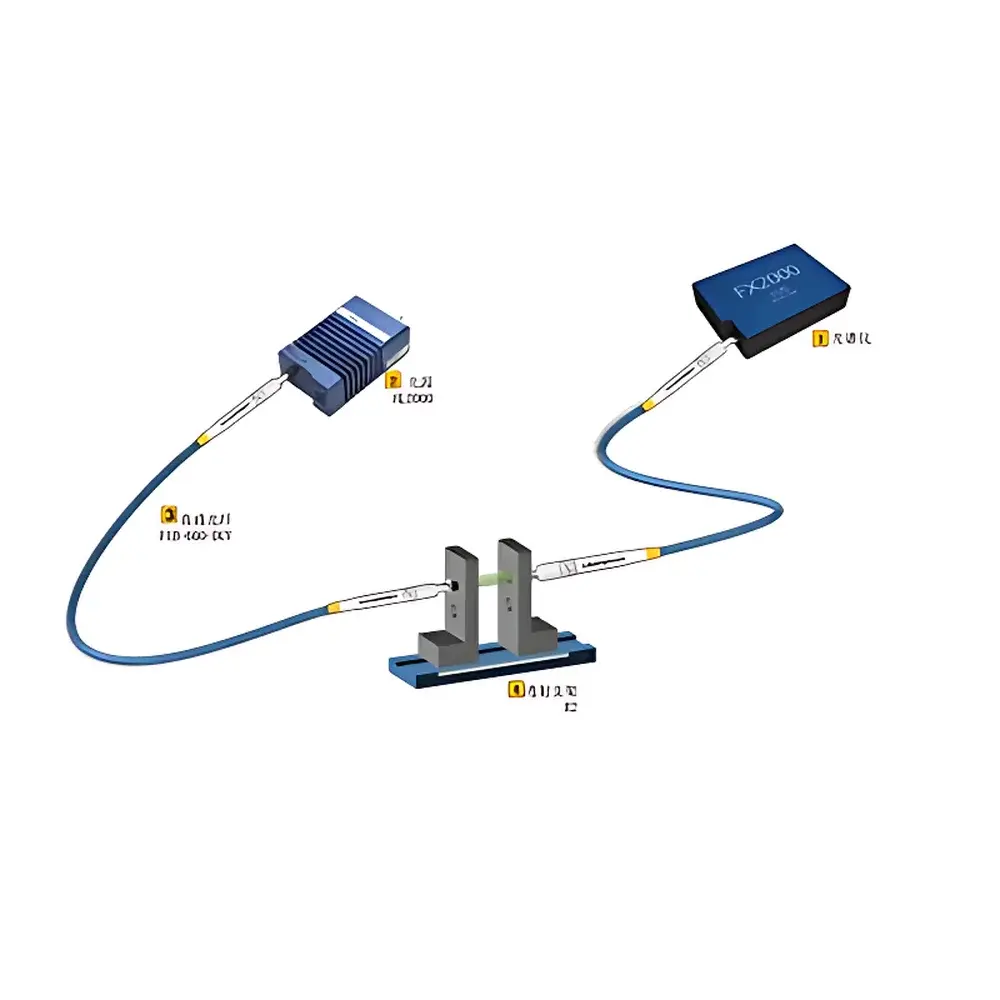
The IdeaOptics R2 Transmission Spectroscopy System is a modular, research-grade optical platform engineered for precise and reproducible measurement of spectral transmittance across the ultraviolet–visible–near-infrared (UV-Vis-NIR) range (typically 200–1100 nm, dependent on spectrometer configuration). Built around a high-sensitivity CCD or CMOS array spectrometer, the system operates on the fundamental principle of comparative intensity measurement: incident light from a stabilized broadband source passes through a sample, and the transmitted intensity is quantified relative to a reference spectrum acquired with an air path or certified neutral density standard. This ratio—normalized to account for source spectral output, detector responsivity, and optical coupling efficiency—yields absolute or relative transmittance (%) as a function of wavelength. The R2 system is not a sealed black-box instrument but a configurable architecture, enabling users to select and integrate components—including deuterium-halogen or tungsten-halogen light sources, multimode silica optical fibers (e.g., 400 µm core, NA 0.22), precision kinematic sample holders, and NIST-traceable reference standards—to match specific experimental requirements in materials science, thin-film characterization, optical filter validation, and pharmaceutical excipient analysis.
Key Features
- Modular optical design supporting user-defined component selection: spectrometer, illumination source, fiber optics, and sample interface
- Integrated optical breadboard-compatible mounting platform with standardized SM1 (1.035″-40) and kinematic post holders for repeatable alignment of collimating lenses, apertures, and beam splitters
- Support for both free-space and fiber-coupled configurations, facilitating measurements on solid substrates, liquid cuvettes (10 mm pathlength standard), or gas cells
- Thermally stabilized spectrometer options available (±0.1 °C) to minimize wavelength drift during extended acquisitions
- Low-stray-light optical path design with calibrated grating-based dispersion and slit-controlled spectral resolution (typical FWHM: 0.5–2.0 nm, dependent on spectrometer model)
- Compliance-ready architecture: supports audit trails, electronic signatures, and parameter locking when paired with validated software modules
Sample Compatibility & Compliance
The R2 system accommodates a broad range of transmission-capable samples, including but not limited to: transparent and semi-transparent thin films (SiO₂, ITO, polymer coatings), optical filters (bandpass, longpass, dichroic), bulk optical glasses (BK7, fused silica), liquid solutions in quartz or UV-grade fused silica cuvettes, and laminated safety glass specimens. Sample positioning is facilitated by adjustable XYZ translation stages with ±0.01 mm repeatability. For regulated environments, the system’s hardware architecture permits integration into GLP/GMP workflows when used with compliant software. While the R2 itself does not carry CE or FDA certification as a standalone medical device, its components—including spectrometers and light sources—meet IEC 61326-1 (EMC) and IEC 61010-1 (safety) standards. Reference measurements may be traceable to NIST SRM 2031 (transmittance standards) or ISO 9050 (optical properties of glazing materials).
Software & Data Management
The R2 system is operated via IdeaOptics’ SpectraSight™ software suite (v4.2+), a Windows-based application supporting real-time spectral acquisition, multi-sample batch processing, and mathematical operations (e.g., baseline correction, derivative spectroscopy, Kubelka-Munk transformation for scattering media). Data export conforms to ASTM E131 and ISO/IEC 17025-compliant formats (CSV, XML, JCAMP-DX). Audit trail functionality logs all user actions—including wavelength calibration events, integration time changes, and reference updates—with timestamps and operator IDs. When deployed in regulated laboratories, optional 21 CFR Part 11 compliance packages provide electronic signature enforcement, role-based access control, and immutable data archiving to networked storage with SHA-256 hash verification.
Applications
- Quantitative determination of optical bandgap in semiconductor thin films via Tauc plot analysis
- Thickness and refractive index extraction from interference fringes in transparent multilayer stacks
- Concentration profiling of dye solutions using Beer-Lambert law validation
- Performance evaluation of anti-reflective, heat-absorbing, and UV-blocking coatings on architectural and automotive glazing
- In-process monitoring of solvent evaporation kinetics in spin-coated polymer films
- Reference-grade transmittance certification of calibration standards per ISO 13697
FAQ
What spectrometer models are compatible with the R2 platform?
The R2 is designed for interoperability with IdeaOptics’ FX, QE, and HR series spectrometers, as well as third-party OEM spectrometers featuring USB2.0/3.0 interfaces and SDK support for LabVIEW, Python (PyVISA), or MATLAB.
Can the R2 perform absorbance measurements directly?
Yes—absorbance (A = –log₁₀T) is calculated in real time from transmittance data; no additional hardware is required beyond the configured reference measurement.
Is fiber optic coupling mandatory?
No—free-space beam delivery is fully supported using collimated illumination and imaging optics mounted on the integrated optical rail.
Does the system include NIST-traceable calibration?
A factory-installed radiometric and wavelength calibration certificate is provided; optional NIST-traceable transmittance calibration using SRM 2031 is available upon request.
What is the typical measurement repeatability under controlled lab conditions?
For stable samples at constant temperature (±0.5 °C), transmittance repeatability is ≤±0.2% (absolute) over 1 hour when using thermally stabilized spectrometer and fixed fiber coupling.