
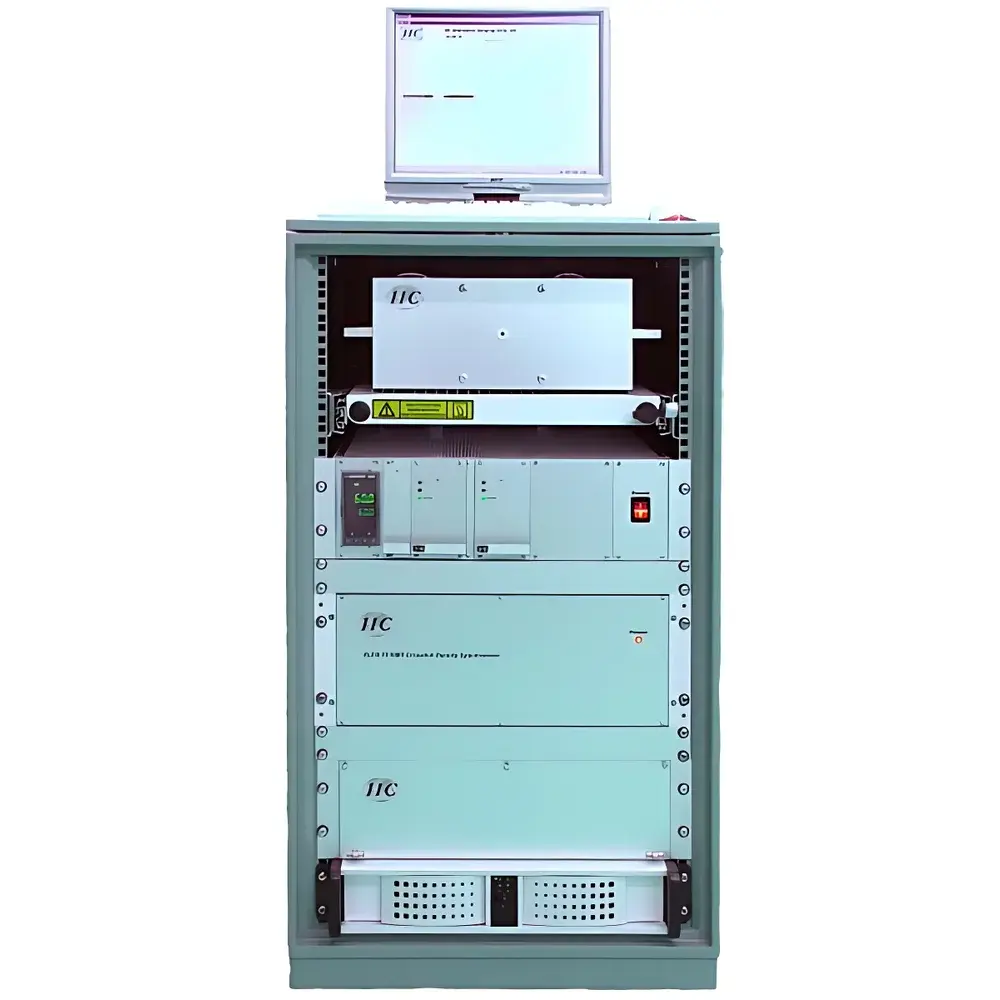
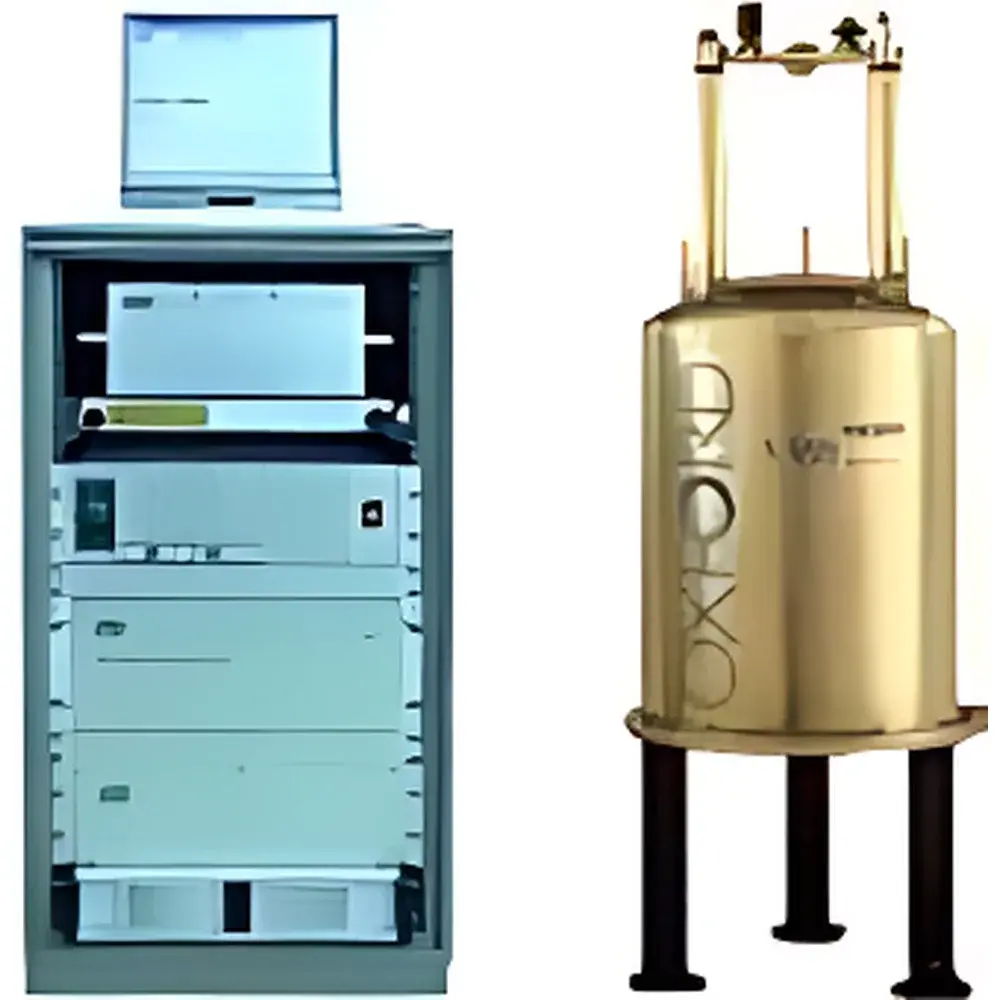
IIC XLDS-15 Low-Field NMR Crosslink Density Analyzer
| Brand | IIC |
|---|---|
| Origin | Germany |
| Manufacturer Type | Authorized Distributor |
| Origin Category | Imported |
| Model | XLDS-15 |
| Pricing | Available Upon Request |
Overview
The IIC XLDS-15 Low-Field Nuclear Magnetic Resonance (LF-NMR) Crosslink Density Analyzer is an engineered solution for quantitative, non-destructive assessment of crosslink density in vulcanized rubber and other thermosetting polymers. Unlike classical solvent-swelling methods—limited by poor reproducibility, narrow material applicability, hazardous chemical use, and destructive sample preparation—the XLDS-15 leverages the fundamental physics of transverse relaxation (T₂) decay in proton-rich polymer networks. By applying a stable, homogeneous 0.05–0.1 T magnetic field and measuring the mobility of hydrogen nuclei in hydrocarbon chains, the instrument derives crosslink density from the relationship between molecular chain segmental motion and network rigidity. This principle is grounded in the Flory–Rehner theory and validated against reference standards per ASTM D6246 and ISO 17987. Designed for routine operation in QC/QA laboratories and R&D centers, the XLDS-15 delivers rapid, traceable, and operator-independent results without altering sample integrity.
Key Features
- Non-invasive measurement: No solvents, no cutting, no thermal degradation—samples remain fully recoverable post-analysis.
- High-throughput capability: Typical analysis time ranges from 30 seconds to 5 minutes per sample, configurable via pulse sequence selection (e.g., CPMG or IR-CPMG).
- Robust precision: Standard deviation in repeated measurements remains below 2% under controlled temperature (±0.5 °C), meeting GLP-compliant repeatability requirements.
- Multi-material compatibility: Validated for natural rubber (NR), styrene-butadiene rubber (SBR), ethylene-propylene-diene monomer (EPDM), silicone elastomers, epoxy resins, and polyurethanes.
- Temperature-controlled probe: Integrated Peltier stage enables isothermal testing from 10 °C to 60 °C, supporting kinetic studies of post-cure evolution.
- Low operational cost: No consumables beyond standard calibration standards; annual magnet maintenance only requires passive shimming and system diagnostics.
Sample Compatibility & Compliance
The XLDS-15 accepts solid cylindrical or disc-shaped specimens (diameter: 10–25 mm; thickness: 2–10 mm) with minimal surface preparation. It complies with international regulatory frameworks governing analytical instrumentation in regulated industries: data integrity features satisfy FDA 21 CFR Part 11 requirements (electronic signatures, audit trails, user role management); software validation documentation supports GMP/GLP audits per ISO/IEC 17025. The instrument’s measurement methodology aligns with ASTM D6246 (“Standard Test Method for Determining Crosslink Density of Vulcanized Rubber Using Low-Field NMR”) and supports internal method transfer per ICH Q2(R2). All firmware and calibration files are digitally signed and version-controlled.
Software & Data Management
The proprietary XLDS Control Suite (v4.2+) provides intuitive workflow-driven operation: automatic parameter selection based on material class, real-time T₂ distribution visualization, and one-click reporting compliant with LIMS export formats (CSV, XML, PDF/A-2). Raw FID and T₂ spectra are stored with full metadata (operator ID, timestamp, environmental conditions, calibration status). Advanced modules include comparative batch analysis, trend monitoring across production lots, and correlation tools linking crosslink density to mechanical properties (e.g., modulus, elongation at break) via embedded regression templates. Audit trail logs record all user actions—including parameter edits, report generation, and calibration events—with immutable timestamps and digital signatures.
Applications
- Quality control of sulfur-cured, peroxide-cured, and metal-oxide-cured rubber compounds during manufacturing.
- Optimization of vulcanization time/temperature profiles in pilot-scale and production environments.
- R&D of novel elastomer formulations, including bio-based rubbers and nanocomposite systems.
- Non-destructive aging studies: tracking crosslink density changes during thermal, UV, or ozone exposure per ASTM D573 and ISO 188.
- Moisture and residual solvent quantification in cured elastomers, ceramics, and semiconductor encapsulants using calibrated T₁/T₂ ratio analysis.
- Predictive service-life modeling of rubber components (e.g., seals, bushings, tires) through accelerated aging correlation with crosslink evolution.
FAQ
How does the XLDS-15 differentiate between physical and chemical crosslinks?
It measures overall network restriction via proton mobility suppression; while it cannot chemically distinguish crosslink types, empirical correlations with FTIR or pyrolysis-GC/MS enable classification when used in tandem.
Can the instrument analyze filled rubber compounds?
Yes—carbon black, silica, and clay-filled systems are supported; built-in correction algorithms compensate for paramagnetic interference up to 40 phr loading.
Is sample temperature stabilization required for accurate results?
Yes; crosslink density is temperature-sensitive due to thermal activation of chain dynamics. The integrated Peltier system ensures ±0.3 °C stability during acquisition.
What calibration standards are supplied with the system?
Traceable reference samples (natural rubber, EPDM, and silicone standards) certified per ISO Guide 34, plus NIST-traceable T₂ reference gels for daily verification.
Does the software support automated report generation for regulatory submissions?
Yes—reports include full metadata, raw data export, uncertainty estimation per GUM, and electronic signature fields compliant with 21 CFR Part 11 Annex 11 requirements.





