
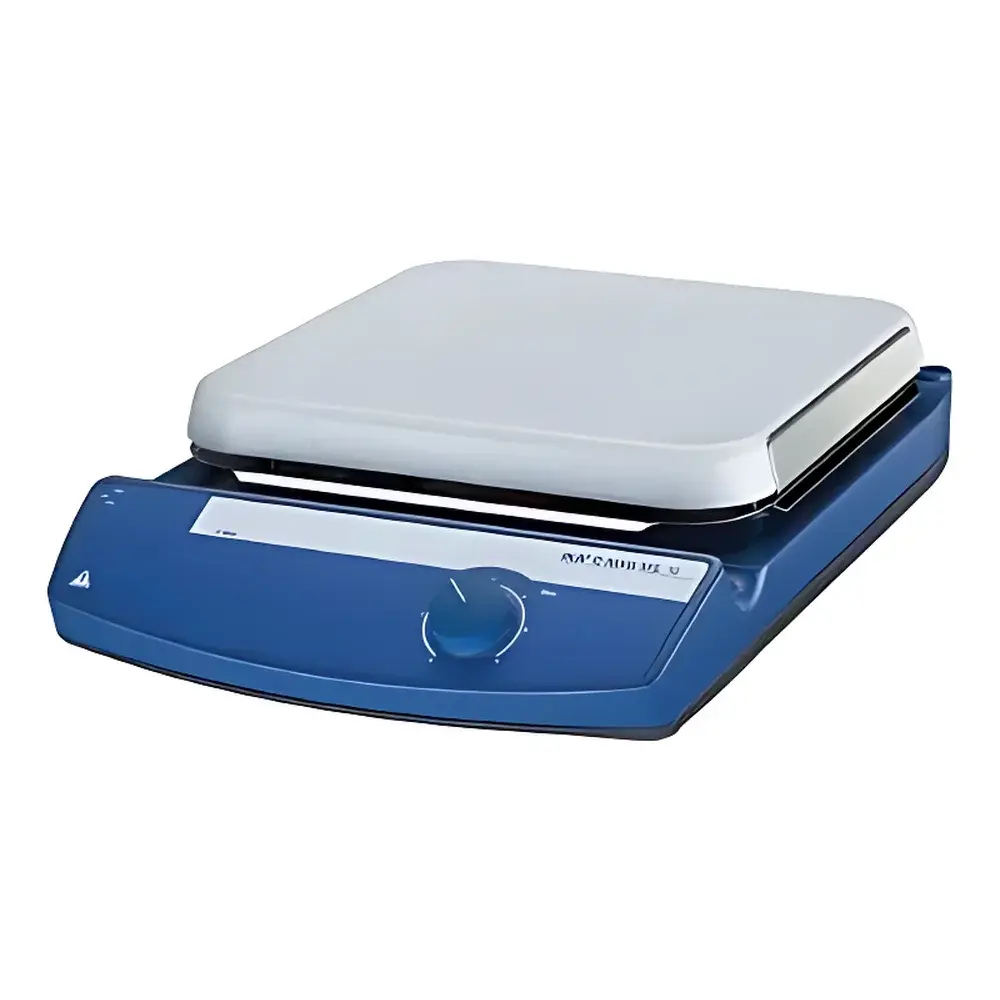
IKA C-MAG MS10 IKAMAG® Magnetic Stirrer
| Brand | IKA |
|---|---|
| Origin | Germany |
| Model | C-MAG MS10 |
| Stirring Capacity (H₂O) | 15 L |
| Speed Range | 100–1500 rpm |
| Temperature Control Range | 5–40 °C |
| Plate Material | Ceramic |
| Input Power | 30 W |
| Protection Class | IP21 |
| Dimensions (W × H × D) | 300 × 105 × 415 mm |
| Weight | 6 kg |
| Operating Ambient | 5–40 °C, ≤80% RH |
Overview
The IKA C-MAG MS10 IKAMAG® Magnetic Stirrer is a precision-engineered single-position laboratory stirrer designed for reliable, consistent mixing of aqueous and low-viscosity solutions under ambient or temperature-controlled conditions. Utilizing robust permanent magnet coupling and closed-loop speed regulation via microprocessor feedback, the unit maintains stable rotational velocity across its full operational range—critical for reproducible reaction kinetics, dissolution testing, buffer preparation, and sample homogenization in QC, R&D, and teaching laboratories. Its ceramic heating plate (non-heating variant; temperature control refers to ambient conditioning compatibility) provides exceptional chemical resistance and thermal stability, while the elevated control panel minimizes liquid ingress risk during active operation. Built to DIN EN 60529 IP21 specifications, the device ensures safe, long-term performance in standard laboratory environments compliant with ISO/IEC 17025 general requirements for testing laboratories.
Key Features
- High-torque DC motor with real-time speed feedback circuitry ensures ±3% speed accuracy across 100–1500 rpm, enabling consistent agitation of moderately viscous media up to 15 L (water-equivalent volume)
- Integrated ceramic plate (260 × 260 mm) fabricated as a single seamless unit—resistant to acids, alkalis, solvents, and thermal shock; non-porous surface prevents residue retention and simplifies decontamination
- Elevated control interface with calibrated rotary dial (0–6 scale) and LED speed indication reduces exposure to splashes and improves ergonomic readability during extended use
- Optimized magnetic field geometry delivers strong coupling force even with longer stir bars (up to 80 mm), minimizing “jumping” or decoupling during high-speed or off-center vessel placement
- Compact footprint (300 × 415 mm base) and low-profile design (105 mm height) facilitate integration into fume hoods, cold rooms, or modular lab benches without compromising accessibility
- Compliant with CE marking requirements and tested per EN 61000-6-3 (EMC emission) and EN 61000-6-2 (immunity), supporting routine use in regulated environments where electromagnetic integrity is essential
Sample Compatibility & Compliance
The C-MAG MS10 accommodates standard round-bottom flasks, beakers, and graduated cylinders (up to 15 L capacity with appropriate stir bar selection). It supports glass, polypropylene, and PTFE-lined vessels but is not rated for direct contact with highly exothermic reactions or pressurized systems. The unit meets general safety requirements outlined in IEC 61010-1 for electrical equipment used in laboratory settings. While it does not incorporate active heating elements, its specified operating ambient range (5–40 °C) ensures functional reliability when deployed alongside external chillers or climate-controlled enclosures—making it suitable for applications governed by USP , ISO 13485, or GLP-aligned protocols requiring documented environmental controls.
Software & Data Management
As a standalone analog-controlled instrument, the C-MAG MS10 does not feature digital connectivity, data logging, or software integration. All operational parameters are set manually via the front-panel dial; no firmware, USB interface, or remote command capability is provided. This architecture aligns with installations prioritizing simplicity, audit-trail minimalism, and reduced validation burden—particularly in GMP manufacturing support labs where only mechanical calibration records (e.g., speed verification using certified tachometer) and preventive maintenance logs are required per FDA 21 CFR Part 211. Calibration certificates traceable to national standards may be issued upon request for metrological verification.
Applications
- Preparation of calibration standards and reference solutions in analytical chemistry workflows
- Homogenization of cell culture media and reagent buffers prior to sterile filtration
- Supporting dissolution testing per USP when paired with temperature-regulated water baths
- Agitation during titration setups, pH adjustment, and redox equilibration studies
- Low-energy mixing in environmental sample processing (e.g., soil leachates, wastewater extracts)
- Undergraduate and graduate teaching labs where robustness, ease of use, and chemical resistance are primary selection criteria
FAQ
Does the C-MAG MS10 include a heating function?
No. This model is a magnetic stirrer only; it lacks integrated heating elements. Temperature control refers to the permissible ambient operating range (5–40 °C), not plate heating capability.
What stir bar length is recommended for optimal performance at maximum speed?
Stir bars up to 80 mm in length are supported; for 1500 rpm operation with 10–15 L volumes, elliptical or cross-shaped bars ≥60 mm are advised to maintain coupling stability.
Is the ceramic plate resistant to hydrofluoric acid (HF)?
No. While highly resistant to most common laboratory reagents—including 37% HCl, 70% HNO₃, and 98% H₂SO₄—the ceramic surface is not HF-compatible. Alternative PTFE-coated plates or specialized stirrers are required for HF-handling applications.
Can this unit be validated for use in GMP environments?
Yes. Its mechanical design, absence of embedded software, and traceable calibration pathways allow straightforward IQ/OQ execution per ASTM E2500 and Annex 15 guidelines—particularly where electronic data capture is not mandated.
What maintenance is required to ensure long-term speed accuracy?
Annual verification of rotational speed against a NIST-traceable handheld tachometer is recommended; cleaning of the ceramic surface with isopropanol and inspection of stir bar magnetism constitute routine upkeep.



