
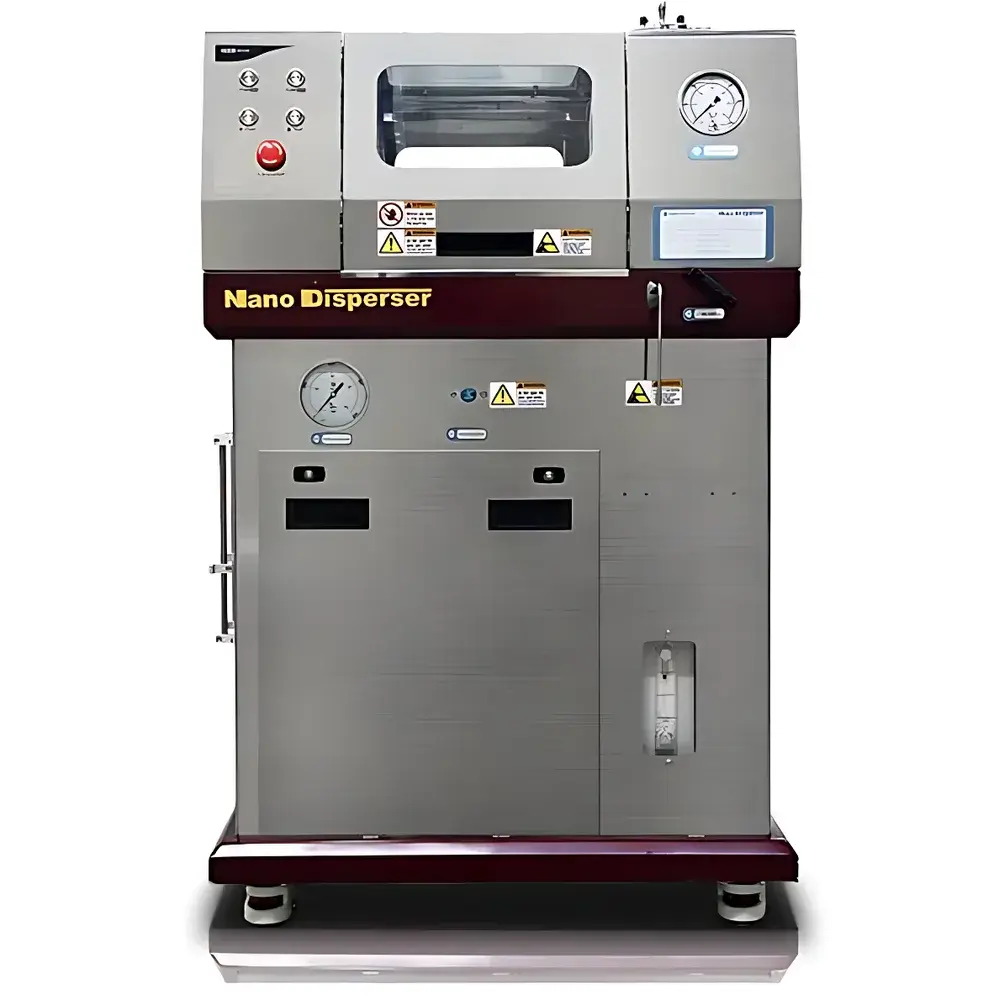
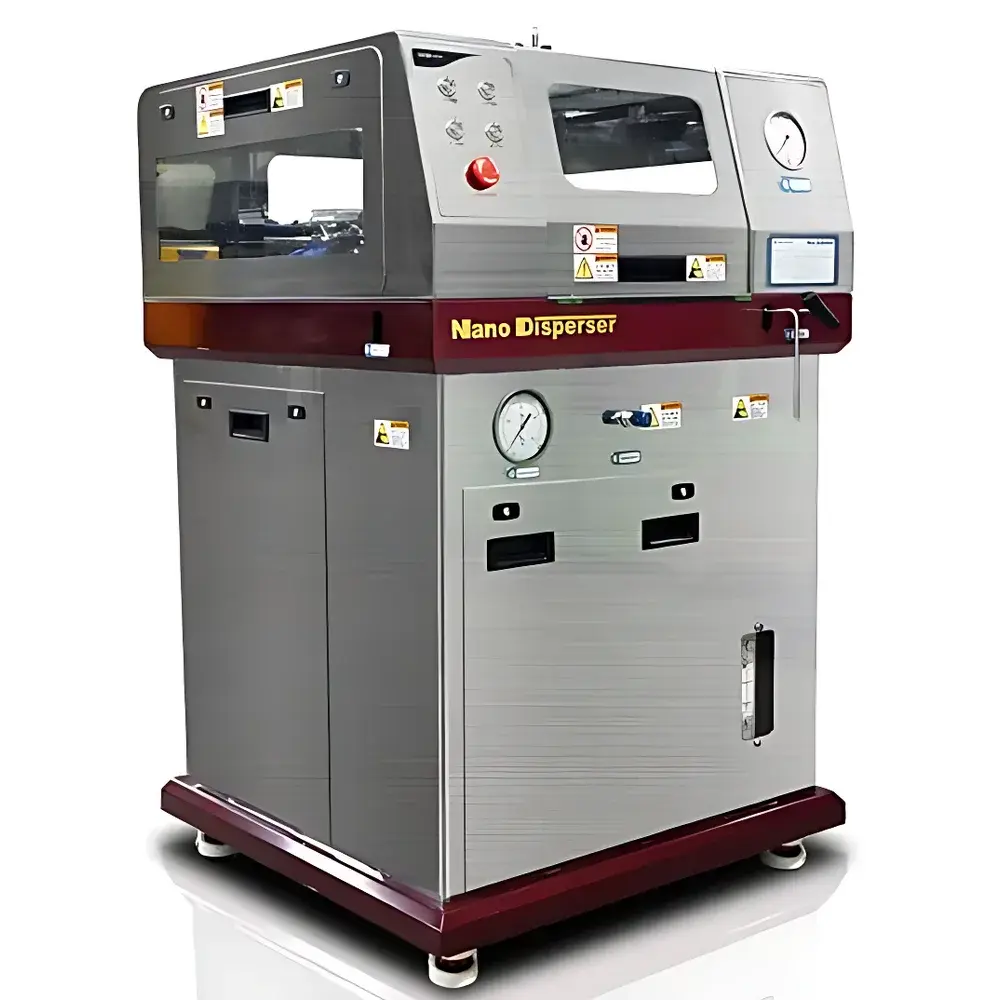
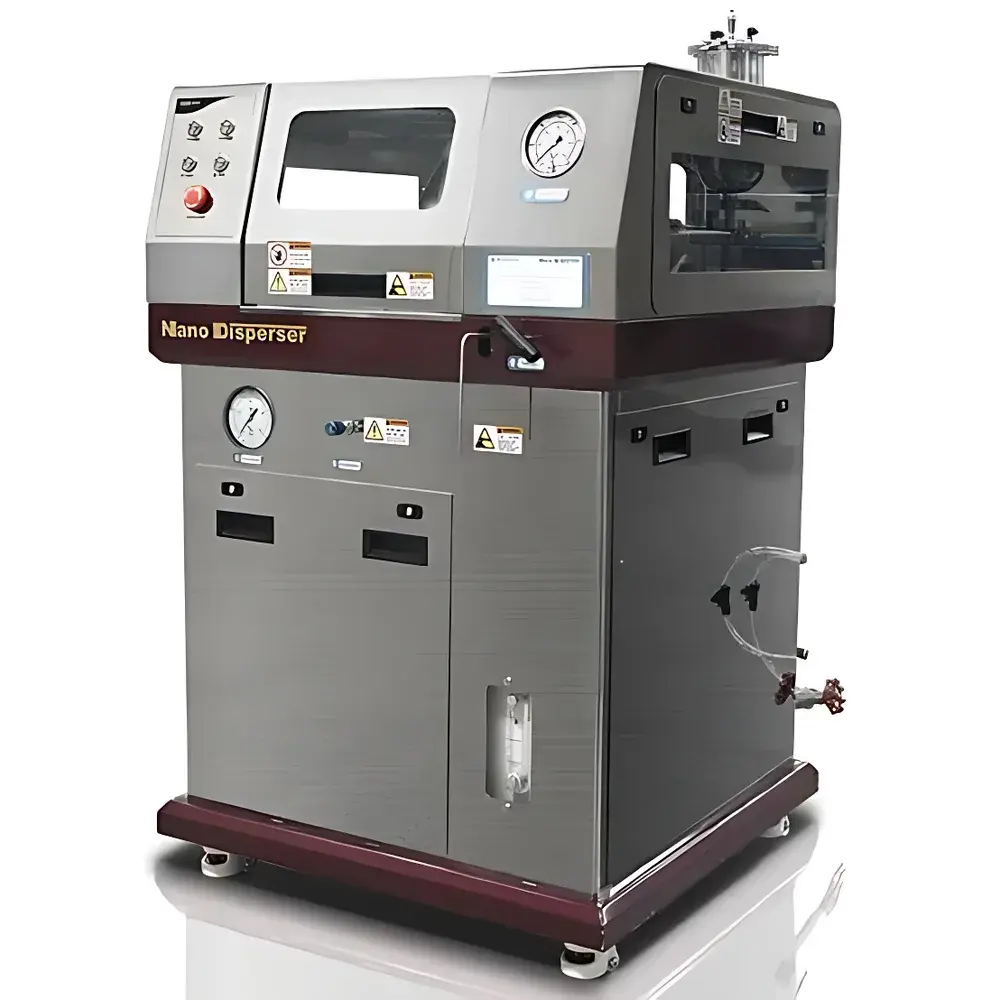
IlshinAutoclave NH500 Microfluidic High-Pressure Homogenizer
| Brand | IlshinAutoclave |
|---|---|
| Origin | South Korea |
| Model | NH500 |
| Instrument Type | High-Pressure Homogenizer |
| Dimensions (W×D×H) | 1000 × 1200 × 1500 mm |
| Sample Throughput | 0–500 mL per batch |
| Drive Mechanism | Hydraulic Piston-Driven Positive Displacement Pump |
Overview
The IlshinAutoclave NH500 Microfluidic High-Pressure Homogenizer is an engineered platform for scalable, reproducible nano-scale particle size reduction and dispersion of complex colloidal systems. Operating on the principle of microfluidization—where fluid is forced under precisely controlled high pressure through fixed-geometry interaction chambers—the NH500 generates intense shear, cavitation, and impact forces at the microscale. Unlike conventional rotor-stator or ultrasonic homogenizers, this system delivers consistent energy input independent of sample viscosity or solids loading, enabling deterministic control over final particle size distribution (PSD), polydispersity index (PDI), and colloidal stability. Designed for laboratory-to-pilot transition workflows, the NH500 supports process development in pharmaceutical formulation (e.g., liposomal drug encapsulation, nanoparticle suspensions), advanced materials synthesis (e.g., graphene oxide dispersions, metal oxide nanocolloids), and functional food emulsification.
Key Features
- Hydraulic piston-driven positive displacement pump delivering stable, pulse-free flow across the full 0–500 mL batch range
- Dual-interaction chamber configuration (Y-type and Z-type) for tunable energy input—enabling optimization between shear-dominated and impact-dominated dispersion mechanisms
- Maximum operating pressure up to 200 MPa (29,000 psi), with real-time digital pressure monitoring and safety interlock circuitry compliant with ISO 13857 and EN 61000-6-2
- Temperature-controlled jacketed sample loop (optional) supporting operation from 4 °C to 60 °C to preserve thermolabile biologics (e.g., monoclonal antibodies, viral vectors)
- Stainless steel 316L wetted path with electropolished surface finish (Ra ≤ 0.4 µm) meeting ASME BPE-2022 standards for pharmaceutical-grade fluid contact surfaces
- Integrated cooling circuit for heat dissipation during extended operation, maintaining < ±2 °C thermal stability at nominal throughput
Sample Compatibility & Compliance
The NH500 accommodates a broad spectrum of aqueous and organic-phase formulations—including oil-in-water and water-in-oil emulsions, polymer dispersions, ceramic slurries, and biological suspensions. It has been validated for processing shear-sensitive biomolecules (e.g., extracellular vesicles, plasmid DNA complexes) without significant aggregation or denaturation when operated below 120 MPa with single-pass protocols. The system meets material compatibility requirements per USP , complies with FDA 21 CFR Part 11 for electronic record integrity (when paired with optional audit-trail-enabled software), and supports GLP/GMP documentation workflows via configurable user access levels and electronic signature capability.
Software & Data Management
Control and data acquisition are managed through the proprietary NH-Soft v3.2 interface, running on an embedded industrial PC. The software logs timestamped operational parameters—including pressure profile, total processed volume, cycle count, temperature, and valve position—with automatic export to CSV or SQL-compatible formats. All data entries include immutable metadata (operator ID, instrument serial number, calibration status) to satisfy ALCOA+ principles. Optional integration with LIMS platforms (e.g., LabVantage, Thermo Fisher SampleManager) is supported via OPC UA protocol, enabling traceability from raw material intake to final product release testing.
Applications
- Pharmaceutical nanocarrier development: Liposome extrusion replacement, siRNA-loaded polymeric nanoparticle formation, sterile filtration–compatible sub-200 nm suspensions
- Advanced material dispersion: Exfoliation of layered 2D materials (graphene, MoS₂), stabilization of CNT networks in conductive inks, uniform TiO₂ pigment dispersion for high-gloss coatings
- Biotechnology: Yeast cell disruption for intracellular enzyme recovery, algal lipid extraction, homogenization of tissue-derived hydrogels
- Food & cosmetics: Cold-process emulsification of plant-based creams, nanoemulsion delivery systems for volatile actives (e.g., terpenes, retinoids), colloidal silica reinforcement in edible films
FAQ
What is the minimum recommended sample volume for reproducible processing?
For optimal chamber filling and pressure stability, the recommended minimum batch volume is 150 mL. Volumes below 100 mL require custom low-volume adapters and may necessitate pressure ramping protocols to avoid cavitation-induced wear.
Can the NH500 be used for continuous processing?
The NH500 is designed for semi-continuous batch operation with automated fill–process–drain cycles. True continuous mode is not supported; however, multi-batch sequences can be scheduled with <30 s dead time between cycles using programmable logic controller (PLC)-based automation.
Is validation support available for GMP environments?
Yes—IlshinAutoclave provides IQ/OQ documentation templates aligned with ASTM E2500-13 and Annex 15 guidelines. On-site qualification assistance and calibration certificate traceability to NIST standards are available as part of the Premium Support Package.
How often does the interaction chamber require replacement?
Under typical use (≤150 MPa, aqueous buffers), Y-type chambers demonstrate >500 hours of service life before measurable erosion affects PSD reproducibility. Chamber wear is monitored via periodic laser profilometry and logged in the maintenance module of NH-Soft.



