
IMKO TRIME-PICO-IPH TDR Profiling Soil Moisture Measurement System
| Origin | Germany |
|---|---|
| Manufacturer Type | Authorized Distributor |
| Origin Category | Imported |
| Model | TRIME-PICO-IPH |
| Pricing | Upon Request |
Overview
The IMKO TRIME-PICO-IPH is a high-precision, wireless time-domain reflectometry (TDR) profiling system engineered for continuous, in-situ measurement of volumetric soil water content (θv) and bulk electrical conductivity (EC) across vertical soil profiles up to 3 meters deep. Unlike conventional point sensors or single-depth TDR probes, the TRIME-PICO-IPH integrates intelligent microelement-based signal processing—patented by IMKO—to resolve sub-picosecond (≥3 ps) transit-time shifts in GHz-range electromagnetic pulses propagating along coaxial waveguides embedded in dedicated access tubes. This enables direct dielectric permittivity (εr) quantification, which is empirically correlated to θv via established calibration models (e.g., Topp equation, Roth et al. 1992). The system operates on the physical principle that water (εr ≈ 80) exhibits significantly higher dielectric permittivity than dry soil minerals (εr ≈ 3–5) and air (εr = 1), allowing robust discrimination of moisture distribution in heterogeneous, saline, or structured soils without destructive sampling. Designed for long-term environmental monitoring, agricultural research, hydrological modeling, and climate resilience studies, the TRIME-PICO-IPH replaces the legacy TRIME-IPH with enhanced Bluetooth 2.0 wireless telemetry, reduced power consumption, and improved thermal stability.
Key Features
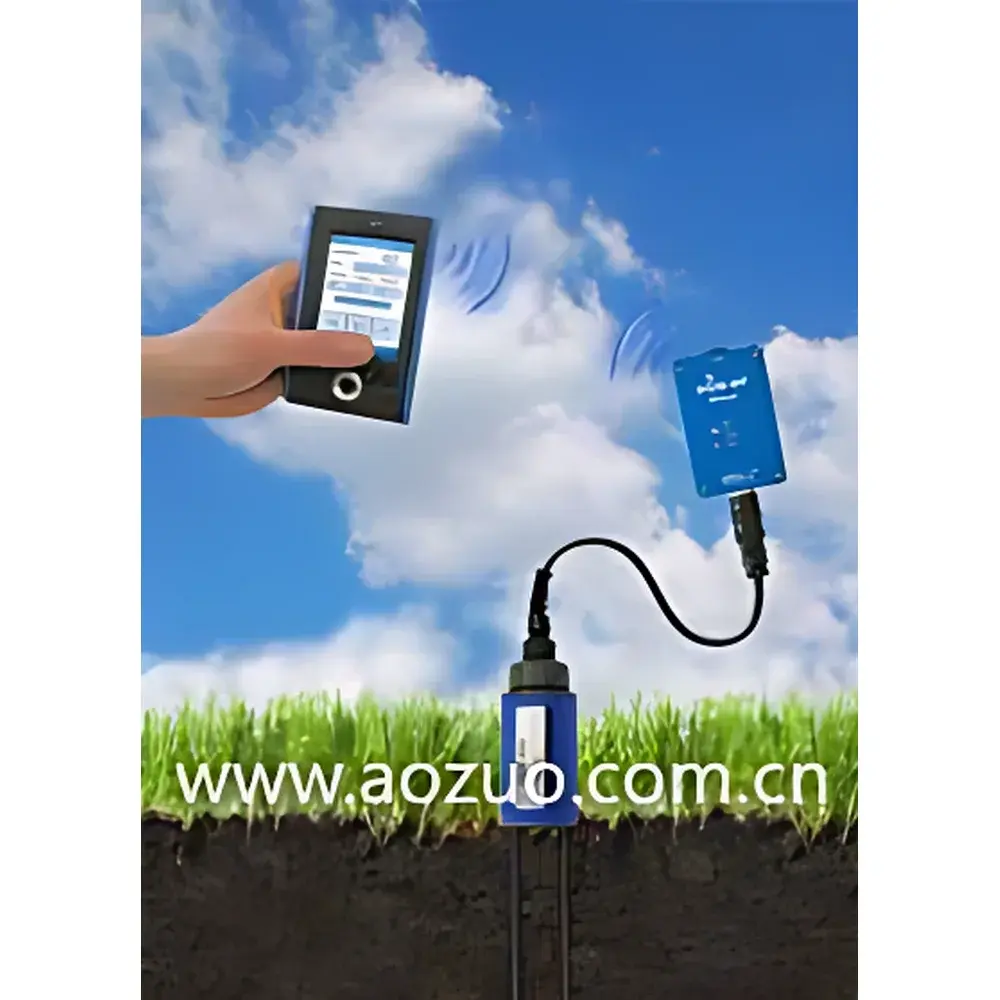
- Wireless TDR profiling architecture with integrated Bluetooth 2.0 module (10 m range), eliminating cabling constraints and enabling rapid field deployment.
- Intelligent MicroElement (IMKOTM) signal processing technology delivering ≥3 ps temporal resolution—critical for accurate εr derivation in low-moisture or high-salinity conditions.
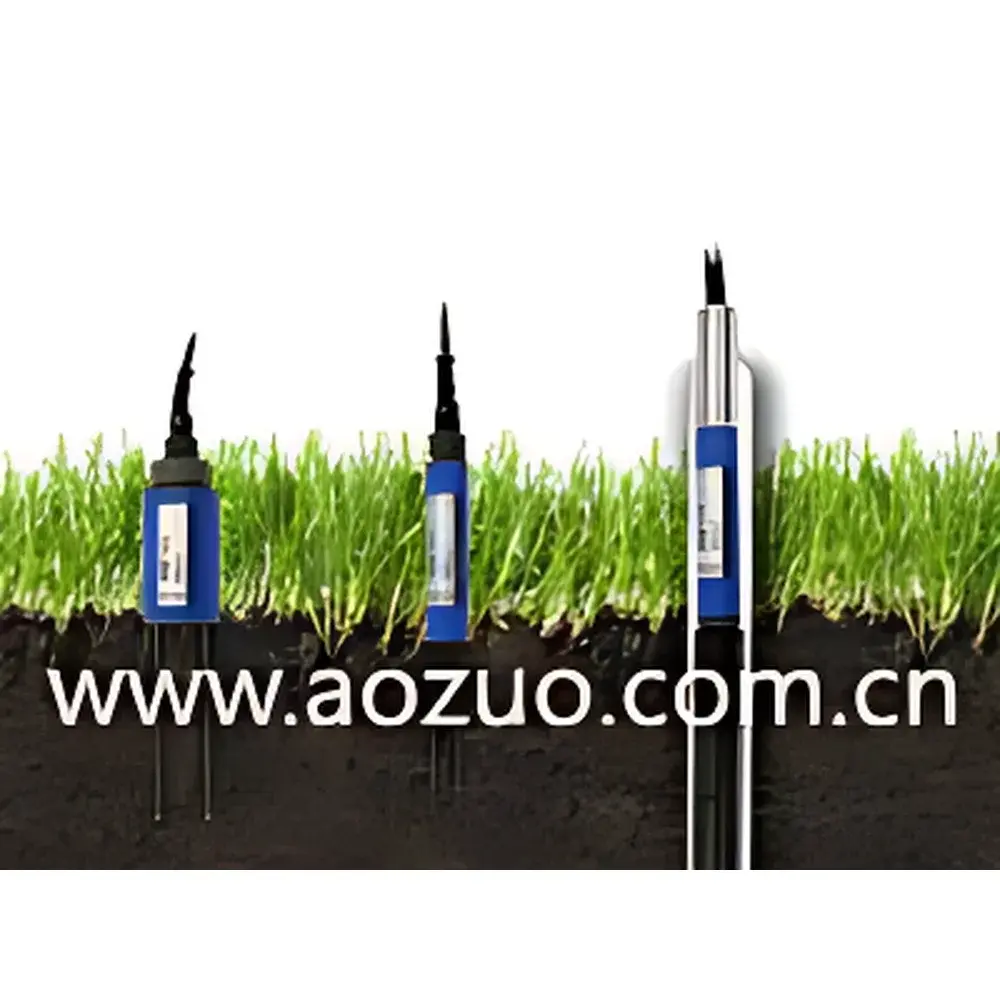
- Modular probe design: TRIME-PICO-IPH cylindrical sensor (PVC housing) compatible with standardized 42 mm ID / 44.3 mm OD access tubes in six lengths (0.6–3.0 m), each with precision-machined waveguide geometry.
- Dual-parameter capability: Simultaneous measurement of volumetric water content (0–100 % θv) and bulk EC (0–50 dS/m) across three salinity ranges, supporting salinity-corrected moisture estimation per ISO 11272:2020.
- Factory-calibrated for mineral soils; supports user-defined recalibration using TrimeTool software and optional calibration kits—essential for organic, volcanic, or clay-rich substrates.
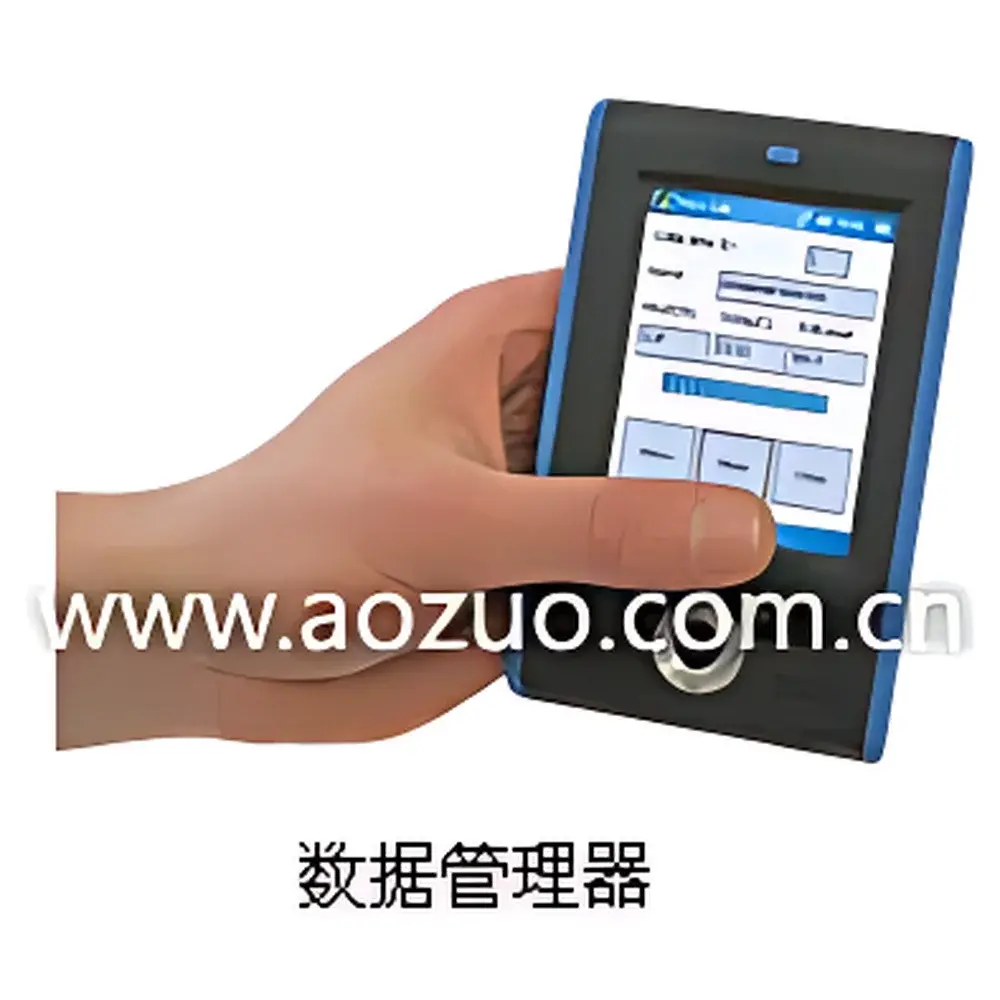
- Ruggedized hardware suite: IP67-rated HD2 handheld reader (no data storage), IP65/IP67 field PDAs (Windows Mobile 5.0/6.1), and purpose-built installation tools (soil augers, alignment jigs, shock-absorbing hammers) minimizing installation-induced soil disturbance.
Sample Compatibility & Compliance
The TRIME-PICO-IPH is validated for use in non-uniform, stratified, and saline soils—including loams, clays, sandy loams, and anthropogenic fill—where traditional capacitance or neutron probe methods suffer from dielectric dispersion or radiation licensing constraints. Its coaxial waveguide configuration ensures minimal sensitivity to air gaps and lateral heterogeneity within the 110–180 mm effective measurement volume (depending on probe variant). The system complies with key international standards governing soil hydrometric instrumentation: ASTM D5084 (in-situ hydraulic conductivity estimation), ISO 11272:2020 (soil physical analysis—determination of water content), and EU Regulation (EC) No 1107/2009 Annex VI (environmental fate testing protocols). All firmware and PICO-TALK software support audit-trail logging and timestamped metadata capture, facilitating GLP-compliant data acquisition in regulatory field trials.
Software & Data Management
Data acquisition and configuration are managed via PICO-TALK—a dual-language (English/Chinese) desktop and PDA application supporting real-time visualization, batch download, and export to CSV, Excel, or ASCII formats. The software implements automated temperature compensation (±0.3 % θv drift over −15 to +50 °C), multi-curve calibration storage (up to 15 user-defined curves), and error diagnostics for cable integrity, probe contact, and signal-to-noise ratio. Field PDAs (e.g., N560e or ruggedized Windows Mobile 6.1 units) feature 128–512 MB flash memory, sunlight-readable TFT displays, and integrated GPS/Wi-Fi expansion—enabling georeferenced profile mapping. Bluetooth communication adheres to Bluetooth SIG v2.0+EDR specifications, ensuring interoperability with third-party data loggers and cloud gateways compliant with IEEE 802.11g and Modbus TCP protocols.
Applications
- Long-term vadose zone monitoring in watershed-scale hydrological models (e.g., HYDRUS-1D, SWAP).
- Root-zone moisture optimization in precision irrigation systems for vineyards, orchards, and row crops.
- Salinity intrusion assessment in coastal aquifers and reclaimed agricultural land.
- Validation of satellite-based soil moisture products (e.g., SMAP, Sentinel-1 SAR backscatter).
- Soil carbon sequestration studies requiring high-temporal-resolution θv–CO2 flux correlation.
- Regulatory compliance monitoring under EU Water Framework Directive (WFD) and US EPA Region 10 soil health indicators.
FAQ
What is the maximum depth resolution achievable with the TRIME-PICO-IPH?
Depth resolution is determined by access tube length selection and probe spacing—not by electronic resolution. Standard configurations offer discrete measurements at 0.6, 1.0, 1.5, 2.0, 2.5, and 3.0 m depths. Sub-meter interpolation requires co-deployment with TRIME-PICO64/32 surface sensors.
Can the system operate autonomously without a PDA or PC?
No. The TRIME-PICO-IPH is a read-on-demand system: it requires active interrogation via Bluetooth from a PDA, HD2 reader, or compatible host device. It does not include onboard datalogging memory.
Is factory calibration sufficient for peat or biochar-amended soils?
No. While calibrated for mineral soils per ISO 11272, organic media require site-specific calibration using the included TrimeTool software and optional calibration kit to correct for anomalous εr–θv relationships.
How does the system handle high-salinity conditions (>12 dS/m)?
The TRIME-PICO-IPH employs dual-frequency TDR signal analysis and built-in EC compensation algorithms aligned with Rhoades et al. (1976) and Hilhorst (2000) models, enabling reliable θv estimation up to 50 dS/m when configured in T3C mode.
What maintenance is required for long-term deployment?
Annual verification of probe contact integrity, access tube seal integrity, and Bluetooth module battery health (Ni-MH, 1000 mAh) is recommended. No routine recalibration is needed unless probe replacement or cable extension occurs.
Related Products







