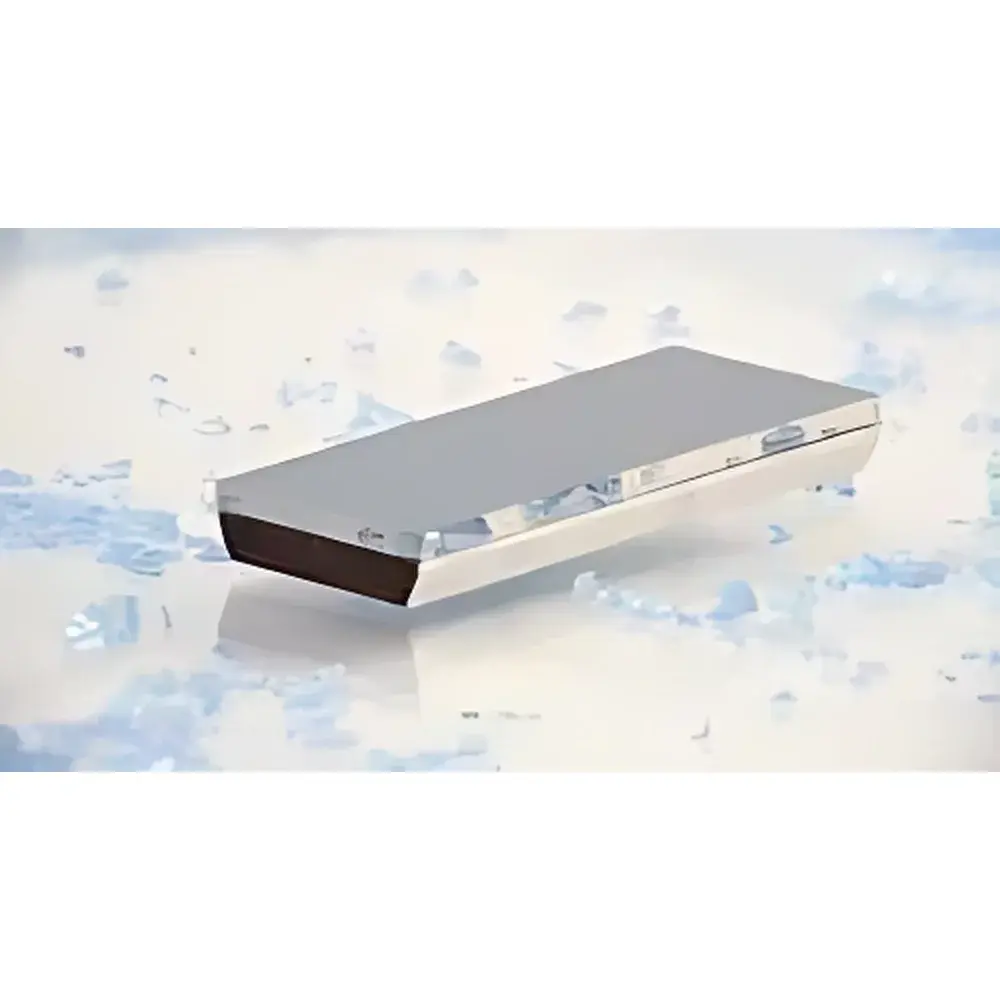
Incoatec Standard-Type XRF Analyzing Crystals

| Brand | Incoatec |
|---|---|
| Origin | Germany |
| Model | Standard Types |
| Crystal Types | LiF(200), LiF(220), LiF(420), PET |
| Component Category | Optical Element |
| Compliance | ISO/IEC 17025-aligned calibration support, compatible with ASTM E1361 & ISO 22085 XRF spectrometer configurations |
Ask about pricing, availability and specifications.
Overview
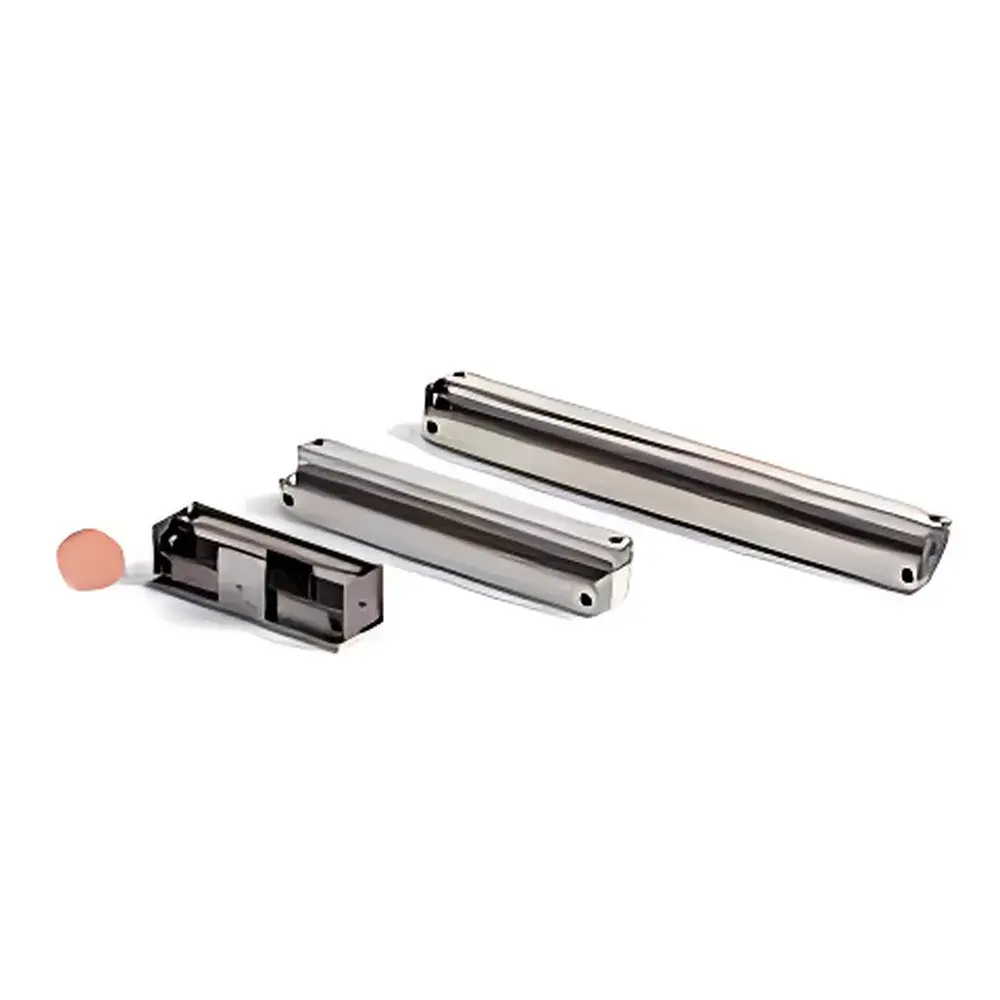
Incoatec Standard-Type XRF Analyzing Crystals are high-precision single-crystal optical components engineered for wavelength-dispersive X-ray fluorescence (WDXRF) spectrometers. These crystals operate on the principle of Bragg diffraction—where incident X-rays undergo constructive interference when satisfying the condition nλ = 2d sinθ—enabling precise energy-to-angle conversion for elemental identification and quantification. Each crystal type is selected based on its lattice plane spacing (d-spacing), thermal stability, and diffraction efficiency across defined energy ranges. Designed for integration into goniometer-based optical paths of benchtop and floor-standing WDXRF systems, these crystals serve as the core dispersive element in analytical channels requiring sub-eV spectral resolution and long-term angular reproducibility.
Key Features
- Manufactured from ultra-high-purity, defect-controlled single-crystal substrates with certified orientation tolerance ≤ ±0.05°
- Available in four standard configurations: LiF(200), LiF(220), LiF(420), and PET—each optimized for distinct elemental coverage and resolution trade-offs
- LiF series crystals exhibit low intrinsic absorption and excellent thermal conductivity, minimizing thermal drift during extended acquisitions
- PET (pentaerythritol) crystals provide broad K-line coverage for light to mid-Z elements (Al–Ti), L-line analysis for Kr–Xe, and M-line capability for Hf–Bi—though subject to higher thermal expansion (α ≈ 120 × 10−6/K)
- All crystals undergo surface polishing to λ/10 surface flatness (at 633 nm HeNe wavelength) and are mounted in kinematic, low-stress holders compatible with standard goniometer stages
- Traceable certification includes d-spacing verification via synchrotron-calibrated reference lines and rocking curve full-width-at-half-maximum (FWHM) characterization
Sample Compatibility & Compliance
These analyzing crystals are compatible with solid, pressed-pellet, fused-bead, and thin-film samples routinely analyzed in metallurgical, geological, cement, and environmental laboratories. Their use conforms to international method standards including ASTM E1361 (Standard Practice for Wavelength Dispersive X-Ray Spectrometry), ISO 22085 (XRF analysis of metallic materials), and IEC 62321-5 (RoHS screening). When deployed in validated instrument configurations, they support GLP-compliant workflows with documented calibration history, angular position repeatability ≤ ±0.002°, and long-term stability verified per ISO/IEC 17025 clause 6.4.2. No crystal requires active cooling under standard ambient lab conditions (20–25°C, <60% RH); however, PET-mounted systems benefit from temperature-stabilized enclosures where ambient fluctuations exceed ±1°C/hour.
Software & Data Management
Incoatec Standard-Type crystals integrate seamlessly with industry-standard WDXRF control platforms—including PANalytical SuperQ, Rigaku ZSX Primus IV, and Bruker S8 TIGER—via preloaded crystal library definitions containing accurate d-spacing, reflection efficiency curves, and recommended 2θ scan ranges. Instrument software automatically selects optimal crystal–detector combinations during method setup, applying empirically derived correction factors for polarization, absorption, and secondary fluorescence. All calibration data, peak overlap diagnostics (e.g., Cr Kα/V Kβ deconvolution), and intensity normalization coefficients are stored within the system’s audit-trail-enabled database, compliant with FDA 21 CFR Part 11 requirements for electronic records and signatures when paired with validated LIMS interfaces.
Applications
- High-resolution separation of overlapping Kα/Kβ lines in transition metal alloys (e.g., Mn/Cr, Fe/Co, Ni/Cu)
- Trace-level analysis of rare earth elements (REEs) in monazite and bastnäsite ores using LiF(420) for enhanced La–Ce–Pr resolution
- Quantitative determination of sulfur in petroleum products and coal ash via PET crystal-based L-line detection
- Thin-film thickness and composition profiling in semiconductor manufacturing using multi-crystal sequential scanning protocols
- Forensic glass analysis requiring simultaneous detection of Na, Mg, Al, Si, Ca, and Fe with minimal peak interference
FAQ
Which crystal offers the best resolution for nickel K-series lines?
LiF(420) provides the highest intrinsic resolution for Ni Kα (7.47 keV) and Co Kβ (7.65 keV), enabling baseline separation where LiF(220) yields partial overlap.
Can LiF(200) be used for sodium (Na) analysis?
No—Na Kα (1.04 keV) falls outside the practical lower-energy limit of LiF(200); PET or TAP crystals are required for elements below atomic number 13.
Why does PET show greater sensitivity to room temperature variation?
PET has a coefficient of thermal expansion approximately 3× higher than LiF, causing measurable d-spacing drift above ±0.5°C—requiring tighter environmental control or real-time θ-compensation algorithms.
Are these crystals suitable for vacuum-path spectrometers?
Yes—all variants are vacuum-compatible (≤10−5 mbar) and outgassing-tested per ASTM E595; no adhesives or organic coatings are used in mounting.
How often should crystal alignment be verified?
Recommended every 200 operational hours or after mechanical shock events; verification uses certified Ce Kα (4.05 keV) or Cu Kα (8.05 keV) reference lines with ≤0.001° angular deviation tolerance.