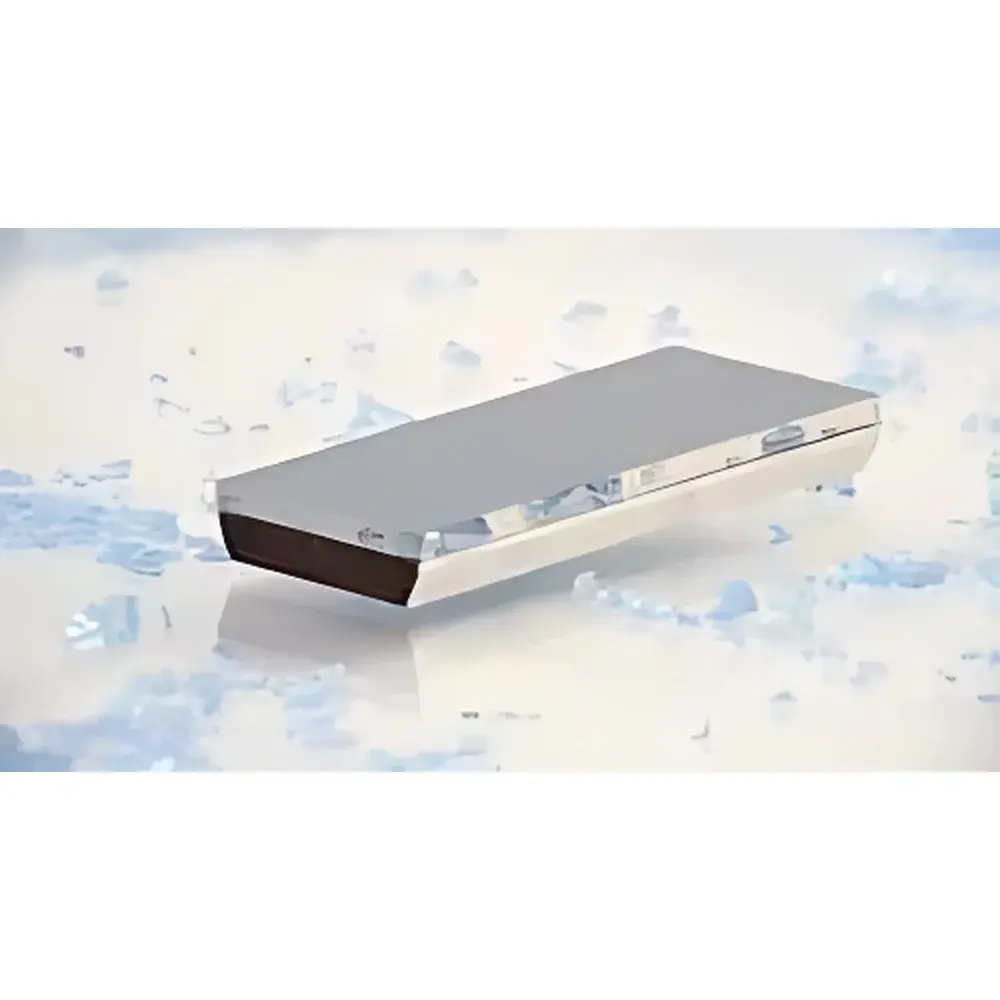
Incoatec XRF Analyzer Special Crystals

| Brand | Incoatec |
|---|---|
| Origin | Germany |
| Product Type | X-ray Diffraction Analyzing Crystal |
| Model | XRF Analyzer Special Crystals |
| Component Category | Optical Instrument Component |
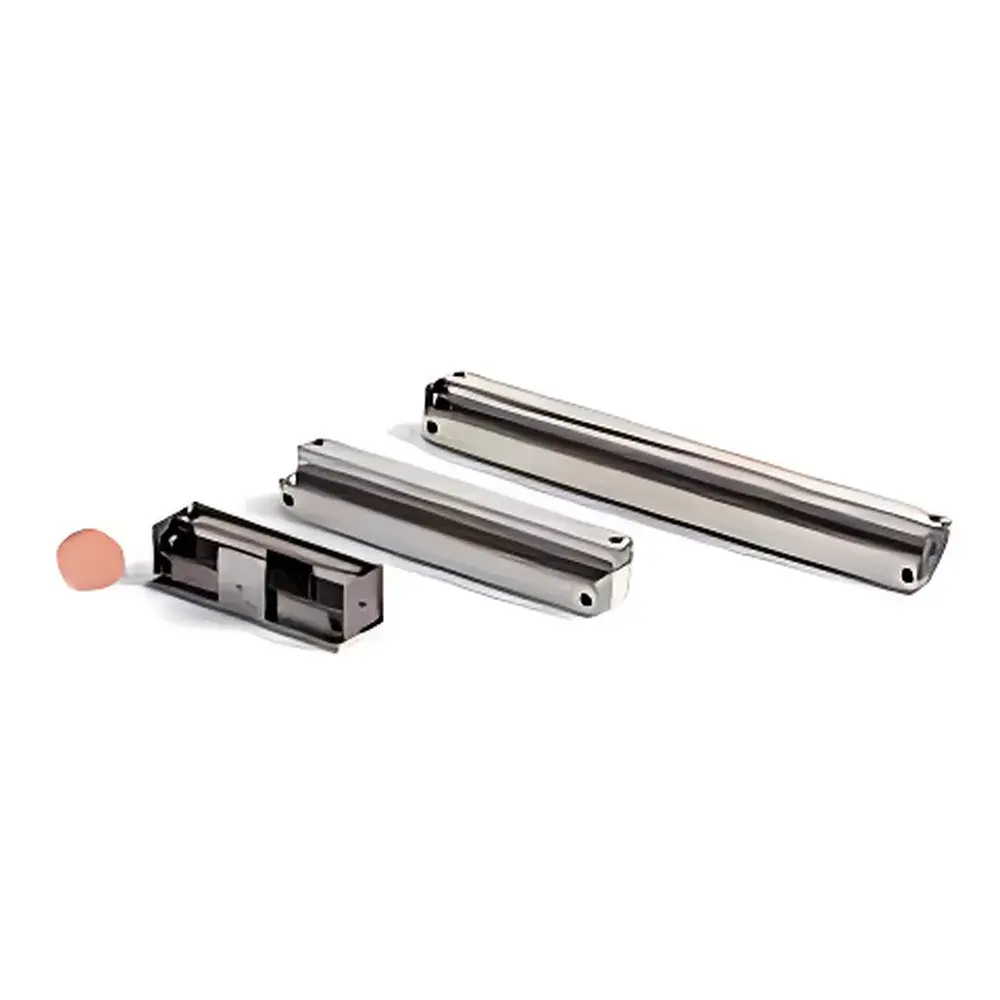
| Crystal Types | LiF(420), Ge, ADP, TlAP, InSb, XS-N (d = 11.0 nm), XS-C (d = 12.0 nm), XS-B (d = 19.0 nm) |
| Primary Applications | Wavelength-Dispersive X-ray Fluorescence (WDXRF) Spectrometry for Light Element Analysis (B, C, N, F, Na, Mg, Si, P, S, Cl) |
Ask about pricing, availability and specifications.
Overview
Incoatec XRF Analyzer Special Crystals are high-precision monochromating optical components engineered for wavelength-dispersive X-ray fluorescence (WDXRF) spectrometers. Unlike standard analyzer crystals—such as LiF(200) or PET—they are purpose-designed to resolve spectral interferences and extend analytical capability to light elements (Z ≤ 15) and challenging matrix conditions. These crystals operate on Bragg’s law (nλ = 2d sinθ), where precise lattice spacing (d-spacing) and crystalline perfection determine peak resolution, intensity, and detection limits. Each crystal type is selected based on its diffraction efficiency, thermal stability, dispersion characteristics, and suppression of higher-order reflections—critical parameters in quantitative elemental analysis per ISO 21043, ASTM E1361, and IEC 62321-5.
Key Features
- Material-specific optimization: Ge crystals deliver superior resolution for S, P, and Cl with reduced second- and fourth-order peak overlap—essential for sulfate/sulfide differentiation in cement and metallurgical slags.
- Light-element multilayers: XS-N (d = 11.0 nm), XS-C (d = 12.0 nm), and XS-B (d = 19.0 nm) enable robust nitrogen, carbon, and boron/beryllium quantification in polymers, steels, and ceramics—where conventional crystals lack sufficient reflectivity below 1 keV.
- High-resolution single crystals: ADP offers enhanced Mg Kα resolution in Al-rich matrices; TlAP provides critical separation of Na Kα from Zn L-lines in galvanized coatings or battery cathode materials.
- Thermally stable architecture: Ge and InSb exhibit minimal d-spacing drift over operational temperature ranges (±0.002 nm/°C), supporting long-term calibration stability required under GLP and ISO/IEC 17025 environments.
- Controlled manufacturing: All crystals are grown and polished in Germany under ISO 9001-certified processes, with certified d-spacing verification via synchrotron-calibrated XRD and rocking-curve FWHM measurement.
Sample Compatibility & Compliance
These analyzer crystals are compatible with all major WDXRF platforms—including Rigaku ZSX Primus IV, PANalytical Axios FAST, and Bruker S8 TIGER—when installed in goniometer-based spectrometer modules. They support solid, pressed-pellet, fused-bead, and thin-film sample geometries. For regulatory compliance, crystal selection directly impacts method validation per USP Chapter <232> (elemental impurities) and EPA Method 6200, particularly when detecting B, C, N, F, or Na at sub-100 ppm levels. Toxicity considerations (e.g., TlAP) are documented per SDS and align with REACH Annex XIV restrictions; handling protocols follow IAEA Safety Standards Series No. SSG-46 for sealed-source XRF instrumentation.
Software & Data Management
Crystal-specific diffraction parameters (d-spacing, reflection efficiency curves, Kα/Kβ separation ratios) are embedded in instrument control software (e.g., SuperQ, SpectraTrace, WinTrace) via standardized .crystal definition files. Automated crystal change sequences preserve traceability through audit logs compliant with FDA 21 CFR Part 11—recording timestamp, operator ID, and calibration verification status. Peak deconvolution algorithms leverage crystal-specific line profiles to correct for Lorentz-polarization and absorption effects, improving reproducibility (RSD < 1.2% for Si in glass standards, n = 10).
Applications
- Cement and clinker analysis: Ge + XS-B combination enables simultaneous quantification of SO₃, Cl⁻, and B₂O₃—key parameters in ASTM C114 and EN 196-2.
- Battery material QA: XS-N and TlAP resolve N in LiNiₓCoₓMnₓO₂ cathodes and Na in solid electrolytes without Zn interference from current collectors.
- High-purity semiconductor glass: InSb replaces PET for sub-ppm Si detection in fused silica substrates (ASTM F3015).
- Environmental soil screening: XS-C supports total carbon determination in contaminated soils per ISO 10694, eliminating graphite peak overlap.
- Pharmaceutical excipient testing: ADP and XS-N ensure Mg and N quantification in Mg-stearate and polyvinylpyrrolidone formulations per USP <233>.
FAQ
What distinguishes XS-B from standard PET crystals for boron analysis?
XS-B’s 19.0 nm d-spacing increases first-order reflectivity by >3× versus PET at λ ≈ 1.66 nm (B Kα), enabling detection limits of 5 ppm in fused beads—without requiring cryogenic cooling.
Can TlAP be used in routine QC labs despite its toxicity?
Yes—when installed in fully enclosed goniometer chambers per IEC 61000-6-3, and handled only during scheduled maintenance using glove-box protocols aligned with OSHA 1910.1200.
Is calibration transfer possible between LiF(420) and Ge crystals on the same spectrometer?
No—each crystal requires independent angle calibration and intensity normalization due to differing dispersion rates and polarization factors; cross-crystal quantification introduces systematic bias >8% without matrix-matched standards.
How does Incoatec verify d-spacing accuracy for XS-series multilayers?
Via reference-free synchrotron XRD at BESSY II (HZB Berlin), with uncertainty < ±0.05% (k=2), traceable to SI length standards through PTB’s lattice-parameter metrology program.
Are these crystals compatible with vacuum or helium purge environments?
All crystals—including TlAP and InSb—are rated for continuous operation under 10⁻³ mbar vacuum or He atmosphere; multilayer coatings include protective capping layers resistant to oxidation and hydrocarbon adsorption.