
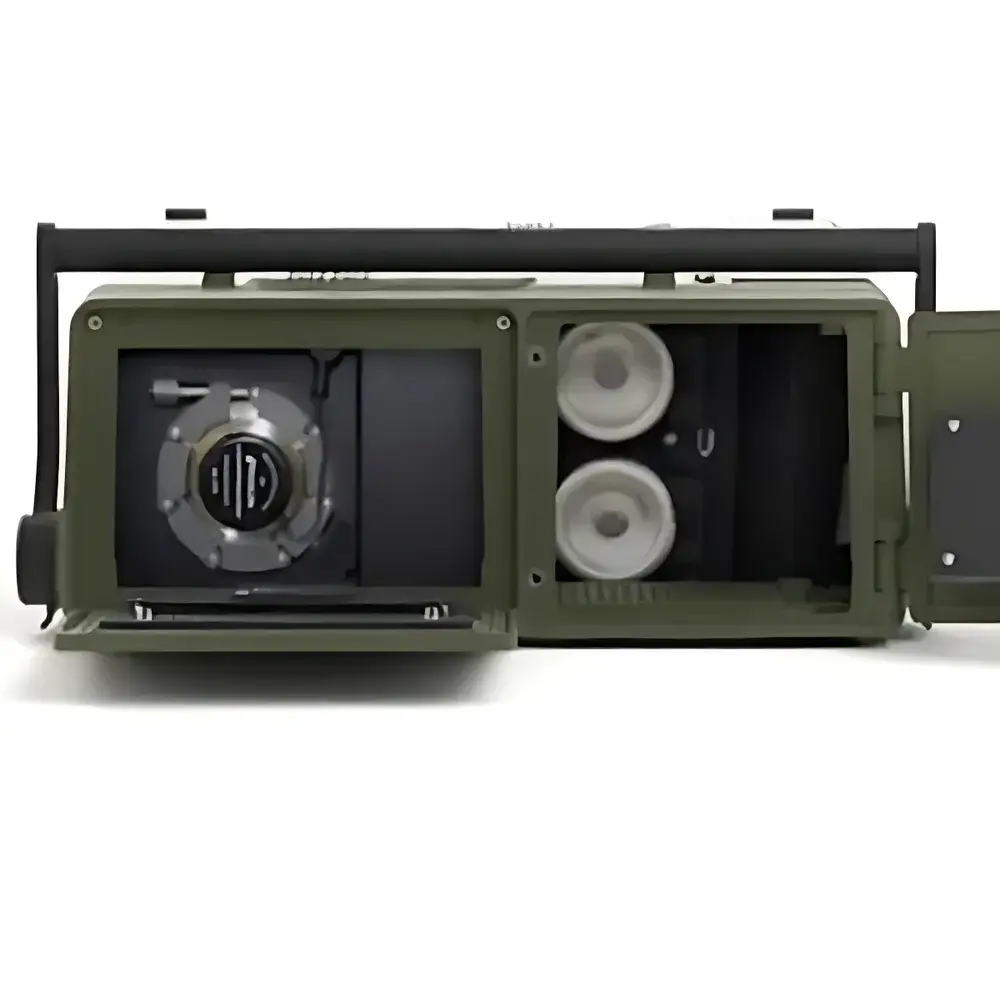
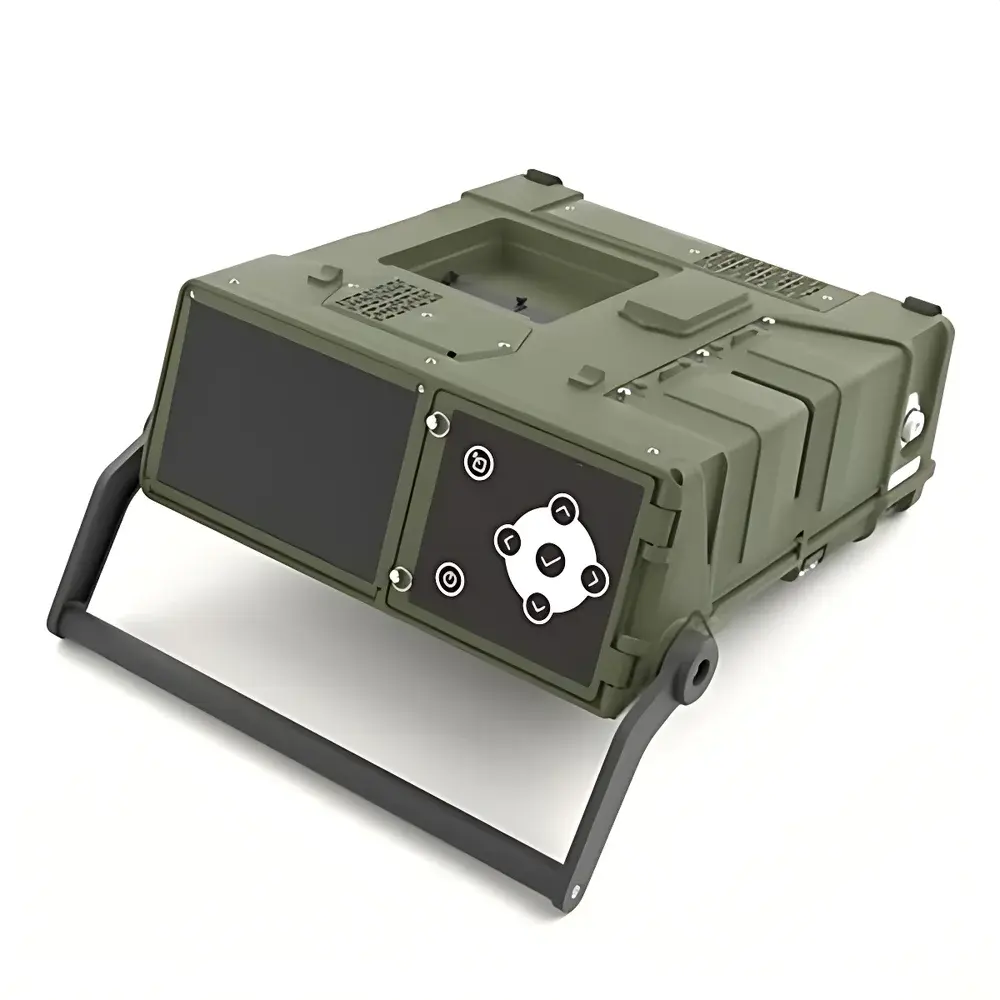
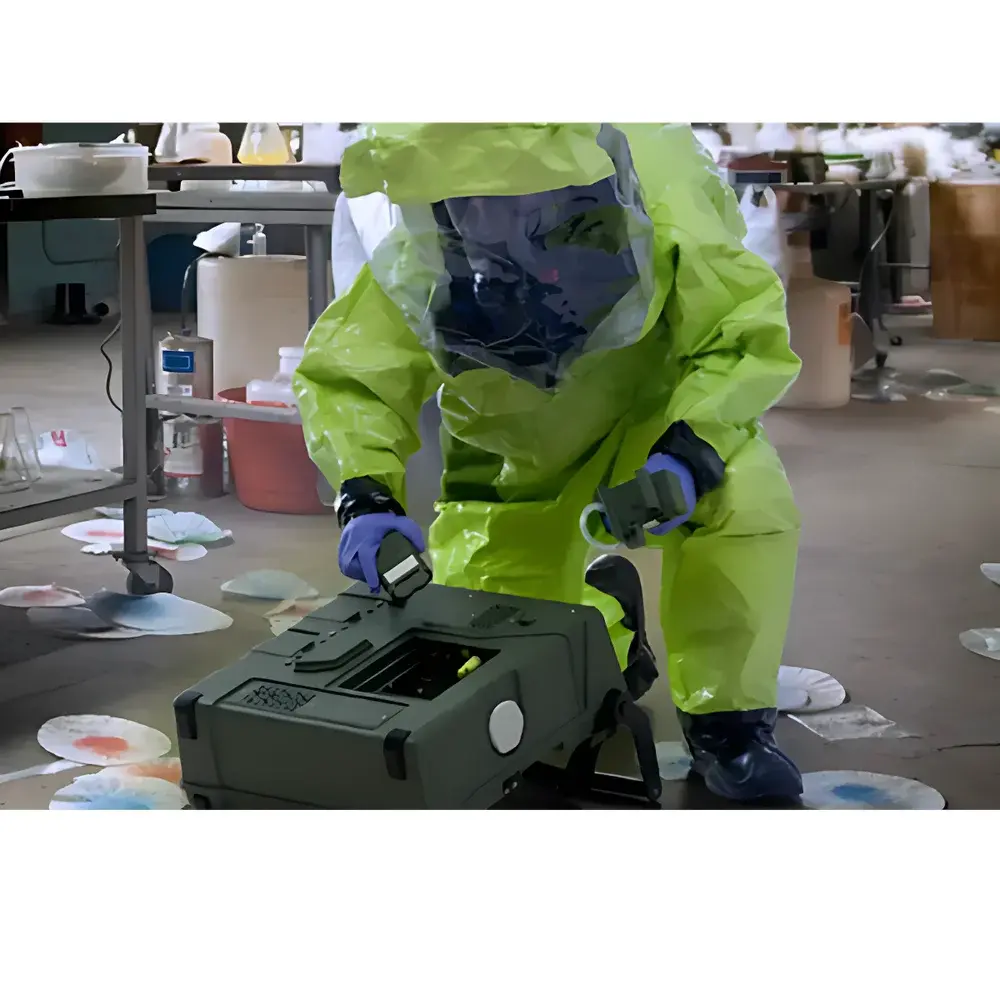
INFICON HAPSITE CDT Portable Gas Chromatography-Mass Spectrometry System
| Brand | INFICON |
|---|---|
| Origin | Shanghai, China |
| Manufacturer Type | Authorized Distributor |
| Product Category | Domestic |
| Model | HAPSITE CDT |
| Instrument Type | Single Quadrupole Mass Spectrometer |
| GC-MS Configuration | Conventional Benchtop-Portable Hybrid GC/MS |
| Mass Range | 1–424 Da |
| Detection Limit | <1 ppb (for target analytes under optimized conditions) |
| Vacuum System | Non-Evaporable Getter (NEG) Pump |
| Battery Operation | Dual hot-swappable Li-ion batteries, >12 h continuous runtime |
| Sample Introduction | Membrane Valve Inlet with Auto-Recognition of Split/Splitless Modes |
| Analysis Time | <5 min per sample (typical) |
| Library | Configurable AMDIS-based spectral library with built-in CWAs, FGAs, TICs, TIMs, VOCs, SVOCs, explosives, and fentanyl analogues |
| Remote Sampling | Integrated TNEX adsorbent trap, 7-day sample stability, UAV-mountable design |
| Compliance | Designed to support GLP/GMP-aligned workflows |
Overview
The INFICON HAPSITE CDT is a field-deployable, portable gas chromatography-mass spectrometry (GC-MS) system engineered for rapid, laboratory-grade chemical identification in time-critical operational environments. Utilizing electron ionization (EI) coupled with a single quadrupole mass analyzer and a temperature-controlled capillary GC column, the HAPSITE CDT delivers high-fidelity spectral acquisition and compound-specific retention indexing. Its core architecture integrates a robust, low-power NEG vacuum system—eliminating reliance on mechanical pumps—and a thermally stabilized, ultra-short transfer line (<15 cm) that minimizes analyte degradation and maximizes sensitivity for volatile and semi-volatile compounds. Designed specifically for defense, civil emergency response, hazardous materials (HAZMAT) teams, and environmental forensics, the system operates independently of fixed laboratory infrastructure while maintaining analytical rigor required for regulatory decision-making.
Key Features
- Sub-ppb detection capability for priority threat agents—including V-series nerve agents, Novichok (A-series) compounds, fourth-generation agents (FGAs), fentanyl derivatives, explosives (e.g., TNT, RDX), toxic industrial chemicals (TICs), and volatile/semi-volatile organic compounds (VOCs/SVOCs)
- Automated internal standard quantification: integrated calibration standard delivery via external sampling cartridge ensures traceable, reproducible quantitation without manual intervention
- Dual hot-swappable lithium-ion battery system enabling uninterrupted operation for >12 hours; supports true field continuity during extended deployments
- Membrane valve inlet with automatic recognition of split/splitless injection modes—optimized for both concentrated vapor-phase samples and solvent-diluted extracts
- Patented short-path heated transfer line and NEG vacuum architecture deliver rapid pump-down (<90 s from ambient) and stable high-vacuum maintenance during power-off periods
- Modular, reusable TNEX-based concentrator cartridges with 7-day analyte stability—validated for unmanned aerial vehicle (UAV)-mounted remote sampling and delayed analysis
- Modern touchscreen UI with guided workflow navigation; enables trained operators to acquire, process, and report results within minutes
Sample Compatibility & Compliance
The HAPSITE CDT accommodates gaseous, liquid, and solid-phase samples through direct headspace analysis, thermal desorption, or solvent extraction protocols. It reliably identifies unknown compounds embedded in complex matrices—including urban dust, soil leachates, water headspace, and industrial effluent vapors—leveraging retention index matching and high-resolution spectral deconvolution via AMDIS (Automated Mass Spectral Deconvolution and Identification System). The instrument’s firmware and data handling framework are structured to support audit-ready documentation: full electronic logs, user authentication, timestamped method parameters, and immutable result archives. While not certified as a standalone 21 CFR Part 11-compliant system, its architecture enables integration into validated workflows meeting GLP, ISO/IEC 17025, and NATO AEP-88 chemical detection standards.
Software & Data Management
Data acquisition and interpretation are managed through INFICON’s proprietary ChemLogic software suite, which embeds a configurable, expandable spectral library containing >12,000 reference spectra—including NATO-standard CWA libraries, EPA Method 8270D SVOC profiles, and custom-built fentanyl analogue libraries. AMDIS-powered deconvolution isolates co-eluting peaks with >95% fidelity under typical field conditions. All raw data (.RAW), processed reports (.PDF/.CSV), and method files are stored locally on encrypted internal storage and exportable via USB or secure Wi-Fi. Audit trails record operator ID, instrument state, calibration events, and library versioning—facilitating retrospective verification and regulatory review.
Applications
- Military and civil defense: real-time confirmation of chemical warfare agent exposure in battlefield or urban settings
- Hazardous materials response: on-site screening of illicit drug manufacturing sites, clandestine labs, and post-blast residue
- Environmental monitoring: rapid assessment of VOC/SVOC contamination at industrial spill sites or landfill perimeters
- Public health surveillance: detection of emerging synthetic opioids and novel psychoactive substances (NPS) in wastewater or air samples
- Border security and customs: non-intrusive screening of cargo containers, mail parcels, and personal effects for concealed threats
- Forensic laboratories: triage-level analysis prior to confirmatory testing in fixed facilities
FAQ
What types of chemical threats can the HAPSITE CDT detect?
It identifies nerve agents (G- and V-series), blister agents (mustards), blood agents (cyanides), choking agents (chlorine, phosgene), fourth-generation agents (FGAs), Novichok compounds, fentanyl analogues, explosives (TNT, PETN, HMX), TICs/TIMs, VOCs, and SVOCs.
Does the system require carrier gas cylinders?
No—it uses an integrated, cylinder-free helium micro-carrier generator with onboard purification, eliminating logistical dependencies on compressed gas supply chains.
Can it operate in extreme ambient temperatures?
Yes—the system is rated for operation between –10 °C and +50 °C and maintains thermal stability across its GC oven and MS source via active feedback control.
Is method validation supported?
Yes—predefined ASTM E2912-22 and NATO AEP-88 compliant methods are included, and users may develop, validate, and lock custom methods using the embedded method editor.
How is data integrity ensured during field use?
All acquisitions include digital signatures, tamper-evident metadata, and time-stamped audit logs synchronized with GPS coordinates when enabled—supporting chain-of-custody documentation.





