
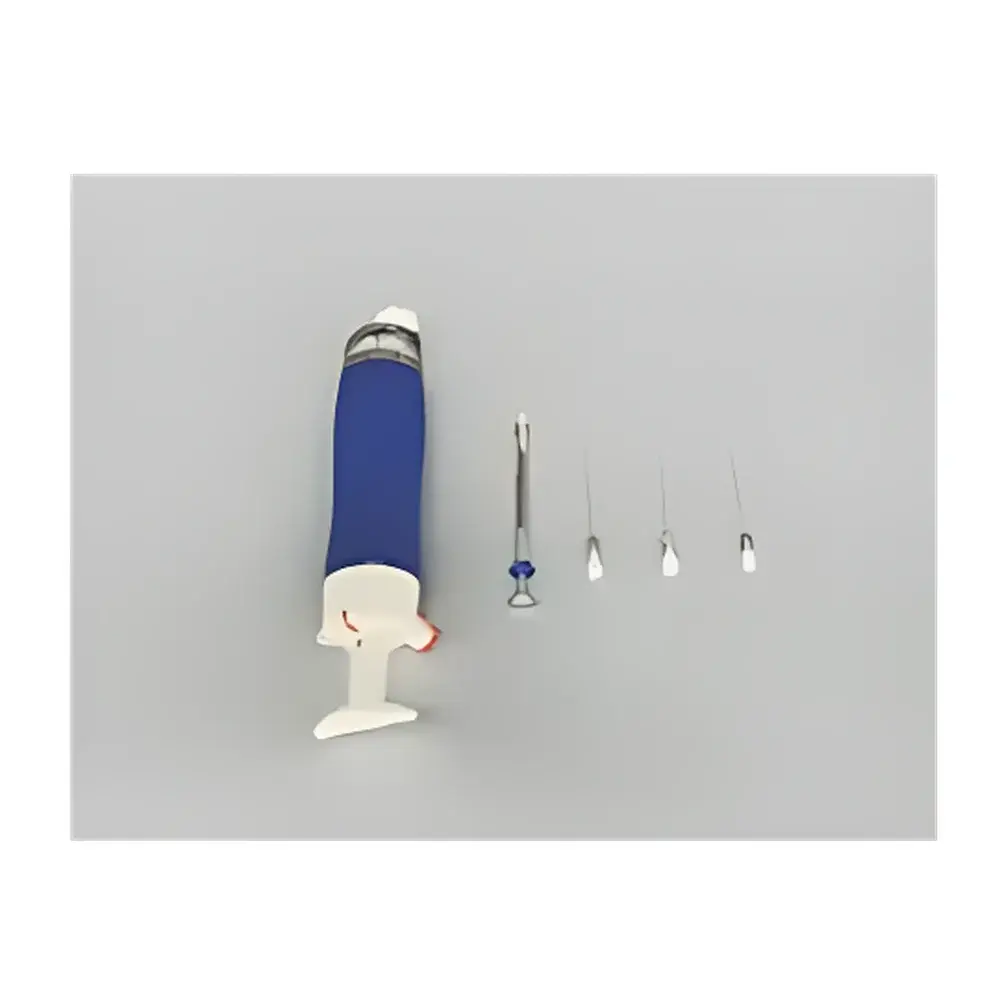
INNOTEG NT Manual Needle Trap Sampling Kit
| Brand | INNOTEG |
|---|---|
| Model | NT Manual Kit |
| Construction | Stainless Steel (dynamic trap needle), Borosilicate Glass + Stainless Steel Plunger (syringe), PTFE (manual sampling pump) |
| Adsorbent Options | Tenax TA, PDMS, DVB, Carbopack X, Carboxen 1000, Carboxen 1016 |
| Sampling Volume | 10 mL / 50 mL / 100 mL (selectable fixed volumes) |
| Trap Dimensions | 60 mm length, OD/ID = 700 µm / 400 µm |
| Reusability | ≥100 cycles after thermal conditioning |
| Detection Range | ppb–ppt level VOCs |
| Direct GC/GC–MS Compatibility | Yes, thermal desorption in standard split/splitless inlet, <60 s desorption time |
| Sealable Transport | Dual PTFE caps included |
| Custom Fillings | Available for fatty acids, alcohols, aldehydes, esters, ketones |
| Compliance | Designed for ASTM D6196, ISO 16017-1, USP <467>, and EPA TO-17 workflows |
Overview
The INNOTEG NT Manual Needle Trap Sampling Kit is a precision-engineered, field-deployable sample preparation system designed for the selective enrichment and direct introduction of volatile and semi-volatile organic compounds (VOCs and SVOCs) into gas chromatography (GC) and GC–mass spectrometry (GC–MS) systems. Unlike conventional sorbent tubes or thermal desorption cartridges, this kit implements passive adsorption-based needle trap microextraction (NTME) using capillary-scale stainless steel traps packed with validated polymeric or carbonaceous sorbents. The core principle relies on controlled, diffusion-limited analyte partitioning into high-surface-area adsorbents during manual, low-flow-rate sampling—enabling quantitative capture without active flow control or external power sources. Its architecture supports both laboratory-based method development and unattended field sampling under ambient or controlled environmental conditions, delivering robust reproducibility (RSD <8% for replicate n=6 at 1 ppb benzene) and minimal carryover (<0.5% after standard bake-out).
Key Features
- Modular three-component design: stainless steel dynamic needle trap, borosilicate glass syringe with stainless plunger, and chemically inert PTFE manual sampling pump—each optimized for mechanical durability and low background interference.
- Selectably calibrated sampling volumes (10 mL, 50 mL, 100 mL) ensure method flexibility across trace-level indoor air, workplace monitoring, and emissions testing applications.
- Pre-packed needle traps feature standardized 60 mm length and 700 µm OD / 400 µm ID geometry, compatible with all commercial GC autosamplers equipped with standard needle-trap adapters.
- Dual PTFE end caps provide hermetic sealing post-sampling, preventing analyte loss or contamination during transport and storage—validated for stability up to 72 h at 4 °C.
- Thermally robust construction allows repeated conditioning (300 °C, 30 min He purge) for ≥100 analytical cycles without performance degradation or bleed.
- No dedicated thermal desorber required: traps are inserted directly into standard GC or GC–MS injection ports for rapid in-situ thermal desorption (<60 s at 280 °C), reducing instrument footprint and operational cost.
Sample Compatibility & Compliance
The NT Manual Kit supports broad analyte coverage across volatility classes—from highly volatile compounds (e.g., C2–C5 hydrocarbons, chloromethanes) to moderately polar SVOCs (e.g., phenols, anilines, short-chain aldehydes). Sorbent configurations include Tenax TA for mid-to-high volatility organics; Carboxen 1000/1016 for low-molecular-weight polar species; and custom polymer blends (e.g., PDMS/DVB hybrids) tailored for oxygenated VOCs such as carboxylic acids, esters, and ketones. All trap assemblies comply with material compatibility requirements outlined in ASTM D6196 (selection of sorbents for ambient air analysis), ISO 16017-1 (indoor air VOC sampling), and USP residual solvent methodology. System validation data meet GLP documentation standards, including linearity (r² ≥ 0.995 over 0.1–100 ppb), recovery (>85% for 15 EPA TO-17 target analytes), and method detection limits (MDLs) consistently below 50 ppt for BTEX and chlorinated solvents.
Software & Data Management
While the NT Manual Kit operates independently of proprietary software, it integrates seamlessly into regulated laboratory environments via documented SOPs aligned with FDA 21 CFR Part 11 requirements. Each sampling event is traceable through manually recorded batch IDs, sampling duration, volume setting, trap lot number, and analyst signature—supporting full audit trails during GMP or ISO/IEC 17025 assessments. Optional digital log templates (Excel-based, password-protected) are provided for metadata capture—including ambient temperature, relative humidity, and barometric pressure—to enable correction factors per ISO 16017 Annex B. No firmware, drivers, or cloud connectivity are involved, minimizing cybersecurity exposure and ensuring long-term platform independence.
Applications
- Ambient and indoor air quality monitoring (IAQ) for regulatory compliance and occupational health assessment.
- Field screening of fugitive emissions from industrial facilities, landfills, and remediation sites.
- Method development for VOC profiling in consumer products, packaging materials, and building materials per ASTM D5116.
- Forensic toxicology and environmental forensics requiring portable, low-power sampling solutions.
- Academic research in atmospheric chemistry, plant volatilomics, and breath analysis where minimal sample manipulation is critical.
FAQ
Can the needle trap be used with any GC or GC–MS system?
Yes—the NT traps are dimensionally compliant with standard GC autosampler needle guides and operate reliably in both split and splitless injection modes across Agilent, Thermo Fisher, Shimadzu, and PerkinElmer platforms.
What is the recommended conditioning protocol before first use?
Heat at 300 °C for 30 min under 20 mL/min helium flow; repeat once prior to initial sampling. Subsequent reconditioning follows the same parameters after every 10–15 analyses.
Is matrix interference from humidity or CO₂ a concern during sampling?
Tenax TA–based traps show negligible water retention below 80% RH; for high-humidity environments, Carboxen 1000–filled variants offer superior selectivity and reduced competitive adsorption.
How is calibration performed for quantitative analysis?
External calibration via certified gas standards or liquid spiking onto blank traps is recommended. Internal standards (e.g., deuterated toluene) may be co-loaded to correct for injection variability and thermal desorption efficiency.
Are custom sorbent packings available for non-standard analytes?
Yes—INNOTEG provides application-specific fillings upon request, including mixed-mode polymers for polar carbonyls and functionalized silicas for acidic or basic VOCs, with full technical documentation and lot-specific validation reports.



