
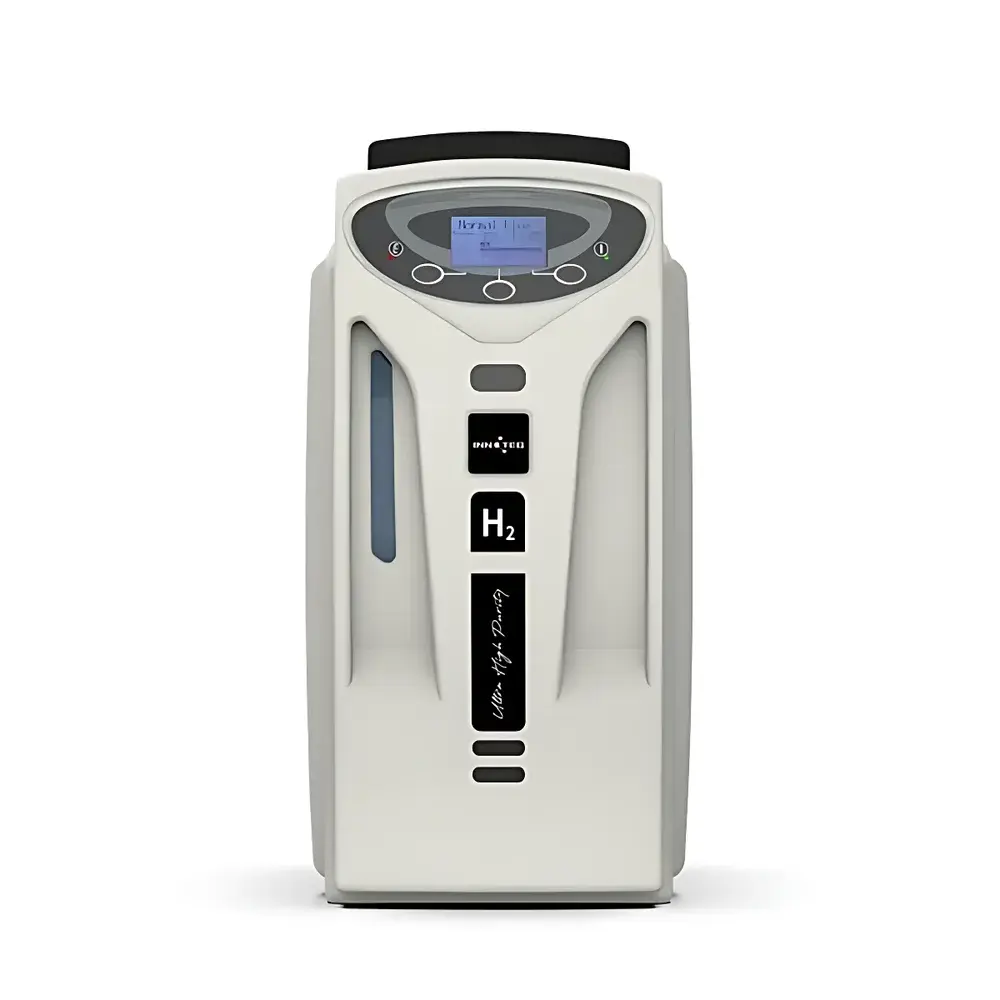
INNOTEG UHP-HG250 Ultra-High-Purity Hydrogen Generator
| Brand | INNOTEG |
|---|---|
| Origin | Italy |
| Manufacturer Type | Authorized Distributor |
| Product Category | Imported |
| Model | UHP-HG250 |
| Hydrogen Generation Principle | Proton Exchange Membrane (PEM) Electrolysis of Deionized Water |
| Output Flow Rate | 250 mL/min |
| Output Pressure | 11 bar |
| Hydrogen Purity | >99.99996% (6.6 N) |
| Power Consumption | 200 W |
| Certifications | CE, FCC, MET (UL/CSA) |
| Continuous Operation | 24/7, 365 days/year |
| Optional Features | Auto-refill System, Multi-unit Cascade Control |
Overview
The INNOTEG UHP-HG250 Ultra-High-Purity Hydrogen Generator is an engineered solution for laboratories requiring continuous, on-demand hydrogen gas at analytical-grade purity without reliance on high-pressure cylinders. Based on proton exchange membrane (PEM) electrolysis technology, the system splits deionized water into high-purity hydrogen and oxygen using a solid polymer electrolyte membrane. This electrochemical process eliminates the need for chemical reagents or metal hydride beds, delivering consistent hydrogen output with intrinsic safety advantages over compressed gas storage. Designed for integration into sensitive analytical instrumentation—including gas chromatographs (GC), hydrogenation reactors, and fuel cell test stations—the UHP-HG250 meets stringent requirements for trace-level impurity control, particularly in applications where oxygen, moisture, nitrogen, or hydrocarbon contamination must be minimized below detection thresholds.
Key Features
- Proton exchange membrane (PEM) stack with platinum and platinum-iridium alloy catalysts on both anode and cathode sides, ensuring high catalytic efficiency and long-term stability under continuous operation.
- Titanium-coated electrolyzer housing provides exceptional corrosion resistance against acidic PEM environments, extending service life beyond 10,000 operational hours.
- Integrated dual-stage purification system: built-in palladium-silver diffusion membrane and molecular sieve desiccant deliver hydrogen purity exceeding 99.99996% (6.6 N), with total hydrocarbon content <0.1 ppmv, O₂ <0.1 ppmv, H₂O <0.1 ppmv, and N₂ <0.1 ppmv (measured by GC-TCD).
- Real-time monitoring via high-resolution LCD interface displaying flow rate (0–250 mL/min), outlet pressure (0–11 bar), water level, conductivity of feedwater (<1 µS/cm), and system status alerts.
- Dual hydrogen leak detection architecture: internal sensor network monitors for membrane breach or seal failure; external ambient sensor triggers audible/visual alarm and immediate shutdown if H₂ concentration exceeds 10% LEL (Lower Explosive Limit).
- Automated safety interlocks include low-water-level cutoff, high-conductivity shutdown, overpressure relief valve (set at 12 bar), and thermal overload protection.
- Compliant with IEC 61000-6-3 (EMC), IEC 61000-6-2 (immunity), and EN 61010-1 (safety), certified to CE, FCC, and MET (UL 61010-1 / CSA C22.2 No. 61010-1) standards.
Sample Compatibility & Compliance
The UHP-HG250 is compatible with all laboratory-grade deionized water sources meeting ASTM D1193 Type II specifications (resistivity ≥1 MΩ·cm, TOC <50 ppb). It requires no consumables beyond feedwater and does not generate hazardous waste. The generator supports GLP/GMP-compliant workflows through configurable audit trail logging (via optional RS-485 or Ethernet interface), supporting FDA 21 CFR Part 11 requirements when integrated with validated LIMS or instrument control software. All materials in contact with hydrogen—including stainless steel 316L tubing, EPDM-free Viton seals, and PTFE-lined water reservoirs—comply with USP Class VI biocompatibility standards and ISO 8573-1:2010 Class 1 for gaseous purity.
Software & Data Management
The UHP-HG250 supports local operation via front-panel controls and remote supervision through analog 0–10 V or 4–20 mA signals for flow/pressure feedback. Optional digital interfaces include Modbus RTU (RS-485) and TCP/IP Ethernet for integration into centralized facility monitoring systems. Firmware enables programmable setpoints, event logging (timestamped alarms, maintenance intervals, runtime counters), and password-protected configuration access. Data export is supported in CSV format for trend analysis and regulatory documentation. Remote firmware updates are performed securely via authenticated HTTPS connection.
Applications
- Gas Chromatography (GC): Primary carrier or fuel gas for FID, HID, and PDD detectors—eliminates baseline drift caused by cylinder-to-cylinder variability and reduces downtime during cylinder changeovers.
- Hydrogenation Reactors: On-site, metered H₂ supply for fine chemical synthesis, enabling precise stoichiometric control and improved reaction reproducibility.
- Fuel Cell Testing: Stable, ultra-dry hydrogen stream for PEMFC and SOFC characterization under controlled load profiles.
- Environmental Monitoring: Calibration gas generation for portable H₂S analyzers and air quality sensors requiring zero-gas background verification.
- Pharmaceutical QC/QA: Complies with ICH Q5C and USP for residual solvent analysis and excipient stability testing where hydrogen purity directly impacts method specificity.
FAQ
What feedwater quality is required for optimal performance?
Deionized water with resistivity ≥1 MΩ·cm (ASTM D1193 Type II) and total organic carbon (TOC) <50 ppb is mandatory. Conductivity monitoring ensures real-time validation of feedwater integrity.
Can the UHP-HG250 operate unattended for extended periods?
Yes. It is rated for continuous 24/7 operation with automated safety shutdowns and optional auto-refill capability for uninterrupted multi-day runs.
Is the hydrogen output suitable for GC-FID applications?
Yes. With total hydrocarbons <0.1 ppmv and moisture <0.1 ppmv, the output meets or exceeds ASTM D7527 and ISO 8573-1 Class 1 requirements for GC carrier/fuel gas.
How often does the PEM stack require replacement?
Under normal operating conditions (200 W average load, 25°C ambient), the PEM stack maintains ≥95% nominal output after 10,000 hours; preventive replacement is recommended at 12,000 hours or per annual calibration schedule.
Does the system support cascade operation for higher flow demands?
Yes. Up to four UHP-HG250 units can be synchronized via master-slave protocol to deliver up to 1,000 mL/min while maintaining synchronized pressure regulation and unified alarm management.



