
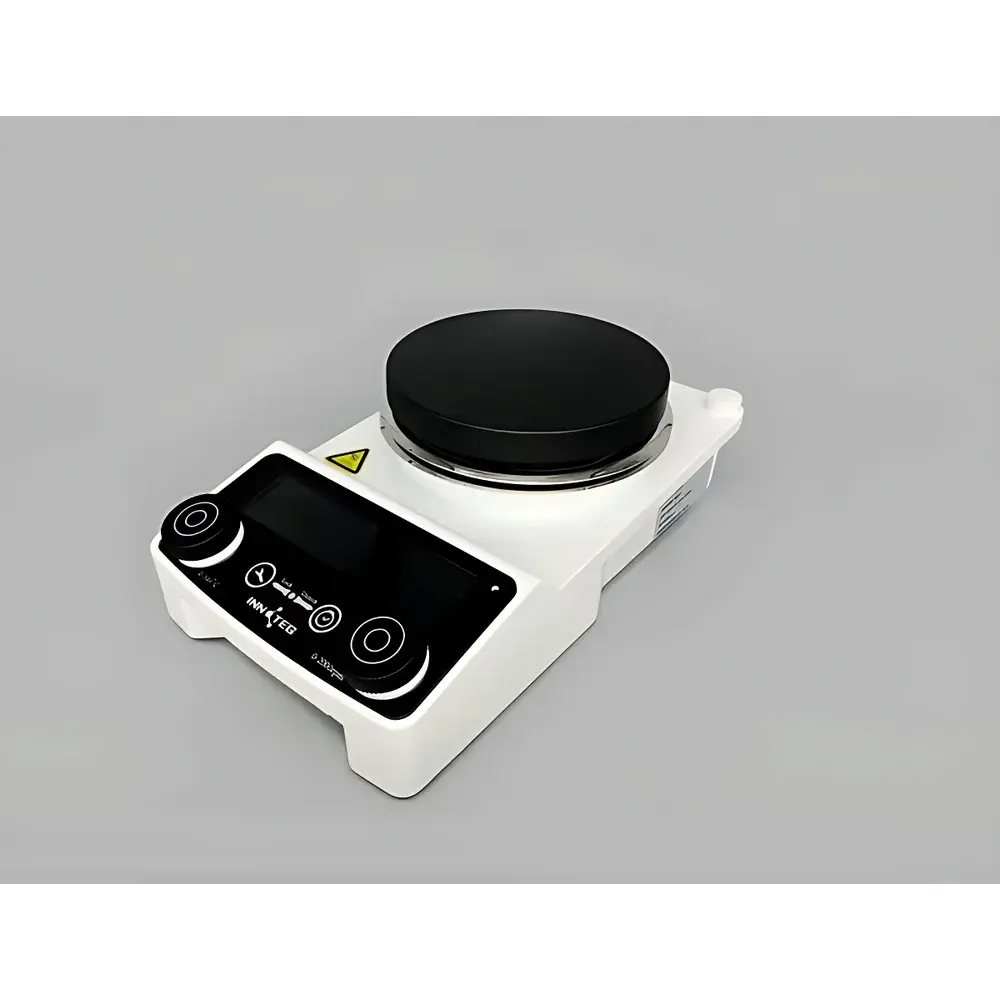
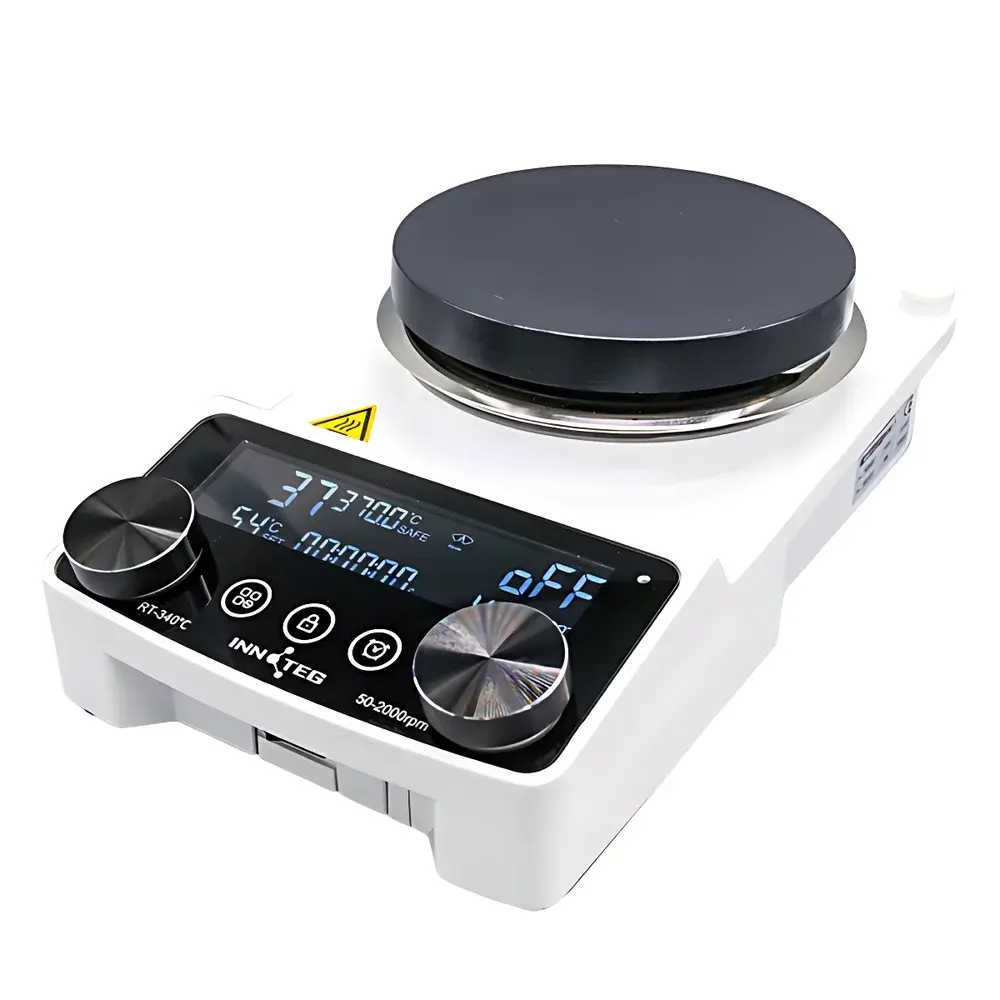
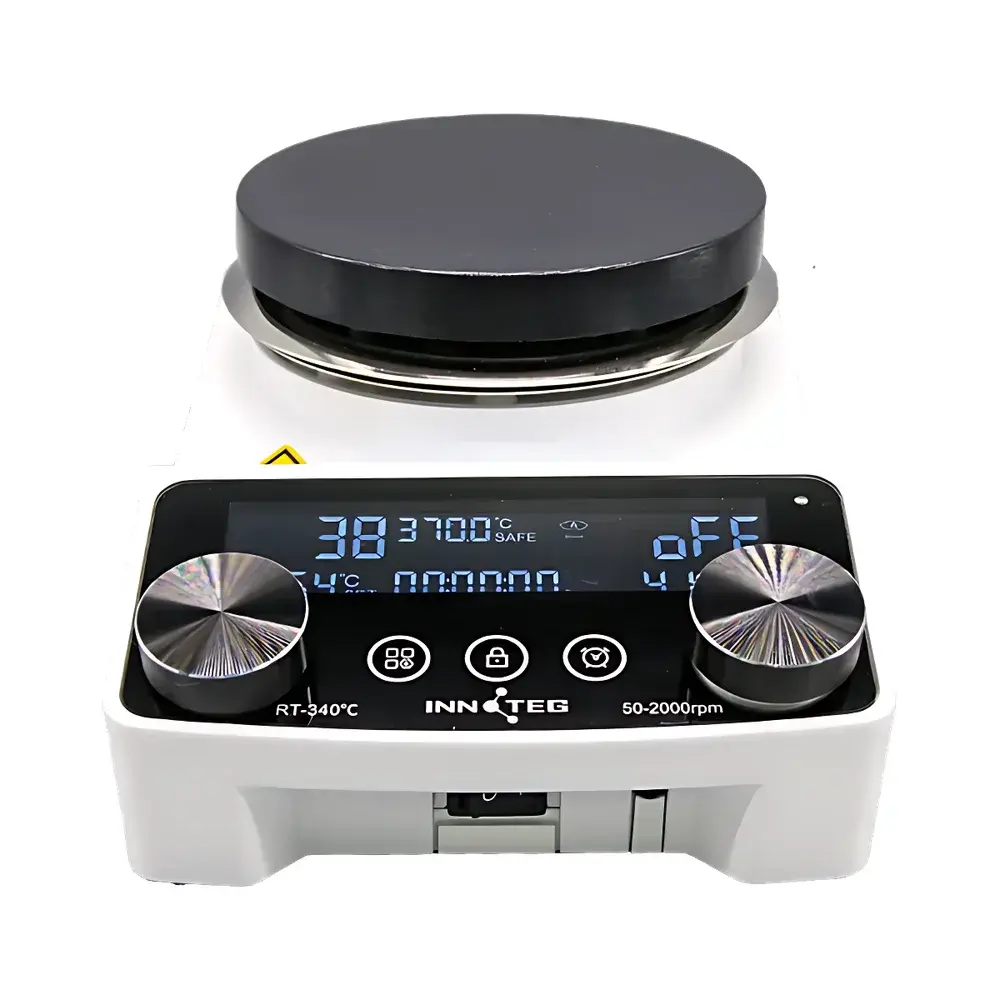
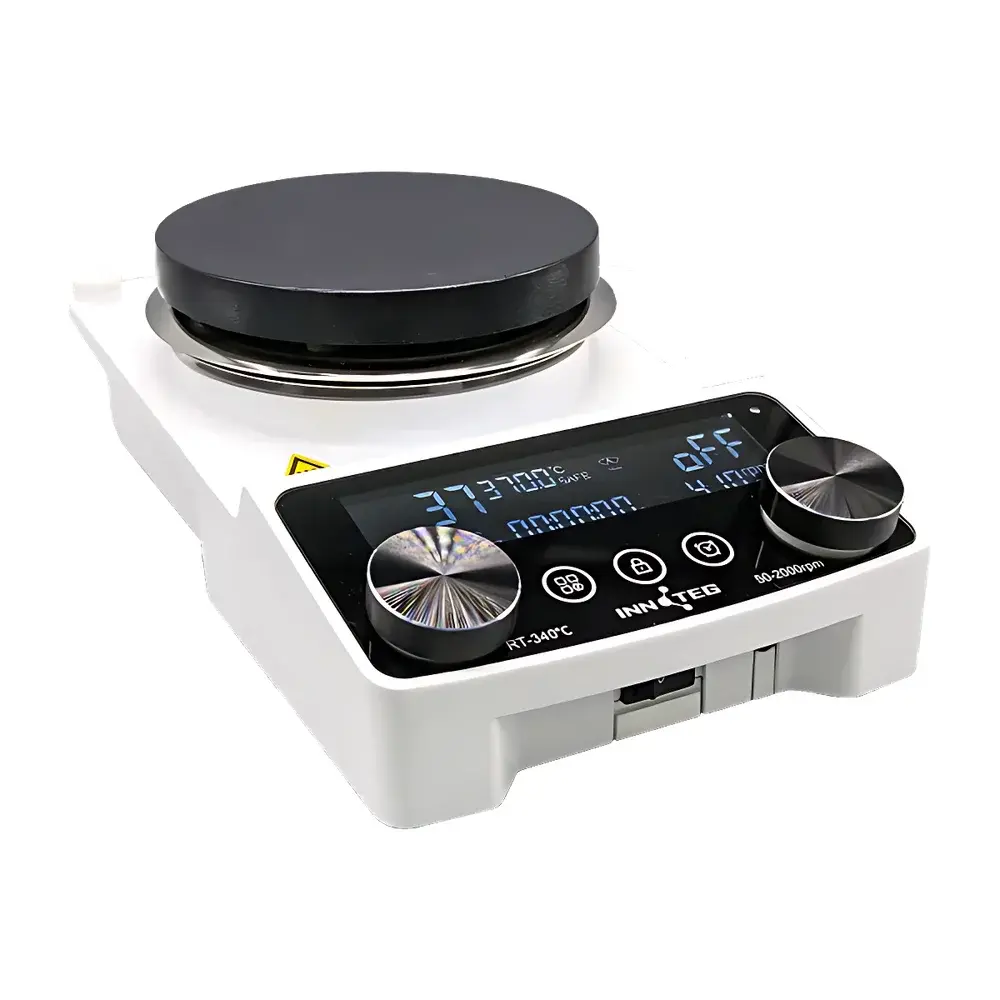
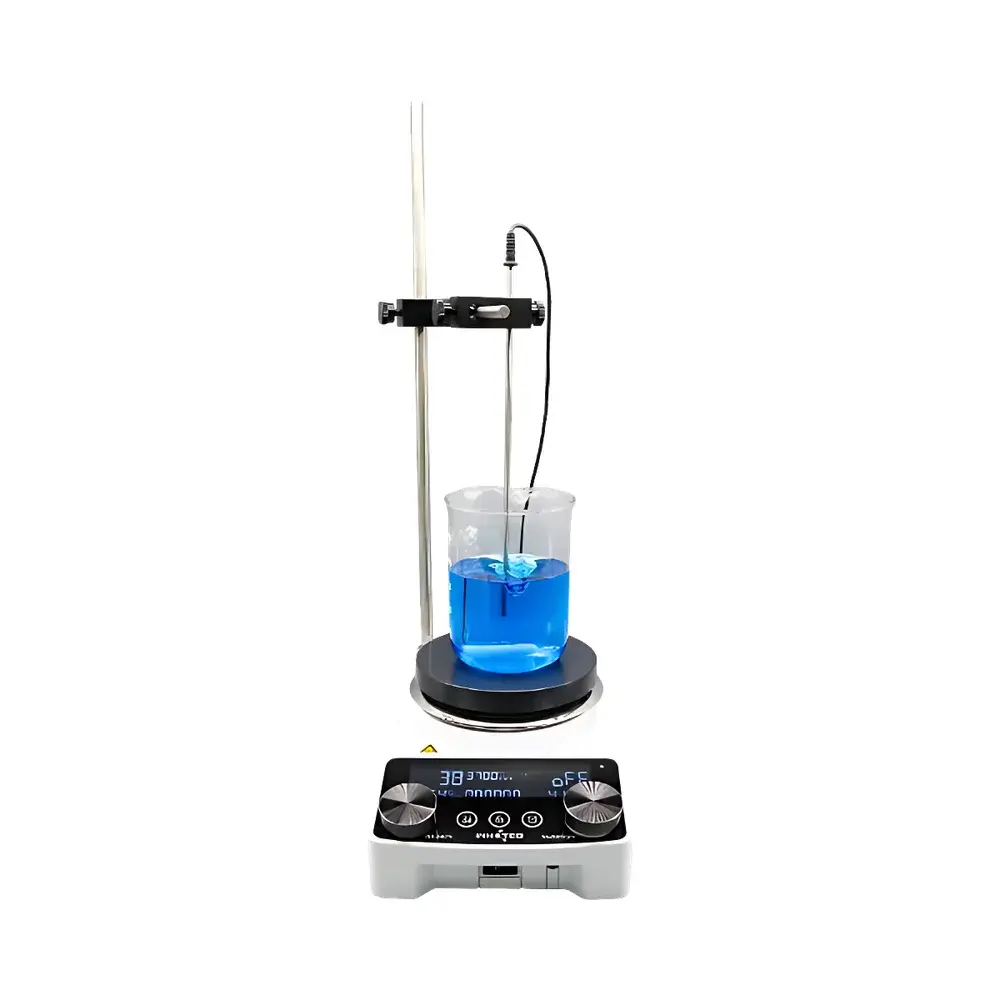
INNOTEG WM-1 Magnetic Stirrer with Heating
| Brand | INNOTEG |
|---|---|
| Model | WM-1 |
| Type | Magnetic Stirrer with Integrated Heating Plate |
| Max Stirring Volume | 20 L |
| Speed Range | 50–2000 rpm |
| Temperature Range | Ambient to 340 °C (Heating Plate) |
| Heating Power | 750 W |
| Temperature Sensor | PT1000 RTD Probe |
| Construction | Anodized Aluminum Heating Plate with Ceramic Coating |
| Safety Features | Adjustable Over-Temperature Cut-off, Auto-Cooling Residual Heat Warning, Keypad Lock, Programmable Timer with Audible Alert, Dual-Mode Operation (Stir Only / Heat Only / Heat & Stir), Reversible Rotation & Intermittent Stirring Modes |
| Compliance | Designed for GLP-compliant laboratory environments |
Overview
The INNOTEG WM-1 Magnetic Stirrer with Integrated Heating represents a purpose-engineered solution for precise, reproducible mixing and temperature-controlled sample preparation in analytical, quality control, and research laboratories. Utilizing robust electromagnetic coupling between the rotating permanent magnet beneath the heating plate and the stir bar immersed in the vessel, the WM-1 delivers consistent torque transfer across its full speed range without mechanical wear or seal degradation. Its integrated ceramic-coated aluminum heating plate enables rapid thermal response and uniform surface temperature distribution—critical for applications requiring strict thermal protocol adherence, such as dissolution testing, catalyst activation, polymerization initiation, and buffer equilibration. Unlike basic stir-only units, the WM-1 implements dual independent control loops: one for rotational dynamics (speed, direction, duty cycle), and another for thermal regulation (setpoint, ramp rate, safety limit). This architecture ensures stable operation under variable load conditions and supports method development aligned with ASTM E2912 (Standard Practice for Calibration of Magnetic Stirrers) and USP environmental conditioning requirements.
Key Features
- High-efficiency ceramic-coated aluminum heating plate: Offers exceptional thermal conductivity (>200 W/m·K) combined with resistance to acid, alkali, and organic solvent exposure—extending service life in aggressive chemical environments.
- PT1000 platinum resistance thermometer integration: Provides ±0.3 °C accuracy over the full 0–340 °C operating range, enabling traceable temperature calibration and compliance with ISO 17025 internal calibration protocols.
- Three operational safety modes: Standard mode (full functionality), Locked mode (prevents parameter modification during active runs), and Maintenance mode (disables heating while preserving stir control for cleaning or cold mixing).
- Programmable dual-function timer: Independently configurable countdown timers for stirring duration, heating duration, or synchronized heat-and-stir cycles; includes audible end-of-cycle alert and automatic power-down.
- Intelligent residual heat management: After shutdown, the display shows real-time plate surface temperature decay and issues visual warnings until surface cools below 60 °C—reducing burn risk and supporting OSHA-aligned lab safety practices.
- Reversible and intermittent stirring logic: Supports bidirectional rotation sequences (e.g., 30 s clockwise → 30 s counterclockwise) or pulsed agitation (e.g., 10 s on / 5 s off), improving homogenization of viscous or particulate-laden samples.
Sample Compatibility & Compliance
The WM-1 accommodates standard laboratory glassware up to 20 L capacity—including borosilicate beakers, round-bottom flasks, and jacketed reactors—with optimal performance observed using PTFE- or glass-coated stir bars (5–80 mm length). Its non-contact drive mechanism eliminates contamination pathways, making it suitable for sterile technique workflows when paired with laminar flow hoods. The device complies with IEC 61010-1:2010 safety standards for electrical equipment used in laboratory environments and meets EMC Class B emission limits per CISPR 11. Firmware architecture supports optional electronic record generation for critical parameters (setpoints, actual values, timestamps), facilitating alignment with FDA 21 CFR Part 11 data integrity expectations where connected to validated LIMS or ELN systems.
Software & Data Management
While the WM-1 operates as a standalone instrument via its front-panel interface, its embedded microcontroller logs runtime metadata—including start/stop times, peak temperature, average RPM, and safety event flags (e.g., overtemperature trigger)—to non-volatile memory. These logs are accessible via USB-C port using vendor-provided configuration utility (Windows/macOS compatible), allowing export to CSV for inclusion in analytical batch records. Audit trail functionality records all parameter changes with user ID (if configured via network authentication), timestamp, and pre-/post-change values—supporting GLP audit readiness and internal quality system reviews.
Applications
- Pharmaceutical QC: Dissolution media conditioning per USP , excipient blending, and stability-indicating assay sample prep.
- Materials science: Precipitation synthesis of metal oxides, sol-gel processing, and nanoparticle dispersion in high-boiling-point solvents (e.g., ethylene glycol, DMF).
- Environmental testing: Extraction of semi-volatile organics from soil/sediment matrices using heated Soxhlet alternatives.
- Food & beverage R&D: Viscosity-modifier hydration studies, enzyme reaction kinetics at elevated temperatures, and flavor oil emulsification optimization.
- Academic research: Teaching labs requiring robust, low-maintenance platforms for physical chemistry experiments involving Arrhenius analysis or reaction calorimetry support.
FAQ
What is the maximum recommended vessel diameter for optimal magnetic coupling?
For reliable torque transmission at 2000 rpm, vessels ≤150 mm in diameter are recommended; larger diameters may require high-torque stir bars (≥40 mm) and reduced speed settings.
Does the WM-1 support external temperature probe input for sample-core monitoring?
Yes—the rear-panel analog input accepts standard PT1000 sensors, enabling closed-loop control based on solution temperature rather than plate surface temperature.
Can the device be integrated into a centralized lab automation network?
It features Modbus RTU over RS-485 (optional module), permitting integration with PLC-based control systems or SCADA platforms for multi-unit orchestration.
Is firmware update capability available?
Yes—updates are delivered via USB-C and include enhanced PID tuning profiles, expanded safety logging depth, and improved thermal overshoot suppression algorithms.
What maintenance intervals are recommended for long-term reliability?
Annual verification of temperature accuracy (using NIST-traceable dry-block calibrator) and visual inspection of ceramic coating integrity are advised; no lubrication or internal servicing is required.



