
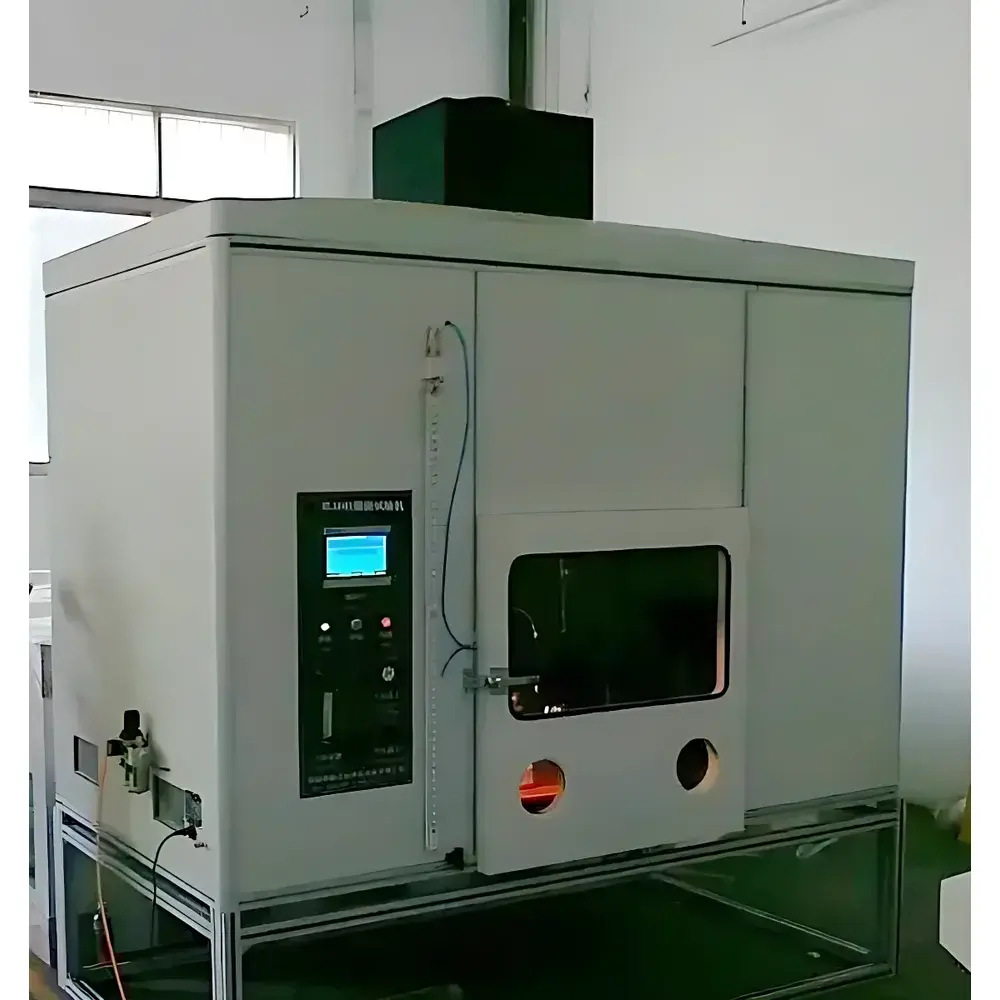
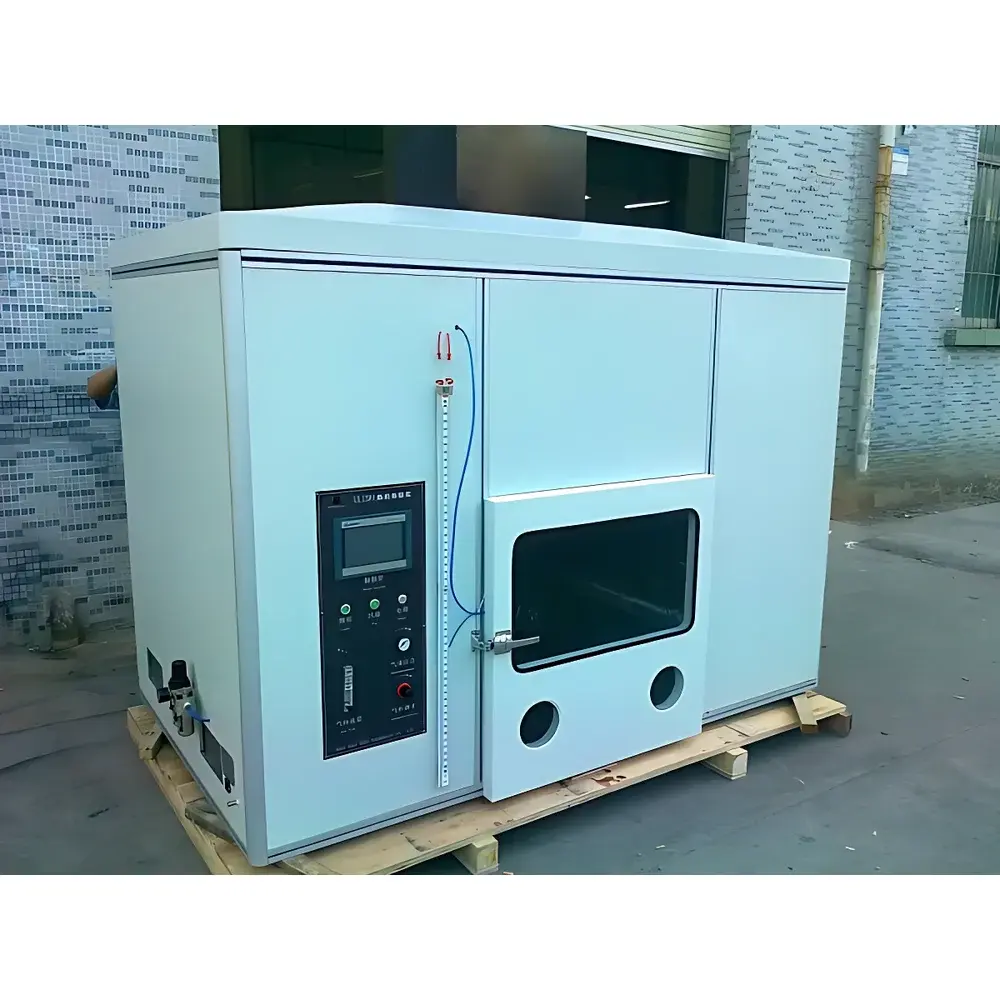
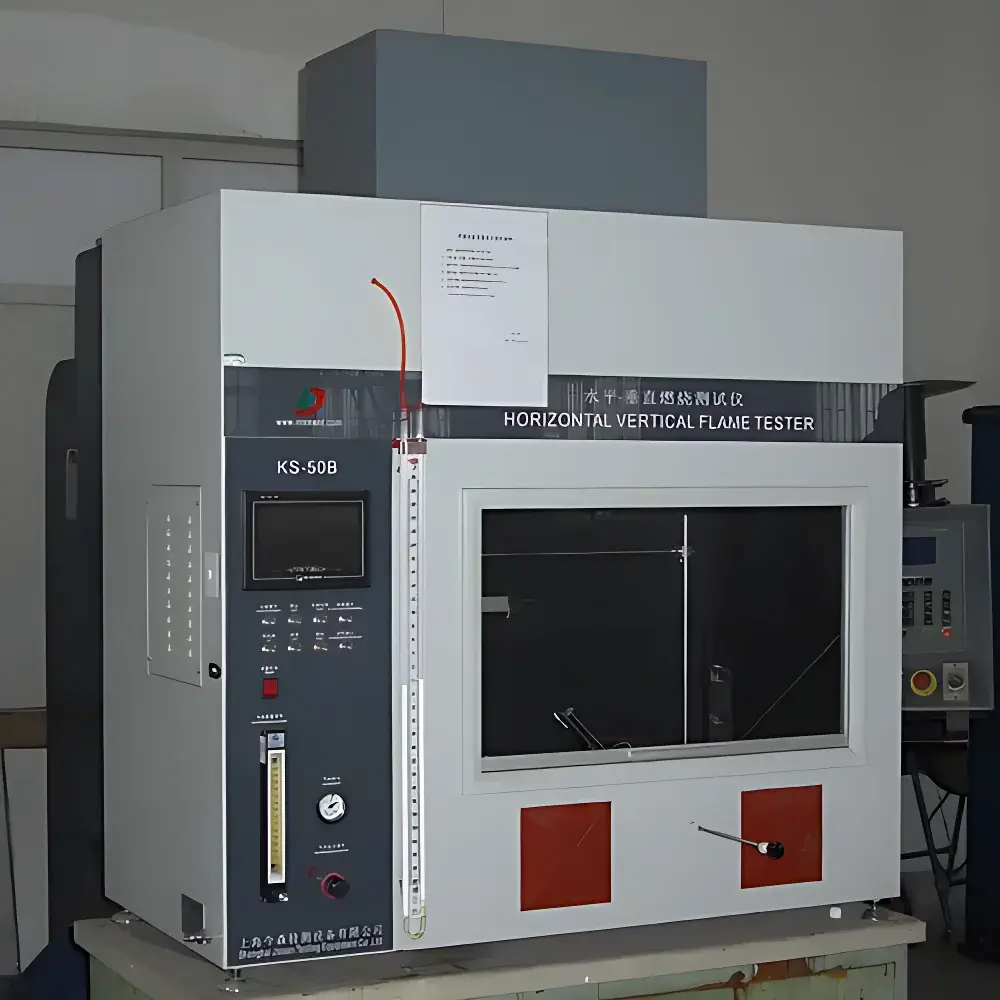
Insment KS-1581A UL 1581 Vertical/Horizontal Combustion Test Chamber for Wire and Cable Flammability Evaluation
| Brand | Insment (Shanghai) |
|---|---|
| Origin | Shanghai, China |
| Model | KS-1581A |
| Compliance | UL 1581 (Sections 1060, 1080, 1100), VW-1, ASTM D5025-99 |
| Chamber Dimensions | 220 × 130 × 165 cm (L×W×H) |
| Internal Volume | 4.8 m³ |
| Burner Power | 500 W (vertical), 225 W (horizontal) |
| Flame Geometry | Inner flame height 40 ± 2 mm, outer flame height 125 ± 10 mm |
| Gas Supply | Methane (≥98% purity, 37.1 MJ/m³) |
| Temperature Measurement | K-type thermocouple with copper thermal probe (electrolytic copper, density 8.96 g/cm³), range up to 1000 °C |
| Timing Resolution | 0.1 s (electronic stopwatch integrated) |
| Air Exchange System | Top-mounted exhaust fan + rear-side intake damper, full chamber air replacement time specified per IEC 60332-1 Annex B methodology |
| Viewing Window | Sealed tempered glass with glove port (dual stainless-steel sealed gloves included) |
Overview
The Insment KS-1581A UL 1581 Combustion Test Chamber is an engineered platform designed specifically for evaluating the flammability performance of insulated wires and cables in accordance with UL 1581—particularly Sections 1060 (Vertical Flame/FT1), 1080 (VW-1), and 1100 (Horizontal Flame/FT2)—as well as ASTM D5025-99 for burner specification. The system operates on the principle of controlled flame impingement under standardized thermal flux conditions, where specimen orientation (vertical or horizontal), burner geometry, gas flow dynamics, and timing sequences are rigorously defined to ensure repeatability and inter-laboratory comparability. Unlike smoke density or toxicity test methods (e.g., IEC 61034, EN 50267, or ISO 5659-2), the UL 1581 protocol focuses exclusively on flame propagation resistance under single-cable exposure—making it applicable to residential and small-office wiring systems where cable bundling is prohibited and mechanical protection (e.g., conduit) is required. The chamber’s architecture integrates thermal, pneumatic, optical, and timing subsystems into a unified test environment compliant with GLP-aligned laboratory practices.
Key Features
- Structural frame fabricated from anodized aluminum alloy with electrostatically coated electrolytic steel panels—ensuring corrosion resistance, dimensional stability, and long-term surface integrity in humid or chemically reactive lab environments.
- Dual-mode ventilation architecture: top-mounted high-capacity exhaust fan and rear-mounted adjustable intake damper, both interlocked with test cycle logic to maintain chamber integrity during flame exposure and enable rapid post-test air exchange (full volume replacement time documented per IEC 60332-1 Annex B).
- Optically isolated observation interface: 20 mm-thick tempered glass viewport with dual-seal design, rated for sustained exposure to radiant heat up to 500 °C; integrated glove port fitted with two pairs of stainless-steel-reinforced, solvent-resistant elastomeric gloves for safe manual burner positioning.
- Precision combustion assembly: vertically and horizontally configurable stainless-steel specimen holders (FT1/VW-1/FT2), ASTM D5025-compliant 500 W vertical burner (orifice Ø 0.90 ± 0.03 mm, nozzle length 1.60 ± 0.05 mm, tilt angle 20° from vertical), and calibrated wedge-mounting system enabling repeatable burner-to-specimen distance control within ±0.5 mm.
- Triple-function digital timing system: independent counters for flame-on duration (programmable 15 s ± 0.1 s), afterflame duration (post-ignition hold time), and flaming droplet extension time—with audible alerts, foot-switch activation for延燃 (afterglow) mode, and automatic burn-cycle logging to prevent operator-induced counting errors.
Sample Compatibility & Compliance
The KS-1581A accommodates standard UL 1581 specimens: solid or stranded conductors with extruded thermoplastic or thermoset insulation, cross-sectional area ≤ 16 AWG (1.31 mm²), and total length ≥ 600 mm. Specimens are mounted either vertically (VW-1/FT1) or horizontally (FT2) using dedicated stainless-steel clamps that minimize thermal conduction artifacts. All test procedures align with UL 1581 Edition 2001 requirements—including flame height verification using supplied dual-scale ruler (inner/outer flame calibration), methane gas certification traceability (minimum 98% purity, calorific value 37.1 MJ/m³), and mandatory use of surgical cotton (ASTM D635 Class 1) as ignition substrate. While not certified to IEC 60332-3 (bundled cable fire propagation), the apparatus supports comparative evaluation against IEC 60332-1 via identical burner geometry and timing parameters—facilitating harmonized reporting for global regulatory submissions.
Software & Data Management
The KS-1581A operates as a hardware-integrated benchtop instrument without embedded firmware or proprietary software. All timing, temperature, and gas flow data are captured via discrete, NIST-traceable analog/digital instruments: K-type thermocouples interfaced with PID-controlled digital temperature indicators (resolution 0.1 °C, range 0–1000 °C), Dwyer-manufactured U-tube manometers (±5 mm H₂O accuracy), and calibrated rotameters (0–1000 mL/min). For laboratories requiring audit-ready documentation, the system supports integration with external LIMS or ELN platforms via RS-232 or USB-serial adapters. All timing events—including flame initiation, extinguishment, and cycle repetition—are logged manually or via synchronized external timestamping devices compliant with FDA 21 CFR Part 11 Annex 11 principles for electronic records and signatures. Calibration certificates for thermocouples, flow meters, and stopwatch units are retained per ISO/IEC 17025 Clause 6.4.
Applications
Primary application domains include QC/QA validation of wire insulation compounds (PVC, PE, LSZH, FEP) prior to UL listing; R&D screening of flame-retardant additive formulations; supplier qualification audits for Tier-1 automotive and building wire manufacturers; and third-party certification testing per UL Recognition Program requirements. The chamber is routinely deployed in accredited laboratories performing UL File E-number verification, CSA C22.2 No. 0.3 compliance checks, and TÜV Rheinland Type Approval protocols. Due to its adherence to ASTM D5025-99 burner specifications, it also serves as a reference platform for internal correlation studies with cone calorimetry (ASTM E1354) and oxygen index (ASTM D2863) datasets.
FAQ
Does the KS-1581A meet UL’s official equipment validation requirements for VW-1 testing?
Yes—the burner geometry, methane supply calibration, timing resolution, and specimen mounting configuration fully satisfy UL 1581 Section 1080 and UL Subject 1581 Appendix A equipment verification criteria. Third-party validation reports are available upon request.
Is methane gas supplied with the system?
No—methane must be sourced locally with certified purity (≥98%) and calorific value documentation. Insment provides gas line fittings compatible with standard CGA-560 regulators.
Can the chamber be used for IEC 60332-1 testing?
Yes—identical burner setup and timing logic apply; only flame duration differs (60 s vs. UL’s 15 s × 5 cycles). Users must adjust test sequence per IEC 60332-1 Clause 8.2 and document deviations in test reports.
What maintenance intervals are recommended for the exhaust filtration system?
The stainless-steel exhaust duct requires quarterly visual inspection for soot accumulation; carbon filter cartridges (optional add-on) should be replaced every 200 test cycles or biannually, whichever occurs first.
Is GLP-compliant calibration documentation provided?
Calibration certificates for all supplied metrology tools (thermocouples, stopwatch, steel ruler) are included. On-site calibration by ISO/IEC 17025-accredited providers is recommended annually.



