
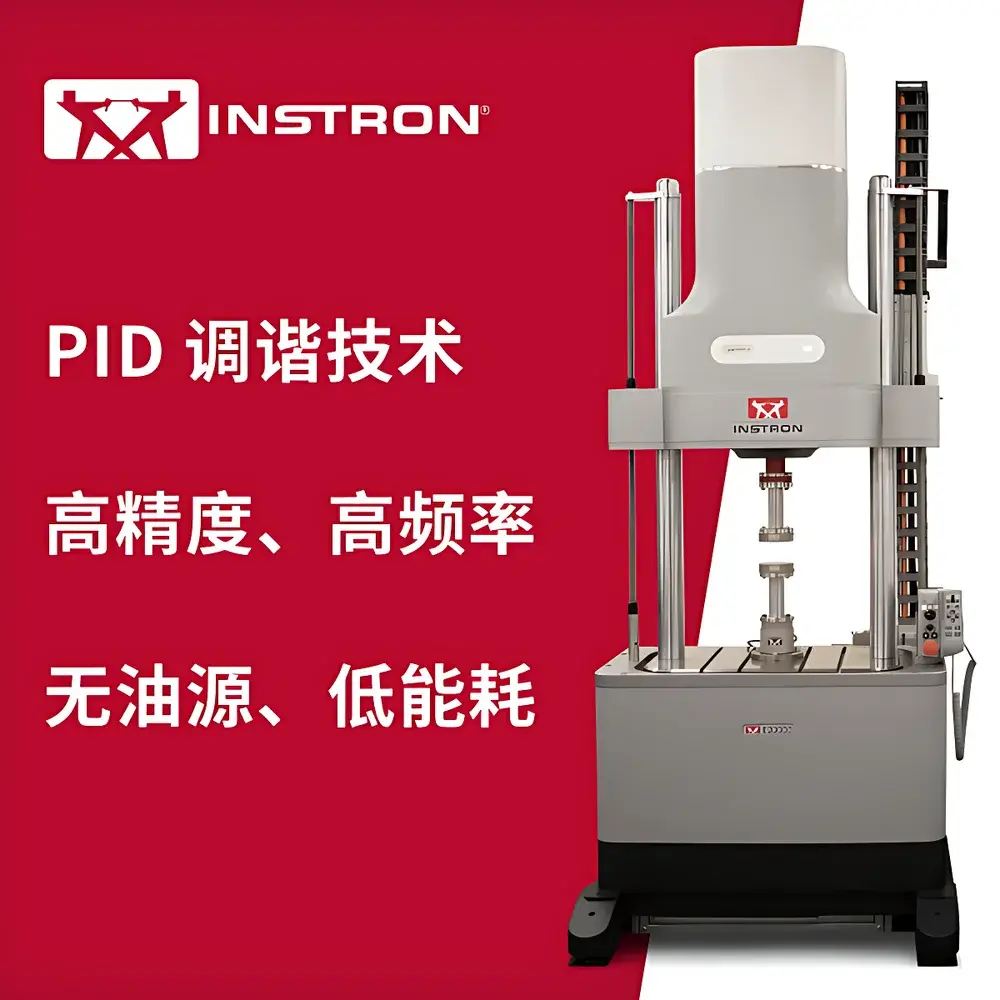
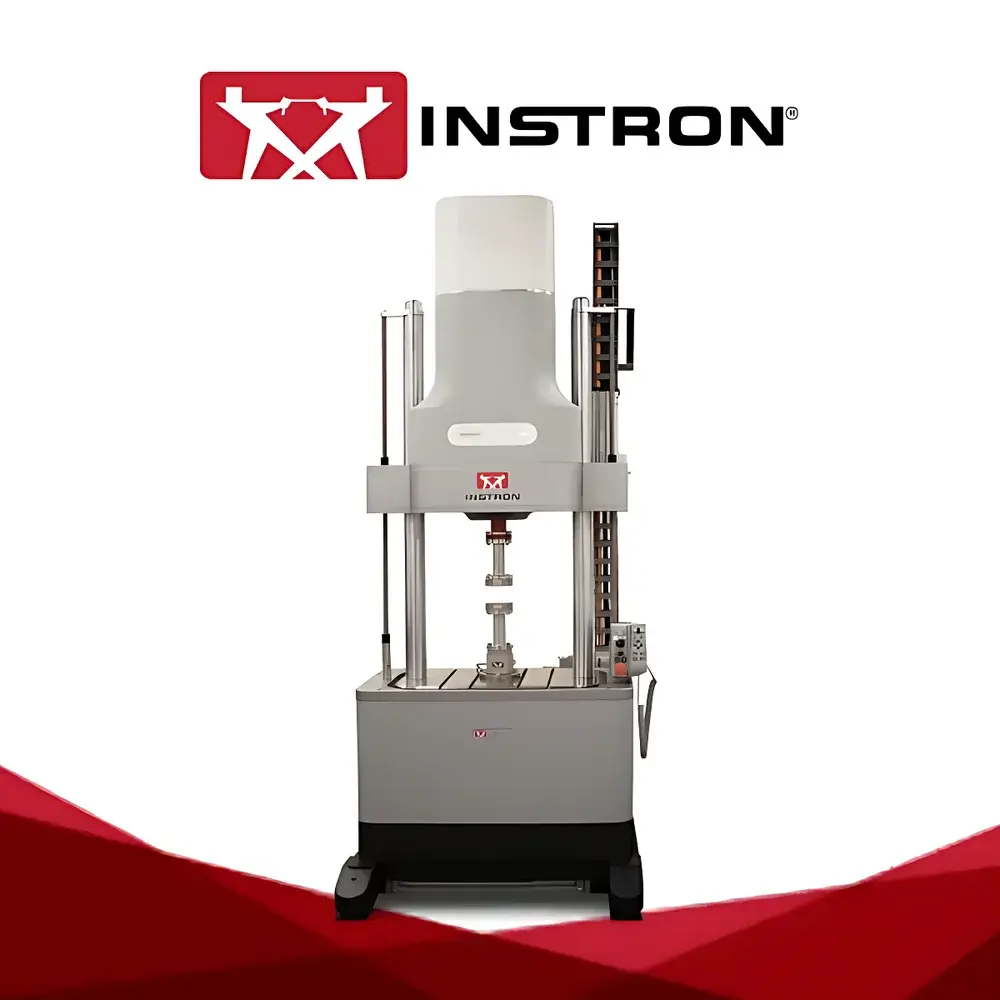
Instron E20000 Electromagnetic Dynamic and Static Fatigue Testing System
| Brand | INSTRON |
|---|---|
| Origin | United Kingdom |
| Manufacturer Type | Original Equipment Manufacturer (OEM) |
| Product Origin | Imported |
| Model | E20000 |
| Instrument Type | Electromagnetic Fatigue Testing System |
| Maximum Test Load | 20 kN |
| Frequency Range | Up to 100 Hz |
| Host Weight | 1225 kg |
Overview
The Instron E20000 is a high-performance, fully electromagnetic dynamic and static fatigue testing system engineered for precision, repeatability, and operational efficiency in advanced materials characterization laboratories. As the latest generation of Instron’s ElectroPuls platform, the E20000 leverages direct-drive linear motor actuation—eliminating hydraulic fluids, servo valves, and associated maintenance—to deliver clean, quiet, and energy-efficient operation. Its core measurement principle is based on closed-loop digital control of axial force and displacement using high-fidelity optical encoders (75 mm stroke resolution) and Instron’s proprietary Dynacell™ load cell technology, enabling traceable force measurement across both static tensile/compression and high-cycle fatigue regimes. Designed for compliance with international testing standards—including ASTM E466, E606, ISO 1099, and ISO 6892—the system supports rigorous R&D, quality assurance, and regulatory submission workflows in aerospace, biomedical, automotive, and additive manufacturing sectors.
Key Features
- Fully electromagnetic actuation architecture delivering up to 20 kN (4,500 lbf) peak dynamic force with zero hydraulic fluid dependency
- High-bandwidth digital control system supporting closed-loop operation at frequencies up to 100 Hz, optimized for high-cycle fatigue (HCF) and ultra-high-cycle fatigue (UHCF) testing
- Patented stiffness-based auto-tuning algorithm that dynamically adjusts control parameters in real time based on specimen compliance, reducing setup time and improving test reproducibility
- Integrated energy recovery and regenerative braking system that reduces net power consumption by up to 40% compared to conventional electromagnetic systems and minimizes thermal drift in temperature-sensitive environments
- Motorized crosshead with automatic locking mechanism enabling rapid, repeatable adjustment of test space—no manual wrenches or alignment tools required
- Compact footprint (<1.2 m² / 13 ft²), making it suitable for space-constrained labs while maintaining full 20 kN capacity and 75 mm stroke capability
- Dynacell™ load cell with integrated temperature compensation and factory-calibrated traceability to NIST standards
Sample Compatibility & Compliance
The E20000 accommodates a broad range of specimen geometries—from miniature coupons (e.g., ASTM E606 sub-size specimens) to full-scale orthopedic implant components—via interchangeable grips, fixtures, and environmental chamber interfaces (including optional temperature-controlled chambers from –70 °C to +350 °C). It meets mechanical integrity requirements for GLP and GMP-regulated environments, with full audit trail support in Bluehill Universal and WaveMatrix™ 3 software. System validation documentation complies with ISO/IEC 17025 and supports IQ/OQ/PQ protocols. Force and displacement accuracy conform to ASTM E4 and ISO 7500-1 Class 0.5, and all calibration records are digitally archived with timestamped metadata.
Software & Data Management
The E20000 integrates natively with three primary software platforms: WaveMatrix™ 3 for advanced dynamic fatigue analysis (S–N curve generation, crack growth rate dA/dN calculations per ASTM E647, and multi-step block loading), Bluehill® Fracture for J-integral and CTOD evaluation, and Bluehill Universal for static tensile, compression, and flexural testing per ISO 6892-1, ASTM D638, and ASTM D790. All software modules enforce 21 CFR Part 11-compliant electronic signatures, role-based access control, and immutable data logging—including raw sensor streams, control loop diagnostics, and hardware event timestamps. Data export formats include ASTM E1432-compliant .tdms, CSV, XML, and PDF reports with embedded metadata for LIMS integration.
Applications
- High-cycle and ultra-high-cycle fatigue characterization of metallic alloys (Ti-6Al-4V, Inconel 718), composites (CFRP laminates), and additively manufactured parts
- Biomedical device validation—including cyclic loading of spinal implants, hip stems, and dental abutments per ISO 14801 and ISO 12417-2
- Dynamic mechanical analysis (DMA) of viscoelastic polymers and elastomers under controlled strain-rate conditions
- Fracture mechanics testing (da/dN vs. ΔK) with real-time crack monitoring via compliance or DC potential drop methods
- Creep-fatigue interaction studies using programmed hold periods within dynamic waveforms
- Material certification for aerospace OEMs requiring AS9100-aligned test documentation and traceability
FAQ
What is the maximum continuous operating frequency for sinusoidal waveforms?
The E20000 maintains full 20 kN force output at frequencies up to 100 Hz under sinusoidal loading with ≤±1 mm displacement amplitude.
Does the system support environmental chamber integration?
Yes—standard mounting interfaces accommodate commercially available thermal, humidity, and corrosive atmosphere chambers; full controller synchronization is maintained via EtherCAT.
Is the Dynacell™ load cell calibrated for both tension and compression?
Yes—factory calibration covers bidirectional force application across the full ±20 kN range with linearity error <±0.05% of full scale.
Can test data be exported directly to MATLAB or Python for custom post-processing?
Yes—raw channel data (.tdms) and processed results (.csv) are fully script-accessible; Instron provides open API documentation for programmatic control via .NET and RESTful endpoints.
What maintenance intervals are recommended for the electromagnetic actuator?
No scheduled lubrication or fluid replacement is required; preventive maintenance is limited to annual verification of encoder alignment and load cell calibration traceability.



