
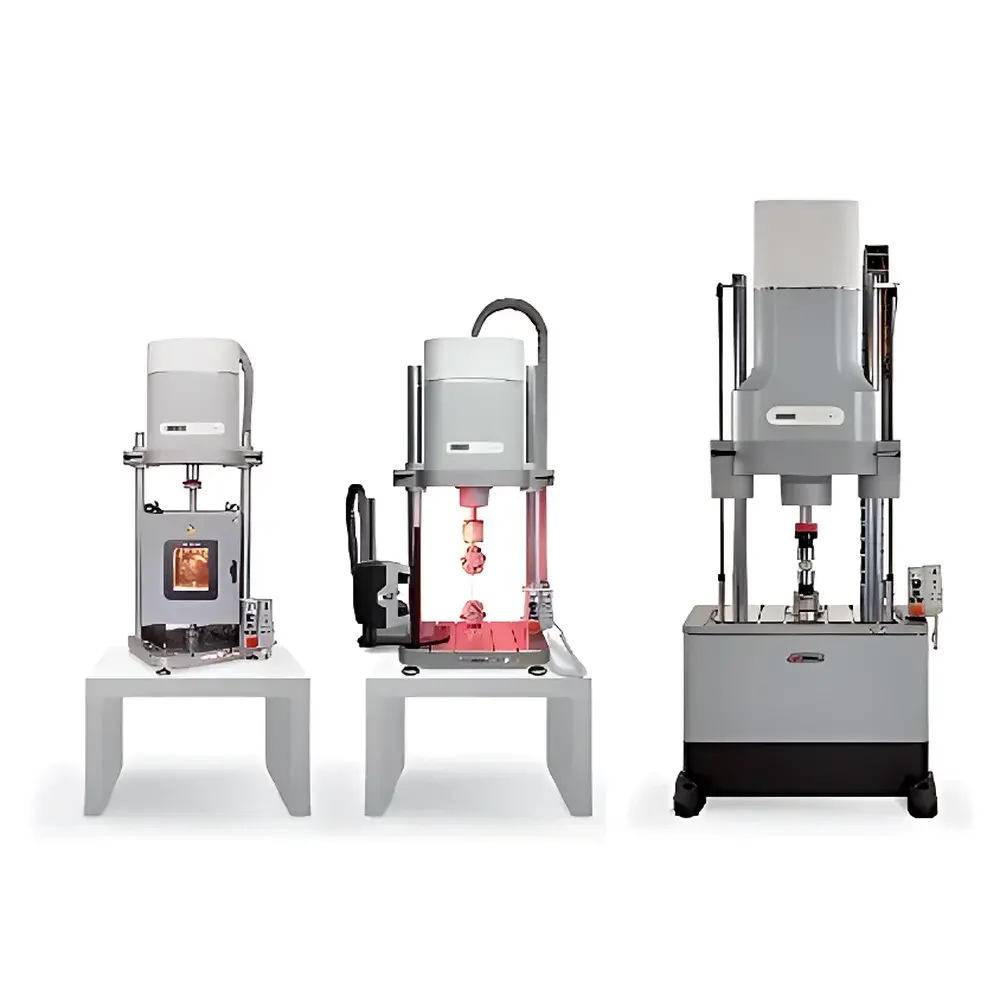
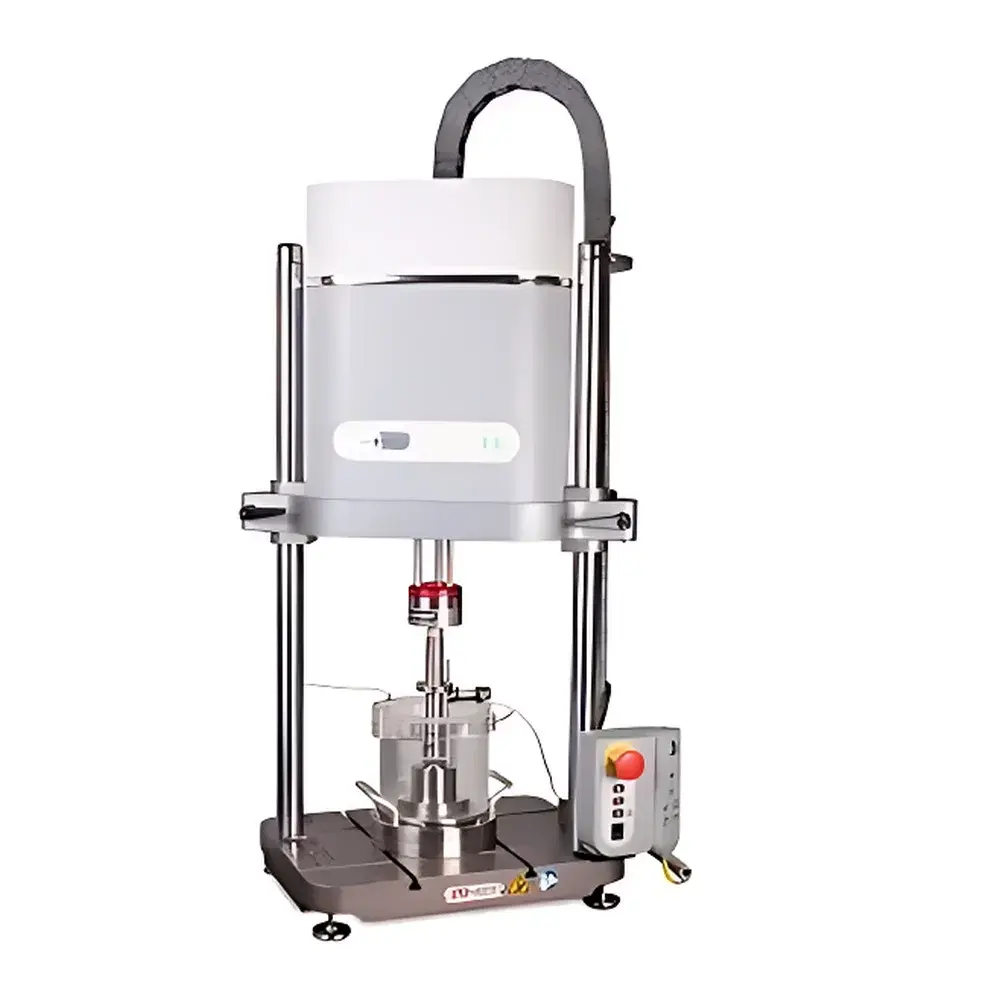
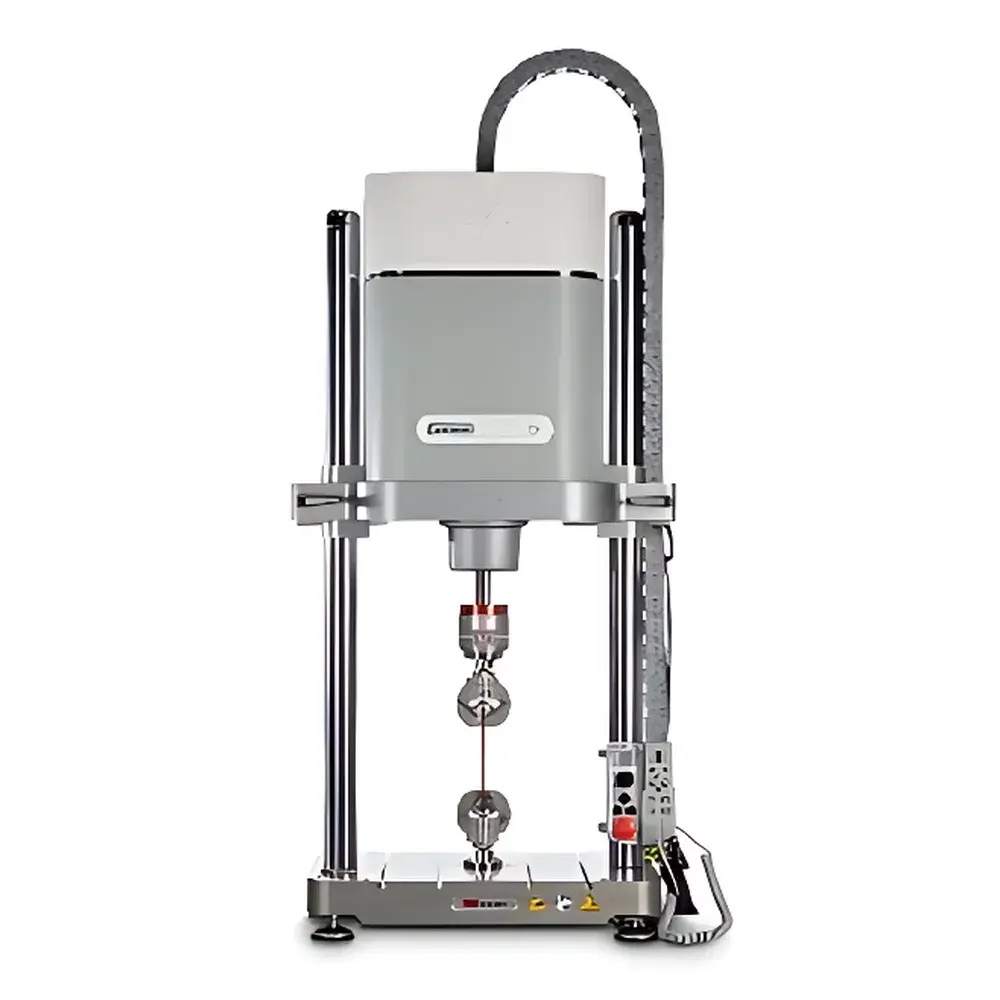
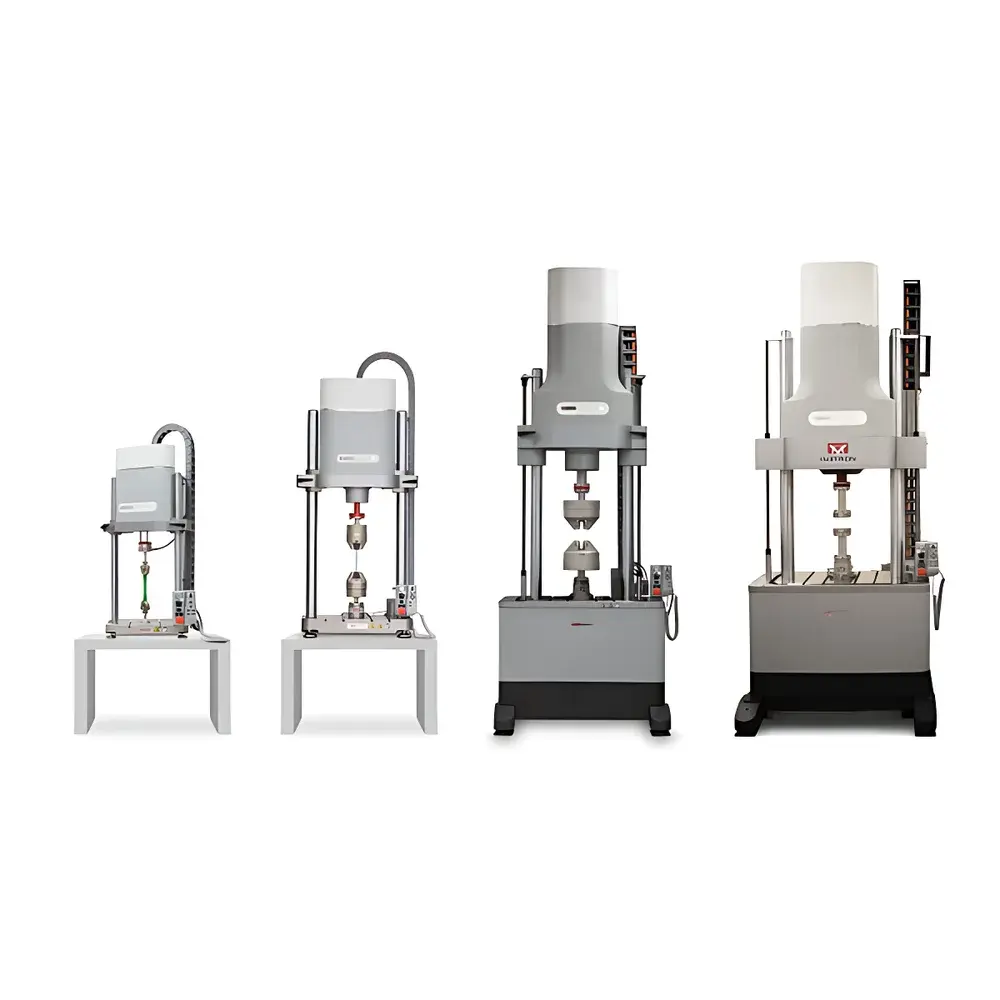
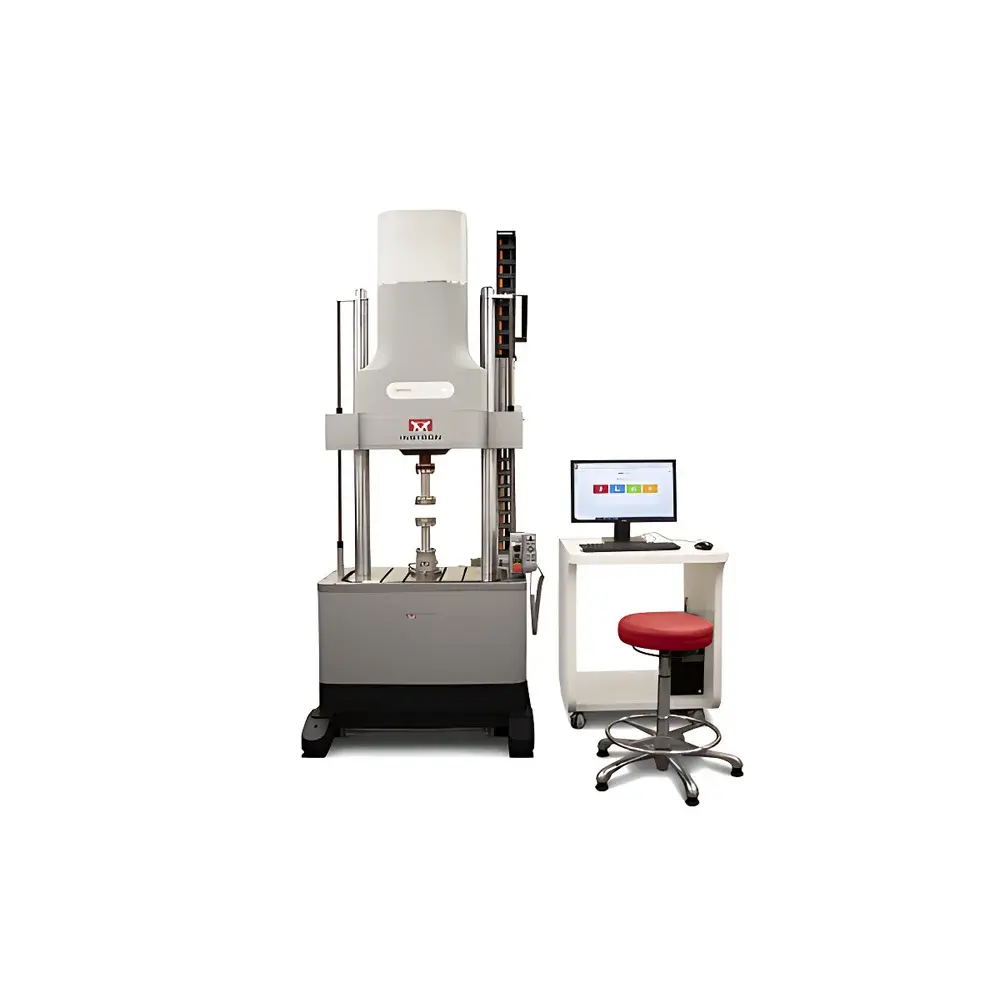
INSTRON ElectroPuls E10000 Electromechanical Dynamic and Static Materials Testing System
| Brand | INSTRON |
|---|---|
| Origin | United Kingdom |
| Manufacturer Type | Original Equipment Manufacturer (OEM) |
| Product Category | Imported Instrument |
| Model | ElectroPuls E10000 |
| Maximum Test Force | ±10,000 N |
| Frequency Range | Quasi-static to 100 Hz |
| Actuator Stroke | 60 mm |
| Host Weight | 50–150 kg |
| Power Supply | Three-phase |
| Compliance | ASTM E4, E8, E21, E606, ISO 1099, ISO 6892-1, ISO 12106, USP <1043>, FDA 21 CFR Part 11 (with optional audit trail module) |
Overview
The INSTRON ElectroPuls E10000 is a fully electromechanical, digitally controlled dynamic and static materials testing system engineered for high-fidelity mechanical characterization across quasi-static, cyclic, and fatigue regimes. Unlike hydraulic or pneumatic servo systems, the ElectroPuls E10000 employs a patented linear motor actuator—designed and validated over more than a decade of continuous operation—to deliver precise force and displacement control without hydraulic fluid, compressed air, or associated maintenance overhead. Its core measurement architecture adheres to fundamental principles of closed-loop servo control: real-time feedback from optical encoders (position), high-stability load cells (force), and advanced digital signal processing ensures traceable, repeatable data acquisition in accordance with international standards including ASTM E4 (load calibration), E606 (fatigue testing), and ISO 1099 (metallic materials—fatigue testing). The system supports vertical floor-standing configuration and integrates seamlessly with environmental chambers, video extensometers, and T-slot test tables for multi-domain experimental flexibility.
Key Features
- Patented linear motor actuation delivering true broadband performance—from static tension/compression at 0.0001 mm/s up to 100 Hz sinusoidal loading—with inherently low acoustic noise (<65 dB(A)) and zero hydraulic leakage risk.
- High-lateral-stiffness bearing system maintains axial alignment under off-center or asymmetric loading conditions, minimizing parasitic bending moments and ensuring compliance with ASTM E1012 requirements for alignment verification.
- DYNACELL™ high-frequency load cell technology with integrated inertial compensation reduces mounting-induced phase lag and amplitude error, enabling ASTM E2129-compliant force measurement accuracy across the full 0.01–100 Hz bandwidth.
- Optical encoder-based displacement feedback with sub-micron resolution provides independent position channeling for specimen setup, preload verification, and end-of-test termination—free from mechanical hysteresis or thermal drift.
- Console software with adaptive stiffness-tuning algorithm automatically calculates optimal control parameters based on specimen modulus, eliminating manual PID tuning and reducing setup time by >70% for first-time users.
- 60 mm stroke actuator accommodates standard tensile bars, notched specimens, biomedical implants, and composite coupons while maintaining constant load-line stiffness throughout travel.
Sample Compatibility & Compliance
The ElectroPuls E10000 accommodates metallic alloys, polymers, composites, ceramics, additively manufactured parts, and biomedical devices—including orthopedic screws, stents, and suture anchors—within standardized geometries per ASTM E8, ISO 6892-1, and ISO 527. Its T-slot anodized aluminum test table supports modular fixturing for tension, compression, bend, torsion (in dual-axis configurations), and biaxial loading. All hardware and firmware comply with CE Machinery Directive 2006/42/EC and electromagnetic compatibility (EMC) standards EN 61326-1. When configured with Bluehill Universal and optional audit trail, electronic signature, and user access control modules, the system meets GLP/GMP and FDA 21 CFR Part 11 requirements for regulated environments.
Software & Data Management
Two complementary software platforms operate natively on Windows OS: WaveMatrix2 for dynamic waveform definition (sine, block, random, user-defined), real-time FFT analysis, and cycle counting per ASTM E1037; and Bluehill Universal for static and quasi-static test methods—including tensile, compression, flexure, peel, tear, and friction—with automated calculation of modulus, yield strength, elongation, and energy absorption. Both applications support direct export to CSV, Excel, and MDF4 formats. Raw data streams are timestamped with microsecond precision and stored in encrypted binary archives. Optional database integration enables centralized test data management via SQL Server or Oracle backends compliant with ISO/IEC 17025 clause 7.5.2.
Applications
The system serves R&D laboratories and quality assurance departments performing standardized and custom mechanical evaluations: high-cycle fatigue (HCF) of turbine blades per ISO 1099; low-cycle fatigue (LCF) of welded joints per ASTM E606; fracture mechanics (KIC, J-integral) using compact tension specimens; viscoelastic characterization of thermoplastics via strain-controlled creep-recovery; and functional durability testing of consumer electronics housings and automotive NVH components. Its non-contact video extensometry option (INSTRON Advanced Video Extensometer) enables µm-level strain resolution on brittle, soft, or temperature-sensitive samples where clip-on extensometers are impractical.
FAQ
What distinguishes ElectroPuls from traditional electro-hydraulic servo testers?
ElectroPuls eliminates hydraulic power units, oil contamination risks, and pressure-related nonlinearities—relying instead on a linear motor with direct-drive kinematics, resulting in superior force fidelity, lower maintenance, and quieter operation.
Can the E10000 perform torsional fatigue testing?
Yes—when equipped with the optional dual-axis (tension-torsion) configuration, it delivers ±100 N·m torque capacity with continuous 32-revolution rotation and synchronized force/torque control per ISO 14242-1.
Is calibration traceable to national standards?
All load cells are factory-calibrated against NIST-traceable deadweight standards; field recalibration kits and third-party certification services are available per ISO/IEC 17025.
Does the system support real-time data streaming to external DAQ systems?
Yes—via Ethernet TCP/IP API and LabVIEW-compatible drivers, enabling synchronization with high-speed cameras, thermal imagers, or acoustic emission sensors.
What environmental conditions can it operate within?
Standard operation: 10–35 °C, 20–80% RH non-condensing; compatible with chamber-integrated testing down to –70 °C or up to +300 °C using certified environmental enclosures.



