
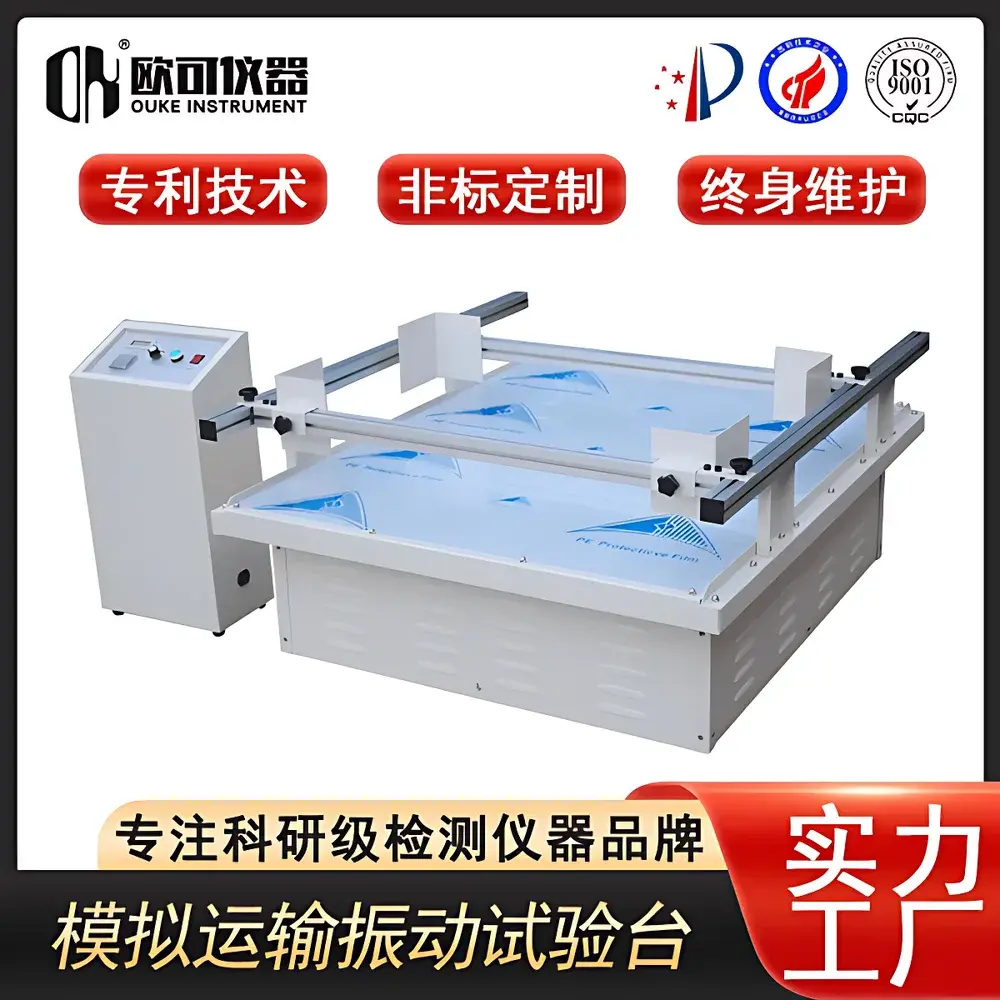
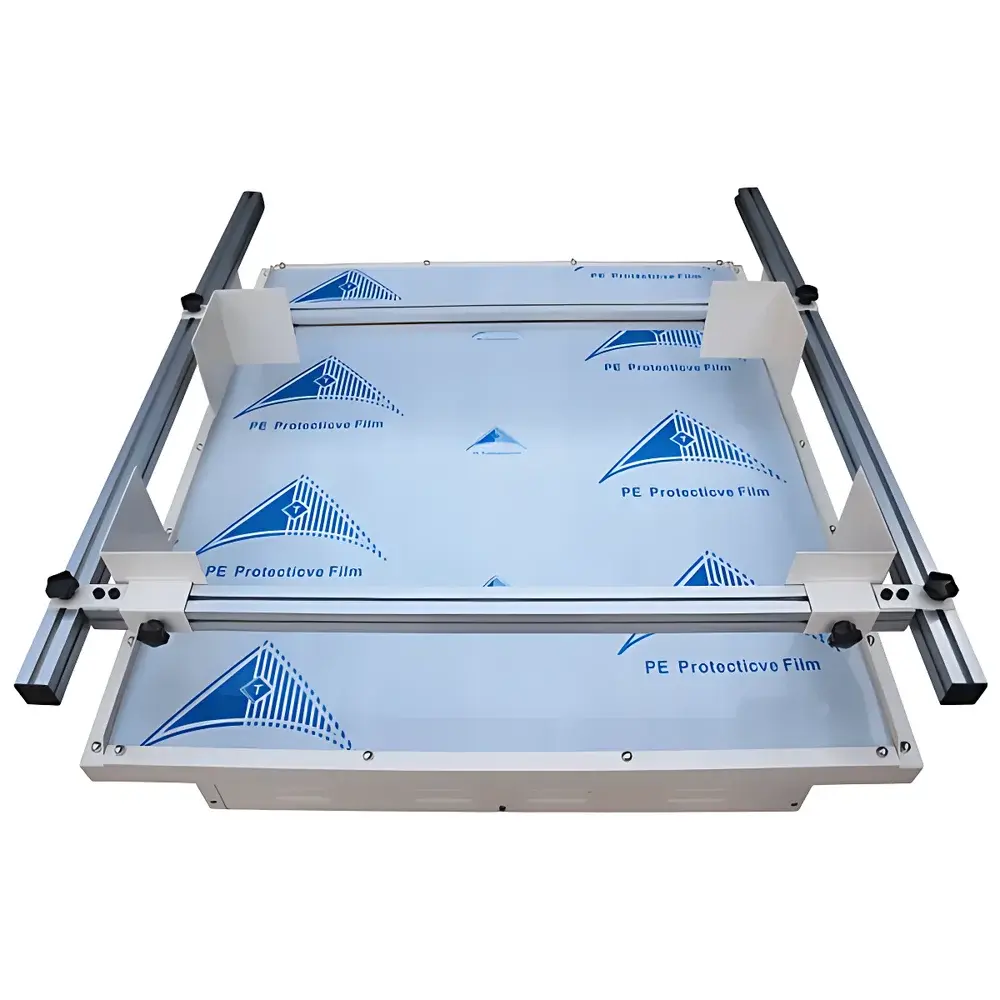
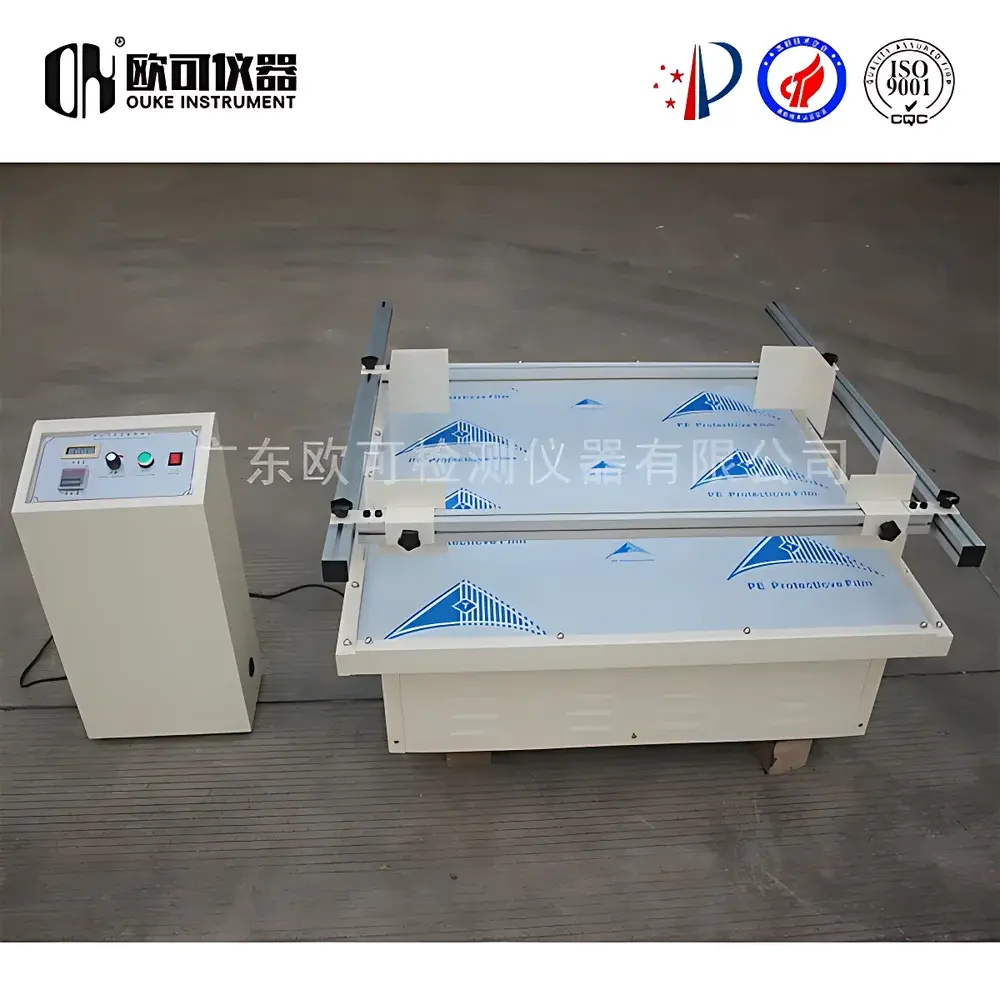
OK Instrument OK-100 Automotive Transport Simulation Vibration Shaker
| Brand | OK Instrument |
|---|---|
| Origin | Guangdong, China |
| Manufacturer Type | Direct Manufacturer |
| Product Category | Domestic |
| Model | OK-100 |
| Instrument Type | Automotive Transport Simulation Vibration Test System |
| Rated Thrust | 1.98 kN |
| Rated Frequency Range | 5–5000 Hz |
| Maximum Test Load | 70 kg |
| Table Dimensions | 1200 mm × 1000 mm |
| Maximum Acceleration | 10 g |
| Vibration Mode | Reciprocating (Oscillatory) |
| Speed Range | 60–300 RPM |
| Peak-to-Peak Amplitude | 25.4 mm |
| Time Setting Range | 0.1 s – 999.99 h |
| Power Supply | 220 V, 50/60 Hz (or 380 V option available) |
| Compliance | ISTA 3A, EN 71-1, ASTM D4169 |
Overview
The OK Instrument OK-100 Automotive Transport Simulation Vibration Shaker is an electromechanically driven oscillatory shaker engineered to replicate the dynamic mechanical stresses encountered during road transportation of packaged goods. Unlike random or broadband vibration systems used in aerospace or structural testing, the OK-100 implements a controlled reciprocating motion profile—characterized by fixed amplitude and variable rotational speed—to emulate the repetitive vertical and lateral excitations typical of truck, van, and delivery vehicle suspension systems. This deterministic approach aligns with standardized transport simulation protocols defined in ISTA 3A (International Safe Transit Association) and EN 71-1 (European toy safety standard), enabling laboratories and quality assurance departments to conduct repeatable, auditable packaging integrity assessments under reproducible boundary conditions.
Key Features
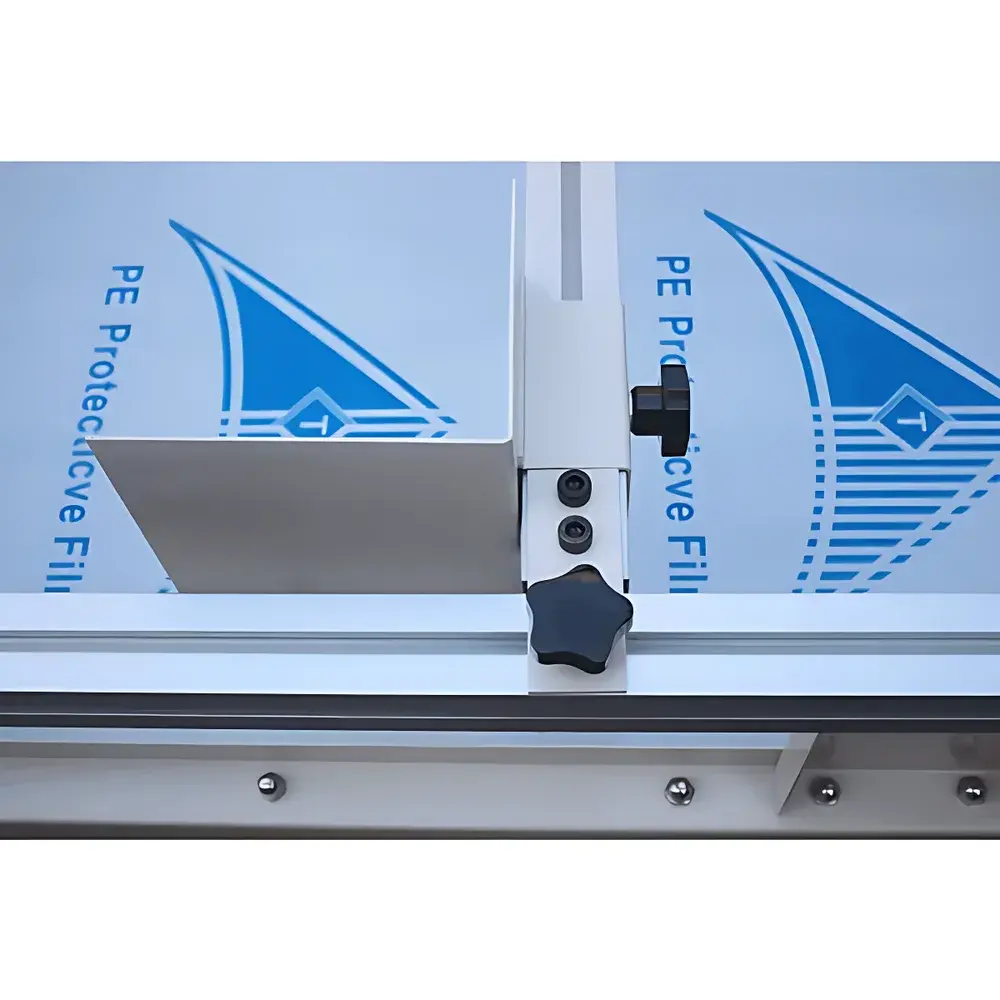
- Reciprocating shaker architecture with precision-machined linear guide rails for low-friction, high-stability sample mounting and minimal parasitic motion;
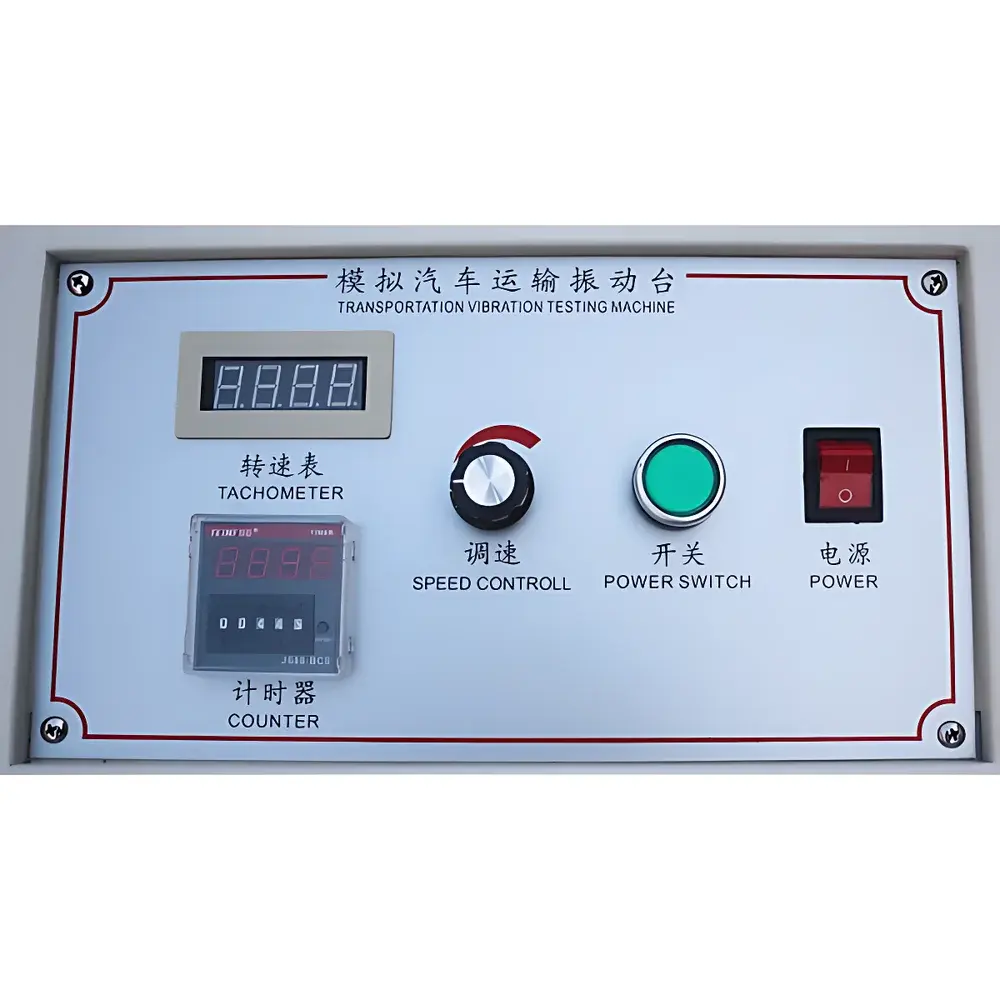
- Digital real-time display of operational parameters including elapsed time, current speed (RPM), and preset duration;
- Programmable timer with resolution down to 0.1 seconds and maximum setting of 999.99 hours, supporting long-duration endurance validation;
- DC motor or optional AC variable-frequency drive (VFD) for smooth, stepless speed regulation between 60 and 300 RPM;
- Robust 1200 mm × 1000 mm aluminum alloy test table with T-slot configuration for flexible fixture integration and load distribution;
- Acoustically damped enclosure design achieving <65 dB(A) at 1 m distance, enabling installation in shared laboratory or office environments without dedicated isolation rooms;
- Structural frame fabricated from reinforced steel with anti-resonance base mounting points compatible with ISO 10816-3 vibration severity guidelines.
Sample Compatibility & Compliance
The OK-100 accommodates packaged products up to 70 kg gross weight—including consumer electronics, ceramic ware, furniture assemblies, toys, and gift items—without requiring secondary fixturing beyond standard pallet or carton anchoring. Its 25.4 mm peak-to-peak displacement and 10 g maximum acceleration envelope satisfy the displacement-limited excitation requirements of ISTA Procedure 3A Section 5.2 (Truck Transport Simulation) and EN 71-1 Annex F (Mechanical Shock and Vibration). The system’s fixed-frequency reciprocating output is traceable to NIST-referenced calibration procedures when operated within its specified 5–5000 Hz bandwidth. All electrical components comply with IEC 61000-6-3 (EMC emissions) and IEC 61000-6-2 (immunity), and mechanical safety conforms to EN 60204-1 for industrial machinery.
Software & Data Management
While the OK-100 operates as a stand-alone hardware platform with front-panel digital controls, it supports optional RS-232 or USB-to-serial interface modules for external logging and remote start/stop commands. When integrated with OK Instrument’s optional VibrationTest Suite v2.1 (Windows-based), users gain access to automated test sequencing, pass/fail threshold tagging, timestamped event logs, and exportable CSV reports compliant with GLP documentation standards. Audit trail functionality—including operator ID, parameter change history, and execution timestamps—is enabled per FDA 21 CFR Part 11 requirements when configured with user authentication and electronic signature modules.
Applications
- Evaluation of corrugated box compression resistance and seam integrity under simulated road vibration;
- Validation of internal cushioning performance for fragile components such as LCD panels, optical lenses, or precision sensors;
- Accelerated fatigue testing of adhesive bonds, snap-fit joints, and plastic housing interfaces in consumer products;
- Pre-shipment qualification of medical device packaging per ISO 11607-1 Annex C vibration profiles;
- Root-cause analysis of field return failures attributed to transport-induced loosening, abrasion, or misalignment;
- Supporting Design for Logistics (DfL) initiatives by quantifying package robustness prior to full-scale distribution trials.
FAQ
Does the OK-100 meet ISTA certification requirements for third-party validation?
Yes—the OK-100’s motion profile, amplitude accuracy, and timing fidelity have been verified against ISTA 3A Section 5.2 using certified reference accelerometers and timebase calibrators. Full validation documentation is provided upon request.
Can the shaker be calibrated in-house, or does it require factory service?
Routine verification of speed and timer accuracy can be performed using a handheld tachometer and stopwatch. Traceable calibration of thrust and acceleration requires ISO/IEC 17025-accredited service; OK Instrument offers annual calibration contracts with certificate of conformance.
Is custom table dimensioning available for oversized packages?
Yes—OK Instrument provides engineering consultation and mechanical redesign services for tables up to 1500 mm × 1300 mm, maintaining structural rigidity and modal stability per ISO 5344 recommendations.
What safety interlocks are included?
The system features dual-channel emergency stop circuitry, door-position sensing on optional enclosures, and automatic shutdown upon overload detection or thermal cutoff in the drive motor.
How is vibration uniformity across the table surface ensured?
Finite element analysis (FEA) of the table structure confirms modal separation >15% between operating frequency range and first bending mode; accelerometer mapping across nine grid points verifies ±15% spatial acceleration deviation at 200 RPM and full load.
Related Products



