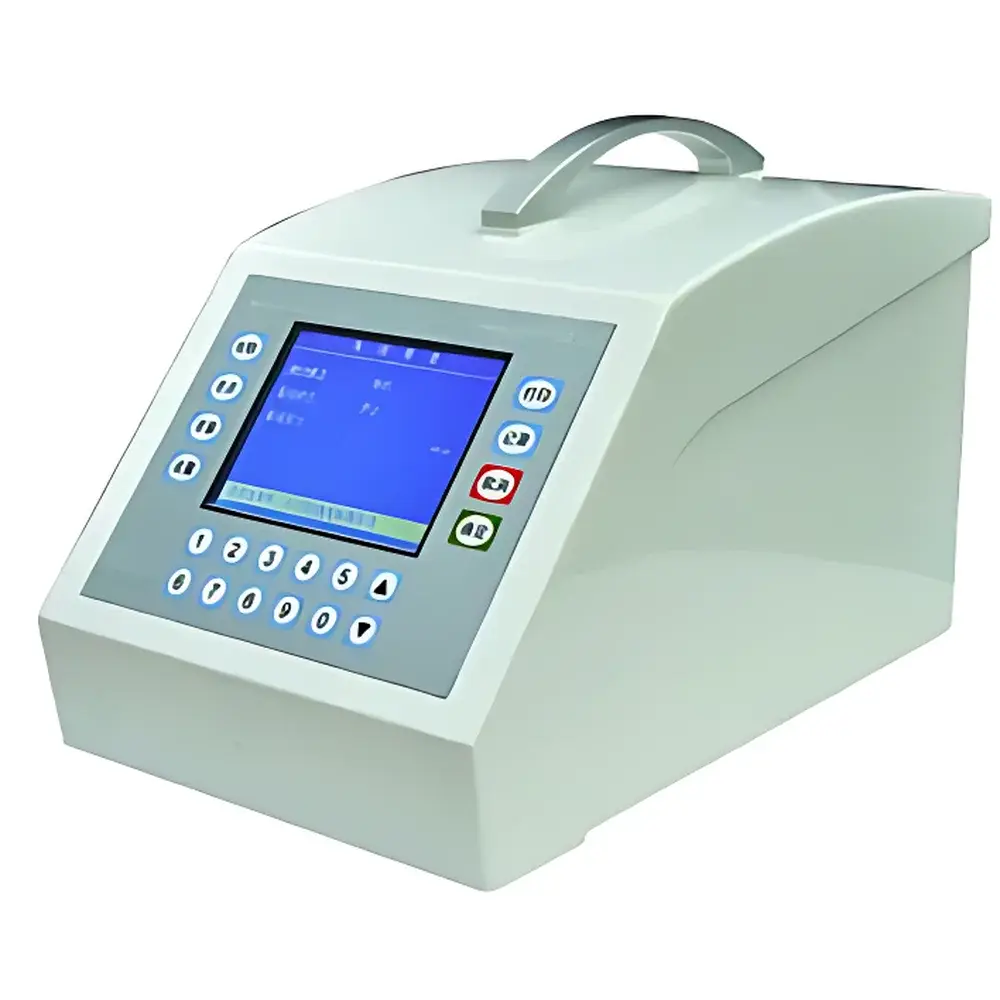
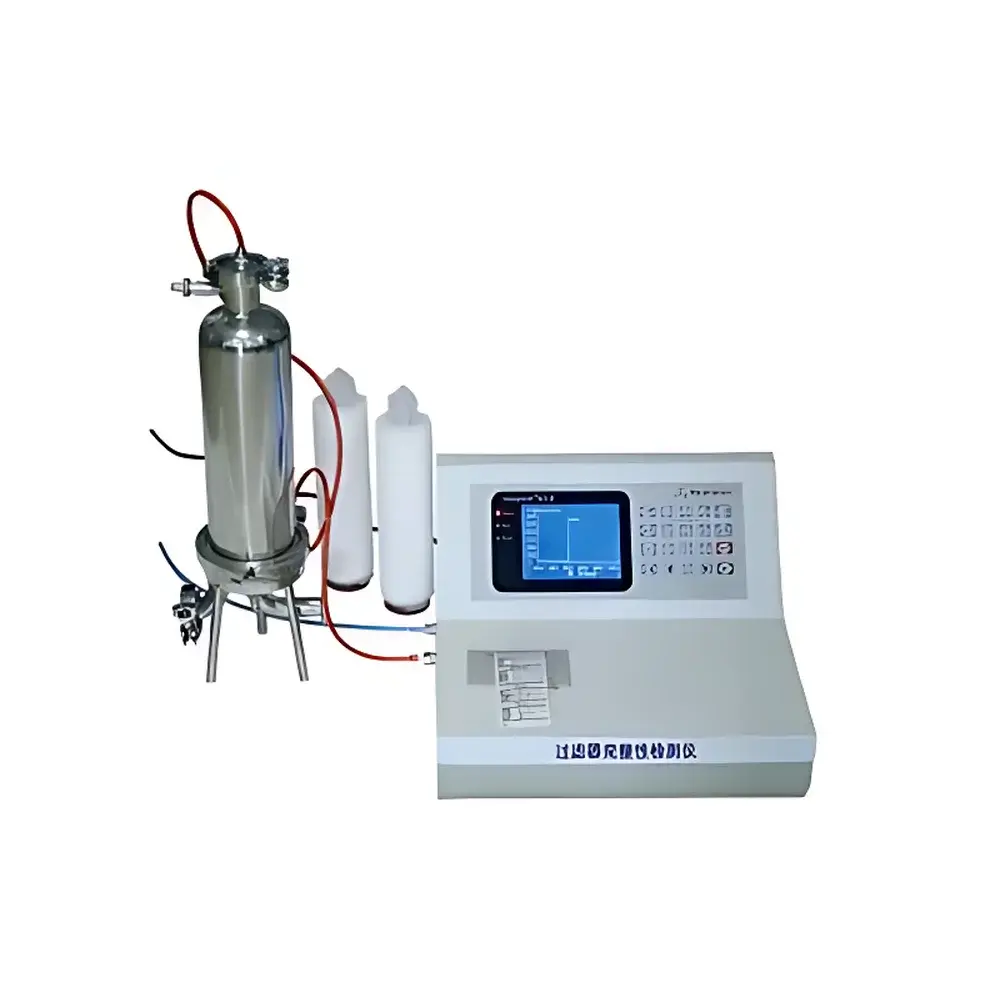
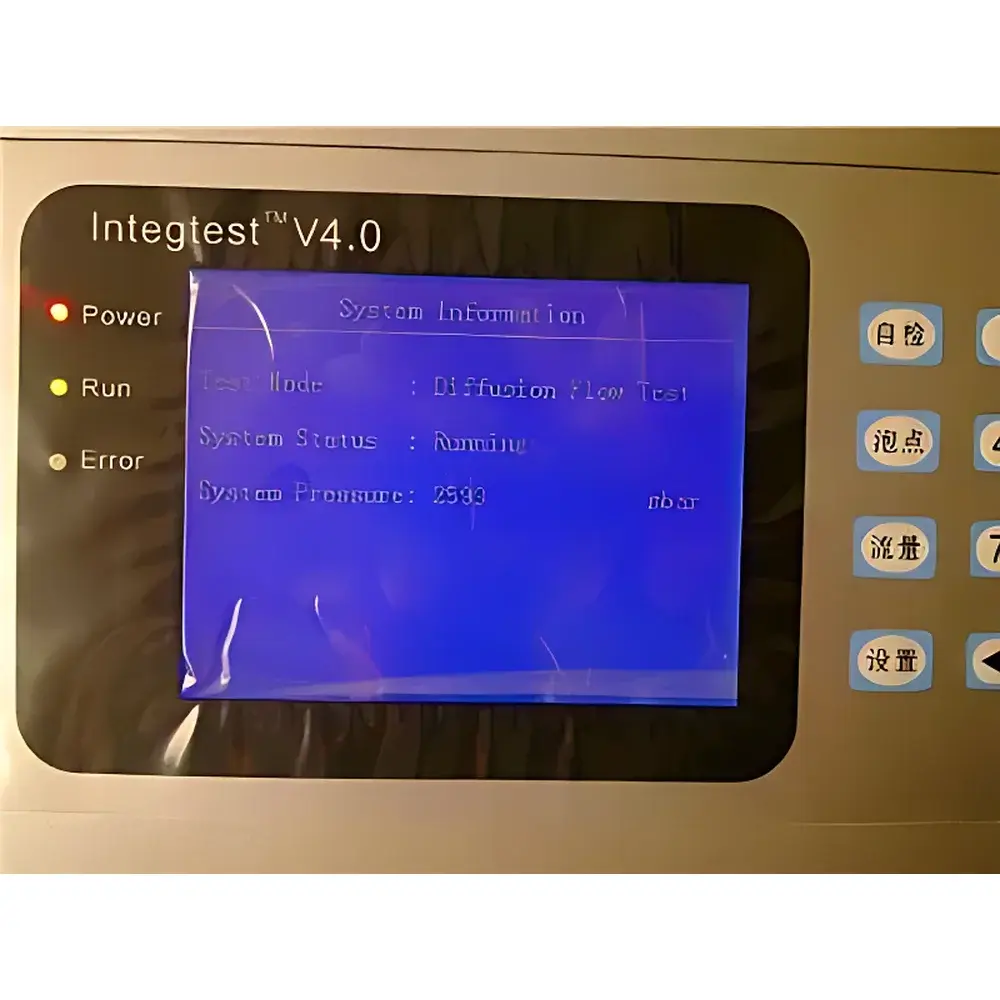
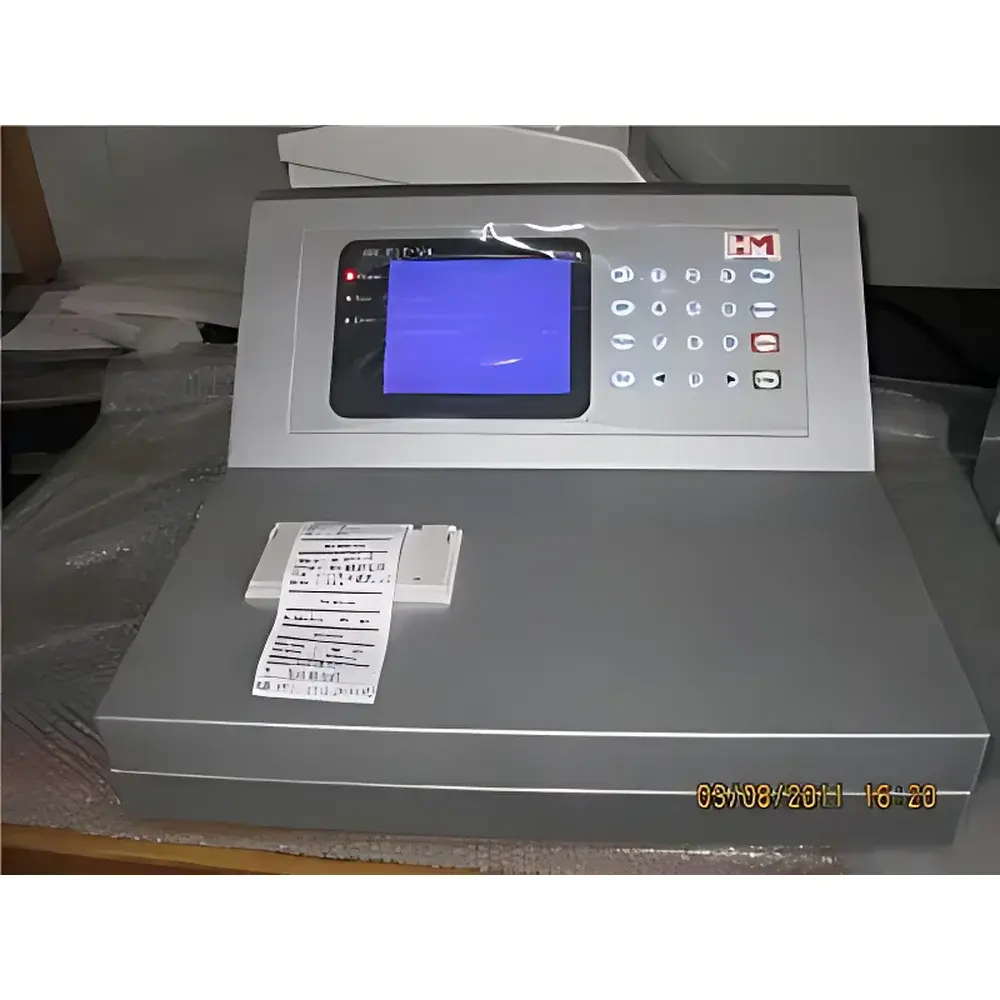
Integtest™ V4.0 Automated Filter Integrity Tester
| Origin | Beijing, China |
|---|---|
| Manufacturer Type | Authorized Distributor |
| Origin Category | Domestic (China) |
| Model | V4.0 |
| Price | USD 5,300 (FOB Beijing) |
| Power Supply | 100–240 V AC, 50/60 Hz, 110 W |
| Operating Pressure Range | 500–6900 mbar |
| Low Inlet Pressure Threshold | 3000 mbar |
| Dimensions (W × D × H₁ × H₂) | 400 × 380 × 100 × 235 mm |
| Test Accuracy | Net Volume ±4% |
| Environmental Operating Conditions | 5–35 °C, 10–80% RH |
| Test Duration | Water Intrusion Test = preset time + 5 min ±2 min |
| Data Storage | 500 test records (expandable to 1000), including full pressure/flow curves |
| Display | 5.7" monochrome TFT LCD with backlight |
| Communication Interface | RS232 serial port |
| Language Support | English, Chinese |
| Compliance | Designed to support ASTM F838-22, ISO 13408-2, USP <1207>, and EU Annex 1 requirements for filter validation and integrity testing |
Overview
The Integtest™ V4.0 Automated Filter Integrity Tester is an engineered solution for quantitative, regulatory-compliant assessment of membrane filter integrity in pharmaceutical, biotechnology, and sterile manufacturing environments. Based on the fundamental principles of gas diffusion, pressure decay, and bubble point measurement—governed by Poiseuille’s law and Laplace’s equation—the instrument delivers traceable, repeatable results across three primary test modes: Diffusion Flow (Forward Flow), Pressure Hold (Decay), and Bubble Point. Its dual-core embedded architecture enables real-time acquisition and processing of transmembrane pressure, gas flow rate, and temperature-compensated volume change, ensuring high reproducibility under dynamic process conditions. Unlike legacy systems reliant on analog signal conditioning, the V4.0 employs digitally calibrated pressure transducers (0.1% FS accuracy) and thermally stabilized mass flow sensors, minimizing drift during extended hold periods required for large-area filters or low-diffusion membranes.
Key Features
- Integrated water intrusion test protocol specifically validated for hydrophobic membrane cartridges—including PTFE, PVDF, and polypropylene—eliminating dependence on hazardous organic wetting agents such as IPA or ethanol.
- Automated overpressure protection logic that dynamically terminates pressurization if upstream pressure exceeds user-defined safety thresholds, preventing irreversible damage to delicate pleated or flat-sheet membranes.
- Configurable audit trail and multi-level user access control (Administrator, Supervisor, Operator), supporting ALCOA+ data integrity principles and facilitating compliance with FDA 21 CFR Part 11 and EU GMP Annex 11 requirements.
- On-device 5.7″ monochrome TFT LCD with adjustable backlight provides simultaneous visualization of real-time pressure curves, flow profiles, and pass/fail status—enabling immediate operator intervention without external software.
- RS232 serial interface supports bidirectional communication with LIMS or MES platforms; optional USB-to-serial adapters enable direct integration into modern lab networks.
- Factory-calibrated against NIST-traceable standards; includes certificate of calibration valid for 12 months, with optional annual recalibration services and certified reference filters available.
Sample Compatibility & Compliance
The V4.0 accommodates a broad range of filter configurations: cylindrical cartridge filters (1–40 inch length), disk filters (25–142 mm diameter), and flat-sheet modules used in tangential flow filtration (TFF) systems. It supports both hydrophilic (cellulose acetate, nylon, PVDF) and hydrophobic membranes, with dedicated algorithms for water intrusion validation per USP Chapter 4. All test methods align with internationally recognized standards: ASTM F838-22 (bacterial retention), ISO 13408-2 (sterile filtration), and PDA Technical Report No. 26 (filter validation). The system is routinely deployed in facilities operating under cGMP, GLP, and ISO 13485 quality management systems, and its firmware architecture permits full traceability of all test parameters, operator IDs, timestamps, and environmental metadata.
Software & Data Management
The included PC-based IntegSoft™ v4.0 application provides comprehensive data review, report generation (PDF/CSV), and trend analysis across multiple instruments. Each test record stores raw sensor data at 10 Hz resolution, enabling post-hoc reanalysis of pressure decay slopes or diffusion onset kinetics. Audit trails are immutable and timestamped to the millisecond, with electronic signatures compliant with 21 CFR Part 11 Subpart C. Historical data can be exported for statistical process control (SPC) using control charts for diffusion flow coefficient (Df) or bubble point shift—critical for detecting gradual membrane fouling or seal degradation. Optional IQ/OQ documentation packages are available for installation qualification and operational qualification in regulated environments.
Applications
- Pre-use/post-sterilization integrity verification of sterilizing-grade filters in bioreactor harvest lines and buffer preparation systems.
- Validation of final-fill sterilizing filters in aseptic filling suites per EU Annex 1 §7.72 and FDA Guidance for Industry (2022).
- Water intrusion testing of vent filters in lyophilizer chambers and compressed air systems where solvent exposure is prohibited.
- Diffusion flow trending for predictive maintenance of large-area depth filters used in monoclonal antibody purification.
- Supporting filter reuse studies under controlled conditions, with automated logging of cumulative exposure cycles and performance drift metrics.
FAQ
Does the V4.0 meet FDA 21 CFR Part 11 requirements for electronic records and signatures?
Yes—the system implements role-based authentication, audit-trail logging, and electronic signature workflows fully aligned with Subpart C controls.
Can the instrument validate filters used in single-use bioprocessing systems?
Yes—it supports integrity testing of gamma-irradiated, pre-sterilized filters integrated into fluid path assemblies, including bag filters and capsule housings.
Is calibration traceable to national standards?
All pressure and flow sensors are calibrated against NIST-traceable references; calibration certificates include uncertainty budgets and as-found/as-left data.
What is the maximum allowable filter area for diffusion flow testing?
The system supports filters up to 10 m² surface area when configured with optional high-capacity flow modules and extended test duration protocols.
How does the water intrusion method differ from traditional bubble point testing for hydrophobic filters?
Water intrusion eliminates solvent handling risks and enables direct correlation between pore size distribution and water entry pressure—providing superior sensitivity for detecting microcracks or edge seal failures.