
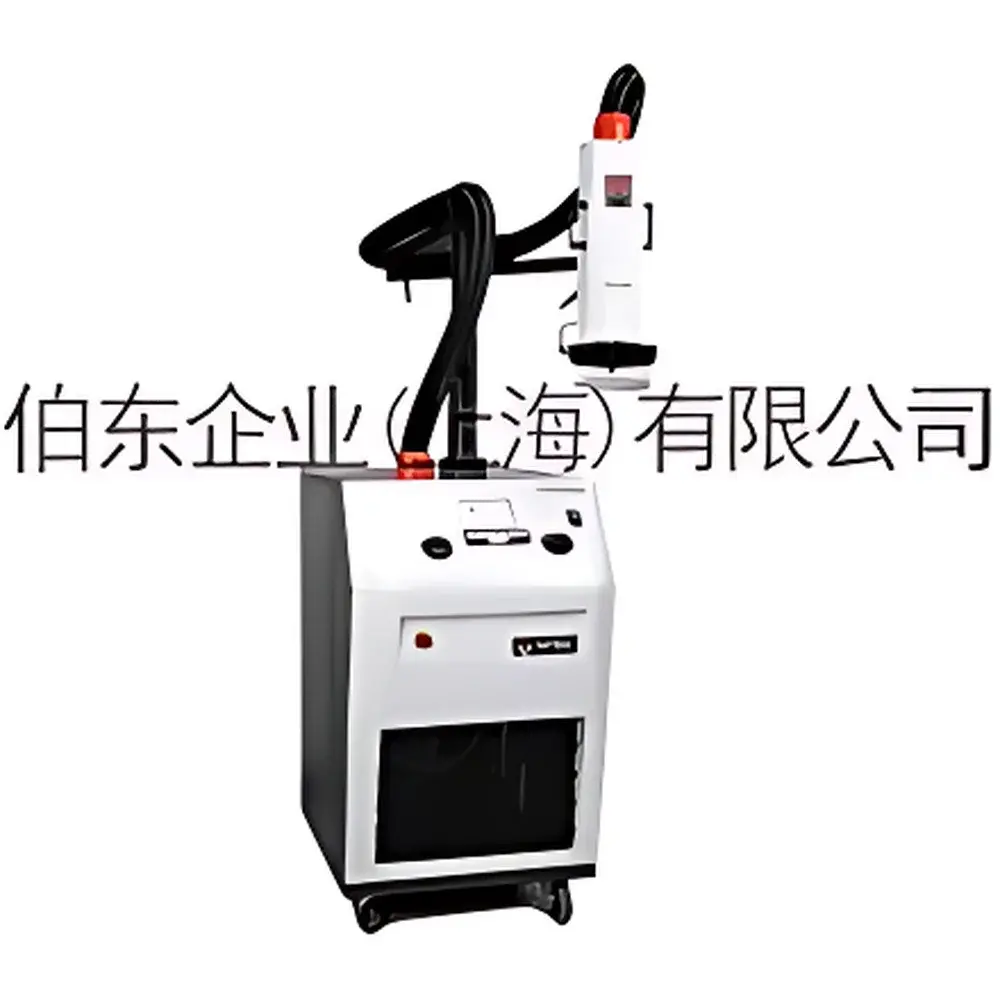
inTEST ThermoStream ATS-505 & ATS-535 Integrated Circuit (IC) Card Thermal Shock Test System
| Brand | inTEST-ThermoStream |
|---|---|
| Model | ATS-505 / ATS-535 |
| Temperature Range | -60°C to +225°C |
| Ramp Rate | Up to 18°C/s |
| Temperature Accuracy | ±1°C |
| Control Mode | Air Mode (ATS-505), DUT Mode (ATS-535) |
| Integrated Compressor | ATS-535 only |
| Safety Protection | Adjustable Over-Temperature Cut-off (Factory Default: +230°C) |
| Compliance | Designed for Semiconductor Process Validation, GLP/GMP-Aligned Operation |
Overview
The inTEST ThermoStream ATS-505 and ATS-535 are high-speed, precision thermal shock test systems engineered specifically for integrated circuit (IC) card qualification, wafer-level device validation, and package-level reliability testing. These systems operate on the principle of forced-air convective thermal transfer—delivering rapid, repeatable, and tightly controlled temperature transitions directly to the device under test (DUT). Unlike conventional environmental chambers relying on chamber-volume air exchange, ThermoStream platforms utilize a closed-loop, compressed-air-based thermal delivery architecture: dry, filtered air is conditioned via independent refrigeration and heating modules, then directed through a thermally optimized nozzle or thermal hood to achieve localized, dynamic thermal profiling at the DUT surface. This methodology enables true thermal shock profiles (e.g., -55°C ↔ +125°C in <10 seconds), essential for JEDEC JESD22-A104 (Thermal Cycling), JESD22-A106 (Thermal Shock), and AEC-Q200 stress screening protocols.
Key Features
- Ultra-fast thermal transition rates up to 18°C per second—enabling accelerated thermal cycling and shock profile execution with sub-second response fidelity.
- High-precision temperature control with ±1°C accuracy across the full operating range (-60°C to +225°C), verified per ASTM E74 and ISO/IEC 17025 traceable calibration practices.
- Dual operational modes: Air Mode (ATS-505) for direct airflow application onto mounted IC cards or PCBs; DUT Mode (ATS-535) for enclosed cavity testing with integrated temperature sensor feedback and closed-loop PID regulation.
- Compact benchtop form factor—ATS-505 requires external clean-dry air supply; ATS-535 integrates an oil-free scroll compressor, eliminating dependency on facility air infrastructure.
- Programmable thermal safety interlocks: User-definable upper/lower temperature limits with automatic system shutdown upon threshold breach—factory default set at +230°C for over-temperature protection.
- Intuitive rotary-knob interface with real-time display of setpoint, actual DUT temperature, ramp rate, and system status—designed for low-training-operation in production and R&D lab environments.
Sample Compatibility & Compliance
The ATS platform supports a broad spectrum of IC card formats—including contact-based smart cards (ISO/IEC 7816), contactless RFID cards (ISO/IEC 14443), dual-interface cards, and embedded secure elements—as well as bare die, packaged ICs (QFN, BGA, SOIC), and small-form-factor PCB assemblies. Its non-contact thermal delivery avoids mechanical stress, electrostatic discharge (ESD) risk, or thermal gradient-induced warpage common in conductive or immersion-based methods. The system meets functional requirements for compliance with industry standards including JEDEC JESD22-A104 (Temperature Cycling), JESD22-A106 (Thermal Shock), MIL-STD-883 Method 1010 (Temperature Cycling), and IEC 60749-25 (Integrated Circuits – Mechanical and Climatic Test Methods). While not a certified Class I medical device, its architecture supports 21 CFR Part 11–compliant data logging when paired with validated third-party software suites for audit-ready electronic records.
Software & Data Management
Both ATS-505 and ATS-535 support RS-232 and Ethernet communication interfaces for integration into automated test environments. Native SCPI command sets enable seamless interoperability with LabVIEW, Python-based test sequencers, and semiconductor ATE platforms. Optional ThermoStream Control Software provides graphical profile definition, real-time thermal mapping visualization, and CSV-exportable timestamped temperature logs with metadata (operator ID, test ID, DUT lot number). All logged data includes system-generated timestamps, firmware version, and hardware configuration checksums—supporting GLP and GMP documentation requirements. Audit trails for parameter changes, start/stop events, and safety limit modifications are retained internally for ≥30 days and exportable for regulatory review.
Applications
- Pre-production qualification of IC cards for automotive (AEC-Q100), financial (EMVCo), and government ID (ICAO Doc 9303) applications.
- Wafer-level burn-in and temperature-dependent parametric testing of 300 mm silicon wafers using custom thermal hoods.
- Failure analysis root-cause correlation between thermal cycling exposure and electrical parameter drift (e.g., VCC current leakage, clock jitter, memory retention loss).
- Package reliability assessment—including solder joint fatigue, die attach delamination, and molding compound cracking under repeated thermal excursions.
- Validation of thermal management strategies for near-field communication (NFC) antennas and embedded security controllers under extreme ambient conditions.
FAQ
What distinguishes Air Mode from DUT Mode operation?
Air Mode delivers conditioned air directly onto the DUT surface via a handheld or fixed nozzle—ideal for open-board testing and fast turnaround. DUT Mode encloses the sample within a thermally isolated cavity equipped with a calibrated RTD sensor, enabling closed-loop temperature regulation and improved stability for long-duration tests.
Is the system compliant with ISO/IEC 17025 calibration requirements?
Yes—the ATS series supports external calibration using NIST-traceable reference sensors. In-house verification procedures align with ISO/IEC 17025 Clause 6.5 (Measurement Traceability) when performed by accredited service providers.
Can the ATS-505 operate without an external air supply?
No—it requires a clean, dry, oil-free compressed air source (minimum 6 bar, dew point ≤ -40°C) for thermal conditioning. The ATS-535 eliminates this dependency with its built-in compressor.
How is thermal uniformity ensured across the DUT surface?
Uniformity is achieved through laminar airflow design, thermal hood geometry optimization, and real-time feedback control. Typical spatial variation across a 50 mm × 50 mm area is ≤ ±1.5°C at steady state.
Does inTEST provide IQ/OQ documentation packages?
Yes—validated installation qualification (IQ) and operational qualification (OQ) templates are available upon request for pharmaceutical, aerospace, and automotive customers requiring formal equipment validation.



