
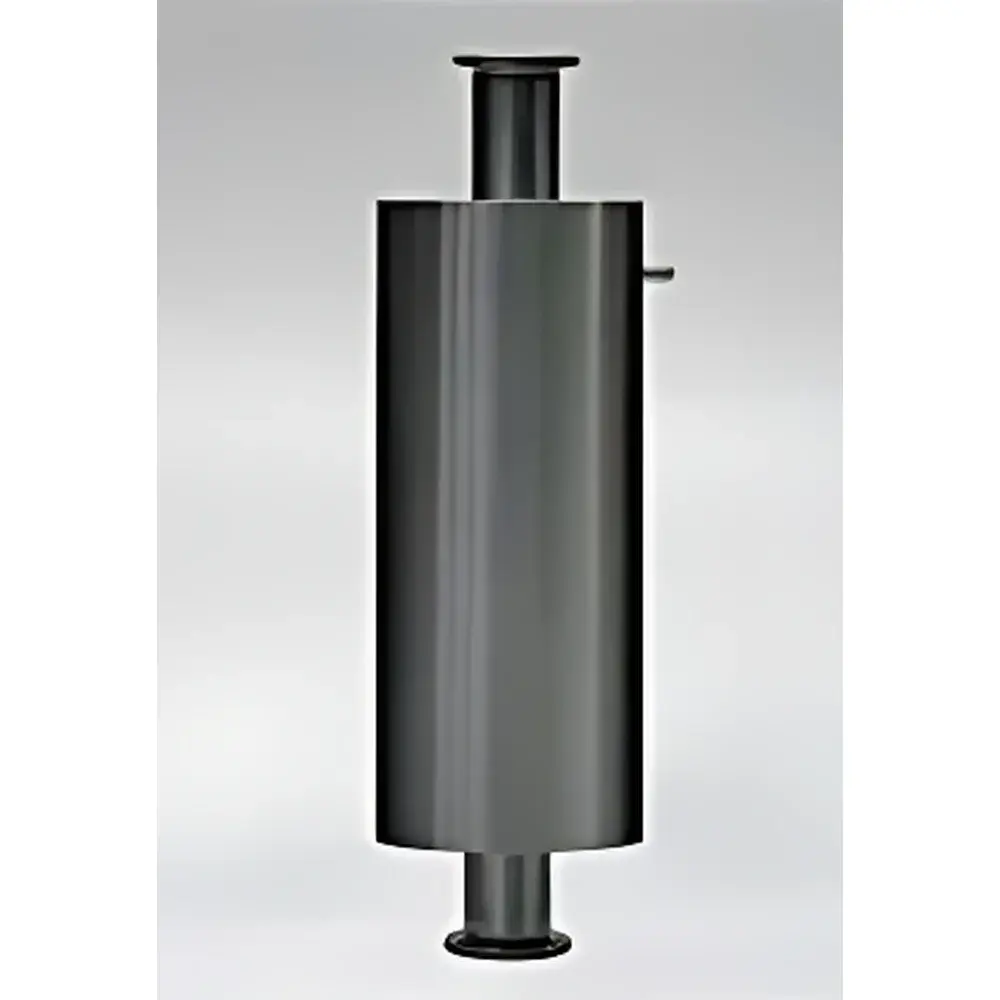
ISAP LPCI Nanoparticle Multi-Stage Cascade Impactor
| Brand | ISAP |
|---|---|
| Origin | Germany |
| Model | ISAP LPCI |
| Sampling Flow Rates | 5 L/min or 27 L/min |
| Aerodynamic Diameter Cut-Points | 20.0 µm to 1 nm |
| Temperature Range | −50 °C to +310 °C |
| Nozzle Plate Outer Diameter | 60 mm |
| Impaction Plate Inner Diameter | 20 mm |
| Calibration | Traceable, per-stage NIST-traceable impactor calibration |
| Materials | Acid-resistant stainless steel and inert alloys |
| Compliance | Designed for ISO 29463, ISO 14644, ASTM D1738, EPA Method IO-3.3, and EU Directive 2008/50/EC ambient PM monitoring frameworks |
Overview
The ISAP LPCI Nanoparticle Multi-Stage Cascade Impactor is a high-precision, gravimetric cascade impactor engineered for size-resolved collection of airborne particulate matter across the full aerodynamic diameter range—from coarse particles (20.0 µm) down to ultrafine nanoparticles (1 nm). Based on the proven PILAT/BERNER inertial impaction principle, the LPCI utilizes sequentially decreasing jet nozzle diameters and precisely spaced impaction plates to achieve sharp, reproducible aerodynamic cut-points under controlled laminar flow conditions. Each stage separates particles by inertia: larger particles impact onto coated collection substrates (e.g., aluminum foil, quartz fiber filters), while smaller particles remain entrained in the airstream and proceed to the next lower-cut stage. The instrument operates at two standardized volumetric flow rates—5 L/min (12-stage configuration) and 27 L/min (10-stage configuration)—both regulated via critical orifice flow control to ensure Reynolds-number-optimized jet velocities and minimal particle bounce or re-entrainment. All units undergo factory calibration using monodisperse PSL aerosols and aerodynamic diameter reference standards traceable to NIST and PTB, with individual stage transfer functions documented in supplied calibration certificates.
Key Features
- Full nanoparticle coverage: validated cut-point range from 20.0 µm down to 1 nm at both 5 L/min and 27 L/min flow rates
- High-fidelity inertial separation: 60 mm outer-diameter, 20 mm inner-diameter impaction plates maximize collection area while minimizing edge effects
- Thermally robust architecture: acid-resistant stainless steel construction with optional heated jacket (−50 °C to +310 °C operational envelope); compatible with flue gas, exhaust ducts, and cryogenic ambient sampling
- Low-loss flow path: critical orifice regulation, optimized nozzle-to-plate spacing, and anti-static bypass option minimize particle diffusion loss and electrostatic deposition artifacts
- Modular, serviceable design: standardized spacer rings, gasket sets, and stage cases enable rapid disassembly, cleaning, and recalibration verification
- Traceable metrology: each unit shipped with stage-specific cut-point data, pressure drop curves, and uncertainty budgets aligned with ISO/IEC 17025-accredited calibration protocols
Sample Compatibility & Compliance
The ISAP LPCI supports a wide range of collection media—including quartz fiber filters (for thermal-optical OC/EC analysis), polycarbonate (PC) membranes (for SEM-EDS, PIXE, TXRF), PTFE (for ICP-MS/OES and AAS), and conductive aluminum foils (for TEM grid transfer)—all mounted on precision-machined ring foil carriers. Its mechanical design conforms to ISO 29463-3 (high-efficiency filter testing), ISO 14644-1 (cleanroom particle classification), and ASTM D1738 (stack emission sampling). For regulatory compliance, the system integrates seamlessly with EPA-compliant sampling trains (Method IO-3.3 for fine particulate mass), EU PM2.5/PM10 monitoring networks, and GLP-aligned laboratory workflows requiring audit-ready documentation. Optional isokinetic probe interfaces ensure representative sampling from moving gas streams, while backup filter stages capture sub-1 nm material not captured by impaction—supporting total mass balance calculations required under EN 12341 and ISO/CD 21847.
Software & Data Management
While the ISAP LPCI is a hardware-calibrated, analog gravimetric instrument, its operation is fully supported by ISAP’s LPCI Configuration & Calibration Manager (LCCM) software suite. LCCM enables digital storage of stage-specific calibration files, real-time flow verification logs, temperature/pressure compensation tables, and user-defined sampling protocols compliant with 21 CFR Part 11 (electronic records and signatures). All calibration reports include uncertainty propagation modeling per GUM (JCGM 100:2018) and are exportable in PDF/A-2b and CSV formats. When paired with certified balance systems (e.g., Mettler Toledo XSE series), mass gain data can be auto-imported into LCCM for automated size-distribution calculation (dM/dlogDp) and PM1, PM2.5, PM10 mass fractioning—fully traceable to SI units and suitable for regulatory submission.
Applications
- Ambient air quality monitoring: source apportionment of urban nanoparticle emissions (traffic, brake wear, cooking aerosols)
- Industrial stack testing: size-resolved characterization of combustion aerosols, metal fumes, and process-generated nanomaterials
- Automotive exhaust research: nucleation mode particle (NMP) quantification downstream of GPFs and SCR systems
- Pharmaceutical inhaler development: aerodynamic particle size distribution (APSD) validation per USP and Ph. Eur. 2.9.18
- Nanomaterial safety assessment: workplace exposure monitoring per ISO/TR 12885 and OECD TG 412
- Climate-relevant aerosol studies: CCN-active fraction analysis via coupled hygroscopic tandem DMA–LPCI setups
FAQ
What is the minimum detectable aerodynamic diameter for the ISAP LPCI at 27 L/min flow rate?
The lowest validated cut-point is 0.001 µm (1 nm) at the backup filter stage; however, effective collection efficiency drops below ~3 nm due to Brownian motion dominance.
Can the LPCI be used for isokinetic sampling in ducts or stacks?
Yes—when equipped with the optional isokinetic probe and flow controller module, it maintains velocity-matched sampling across variable gas velocities up to 30 m/s.
Is NIST-traceable calibration provided with each unit?
Yes—each LPCI ships with a certificate of calibration including stage-wise cut-point data, pressure drop vs. flow curves, and measurement uncertainty budgets per ISO/IEC 17025.
Which filter substrates are recommended for ICP-MS elemental analysis?
Quartz fiber filters (ash-free, low-metal background) and PTFE membranes are preferred; both require acid leaching pre-analysis per EPA Method 200.8 protocols.
Does the LPCI support GLP or GMP-compliant data integrity requirements?
When operated with LCCM software and qualified balance systems, full audit trails, electronic signatures, and 21 CFR Part 11 compliance are achievable through documented SOPs and system validation.
Related Products







