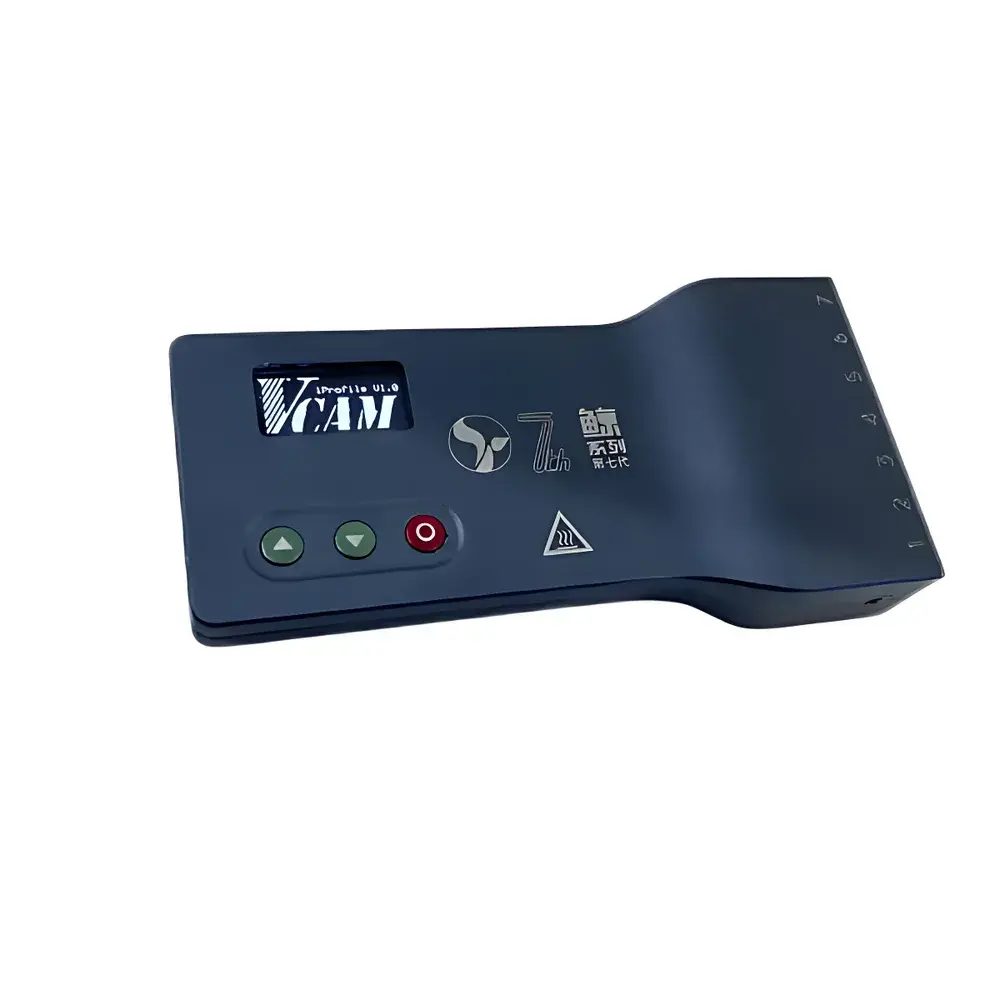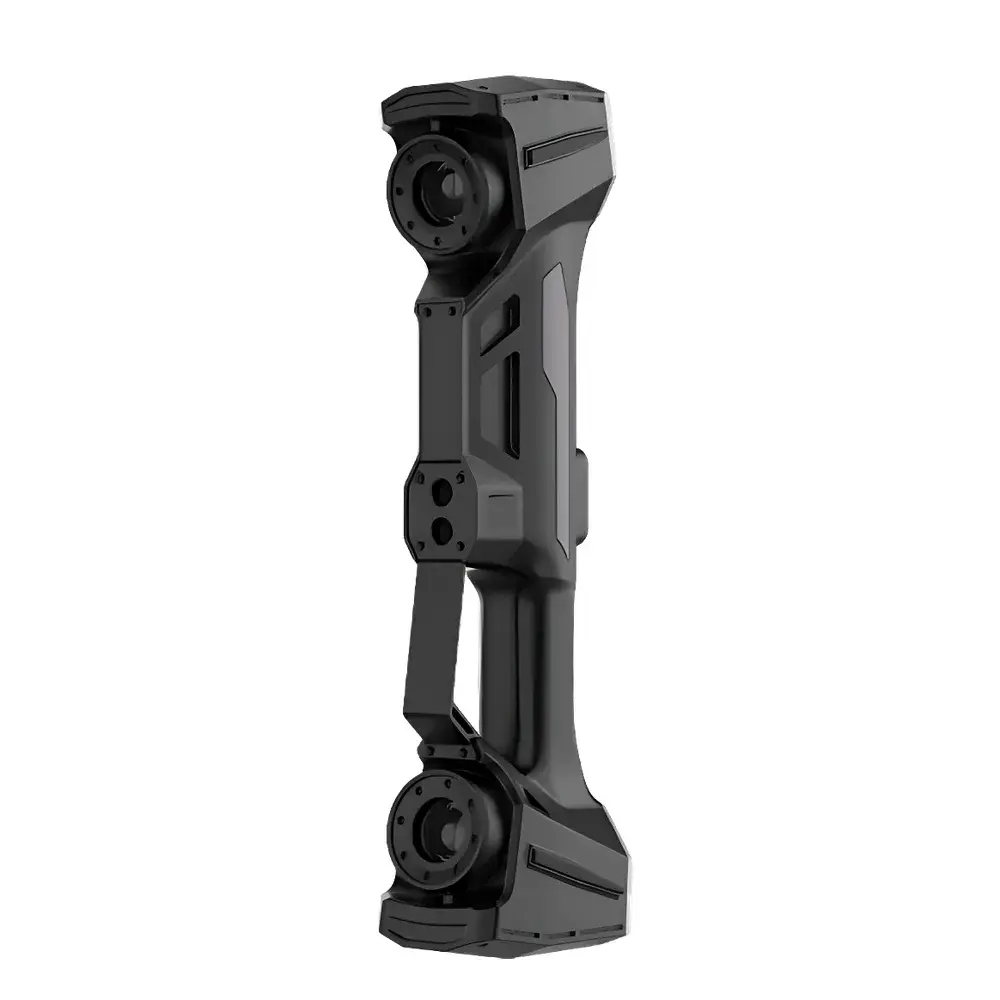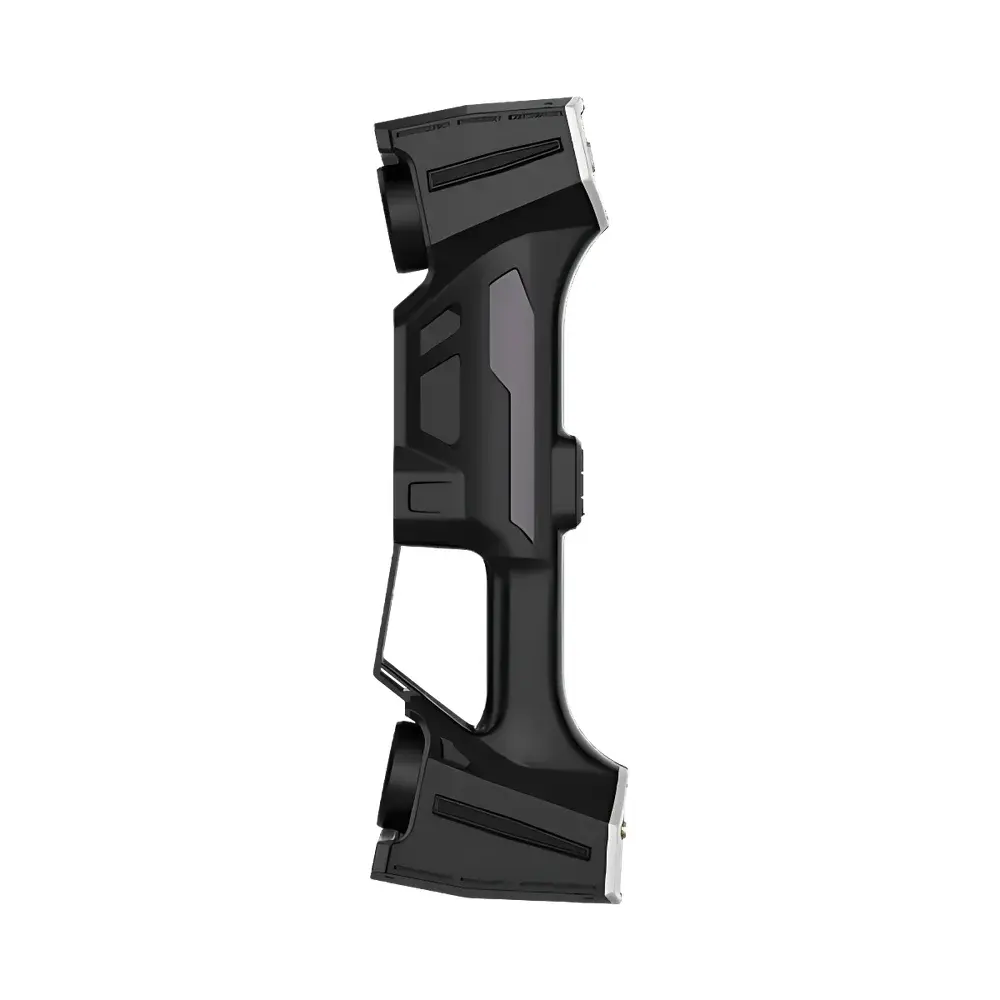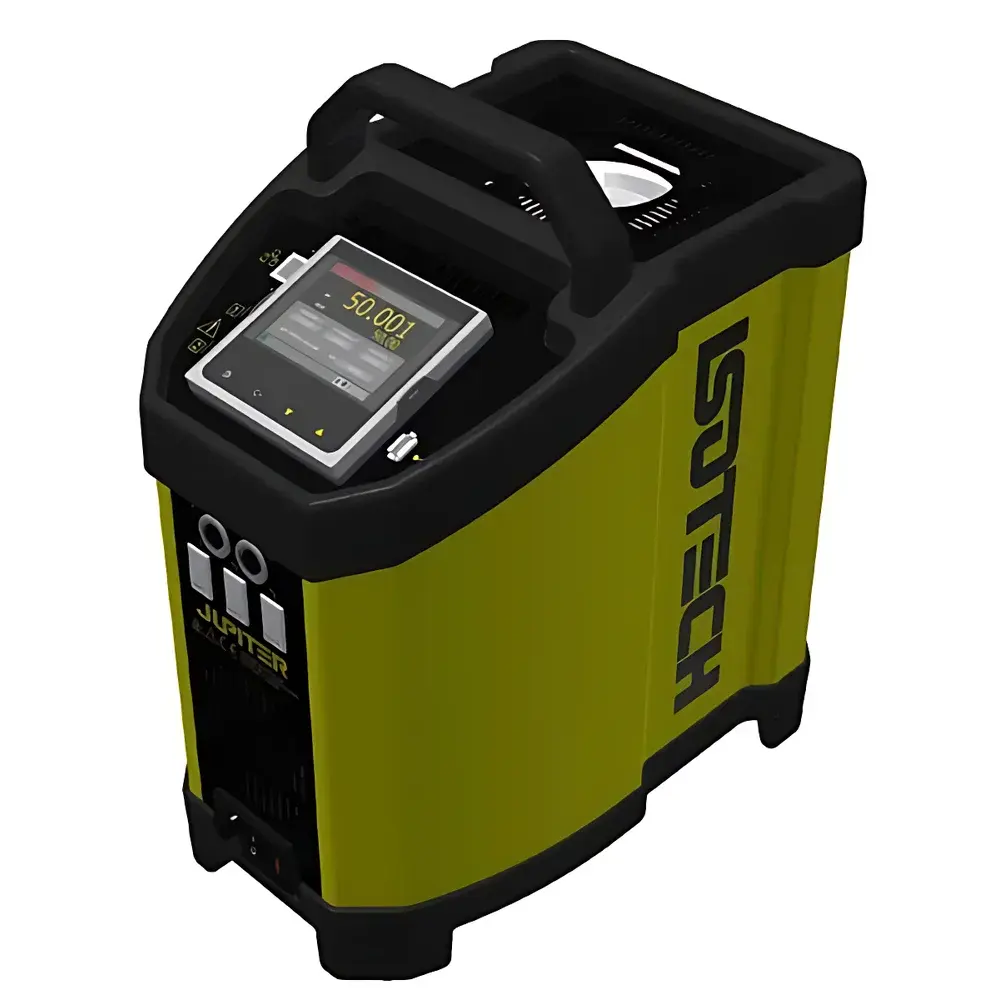
ISOTECH Europa 4520 / Venus 4951 / Calisto 4953 Multi-Mode Dry-Block Calibration Furnace System
| Brand | ISOTECH |
|---|---|
| Origin | USA |
| Model | E4520 & V4951 & C4953 |
| Temperature Range | −45 °C to 250 °C |
| Stability | ±0.01 °C (E4520/V4951), ±0.02 °C (C4953) |
| Temperature Resolution | 0.001 °C (E4520/V4951), 0.01 °C (C4953) |
| Heating Time | 15 min (−30 °C → 140 °C |
| Cooling Time | 15 min (140 °C → 0 °C), 25 min (250 °C → 30 °C) |
| Dimensions (D×W×H) | 312 mm × 212 mm × 384 mm |
| Calibration Well | Ø35 mm × 160 mm depth |
| Horizontal Uniformity (Dry-Block Mode) | <0.008 °C (E4520/V4951), <0.02 °C @ 250 °C (C4953) |
| Vertical Uniformity (Dry-Block Mode, 40 mm below top) | <0.040 °C (E4520/V4951), <0.25 °C (C4953) |
| Input Compatibility | Thermocouples (E/J/K/N/R/S/T), RTDs (Pt100/Pt1000), CJC Accuracy: ±0.35 °C |
| Interface | Ethernet + USB |
| Power | 220 VAC, 50/60 Hz, 150–300 W |
| Weight | 8–14 kg |
Overview
The ISOTECH Europa 4520 / Venus 4951 / Calisto 4953 Multi-Mode Dry-Block Calibration Furnace System is a metrologically engineered thermal calibration platform designed for high-accuracy verification and adjustment of contact temperature sensors across laboratories, calibration service providers, and manufacturing quality control environments. Unlike conventional single-mode dry-block calibrators, this system integrates six distinct operational modes—dry-block furnace, liquid bath, ice/water point reference, blackbody cavity, ITS-90 fixed-point cell support, and surface sensor calibration—within a unified, thermally optimized architecture. Each model leverages proprietary thermal management: the Europa 4520 operates from −45 °C to 140 °C with ±0.01 °C stability in dry-block mode; the Venus 4951 extends low-end capability to −35 °C while maintaining identical stability; the Calisto 4953 delivers extended high-temperature performance up to 250 °C with ±0.02 °C stability and enhanced uniformity at elevated setpoints. All units employ active thermal circulation, precision PID control with adaptive learning algorithms, and dual-zone heating/cooling elements to minimize axial and radial thermal gradients—enabling traceable calibration compliant with ISO/IEC 17025, ASTM E2877, and IEC 60751.
Key Features
- Multi-mode operation: seamless switching between dry-block, liquid bath, surface probe, blackbody, ITS-90 fixed-point, and ice-point calibration without hardware reconfiguration
- High thermal uniformity: horizontal uniformity <0.008 °C (Europa/Venus, dry-block, ambient to 140 °C); vertical uniformity <0.040 °C at 40 mm below well top—critical for multi-sensor simultaneous calibration
- Fast thermal response: 15-minute ramp from −30 °C to 140 °C and from 25 °C to 250 °C; 15-minute cooldown from 140 °C to 0 °C; 25-minute cooldown from 250 °C to 30 °C
- Calibration-ready well geometry: Ø35 mm × 160 mm deep insert with six precision-machined bore options (2×Ø4.5 mm, 2×Ø6.4 mm, 1×Ø8.0 mm, 1×Ø9.5 mm), all 157 mm deep for optimal immersion ratio adherence per ASTM E740
- Integrated sensor interface: direct thermocouple (E/J/K/N/R/S/T) and RTD (Pt100/Pt1000) measurement with cold-junction compensation (CJC) accuracy of ±0.35 °C; thermocouple accuracy referenced to NIST-traceable standards
- Networked remote operation: native Ethernet and USB connectivity supporting industry-standard calibration software (e.g., MET/CAL, DATACAL, CalTemp) with full audit trail, user access control, and electronic record generation
Sample Compatibility & Compliance
The system accommodates a broad spectrum of temperature sensing elements including PRTs, thermistors, thermocouples (types E, J, K, N, R, S, T), infrared reference sources, and surface contact probes. Its modular well inserts ensure mechanical compatibility with standard probe diameters while maintaining thermal contact integrity. The liquid bath mode supports silicone oil or ethylene glycol-based media for extended low-temperature stability. For ITS-90 compliance, the furnace supports sealed fixed-point cells (e.g., Sn, Zn, Al) via optional mounting fixtures, enabling sub-millikelvin reproducibility when used with certified reference materials. All models meet requirements for GLP and GMP environments: full 21 CFR Part 11–compliant data logging (electronic signatures, audit trails, role-based permissions), automatic calibration certificate generation, and traceability to NIST, PTB, or NPL primary standards. Horizontal and vertical uniformity data are validated per ISO 17025 Clause 6.4.2 and documented in the factory calibration report supplied with each unit.
Software & Data Management
ISOTECH’s firmware supports native integration with leading metrology software suites via TCP/IP and USB HID protocols. Real-time temperature monitoring, setpoint profiling, and multi-channel data acquisition are programmable through intuitive GUI interfaces. The embedded operating system logs all calibration events—including operator ID, timestamp, environmental conditions, sensor IDs, raw readings, uncertainty budgets, and pass/fail status—with immutable timestamps and SHA-256 hashing for data integrity. Audit trails comply with FDA 21 CFR Part 11 and EU Annex 11 requirements, including electronic signature validation, user authentication, and revision-controlled configuration management. Optional cloud synchronization enables centralized fleet monitoring across distributed lab networks while preserving data sovereignty and encryption-in-transit (TLS 1.2+).
Applications
- Primary and secondary calibration laboratories performing accredited temperature sensor verification per ISO/IEC 17025
- Pharmaceutical and biotech QC/QA departments requiring validated thermal mapping for autoclaves, incubators, and stability chambers
- Aerospace and power generation facilities validating thermocouple assemblies for turbine inlet and exhaust monitoring
- Automotive Tier-1 suppliers verifying engine coolant and exhaust gas temperature sensors against OEM specifications (e.g., GM W3170, Ford WSA-M97B44-D)
- National metrology institutes conducting inter-laboratory comparisons and fixed-point cell characterization
- Research institutions performing material property studies requiring stable, uniform thermal environments over extended durations
FAQ
What is the difference between the Europa 4520, Venus 4951, and Calisto 4953 models?
The Europa 4520 offers the widest low-temperature range (−45 °C to 140 °C) with highest stability (±0.01 °C). The Venus 4951 shares the same stability but starts at −35 °C, optimized for mid-range applications with lower power consumption (150 W). The Calisto 4953 targets high-temperature industrial use (30 °C to 250 °C), featuring reinforced thermal insulation and ±0.02 °C stability at 250 °C.
Can this system be used for accredited calibrations under ISO/IEC 17025?
Yes—each unit ships with a NIST-traceable calibration certificate, uncertainty budget, and full thermal uniformity characterization. When operated with validated procedures and documented environmental controls, it meets the technical requirements for scope accreditation.
Is remote monitoring supported over corporate networks?
Yes—Ethernet interface enables secure remote access via authenticated HTTPS or dedicated calibration software clients. Firewalls and VLAN segmentation are supported; no cloud dependency is required for local network deployment.
What liquid media are compatible with the bath mode?
Silicone oils (e.g., Dow Corning 200 Fluid, viscosity 50–100 cSt) and inhibited ethylene glycol/water mixtures are recommended. Media selection must align with target temperature range and flash point safety requirements per OSHA 1910.1200.
Does the system support automated calibration sequences?
Yes—through integration with MET/CAL or CalTemp, users can define multi-step temperature ramps, dwell times, sensor identification, and pass/fail criteria. All steps generate time-stamped, signed records compliant with audit requirements.