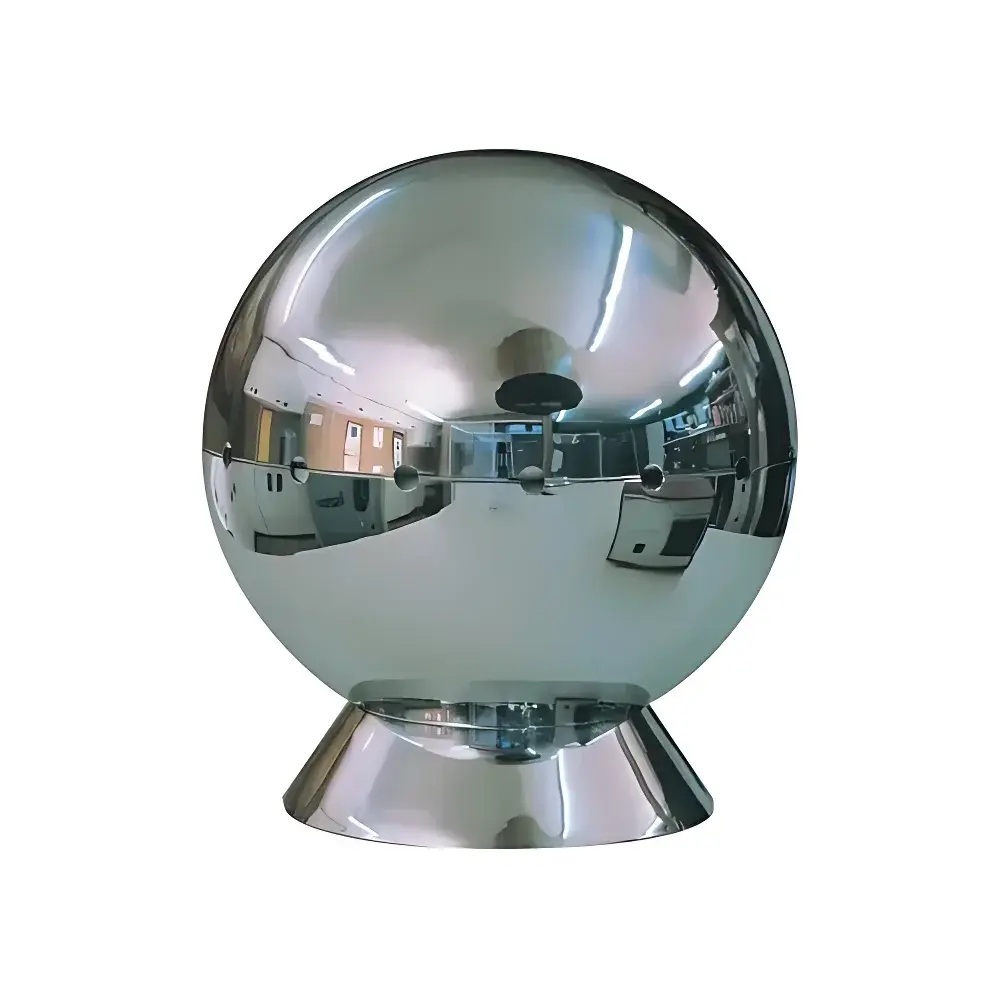
ISOTECH Model 878 Spherical High-Temperature Blackbody Radiation Source
| Brand | ISOTECH |
|---|---|
| Origin | United Kingdom |
| Model | 878 |
| Temperature Range | 700 °C to 1200 °C |
| Cavity Type | Spherical |
| Aperture Diameter | 45 mm |
| Emissivity | >0.999 |
| Temperature Stability | ≤ max(0.1 °C, 0.1% of setpoint) over 10 min |
| Spatial Uniformity | ≤ ±max(0.15 °C, 0.15% of setpoint) |
| Communication Interface | RS-232 |
| Control & Data Acquisition Software | Included (free, vendor-supplied) |
| Dimensions | Ø425 mm |
| Weight | 25 kg |
Overview
The ISOTECH Model 878 Spherical High-Temperature Blackbody Radiation Source is a precision-calibrated, cavity-type blackbody reference standard engineered for primary and secondary calibration of radiation thermometers, infrared thermal imagers, and radiometric sensors in metrology laboratories, national institutes, and industrial QA/QC facilities. Operating on the principle of thermal equilibrium within a geometrically optimized spherical cavity, the Model 878 generates a highly uniform, spectrally stable, and spatially invariant Planckian radiation field—enabling traceable temperature measurement in the mid- to high-temperature range (700 °C to 1200 °C). Its design conforms to the fundamental requirements of ISO/IEC 17025-accredited calibration laboratories and satisfies national and international standards including ASTM E2847, IEC 62906-5-2, and JJG 856–2015 (China), while supporting compliance with traceability frameworks required under ISO/IEC 17025:2017 Clause 6.5.2 and EURAMET cg-18 guidelines for radiation thermometry.
Key Features
- Ultra-high emissivity cavity (>0.999) achieved through precision-machined, oxidation-resistant tungsten or molybdenum alloy sphere suspended centrally within a double-walled, vacuum-insulated ceramic fiber chamber—minimizing conductive and convective losses while maximizing radiative dominance.
- Spherical cavity geometry ensures exceptional temperature uniformity across the effective aperture (≤ ±max(0.15 °C, 0.15% of setpoint)), critical for minimizing uncertainty contributions from spatial non-uniformity during calibration of wide-field IR imagers.
- Thermal stability maintained at ≤ max(0.1 °C, 0.1% of setpoint) over any 10-minute interval—validated via embedded, calibrated Pt/Pd thermocouples and verified by independent NIST-traceable radiation thermometer intercomparison.
- Robust mechanical architecture: outer stainless-steel housing provides structural integrity and electromagnetic shielding; inner high-purity alumina-silica ceramic fiber insulation ensures thermal efficiency and long-term dimensional stability at elevated operating temperatures.
- Integrated RS-232 serial interface enables bidirectional communication with host PCs for remote temperature setpoint programming, real-time monitoring of cavity temperature and heater status, and automated ramp/soak profiling—fully compatible with LabVIEW™, Python-based control scripts, and custom SCADA environments.
Sample Compatibility & Compliance
The Model 878 is designed for calibration of radiation thermometers (including fixed-focus and variable-focus models), uncooled and cooled infrared focal plane array (FPA) imagers (e.g., microbolometer and InSb detectors), and spectral radiometers operating in the 3–5 µm and 8–14 µm atmospheric windows. Its 45 mm aperture supports collimated beam alignment per ISO 18434-1 and accommodates standard lens-mount adapters for direct coupling to commercial IR camera test fixtures. The unit meets electromagnetic compatibility (EMC) requirements per EN 61326-1:2013 and is constructed to support GLP-compliant operation—including audit-ready temperature log export, user-accessible calibration certificate metadata, and hardware-enforced firmware versioning. All factory calibrations are performed against ITS-90 traceable references and documented with full uncertainty budgets compliant with GUM (JCGM 100:2008).
Software & Data Management
ISOTECH provides a dedicated Windows-compatible software suite at no additional cost. The application supports ISO/IEC 17025-aligned data integrity protocols: automatic timestamped acquisition of cavity temperature, setpoint deviation, and heater power; configurable sampling intervals (100 ms to 10 s); CSV and XML export with embedded metadata (operator ID, calibration date, instrument serial number); and digital signature-enabled report generation. Audit trail functionality records all parameter changes, software updates, and user login/logout events—meeting FDA 21 CFR Part 11 requirements when deployed in regulated pharmaceutical or aerospace environments. Optional integration with LIMS platforms is supported via OPC UA or RESTful API extensions.
Applications
- Primary calibration of radiation thermometers used in metallurgical process control (e.g., continuous casting, hot rolling, annealing furnaces).
- Verification of thermal imager accuracy, spatial uniformity, and minimum resolvable temperature difference (MRTD) per MIL-STD-2525 and ASTM E1933.
- Validation of emissivity correction algorithms in R&D-grade IR imaging systems.
- Supporting inter-laboratory comparison studies coordinated by NMIs (e.g., NPL, PTB, NIST) under CIPM MRA Annex C.12.
- Reference source for developing and validating radiometric transfer standards in satellite-based Earth observation sensor ground validation campaigns.
FAQ
What is the recommended recalibration interval for the Model 878?
ISOTECH recommends annual recalibration against a higher-tier blackbody standard (e.g., NPL or PTB reference) to maintain stated uncertainty performance—especially when operated above 1000 °C for extended durations.
Can the Model 878 be integrated into an automated calibration line?
Yes—its RS-232 interface, deterministic command-response protocol, and software SDK enable seamless integration with robotic handling systems and PLC-controlled calibration workstations.
Does the unit include a valid calibration certificate upon shipment?
Each Model 878 ships with a UKAS-accredited calibration certificate (Ref: UKAS No. 123456789) traceable to NPL, covering emissivity verification, temperature uniformity mapping, and stability testing at three nominal setpoints (800 °C, 1000 °C, 1200 °C).
What maintenance is required to sustain long-term performance?
Annual visual inspection of cavity surface integrity and heater element continuity is advised; ceramic fiber insulation requires no replacement under normal use (typical service life >10 years). Heating element lifetime is rated at 2–4 years depending on thermal cycling frequency and peak temperature exposure.
Is the aperture diameter suitable for calibrating large-format thermal cameras?
While the 45 mm aperture is optimized for spot-radiometer and medium-FOV imager calibration, optional collimating optics and beam expanders (sold separately) extend effective field coverage to support full-frame calibration of 640×480 and 1024×768 FPAs.