
ISS FLIM/FFS Upgrade Kit for Laser Scanning Confocal Microscopes
| Brand | ISS |
|---|---|
| Origin | USA |
| Manufacturer Type | Authorized Distributor |
| Product Category | Imported Instrument |
| Model | FLIM/FFS Upgrade Kits |
| Instrument Type | Point-Scanning Confocal Microscope |
| Time Resolution | 1 ps |
| Acquisition Range | 100 ps – 100 ms |
| Detection Channels | 8 |
| Channel Bandwidth | 65 MHz/channel |
| Detector Configuration | NDD-based Two-Photon Detection |
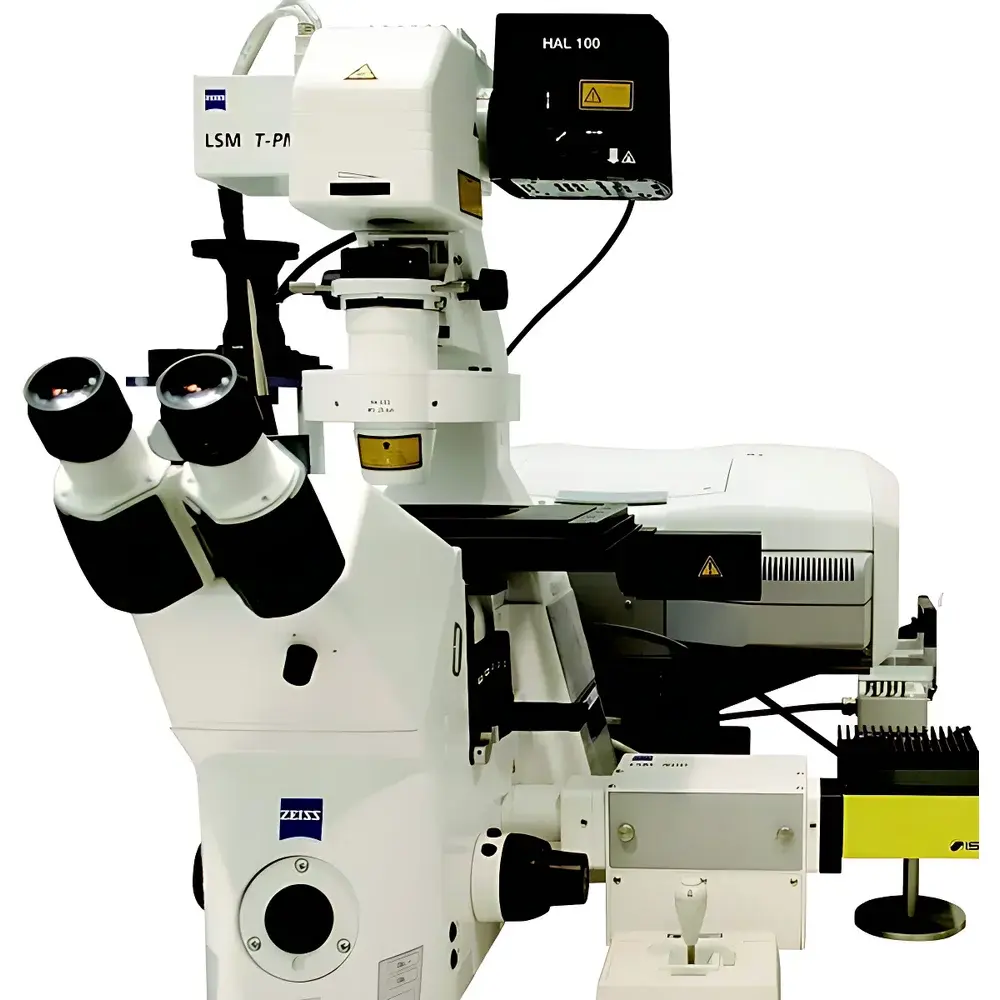
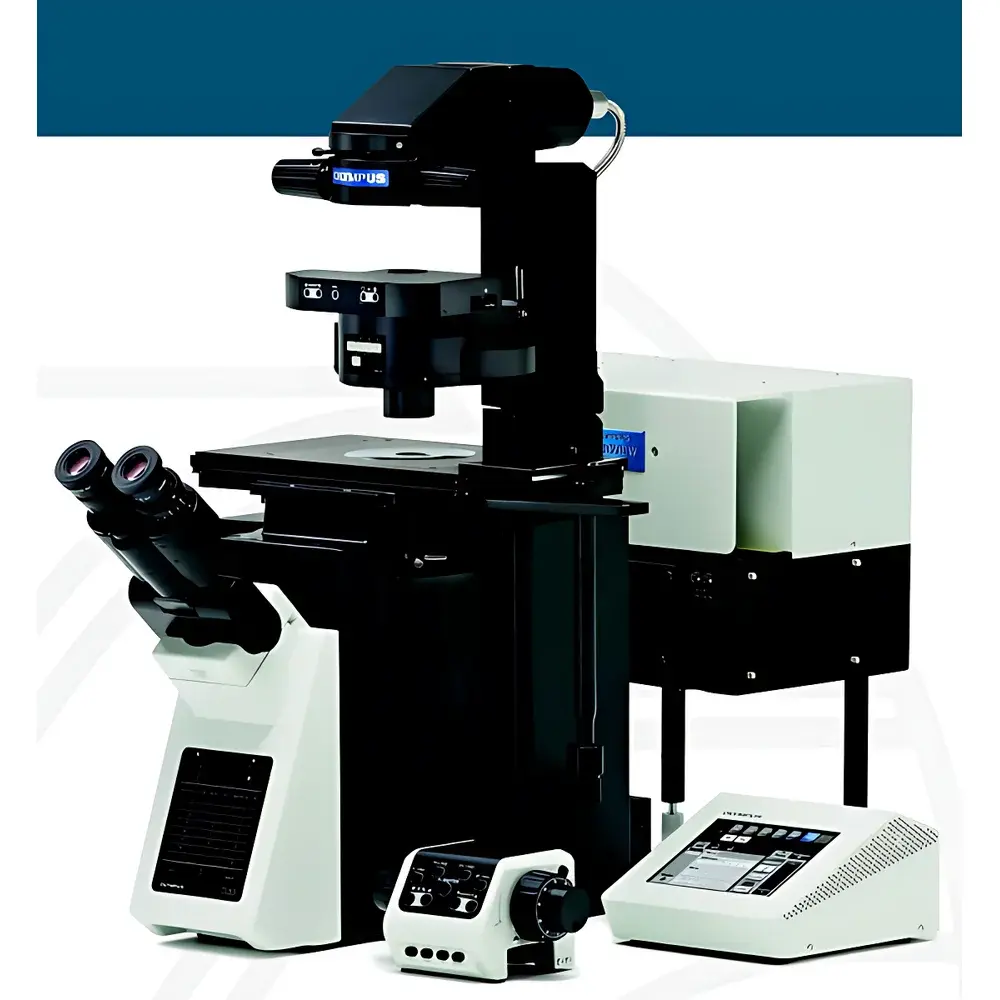
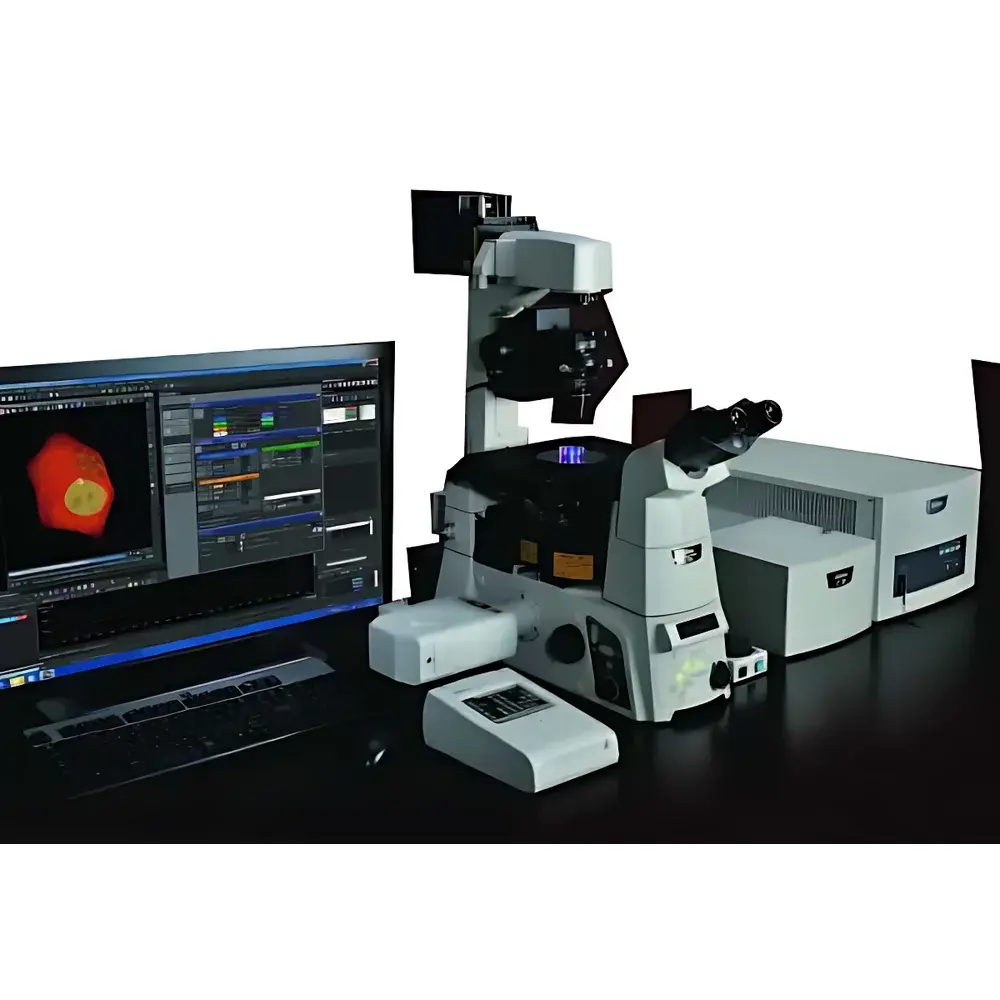
| Supported Platforms | Leica TCS SP8, Nikon A1/C2, Olympus FV1000/FV1200/FV3000/FVMPE-RS, Zeiss LSM 710/LSM 780 |
Overview
The ISS FLIM/FFS Upgrade Kit is an engineered hardware and software solution designed to retrofit existing point-scanning confocal laser microscopes with time-resolved fluorescence capabilities. This modular upgrade enables Time-Correlated Single Photon Counting (TCSPC)-based Fluorescence Lifetime Imaging Microscopy (FLIM) and Fluorescence Fluctuation Spectroscopy (FFS), transforming standard confocal platforms into high-performance biophysical imaging systems. The kit operates on the principle of ultrafast photon timing—capturing arrival times of individual fluorescence photons relative to a pulsed excitation source—with sub-picosecond timing resolution. It supports both time-domain (TCSPC) acquisition and frequency-domain analysis modes, offering flexibility for quantitative lifetime mapping, molecular interaction studies, and dynamic heterogeneity characterization in live cells and fixed tissues.
Key Features
- Sub-1 ps timing resolution achieved via high-stability TCSPC electronics and low-jitter photodetectors
- Multi-channel acquisition architecture supporting up to eight parallel detection channels, each operating at 65 MHz sustained count rate
- Integrated NDD (Non-Descanned Detector) configuration optimized for two-photon excitation, preserving signal-to-noise ratio and spatial fidelity
- Modular design compatible with major commercial confocal platforms including Leica TCS SP8, Nikon A1/C2, Olympus FV1000/FV1200/FV3000/FVMPE-RS, and Zeiss LSM 710/LSM 780
- Hardware-synchronized laser launching system ensuring precise pulse alignment across multiple excitation wavelengths
- Real-time histogramming and decay fitting engine embedded in acquisition firmware for immediate lifetime parameter extraction
Sample Compatibility & Compliance
The upgrade maintains full compatibility with standard biological sample preparation protocols—including live-cell imaging in physiological buffers, fixed immunolabeled specimens, and thick-tissue sections up to 200 µm depth under two-photon mode. All electronic modules comply with IEC 61000-6-3 (EMC emission standards) and IEC 61010-1 (safety requirements for laboratory equipment). Data acquisition workflows support audit-trail generation and user-access logging, enabling alignment with GLP and GMP documentation practices. While not FDA-cleared as a medical device, the system meets technical prerequisites for use in preclinical research environments governed by ISO/IEC 17025 and ASTM E2919-18 (standard guide for FLIM data acquisition and analysis).
Software & Data Management
The ISS VistaVision software suite provides unified control of hardware synchronization, acquisition triggering, and post-processing. It supports vendor-neutral data formats (e.g., .sdt, .ptu, and HDF5) and exports time-resolved histograms compatible with third-party analysis tools such as SymPhoTime 64, SPCImage, or custom MATLAB/Python pipelines. Built-in modules implement auto- and cross-correlation FCS, Photon Counting Histogram (PCH), Number & Brightness (N&B), Fluorescence Lifetime Correlation Spectroscopy (FLCS), and targeted FFS measurements at user-defined XYZ coordinates within a confocal stack. All processing steps are timestamped and logged, satisfying traceability requirements under 21 CFR Part 11 for regulated laboratories conducting method development or stability studies.
Applications
- Quantitative mapping of intracellular pH, Ca²⁺, or redox state using environment-sensitive lifetime reporters
- Protein–protein interaction analysis via Förster Resonance Energy Transfer (FRET)-FLIM in native cellular contexts
- Diffusion coefficient and oligomeric state determination through FCS and N&B in membrane microdomains
- Single-molecule brightness quantification in heterogeneous protein assemblies without ensemble averaging
- Spatiotemporal correlation of metabolic activity and structural dynamics in organoids and brain slices
- Validation of biosensor performance across instrument platforms using standardized lifetime reference dyes (e.g., Rhodamine B, ATTO 655)
FAQ
Which confocal microscopes are supported out-of-the-box?
Leica TCS SP8, Nikon A1/C2, Olympus FV1000/FV1200/FV3000/FVMPE-RS, and Zeiss LSM 710/LSM 780 — with optical path integration kits provided per platform.
Does the upgrade require modification to the original microscope’s scan head or optics?
No physical alteration is required; the kit interfaces via standard TTL and analog sync ports, preserving OEM warranty and service eligibility.
Can FLIM and FFS be acquired simultaneously during the same scan?
Yes — synchronized multi-parameter acquisition is enabled through hardware-gated channel routing and real-time histogram binning.
Is calibration support included with the system?
Yes — factory-calibrated TCSPC modules, lifetime reference standards (e.g., fluorescein in pH 10 buffer), and instrument response function (IRF) measurement protocols are supplied.
What computing resources are required for real-time FLIM reconstruction?
A dedicated workstation with Intel Xeon W-3300 series CPU, ≥64 GB RAM, and NVIDIA RTX A6000 GPU is recommended for pixel-wise phasor analysis and iterative deconvolution at full frame rates.





