
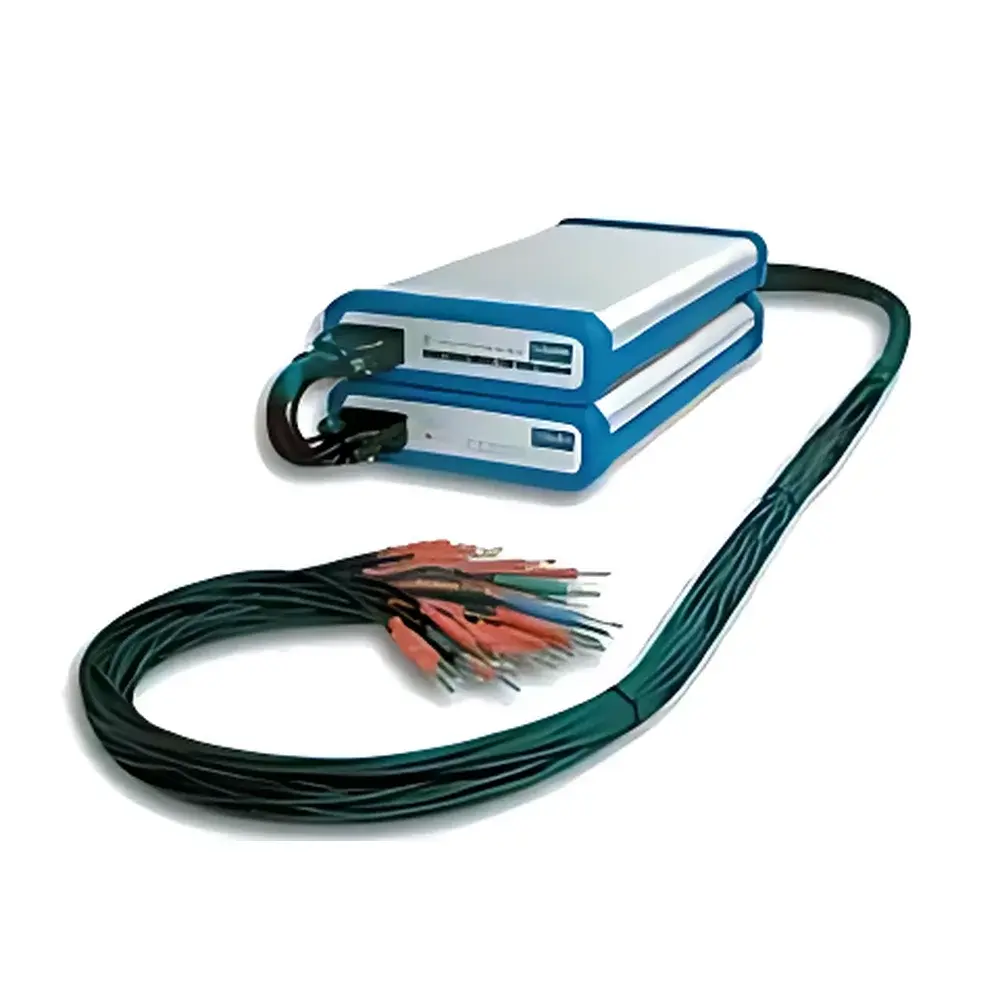
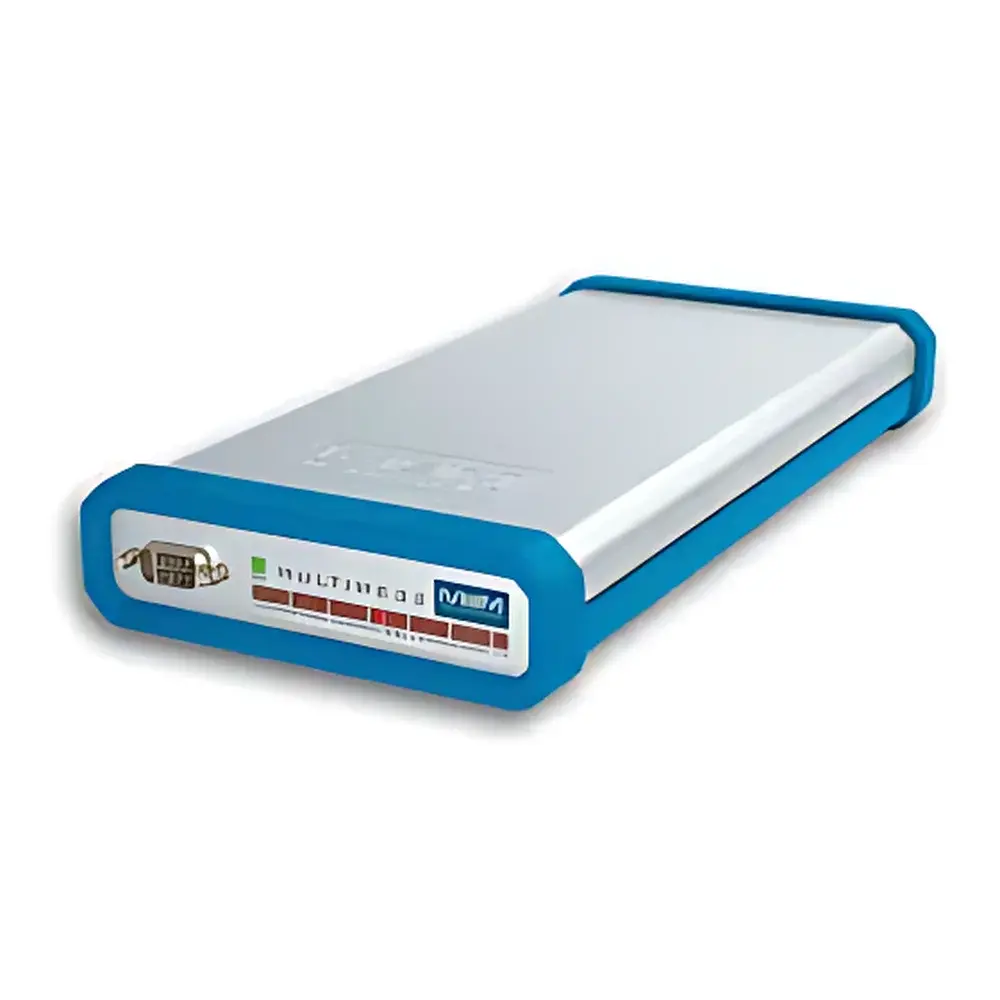
Ivium MultiWE32 Multi-Working Electrode Module
| Brand | Ivium |
|---|---|
| Origin | Netherlands |
| Model | MultiWE32 |
| Electrode Channel Capacity | 32 working electrodes (expandable to 256) |
| Compatible Systems | Ivium potentiostats/galvanostats |
| Measurement Modes | Simultaneous LSV, CV, and EIS on all channels |
| Reference/Counter Electrode Configuration | Shared RE/CE pair |
| Compliance | Designed for ISO/IEC 17025-compliant electrochemical labs |
Overview
The Ivium MultiWE32 Multi-Working Electrode Module is a precision-engineered hardware expansion unit designed exclusively for integration with Ivium Technologies’ modular potentiostat/galvanostat systems (e.g., IviumStat, CompactStat, and Vertex series). It transforms a single-channel electrochemical workstation into a high-throughput, parallel measurement platform capable of simultaneously controlling and acquiring data from up to 32 independent working electrodes—each with individually addressable potential control and current monitoring—while sharing a common reference electrode (RE) and counter electrode (CE). This architecture leverages Ivium’s proprietary low-noise analog multiplexing and synchronized digital sampling to preserve measurement integrity across all channels without cross-talk or timing drift. The module operates on the principle of time-multiplexed, channel-isolated potentiostatic control, enabling true concurrent electrochemical characterization under identical solution conditions—a critical requirement for sensor array validation, corrosion screening, battery electrode library testing, and high-content electrocatalyst evaluation.
Key Features
- Scalable channel architecture: Supports 32 working electrodes out-of-the-box; up to eight MultiWE32 modules can be daisy-chained via Ivium’s EtherChem interface to achieve 256-channel parallel operation.
- Full-mode electrochemical compatibility: All 32 channels support simultaneous acquisition of linear sweep voltammetry (LSV), cyclic voltammetry (CV), chronoamperometry (CA), and electrochemical impedance spectroscopy (EIS) — including multi-frequency EIS with phase-resolved current capture.
- Hardware-synchronized sampling: Sub-millisecond inter-channel timing alignment ensures temporal coherence across datasets, essential for comparative kinetic analysis and transient response correlation.
- Low-impedance signal routing: Gold-plated contact interfaces and shielded coaxial cabling minimize capacitive coupling and thermal EMF, maintaining baseline stability < ±2 pA in open-circuit conditions.
- Firmware-integrated calibration: Onboard temperature-compensated gain calibration traceable to NIST-traceable standards; supports user-defined electrode-specific correction factors per channel.
Sample Compatibility & Compliance
The MultiWE32 is compatible with standard three-electrode electrochemical cells using conventional working electrodes (e.g., Pt, Au, GC, carbon ink, screen-printed electrodes, and custom microelectrode arrays). Its shared RE/CE configuration is optimized for aqueous and non-aqueous electrolytes with conductivity ≥1 mS/cm. The module meets CE marking requirements for electromagnetic compatibility (EN 61326-1) and electrical safety (EN 61010-1). It supports audit-ready operation in regulated environments: raw data files include embedded metadata (timestamp, instrument ID, firmware version, calibration log hash), satisfying ALCOA+ principles. When used with IviumSoft v11+ and enabled audit trail settings, the system complies with FDA 21 CFR Part 11 requirements for electronic records and signatures—including operator authentication, immutable event logging, and electronic signature workflows.
Software & Data Management
Control and analysis are fully integrated within IviumSoft, Ivium’s native electrochemical software suite (Windows-based). The software provides dedicated MultiWE32 dashboards for real-time channel status visualization, batch parameter scripting (e.g., applying unique scan rates or EIS frequencies per electrode), and automated data segmentation by channel ID. Export formats include ASCII (tab-delimited), CSV, and binary .ivium format with embedded metadata headers. Raw datasets retain full time-stamped current/potential resolution (up to 100 kS/s aggregate sampling rate) and support post-acquisition alignment, differential capacitance mapping, and principal component analysis (PCA) across electrode populations. Data archives are structured in hierarchical folders compliant with ISO 14155:2020 Annex C for clinical electrochemical device studies.
Applications
- High-throughput electrocatalyst screening: Rapid evaluation of composition-gradient thin-film libraries for HER, OER, or CO₂RR activity.
- Corrosion science: Spatially resolved monitoring of localized pitting or galvanic coupling across multi-material coupons.
- Battery R&D: Parallel cycling and impedance tracking of 32 cathode/anode formulations under identical aging protocols.
- Biosensor development: Validation of printed electrode arrays for point-of-care diagnostics under controlled flow or static conditions.
- Electrochemical education: Multi-electrode experiments demonstrating statistical reproducibility, edge effects, and mass transport limitations.
FAQ
Can the MultiWE32 be used with non-Ivium potentiostats?
No. The module requires Ivium’s EtherChem communication protocol and firmware-level synchronization; it is not compatible with third-party instruments.
Is individual current range selection available per channel?
Yes. Each working electrode channel supports independent current range selection (from ±100 nA to ±100 mA) via software command prior to measurement initiation.
Does the shared reference electrode introduce measurement error in high-impedance systems?
For solutions with bulk resistance >10 kΩ, optional high-impedance RE buffers (e.g., Ivium RE-Buffer-10G) are recommended to maintain potential stability; application notes provide guidance on IR compensation strategies.
How is data synchronization validated across 32 channels?
Ivium provides a built-in channel alignment test sequence using synchronized square-wave stimuli; residual timing skew is quantified and reported in the calibration certificate (< ±50 ns RMS deviation).
What maintenance is required for long-term reliability?
Annual verification of channel isolation resistance (>1012 Ω) and gain linearity (±0.05% FS) is recommended; Ivium-certified service centers perform traceable recalibration against primary standards.






