
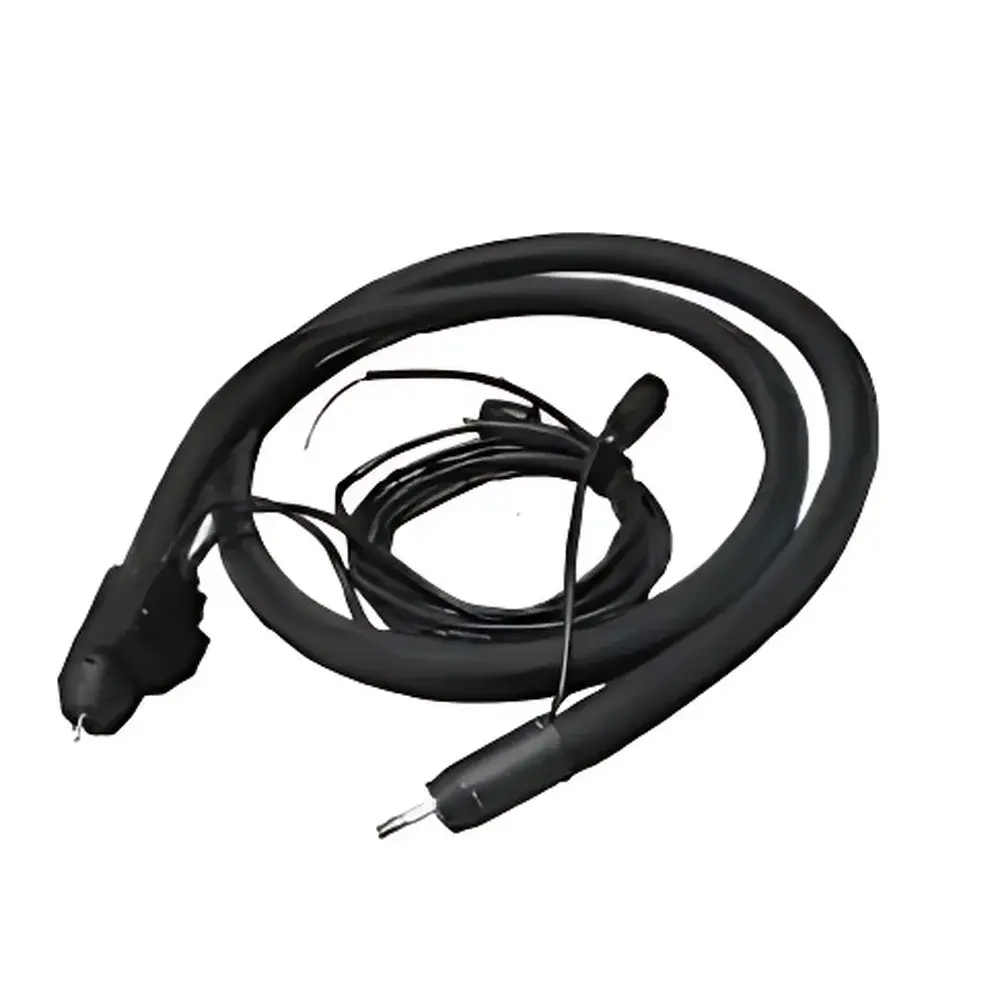
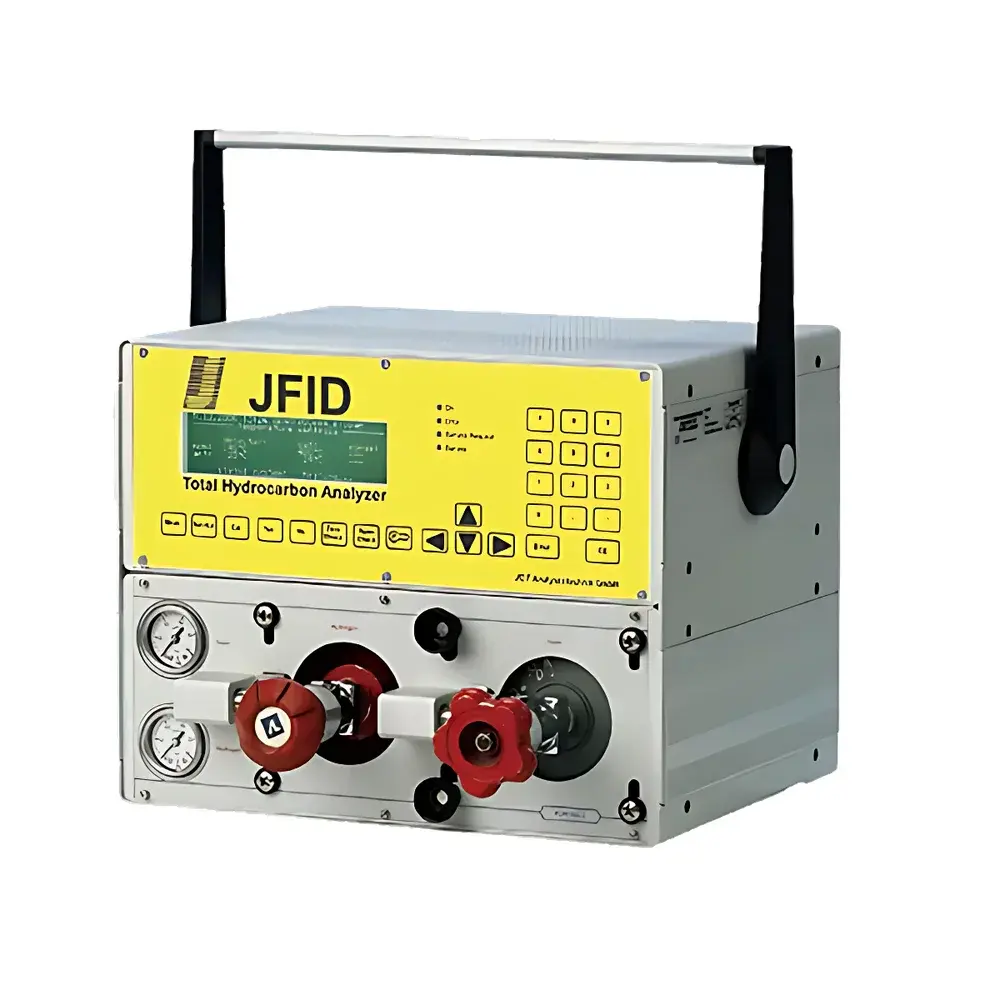
JCT JFID Portable Total Hydrocarbons (Non-Methane) Analyzer
| Brand | JCT |
|---|---|
| Origin | Austria |
| Product Type | Portable Gas Preconditioner with Flame Ionization Detection (FID) for NMHC Analysis |
| Instrument Category | Environmental Monitoring Instrument / Gas Analyzer |
| Configuration | Dual-Channel Sample Conditioning System |
| Flow Range | 10–100 Nl/h (Single Channel), 15–150 Nl/h (Dual Channel, per channel) |
| Maximum Combined Flow Capacity | 200 Nl/h at Rated Backpressure |
| Operating Ambient Temperature | 5–45 °C (up to 50 °C continuous) |
| Dew Point Control | +3 °C ± 0.2 °C |
| Refrigerant | R134a (non-CFC, environmentally compliant) |
| Material of Construction | PVDF (Polyvinylidene Fluoride) gas pathways |
| Integrated Components | Dual diaphragm sampling pumps, condensate removal pump, digital temperature display with alarm, precision thermal mass flow sensors, high-efficiency counterflow heat exchanger |
| Compliance | Designed for ASTM D6348, ISO 12913-1, EPA Method 25A, and EU EN 13649-1 pre-conditioning requirements |
Overview
The JCT JFID Portable Total Hydrocarbons (Non-Methane) Analyzer is a field-deployable, integrated gas preconditioning and detection system engineered for accurate, real-time quantification of non-methane total hydrocarbons (NMTHC) in ambient air, stack emissions, and fugitive sources. Unlike standalone samplers or passive concentrators, the JFID combines active sample conditioning—precise dew point stabilization, particulate filtration, and moisture removal—with flame ionization detection (FID) in a single ruggedized portable platform. Its core measurement principle relies on selective oxidation of organic compounds in a hydrogen-air flame, generating ions proportional to carbon content; methane is subtracted via catalytic methanation or dual-detector differential mode (configurable), yielding NMHC concentration in ppmC or mg/m³. The system is calibrated traceably to NIST-traceable hydrocarbon standards and operates under thermally stabilized conditions to minimize matrix interference from humidity, temperature fluctuation, or pressure drift—critical for regulatory-grade data acquisition in dynamic field environments such as boiler rooms, refinery perimeters, and municipal waste treatment facilities.
Key Features
- Stabilized dew point control at +3 °C ±0.2 °C, maintained independently of inlet gas temperature and ambient fluctuations through closed-loop PID-regulated refrigeration
- Dual-channel PVDF gas pathway architecture enabling simultaneous sampling from two independent sources or parallel calibration/analysis streams
- Integrated dual-diaphragm sampling pumps and auto-evacuating condensate removal pump, eliminating manual drainage and ensuring uninterrupted operation over extended deployments
- High-efficiency counterflow heat exchanger fabricated from corrosion-resistant materials, achieving >92% thermal recovery while preventing cross-contamination and leakage
- Digital temperature monitoring with programmable high-temperature alarm and interlocked pump shutdown for safety-critical thermal management
- R134a-based refrigeration system—zero ozone depletion potential (ODP = 0), low global warming potential (GWP = 1430), fully compliant with EU F-Gas Regulation (EU) No 517/2014
- Field-configurable flow range (10–100 Nl/h or 15–150 Nl/h per channel) with thermal mass flow sensors offering ±1.5% full-scale accuracy and built-in zero-stability compensation
Sample Compatibility & Compliance
The JFID is validated for use with humid, particulate-laden, and moderately corrosive gas matrices typical of industrial exhaust, landfill vent gas, and urban ambient air. It meets the sample conditioning specifications outlined in ASTM D6348 (standard test method for determination of total hydrocarbons in ambient air), ISO 12913-1 (acoustics—description and measurement of environmental noise), and EPA Method 25A (determination of total gaseous organic emissions). All wetted components—including gas lines, filters, and condensate traps—are constructed from PVDF, ensuring chemical resistance to sulfur compounds, halogenated VOCs, and acidic condensates. The system supports GLP-compliant data integrity protocols, including time-stamped event logging, operator ID authentication, and audit-ready calibration history export.
Software & Data Management
The embedded firmware supports USB and Bluetooth 5.0 connectivity for configuration, real-time telemetry, and remote diagnostics via the JCT FieldLink™ desktop application (Windows/macOS). All measurements are timestamped with GPS-synchronized UTC, and raw sensor outputs—including FID current, dew point deviation, pump duty cycle, and condensate volume—are stored locally on a removable microSD card (up to 32 GB) with automatic rollover. Data exports comply with CSV and XML formats compatible with LIMS integration and EPA Compliance Reporting Tools. Firmware updates preserve calibration coefficients and user-defined method parameters, and all critical operational events (e.g., dew point excursion, pump timeout, sensor fault) trigger automatic flagging in the data stream per 21 CFR Part 11 Annex 11 requirements.
Applications
- Regulatory stack testing for NMHC compliance under local air quality ordinances and national emission standards
- Fugitive emission surveys across petrochemical facilities, storage terminals, and transfer stations
- Continuous ambient air monitoring near industrial zones using mobile van-mounted configurations
- Verification of VOC abatement system performance (e.g., thermal oxidizers, carbon adsorption units)
- Method validation and reference instrument deployment during third-party audit campaigns
- Research-grade field studies requiring stable, humidity-compensated hydrocarbon baselines in variable climate zones
FAQ
What is the certified measurement range for NMHC concentration?
The JFID delivers linear response from 0.1 to 10,000 ppmC, with detection limit of 0.05 ppmC (signal-to-noise ratio ≥3) when operated with standard 1-meter sample path and H₂ fuel optimization.
Does the system support automated zero/span calibration?
Yes—integrated solenoid valves enable unattended zero-air and span-gas introduction via external cylinders; calibration sequences follow ISO 17025 traceable protocols with full electronic record generation.
Can the dew point setpoint be adjusted in-field?
No—the +3 °C setpoint is factory-optimized for maximum hydrocarbon recovery and FID stability; deviation compromises method compliance and is disabled in operational firmware.
Is the instrument suitable for explosive atmospheres?
The JFID is not ATEX or IECEx certified; it must be operated outside Zone 0/1 hazardous areas unless installed within an approved purge enclosure meeting IEC 60079-13 requirements.
How often does the condensate trap require maintenance?
Under nominal operating conditions (40% RH, 25 °C), the integrated condensate pump evacuates accumulated water continuously; visual inspection is recommended every 160 hours of cumulative runtime, with filter replacement every 500 hours or per ISO 8573-1 Class 3 particulate specification.







